 Follow Us on Google News
 Follow Us on Google Discover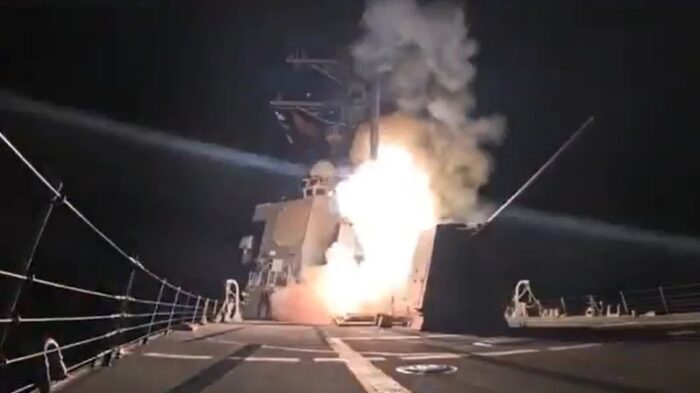
Reactions have continued to trail the recent United States–Nigeria joint airstrikes on suspected Islamic State-linked camps in Sokoto State, with government officials, lawmakers, political actors, and research groups offering differing interpretations of the operation’s purpose, legality, and likely impact on Nigeria’s security crisis.
The strikes, carried out on Christmas Day, were confirmed by both Washington and Abuja as coordinated operations targeting terrorist enclaves in northwest Nigeria. United States officials said the action was aimed at degrading Islamic State elements operating in the region, while Nigerian authorities stressed that the operation was intelligence-led and jointly executed.
US Congressman Riley Moore said President Donald Trump authorised the strikes as part of efforts to halt attacks on Christians in Nigeria, describing the operation as coordinated with the Nigerian government.
In a post on X, Moore said, “We did this in coordination with the Nigerian government, which is very important to point out. This isn’t the United States unilaterally doing this, we are doing this in coordination with the Nigerian government to help secure their country and end the slaughter of Christians in Nigeria.”
He added that the strikes were intended to deter further violence, stating that Trump “gave the terrorists a taste of their own medicine” after attacks on Christian communities during previous Christmas periods.
However, Nigeria’s Special Adviser to the President on Public Communications and Media, Daniel Bwala, expressed reservations about the operation, describing it as “sketchy” while acknowledging that the United States has global jurisdiction to act against ISIS-linked groups.
Speaking on Sky News, Bwala said, “I’m sure that the American government has jurisdictional power over operations against ISIS and their ancillaries around the world. They may not have specific authorisation by Congress to fight terrorist organisations that are designated as such in Nigeria.”
He added that further clarity would emerge as intelligence reports became available, noting that it remained unclear whether those targeted were ISIS fighters, Boko Haram elements or other armed groups.
Nigeria’s Minister of Finance and Coordinating Minister of the Economy, Wale Edun, sought to reassure investors and international partners that the strikes did not place the country in a state of war. In a statement issued in Abuja, Edun said Nigeria was “decisively confronting, alongside trusted international partners, terrorism,” stressing that the operation was limited and security-driven.
“What Nigeria is confronting is terrorism. This distinction is important,” Edun said. “The operation was precise, intelligence-led, and focused exclusively on terrorist elements that threaten innocent lives, national stability, and economic activity.”
He added that the government remained committed to stability and reforms, insisting that security efforts and economic growth were inseparable. “Far from destabilising markets, such actions strengthen the foundations of peace and reinforce the conditions required for sustainable growth,” he said.
The minister also pointed to recent economic indicators, including GDP growth and easing inflation, as evidence that the country remained on a stable path despite security challenges.
Meanwhile, US Defence Secretary Pete Hegseth warned that further strikes could follow, stating on X that “more [are] to come,” while thanking the Nigerian government for its cooperation. Nigeria’s Foreign Affairs Minister, Yusuf Tuggar, confirmed that Abuja provided intelligence for the operation and described it as part of “joint ongoing operations.”
“This is something we have been working on together,” Tuggar said, adding that President Bola Tinubu authorised the cooperation after consultations with US officials.
Despite official assurances, the strikes have drawn criticism and caution from political actors and civil society. Former presidential candidate Gbenga Olawepo-Hashim said the intervention exposed deep failures in Nigeria’s security architecture, arguing that persistent insecurity had created conditions for extremist groups to gain ground.
He said international intervention, while sometimes necessary, could not substitute for effective domestic governance.
“The emergence of an IS foothold reflects long-standing governance failures and weakened institutions,” he said, warning that airstrikes alone could not resolve the crisis.
A US-based think tank, the Centre for Strategic and International Studies (CSIS), also cautioned that isolated military actions were unlikely to end terrorism in Nigeria. In an assessment of the strikes, the group said such operations might degrade militant capabilities temporarily but would not address the structural drivers of violence.
CSIS noted that jihadist groups in northern Nigeria target both Christians and Muslims and that much of the violence in the region is also driven by banditry and farmer-herder conflicts. It added that while extremist groups pose a threat to regional stability, there is limited evidence that they currently have the capacity to attack the United States directly.

The Youth Party, in a separate reaction, welcomed international support against terrorist groups but warned against framing Nigeria’s insecurity as a religious conflict. In a statement by its acting national publicity secretary, Sope Durodola, the party said terrorism in Nigeria affects people of all faiths and warned that religious narratives could deepen divisions.
“Terrorism in Nigeria is a crime against humanity, not a war between religions,” the party said, urging that any foreign intervention should prioritise civilian protection and respect Nigeria’s sovereignty.
On the ground, residents of communities near the affected areas in Sokoto described panic following the strikes. Some said they saw bright flashes in the sky and felt intense heat, while security forces later cordoned off the areas.
There were no official figures on casualties, and both Nigerian and US authorities have declined to confirm whether any militants were killed.
The strikes come amid renewed concern over insecurity across northern Nigeria. In Zamfara State, a roadside bomb attack days later killed several passengers, prompting the Speaker of the House of Representatives, Tajudeen Abbas, to condemn the incident and describe it as a cowardly act. He said the National Assembly would continue to support security agencies through legislation and funding.

