 Follow Us on Google News
 Follow Us on Google Discover
Nigeria’s mining sector have robust potential, rich in various minerals such as gold, coal, lithium, iron and limestone, and many more, but it has historically been overshadowed by the dominance of the oil and gas industry, and public-owned enterprises. Though artisanal and small-scale mining remain prevalent, the sector is hindered by challenges such as poor infrastructure and a lack of local refining industries. The industry has great potential yet untapped but the government is making serious efforts to galvanize it, focusing on economic diversification, attracting investment, and curbing illegal mining.
Solid mineral mining is crucial for Nigeria’s economic diversification, moving away from oil dependency by creating jobs, attracting investment, providing raw materials for industries like lithium for green energy, gold, tin, boosting GDP, developing rural areas, and fostering national unity as minerals are found nationwide. It supports infrastructure, manufacturing, and aligns Nigeria with global green energy transitions, transforming raw wealth into industrial power through value addition.
In the last few decades, the sector has witnessed an increased number of notable professionals who responded to the call for private investment in running the industry. They have set up private companies to complement government’s efforts by committing huge resources into this critical sector. Their companies now serve as platforms for increasing the nation’s GDP, provision of employment and also playing crucial role in the area of green energy transition.
These professionals have brought innovation, technology, good marketing analysis and opportunity identification among others to achieve tremendous growth and improvement. Indeed, they are responsible for overall strategic direction, financial performance, risk taking and operational success in the industry, thus engendering profitability, productivity and sustainability in the sector.
The Guardian acknowledges the accomplishments of these distinguished nation builders and this special report showcases frontline professionals driving growth in Nigeria’s mining sector.
It happens that Segilola Resources Operating Limited, parades iconic professionals in leadership positions. Indeed, their exemplary contributions to the development of the mining sector in Nigeria stand them out as the first to be featured in the series…

Harnessing Nigeria’s Solid Minerals Sector To Generate Employment, Stimulate Local Economies And Contribute Meaningfully To Shared Prosperity: Insights From Austin Menegbo, Country Manager, Segilola Resources Operating Limited (SROL)

Nigeria’s solid minerals sector has long been described as a sleeping giant-rich in potential but constrained by years of underdevelopment, weak data, and limited investor confidence. Few professionals, however, embody the sector’s gradual awakening as clearly as Austin Menegbo, Country Manager of Segilola Resources Operating Limited (SROL), operators of Nigeria’s first commercial gold mine.
With over 16 years of experience in the solid minerals industry, Menegbo has been both a witness to and a participant in the sector’s transformation. In his current role, he provides strategic leadership across Corporate Affairs, Government Relations, Regulatory Coordination, Export Management, and Operational Optimisation, not only for SROL but also for its sister company, NewStar Minerals, which is focused on lithium development.
Reflecting on his professional journey, Menegbo notes that his path into mining was far from conventional. “During my undergraduate studies and early graduate work, I never imagined that I would build a career in solid minerals,” he says. “But the transferable skills I developed, particularly in stakeholder engagement, ethical business practices, and strategic management, have proven invaluable in navigating the complexities of Nigeria’s mining sector.”
Menegbo holds an Executive MBA from ESCP Business School and a Master’s degree in Business Ethics from the University of KwaZulu-Natal in South Africa. That grounding, he explains, has shaped his leadership philosophy in an industry often challenged by governance concerns. “Mining is not just about extraction; it is about trust, systems, and long-term value creation,” he adds.
Asked what initially attracted him to the solid minerals sector, Menegbo is candid about his motivations. “I have always been drawn to unconventional paths, even from childhood,” he says. “So perhaps the appeal of mining was inevitable.”
What truly sealed his commitment, however, was the opportunity to be part of a historic milestone. The development of Nigeria’s first commercial gold mine. “The Segilola Gold Mine presented a rare opportunity to help shape industry standards, strengthen governance practices, and influence community outcomes in a meaningful way,” he explains.
For Menegbo, the sector’s appeal goes beyond commercial returns. He speaks passionately about the intellectual and operational demands of mining. “It is a dynamic and demanding industry,” he says. “You need strategic thinking, regulatory navigation, stakeholder diplomacy, and strong operational discipline. Few sectors test leadership capacity in quite the same way.”
As Country Manager, Menegbo occupies a role he describes as “broad by design.” That breadth, he says, has enabled him to influence both internal performance and wider industry perceptions.
One of the most notable outcomes of that leadership was SROL’s recognition in 2024 as one of Nigeria’s Top 10 Non-Oil Exporters. “That recognition underscores our operational excellence and export contribution,” Menegbo says, adding that it also challenges outdated assumptions about mining’s role in Nigeria’s economy.
Beyond awards, he highlights the importance of credibility. “Supporting the successful development and continuous operation of Nigeria’s first commercial gold mine has positioned SROL as a reference point for responsible and modern mining,” he notes.
Menegbo also emphasizes the role of relationships. “We have deliberately built strong partnerships with government agencies, host communities, and industry stakeholders,” he says. “That trust translates directly into operational stability.”
Transparency, he adds, has been a defining principle. “We have championed transparency across licensing, reporting, and ESG commitments, helping to elevate expectations around accountability and sustainability across the sector.”
For Menegbo, the conversation about mining must ultimately be about national development. He argues that Nigeria’s solid minerals potential can only be harnessed if foundational issues are addressed, starting with geological data.
“Robust, independently verified geological information is essential,” he stressed. “Compared to countries like Ghana, Côte d’Ivoire, or South Africa, Nigeria is still emerging in the global mining space. Credibility begins with data.”
Infrastructure, he says, is another critical constraint. “Reliable power, quality road networks, and processing capacity are not optional—they are fundamental,” Menegbo explains. “When mining companies are forced to invest heavily in off-grid power solutions, it raises costs and weakens competitiveness.”
According to him, consistent electricity alone would significantly reduce overheads across the economy. “That single factor would unlock value not just for mining, but for virtually every business in Nigeria,” he adds.
While optimistic, Menegbo is realistic about the challenges facing the sector. “Predictability in regulatory processes remains a key issue,” he says. “Investor confidence depends on clarity and consistency.”
He also points to geological data gaps, security concerns in some mining regions, and the prevalence of informal mining. “Informal operations distort markets and create serious safety and environmental risks,” he warns.
Capacity development is another concern. “There is still a shortage of specialized technical skills,” he notes, adding that environmental and social governance pressures require stronger compliance support. “Without value-addition infrastructure, downstream growth and export competitiveness will remain limited.”
On environmental sustainability, Menegbo is unequivocal. “Environmental responsibility is embedded in how we operate, it is not an afterthought,” he says.
At SROL, environmental management plans were developed before operations began and are continuously updated. “We practice progressive rehabilitation,” he explains. “We don’t wait until mine closure. We restore land as mining advances, minimizing our disturbed footprint.”
Energy transition is also a priority. Menegbo highlights the company’s use of Compressed Natural Gas (CNG) for power generation at the Segilola Gold Mine. “This initiative has significantly reduced our greenhouse gas emissions and lowered power generation costs,” he says.
Water management, waste handling, and transparent ESG reporting complete what he describes as a “holistic sustainability framework.” But beyond systems, Menegbo emphasizes culture. “Environmental stewardship requires a mindset. Every employee must understand their responsibility.”
Technology, particularly artificial intelligence, is increasingly shaping modern mining, and SROL is no exception. “AI is no longer optional,” Menegbo says. “It is integral to efficiency, safety, and decision-making.”
He explains that AI supports geological interpretation, predictive maintenance, safety monitoring, and plant optimization. “It helps us reduce downtime, improve recovery rates, and identify risks in real time,” he notes.
AI is also used in export logistics, compliance workflows, and social listening. Still, Menegbo is careful to draw a distinction. “We categorically do not see AI as a replacement for human judgment,” he says. “It is a tool that augments our capabilities and allows our people to focus on higher-value activities.”
Attracting talent, Menegbo argues, requires intentional strategy. “When we entered the industry, there were very few mining-technical professionals locally,” he recalls. “But Nigeria had strong talent in oil and gas, FMCG, and telecommunications.”
SROL recruited from those sectors and invested heavily in training. “You cannot attract or retain professionals without deliberate capacity development,” he insists.
Looking ahead, Menegbo is optimistic about the sector’s trajectory. “Over the next five years, mining can become a major engine of Nigeria’s economy,” he predicts. He cites growth in gold, lithium, and critical minerals, improved ESG standards, and accelerated technology adoption.
“The foundation is being laid today,” Menegbo concludes. “The real question is not whether mining can drive growth, but how quickly we can remove bottlenecks and scale successful models like the Segilola Gold Mine.”
“Gold Mining Is a Mechanical Engineer’s Dream: Driving Sustainable Growth Through Engineering Excellence in Nigeria’s Mining Sector- Olusomidomo, Deputy GM/Operations Manager, SROL
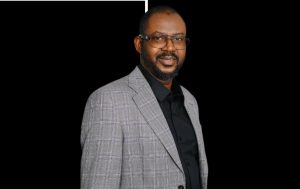
Nigeria’s solid minerals sector is undergoing a quiet but transformative renaissance, driven by a new generation of technically grounded, globally exposed professionals. One such leader is Engineer Olusola Olusomidomo, a seasoned mechanical engineer and project management professional whose career exemplifies the blend of engineering excellence, operational discipline, and community-focused leadership required to unlock Nigeria’s mining potential.
Engineer Olusomidomo is a COREN-registered Mechanical Engineer and a certified Project Management Professional (PMP) with over two decades of cross-sector experience. He holds a Bachelor of Engineering in Mechanical Engineering from the University of Ado Ekiti and an MBA in Marketing Management from Lagos State University. His professional journey spans blue-chip multinationals including UACN Plc, Unilever Nigeria Plc, HealthPlus Ltd, Devyani International Nigeria Ltd (KFC operator), EatnGo Nigeria Ltd (Domino’s Pizza), and Pladis (A&P Foods).
Currently, he serves at Segilola Resources Operating Limited, a subsidiary of Thor Explorations Limited, Nigeria’s first large-scale commercial gold mining company. In his role, he oversees end-to-end mine operations, covering safety, mineral processing, supply chain management, community relations, and enterprise risk management. Previously, as Engineering Manager and Project Delivery Manager, he played a pivotal role in the successful delivery of the $67 million Segilola Gold Project in Osun State, executed under an Engineering, Procurement, and Construction (EPC) framework.
Across his career, Engineer Olusomidomo has delivered over 70 major projects ranging from industrial plant installations to complex greenfield developments. A Fellow of the Nigerian Society of Engineers (NSE), he is deeply committed to safety, quality assurance, continuous improvement, talent development, and stakeholder engagement.
For him, the attraction to mining—particularly gold mining—lies in its intellectual and practical demands. “Gold mining is a mechanical engineer’s dream,” he explains. “Every day presents real engineering challenges: improving reliability, reducing downtime, optimizing energy consumption, lowering carbon footprint, managing water efficiently, and rehabilitating mined land.” Mining, he notes, uniquely integrates geologists, metallurgists, environmental scientists, and community relations professionals, with mechanical engineering sitting at the intersection of design, maintenance, and operations across the value chain.
His professional impact on Segilola’s operations has been significant. By optimizing equipment performance, introducing robust preventive maintenance regimes, and deploying automation and digital monitoring tools, he has helped reduce downtime, improve safety, and enhance cost efficiency. His project management expertise has ensured timely, on-budget delivery of critical infrastructure, while maintaining strict compliance with environmental and safety standards—an essential factor in sustaining a social license to operate.
Beyond company boundaries, Engineer Olusomidomo believes his work contributes to raising technical and operational standards across Nigeria’s mining sector. By promoting best practices, supporting local technical capacity development, and encouraging innovation, he sees engineering leadership as central to building a safer, more competitive, and technologically advanced industry.
On harnessing the sector’s vast potential for national prosperity, he emphasizes the formalization of artisanal and small-scale mining (ASM) as the fastest win. ASM accounts for much of Nigeria’s gold production, yet remains largely informal. Formalization would improve safety, increase government revenue, provide miners access to finance and training, and significantly reduce smuggling. He also stresses the importance of attracting responsible private investment through clear policies, transparent licensing, and strong Environmental, Social, and Governance (ESG) frameworks, alongside targeted infrastructure development in mining communities.
However, challenges persist beyond funding and infrastructure. Weak regulatory enforcement, illegal mining, skills shortages, insecurity in mineral-rich regions, environmental degradation from unregulated activities, limited geological data, and bureaucratic licensing processes all constrain growth. Addressing these issues, he argues, would unlock enormous economic and social benefits.
On climate change, Engineer Olusomidomo advocates practical mitigation strategies: transitioning to renewable energy, electrifying mining fleets, adopting circular economy practices such as water recycling and waste heat recovery, and implementing progressive land reclamation and reforestation. “Mining must be responsible,” he asserts, “and climate action must extend beyond the mine gate.”
Technology, particularly Artificial Intelligence, is already reshaping operations. AI-driven data analytics enhances mineral exploration accuracy, reduces risk, and lowers costs, while also supporting production forecasting, cost modeling, and strategic decision-making—enabling safer, cleaner, and more profitable operations.
Segilola’s impact on host communities in Imogbara, Odo Ijesha, and Iperindo reflects this integrated approach. Through Community Development Agreements, the company has invested in roads, water systems, electrification, schools, health centers, scholarships, vocational training, and environmental protection initiatives; ensuring mining translates into sustainable local development.
Looking ahead, Engineer Olusomidomo is optimistic. With rising royalties, growing investment, policy reforms, and increased adoption of modern technologies, he projects that gold mining will become a major contributor to Nigeria’s non-oil GDP, exports, employment, and rural development over the next five years. “Nigeria is positioning itself to become a significant gold-producing nation in West Africa,” he concludes, “provided reforms continue and security challenges are addressed.”
In leaders like Engineer Olusola Olusomidomo, Nigeria’s mining sector has both the technical competence and strategic vision required to deliver inclusive, sustainable growth.
“Community Development at the Heart of Responsible Mining” Madhurii Sarkar-Amoda, Community Development and Stakeholder Manager, Segilola Resources Operating Limited (SROL).

As Nigeria’s solid minerals sector continues its push toward responsible growth and shared prosperity, professionals working at the intersection of mining, communities, and governance are becoming increasingly vital. One such professional is Madhurii Sarkar-Amoda, Community Development and Stakeholder Manager at Segilola Resources Operating Limited (SROL). This frontline professional shares insights into her motivations and perspectives on the future of Nigeria’s mining industry.
Madhurii Sarkar-Amoda brings a rich multidisciplinary academic and professional background to her role. She holds an MBA in International Relations and Diplomacy from the University of Cumbria, UK (2024), alongside a Postgraduate Diploma in Mass Communication and a Bachelor’s degree in French, both from the University of Lagos. Her professional profile is further strengthened by her membership in the Nigerian Institute of Chartered Arbitrators, equipping her with skills in diplomacy, communication, and conflict resolution. According to her, these competencies are essential in an industry where trust-building, negotiation, and the management of complex stakeholder relationships often determine operational success.
Her journey into the solid minerals sector was driven by its potential to deliver tangible national and grassroots development. For Madhurii, mining represents more than extraction—it is an opportunity to stimulate local economies, create employment, and contribute meaningfully to shared prosperity when managed responsibly. While acknowledging the social and environmental challenges inherent in mining, she sees these complexities as what makes her work impactful. “My role is to ensure communities are not sidelined but are genuine partners and beneficiaries of development,” she explains.
In practice, her profession plays a critical role in securing and sustaining SROL’s social license to operate. At Segilola, community development and stakeholder engagement are integrated into operational planning rather than treated as an afterthought. This proactive approach has helped reduce conflict, strengthen trust with host communities, ensure compliance with regulatory and international best practices, and support uninterrupted operations over time. Beyond the company level, she believes this model contributes to raising standards across the sector by proving that responsible mining is both achievable and beneficial.
Looking at Nigeria more broadly, Madhurii emphasizes that harnessing the solid minerals sector for shared prosperity requires a deliberate focus on value creation beyond extraction. She highlights local content development, skills transfer, community investments, transparent governance, and effective revenue management as key pillars. When mining companies, government, and communities collaborate within clear accountability frameworks, the sector can support industrialization, infrastructure development, and long-term socio-economic growth.
However, she notes that the industry faces several challenges beyond infrastructure and funding constraints. These include regulatory inconsistency, illegal mining, weak institutional capacity, community mistrust, and gaps in data and planning. She also stresses the need for stronger alignment between mining operations and local development priorities, as well as more robust enforcement of environmental and social standards.
On climate change and environmental concerns, often a major criticism of mining, Madhurii advocates for integrating environmental management throughout the mining lifecycle. Strategies such as efficient energy use, water stewardship, biodiversity conservation, emissions reduction, and comprehensive rehabilitation planning are essential. She also underscores the importance of transparent environmental monitoring, community engagement, and strict compliance with national and international standards, noting that responsible mining can coexist with climate action when sustainability is treated as a core operational principle.
Technology is also playing an increasing role at SROL. Artificial Intelligence and digital tools are being applied to improve operational efficiency, data management, and decision-making. Within community and social performance functions, these tools support data collection, program monitoring, grievance tracking, and reporting, enhancing accuracy, transparency, and responsiveness while enabling proactive social risk management.
To attract more professionals and investment into the sector, Madhurii calls for regulatory clarity, transparency, improved governance, and consistent policy implementation. She also highlights the importance of showcasing success stories, strengthening ESG performance, investing in local capacity building, and creating clear career pathways to make the industry more appealing.
At Segilola, corporate social responsibility and environmental protection remain central. The company has invested in education, livelihoods restoration, infrastructure, and capacity-building initiatives, all designed in consultation with host communities. Environmentally, SROL applies strict pollution controls, monitors performance, and implements rehabilitation measures aligned with regulatory and international standards.
Looking ahead, Madhurii projects that over the next five years, Nigeria’s solid minerals sector will see increased formalization, stronger regulatory frameworks, and deeper integration of ESG principles. With the right policies and partnerships, she believes the sector can significantly contribute to economic diversification, job creation, and sustainable development, positioning Nigeria as a competitive and responsible mining jurisdiction.
“Mining is not just about exploration; it’s about building local capacity and reducing import dependence.” – Engineer Haruna Sikiru, Mines Manager, SROL
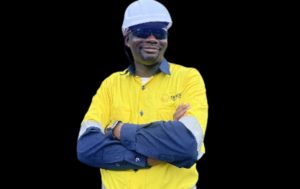
Haruna Sikiru a seasoned Mining Engineer with over 15 years of experience, is a COREN and COMEG-registered engineer with academic qualifications from Kaduna Polytechnic, Federal University of Technology Akure, and Gombe State University. He has worked with leading organizations, including National Iron Ore Mining Company, Dangote Cement, Lafarge Africa, and Segilola Resources, where he currently serves as Mines Manager.
Growing up, Sikiru was captivated by space exploration and later realized that mining shares parallels with astronomy, exploring frontiers beneath our feet. Solid minerals are critical to national development, reducing import dependence and growing local industries when extracted responsibly.
As Mines Manager at Segilola Resources, Sikiru has driven operational improvements, enhancing safety, production, and cost optimization. He has maintained regulatory compliance, managed environmental impacts, and developed local talent through training and mentorship.
As a seasoned Mining Engineer, Sikiru has consistently driven operational and strategic improvements to enhance business performance across the following key areas: Health & Safety Leadership: Improved safety performance by enforcing safe work systems and embedding industry best practices from Lafarge Africa into SROL operations. Production Optimization: Increased output per shift through effective mine planning, reduced dilution, and minimized ore losses. Cost Optimization: Lowered mining costs by targeting key cost drivers and improving equipment utilization and fuel efficiency.
He is also actively involved in Environmental & Water Management where he enabled year-round mining beyond 200 m pit depth through a robust dewatering system while controlling environmental impacts.
Keeping an eye on Regulatory & Sustainability Compliance, Sikiru maintains full regulatory compliance, managing permits, royalties, and land rehabilitation in line with environmental standards. In the same vein, he scouts and develops local talent through structured training and mentorship, strengthening skills, discipline, and operational continuity.
Pointing out that Nigeria’s solid minerals potential is significant but underdeveloped, Sikiru advocates for institutional reform, transparency, value addition, and local content development. Investing in research, training, and geological data infrastructure is crucial for sustainable growth.
The engineer listed the challenges confronting the industry as systemic. Listing them as poor geological data, inadequate infrastructure, lack of professional manpower, funding constraints, low value addition, and security concerns. He stressed that addressing these obstacles is essential for attracting investment and contributing to the national economy.
Based on his experience in the field, Sikiru advocated for practical strategies that involves transitioning to renewables, improving diesel efficiency, applying better mine planning, enforcing progressive reclamation, and strengthening water and tailings management. Building local capacity and awareness is also crucial.
Sikiru’s company adopts a “measured innovation” approach, monitoring AI-infused software evolution and introducing technologies once matured and proven effective. Current mining software and protocols represent global best practices.
Strategic actions include generating and selling bankable geological data, ensuring policy stability, streamlining licensing, incentivizing value addition, and investing in education and research. Mandating local content and formalizing artisanal mining can also attract professionals and investment.
Segilola Resources integrates environmental sustainability into every stage of mining, focusing on water management, waste reduction, and material efficiency. The company prioritizes community engagement, local employment, and sustainable empowerment initiatives.
Over the next five years, the sector’s contribution is expected to surpass its current 3-4% share of national GDP as serious investors focus on Nigeria’s vast resources. Mitigating corruption and bureaucratic friction is crucial for realizing this potential.
Nigeria’s solid minerals sector holds immense potential for sustainable growth and national development. Addressing challenges, harnessing opportunities, and adopting responsible practices can position the sector as a cornerstone of the country’s diversified economy.

