 Follow Us on Google News


 Follow Us on Google Discover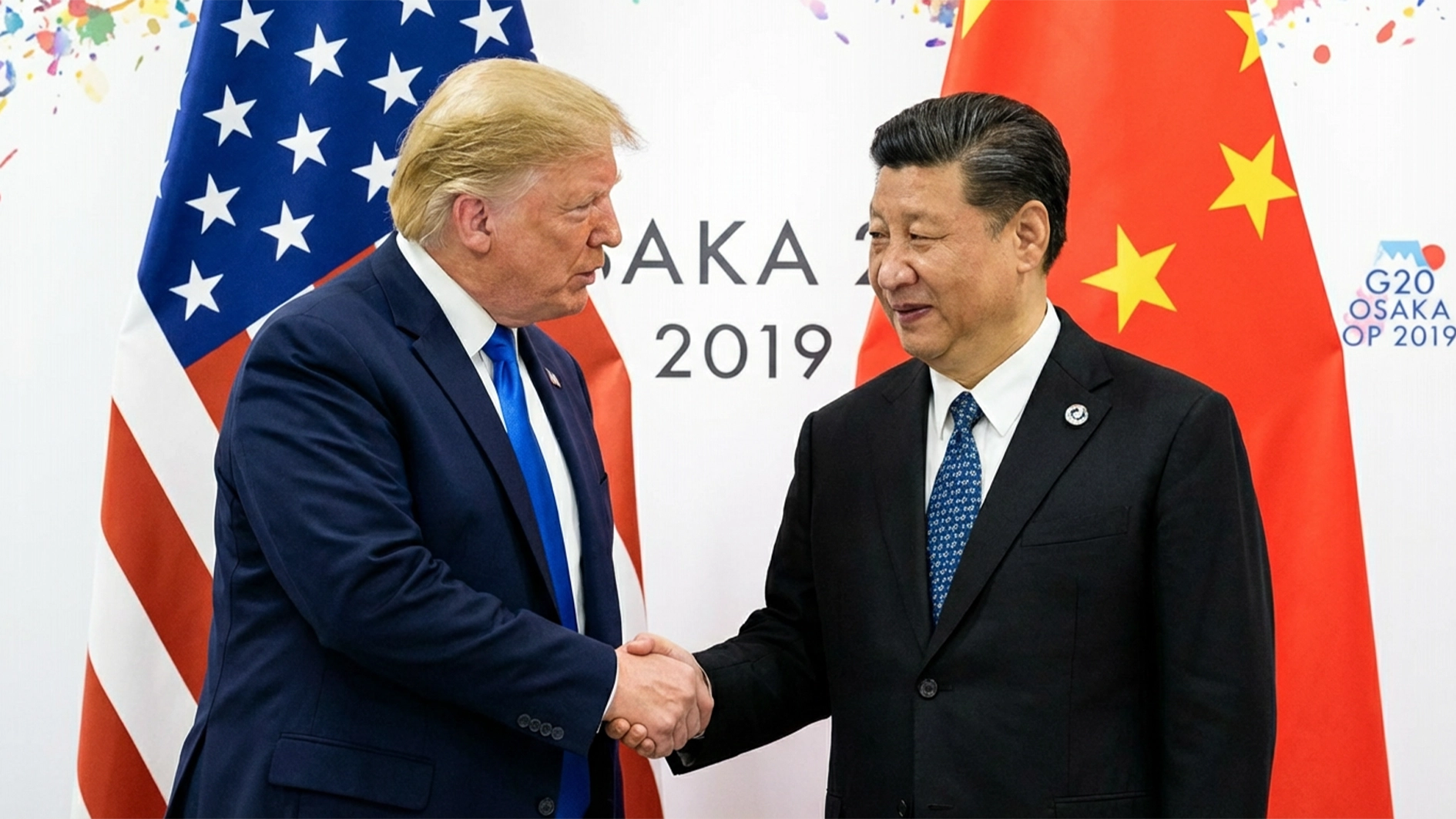
Beijing’s top diplomat pitched China on Tuesday as a guardian of stability, praising deepened regional ties while condemning trade wars and vowing to counter US arms sales to Taiwan.
“This year, economic globalisation has taken a severe hit and tariff wars have disrupted the international trade order,” Foreign Minister Wang Yi said in a speech in Beijing.
“Facing a chaotic situation for world peace, China is an anchor of stability.”
Earlier this year US President Donald Trump announced levies of over 100 percent on Chinese goods, with Beijing responding with high tariffs of its own.
Tensions cooled months later after Trump met his Chinese counterpart Xi Jinping in South Korea and they agreed to a one-year reprieve.
Speaking at an annual international relations symposium, Wang did not single out Washington for causing trade chaos, but said “cooperation between China and the United States benefits both sides while confrontation harms both”.
He also warned the United States — whose relationship with China he said was one of the world’s most important — against interfering with Beijing’s national interests.
Earlier this month, Taipei said Washington had approved an $11-billion arms package, angering Beijing and prompting large-scale military drills around the island.

“In response to the continuous provocations by pro-independence forces in Taiwan and the large-scale US arms sales to Taiwan, we must… resolutely oppose and forcefully counter them,” Wang said.
Wang’s comments came about an hour after China’s military said it conducted live fire drills off Taiwan, drawing condemnation from the democratic island.
China claims Taiwan as part of its sovereign territory and has refused to rule out using military action to seize it.
Wang added that any attempt to obstruct China’s unification with Taiwan “will inevitably end in failure”.
He also highlighted Chinese President Xi’s visits to Southeast Asia and Russia as evidence of the country’s expanding regional role.
Wang also praised China’s efforts in mediating conflicts in northern Myanmar, and between India and Pakistan and Thailand and Cambodia, as well as supporting nuclear diplomacy with Iran.
He further mentioned efforts to resolve the Israeli-Palestinian conflict, welcoming international support for a ceasefire in the Gaza Strip but saying “the world still owes Palestine a fair path” to sovereignty.
Meanwhile, China launched missiles and deployed dozens of fighter aircraft and navy vessels around Taiwan on Tuesday for a second day of live-fire drills aimed at simulating a blockade of the self-ruled island’s key ports and assaults on maritime targets.
The two-day war games code-named “Justice Mission 2025” have been slammed by Taipei as “highly provocative and reckless”.
China claims Taiwan as part of its sovereign territory and has refused to rule out military action to seize the island democracy.
AFP journalists in Pingtan — a Chinese island at the closest point to Taiwan’s main island — saw a volley of rockets blast into the air at around 9:00 am (0100 GMT) on Tuesday, leaving trails of white smoke.
At least 10 were launched in quick succession, sending a booming sound reverberating across the sky and drawing tourists towards the seafront to snap photos and videos on their phones.
China’s People’s Liberation Army (PLA) said in a statement shortly afterwards that it had “conducted long-range live fire drills in the waters to the north of the Taiwan Island and achieved desired effects”.
The show of force follows a bumper round of arms sales to Taipei by the United States — Taiwan’s main security backer — and comments from Japan’s prime minister that the use of force against Taiwan could warrant a military response from Tokyo.
China’s top diplomat Wang Yi said Tuesday that Beijing would “forcefully counter” large-scale US weapons sales to Taiwan, adding that any attempt to obstruct China’s unification with the island “will inevitably end in failure”.
Foreign ministry spokesman Lin Jian called the drills a “punitive response to Taiwan independence separatist forces and a necessary action to defend national sovereignty and territorial integrity”.
Taiwan’s President Lai Ching-te expressed his “strongest condemnation” and said Beijing was “deliberately undermining regional stability through military intimidation”.
“This is a blatant provocation against regional security and the international order,” he wrote on Facebook, adding that Taipei would not escalate the situation.
– ‘Live-fire training’ –
China said on Tuesday morning that it had deployed destroyers, frigates, fighters and bombers “to conduct drills on subjects of identification and verification, warning and expulsion, simulated strikes, assault on maritime targets, as well as anti-air and anti-submarine operations”.
A statement from the PLA’s Eastern Theater Command said the exercises in the waters to the north and south of Taiwan “tested capabilities of sea-air coordination and integrated blockade and control”.
State broadcaster CCTV reported that a core theme of the exercises was a “blockade” of key Taiwanese ports, including Keelung in the north and Kaohsiung in the south.
Chinese authorities published a map of five large zones around Taiwan where the war games would take place. They are due to finish at 6:00 pm on Tuesday.
Taiwan said the zones, some of which are within 12 nautical miles of its coast, had affected international shipping and aviation routes.
Dozens of flights to Taiwan’s Kinmen and Matsu islands were cancelled, according to the island’s Civil Aviation Administration, affecting around 6,000 passengers, while more than 850 scheduled international flights will be “affected” and could face delays.
Taiwan’s defence ministry said on Tuesday it had detected 130 Chinese military aircraft near the island, as well as 14 Chinese navy ships and eight unspecified government vessels, in the 24 hours ending 6:00 am.
Taiwan’s coast guard said it deployed 14 ships to monitor the naval activity, “employing a one-on-one shadowing approach to forcefully deter the vessels”.
– Stoic reaction –
Many ordinary Taiwanese reacted stoically.
“There have been so many drills like this over the years that we are used to it,” said fishmonger Chiang Sheng-ming, 24, at a market in the capital Taipei.
“If you stand your ground, there’s nothing to be afraid of,” added fruitseller Tseng Chang-chih, 80.
“War? Impossible. It’s just posturing. If they really attacked Taiwan, they would have to pay a price.”
China’s military last held large-scale drills involving live firing around Taiwan in April — surprise manoeuvres condemned by Taipei.
Beijing said this month it would take “resolute and forceful measures” to safeguard its territory after Taiwan said the United States had approved a major $11 billion arms sale.
US President Donald Trump said he was not concerned about the drills, appearing to brush aside the possibility of counterpart Xi Jinping ordering an invasion of Taiwan.
“I don’t believe he’s going to be doing it,” Trump said.

