 Follow Us on Google News
 Follow Us on Google Discover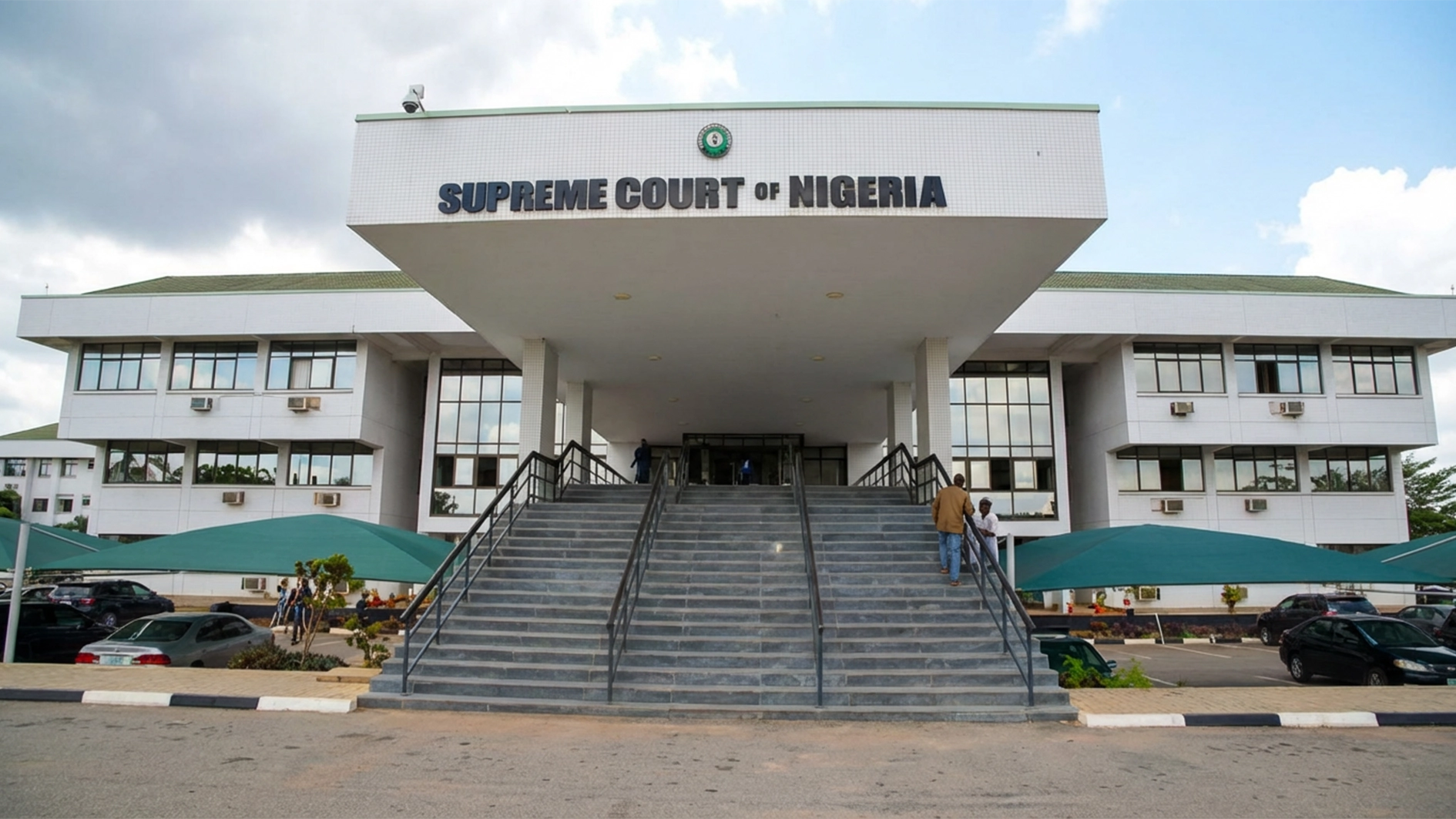
More than 19 months after the Supreme Court ordered financial autonomy for Nigeria’s 774 local government areas, compliance by state governments remains uneven, exposing deep constitutional ambiguities that continue to empower governors to dominate the third tier of government.
On July 11, 2024, the apex court ruled that allocations from the Federation Account must be paid directly to local governments, declaring the long-abused State–Local Government Joint Account unconstitutional in practice. The ruling was widely hailed as a breakthrough for grassroots governance.
After the judgment, more than 30 states out of the 36 hurriedly conducted council polls across the country, following the apex court’s position that allocations would not be paid to states still using caretaker committees.
Despite the Supreme Court’s ruling affirming local government financial autonomy, findings indicate that most states across the federation are yet to demonstrate full compliance. Delta State appears to be among a handful of states claiming to have begun releasing funds directly to elected local government councils.
However, independent verification of full compliance remains limited, raising concerns about the depth and sustainability of such claims.
JAAC status quo remains across states
Recall that the CBN outlined the procedures local government councils must fulfil to access direct allocations from the Federation Account, in line with the Supreme Court’s judgment granting financial autonomy to the third tier of government.

Under the framework, councils are required to open dedicated accounts with the apex bank to enable the direct disbursement of statutory allocations. To activate the process, local governments must submit relevant documentation, including bank details, to the Federation Accounts and Allocation Committee (FAAC).
A key requirement is the provision of verified account information, which will allow FAAC to credit allocations directly to each council, bypassing state government control. The CBN also mandates that each council operate a standalone account strictly for receiving federal allocations.
In addition, councils are expected to comply with existing financial transparency and accountability regulations. The Nigerian Financial Intelligence Unit (NFIU) will monitor the utilisation of funds to prevent diversion and other corrupt practices.
Generally, there is no evidence that any of the 774 local government areas had opened accounts with the Central Bank of Nigeria (CBN), let alone begun receiving their allocations directly from the Federation Account Allocation Committee (FAAC).
For instance, in Enugu State, no local government maintains a CBN account for the purpose of receiving monthly allocations directly from the Federation Account. Although council chairmen insist that they have always received their statutory shares from federal allocations, these funds are still disbursed through the state’s Joint Allocation Accounts Committee (JAAC), which comprises representatives of both the state and local governments.
Recently, Governor Peter Mbah declared that he does not remove “a kobo from the allocations coming to local governments in the state.” He made the statement during a visit by members of the Achi Community in Oji River Local Government Area. His claim was corroborated by a serving local government chairman, who described it as “an honour to serve under Mbah,” stressing that the governor had “allowed us to apply our resources in the best way possible for the overall development of the state.”
The council chairman, who requested anonymity, said that “individual management of resources has boosted development and empowered our people.”
However, despite these claims, the 17 local government chairmen reportedly recently granted a power of attorney to the state government, through the Board of Internal Revenue, authorising it to collect and manage both tax and non-tax revenues of the councils. These include taxes, levies, fees, charges and penalties, with the board expected to remit an agreed percentage of the revenue into designated local government accounts at specified intervals.
In Imo State, The Guardian gathered that local government allocations from the Federation Account are paid directly to the governor, who in turn disburses only funds for salaries and minimal running costs to the 27 council chairmen.
A source hinted that the councils have not dealt with the CBN directly, adding that rural road contracts in the state are still awarded by the governor.
In Kwara State, a resident of Irepodun Local Government said allocations are still paid into the JAAC account, where councils deliberate on disbursement after salaries are settled.
A similar arrangement exists in Lagos State, where allocations for the 20 local governments are paid through JAAC, with a joint committee of the state and councils determining how funds are shared among the 20 LGAs and 37 Local Council Development Areas (LCDAs). However, a credible source disclosed that the state rarely interferes with council allocations.
In Kaduna State, a serving commissioner yesterday said the government releases full allocations to the local governments, but could not confirm whether the councils have opened CBN accounts.
In Cross River State, the government continues to operate a joint account with its local government councils and has yet to commence direct payment of allocations to LGAs.
Sources in Osun State also told The Guardian that local governments were yet to open CBN accounts or receive allocations directly from FAAC. One source explained that Governor Ademola Adeleke is still sourcing funds to pay councils, pending the resolution of the lingering local government crisis between the state and the Federal Government.
Similarly, in Ondo, Ogun and Ekiti states, findings show that councils are still operating under the JAAC system, largely due to the existence of LCDAs, with none of the councils receiving allocations autonomously.
In Bauchi State, a local government chairman contacted on the issue declined to comment, dismissing the inquiry as “disrespectful.”
Unresolved gaps in 1999 Constitution
Evidence shows that many governors are exploiting loopholes in the 1999 Constitution to resist full implementation of financial autonomy.
At the centre of the controversy is Section 7(1) of the Constitution. While the section guarantees “a system of local government by democratically elected local government councils,” it also empowers state governments to legislate on the structure, composition, finance, and functions of councils. This contradiction has allowed governors to argue that local governments remain subject to state control, despite their constitutional recognition.
While the provision gives with one hand, it takes with the other. “Section 7 guarantees local governments, but it subordinates them to state laws. That is the foundation upon which governors justify dissolving councils and appointing caretakers.”
Financial control remains the biggest battleground. Section 162(6) establishes the State Joint Local Government Account, while Sections 162(7) and (8) give state governments and Houses of Assembly authority to determine how council funds are shared. Although the Supreme Court ruled that allocations must now go directly to councils, governors insist that the Constitution still recognises the joint account system.
This ambiguity explains why several governors have delayed compliance. “For decades, governors used local government funds to finance state projects and political structures. Direct allocation strips them of that leverage.”
The Constitution further weakens local autonomy by providing inadequate protection for council functions. The Fourth Schedule assigns responsibilities, including primary education, markets, waste disposal, and local roads, to local governments. Yet, the same Constitution provides no sanction when states encroach on these functions. In many states, governors have assumed control over primary education and local revenue sources, effectively reducing councils to salary-paying units.
Another grey area is the status of local governments themselves. While councils are listed in the First Schedule, Section 8 allows states to initiate the creation of new local governments, subject to federal ratification.
This has fuelled arguments that councils are creations of the states, enabling governors to dissolve elected councils or restructure them through state legislation.
Control is also reinforced through council elections. Section 197 establishes State Independent Electoral Commissions (SIECs) to conduct local government polls. In reality, SIECs are appointed and funded by state governments, making them answerable to governors. The result has been one-party sweeps in council elections across most states, with chairmen owing loyalty to governors rather than residents.
An anonymous former local government chairman in Lagos told The Guardian that council autonomy remains cosmetic. “Even if funds come directly, governors still decide who becomes chairman. Once you control the election, you control the council,” he said.
The Constitution’s silence on caretaker committees has further empowered governors. Although Section 7 guarantees elected councils, it does not expressly prohibit caretakers, allowing governors to rule councils through appointed loyalists for prolonged periods.
While the National Assembly has vowed to enforce the Supreme Court ruling and President Bola Tinubu has warned of possible executive action, observers say constitutional reform remains the real solution.
Until Sections 7, 162, and 197 are amended to clearly define local governments as an autonomous tier with independent elections and finances, governors’ resistance is likely to persist, leaving council autonomy trapped between judicial pronouncements and constitutional contradictions.
Although the implementation of the judgment was scheduled to begin in January 2025, implementation remained largely stalled nationwide as of December last year. As of December 2025, there is no verified number of local governments currently enjoying full autonomy in practice.
Across most states, council funds are still controlled by governors, with administrative bottlenecks, resistance from state executives, and new conditions reportedly introduced by financial regulators slowing compliance. While isolated claims of partial compliance have emerged from a few states, there is no official confirmation of direct allocation to councils on a broad scale.
Stakeholders warn that continued non-implementation undermines grassroots development and constitutes a direct violation of the Supreme Court order, raising concerns over constitutional compliance and intergovernmental accountability ahead of the 2027 elections.
Verified data from FAAC showed that a total of N4.9 trillion was disbursed from the Federation Account to the 774 local governments between January and November last year, yet no concrete evidence indicated that those allocations go directly to the councils.
Another grey area, yet to be verified, is whether most of the councils have had the courage to open direct accounts into which the allocations can be paid.
Stakeholders fume
To express his displeasure, President Bola Tinubu, who, through the Attorney General, approached the apex court, recently threatened to enforce the implementation of council autonomy by directing the payment of council allocations directly to local governments and no longer through the states.
He said to the governors, “Now that you have the local government elections and you know those elected, you must be responsible for their survival. The Supreme Court has capped it for you; give them their allocation directly.
“If you wait for my Executive Order, I have the knives and the yam. I will cut it (council allocation) before FAAC does the arithmetic. We know the percentage, and I will send it directly to the local governments.”
The President warned that he was only being respectful and showing understanding with the governors; otherwise, he would begin to implement the apex court judgment.
Meanwhile, a stalwart of the ruling APC, Jamiu Ekungba, said the major challenge facing the implementation of autonomy is the level of understanding of council managers, who, according to him, need extensive training.
While expressing confidence in President Tinubu’s determination to push the implementation through, Ekungba said: “The argument of some state governors that we interacted with is that the level of politicking at the local government, as it is now, needs a lot of reorientation and training of those you want to trust with this volume of money because of accountability. Otherwise, 70 per cent of them will end up in EFCC custody. I do not agree with that anyway, but it is a valid point.
“The state and federal governments must come together to carry out the necessary training, reorientation, and encouragement of local government administrators to understand the responsibility this new autonomy places on them, particularly with the volume of resources involved.”
Ekungba said the delayed implementation does not indicate cross purposes among the leadership of the ruling party, despite its control over 28 states. “It is not easy for governors to change. The removal of fuel subsidy and naira unification required courage. When those decisions were taken, stones were thrown at the President. It is now that we realise it was better to do so. Change is not easy.”
Blaming the lack of implementation on power and control, rather than party numbers, a legal expert and analyst, Tope Temokun, said governors across party lines have formed a united front to maintain the status quo.
Temokun described the refusal to comply with the Supreme Court verdict as anti-party, anti-constitutional, and anti-people.
He stressed that unwillingness to relinquish control over council funds raises questions about governors’ commitment to transparency and decentralisation and casts doubt on their readiness to cooperate on tax reforms.
He said judicial pronouncements alone cannot dismantle decades of captured governance without legislative reinforcement.
Describing the situation as ridiculous, elder statesman Chekwas Okorie said the federal government’s inability to ensure full implementation more than 17 months after securing the judgment was worrisome.
Critical academics at the University of Ibadan also blamed politics, weak enforcement, and lack of transparency for Nigeria’s failure to achieve true local government autonomy and effectively implement tax reforms.
A legal practitioner, Wahab Abdullah, said governors’ resistance is driven largely by political and financial interests, stressing that control of grassroots mobilisation and funds remains central to electoral success. He said the Supreme Court judgment alone may be insufficient without constitutional amendments and clear enforcement guidelines, noting that cooperation from state governments is crucial for both council autonomy and the successful implementation of tax reforms.

