 Follow Us on Google News
 Follow Us on Google Discover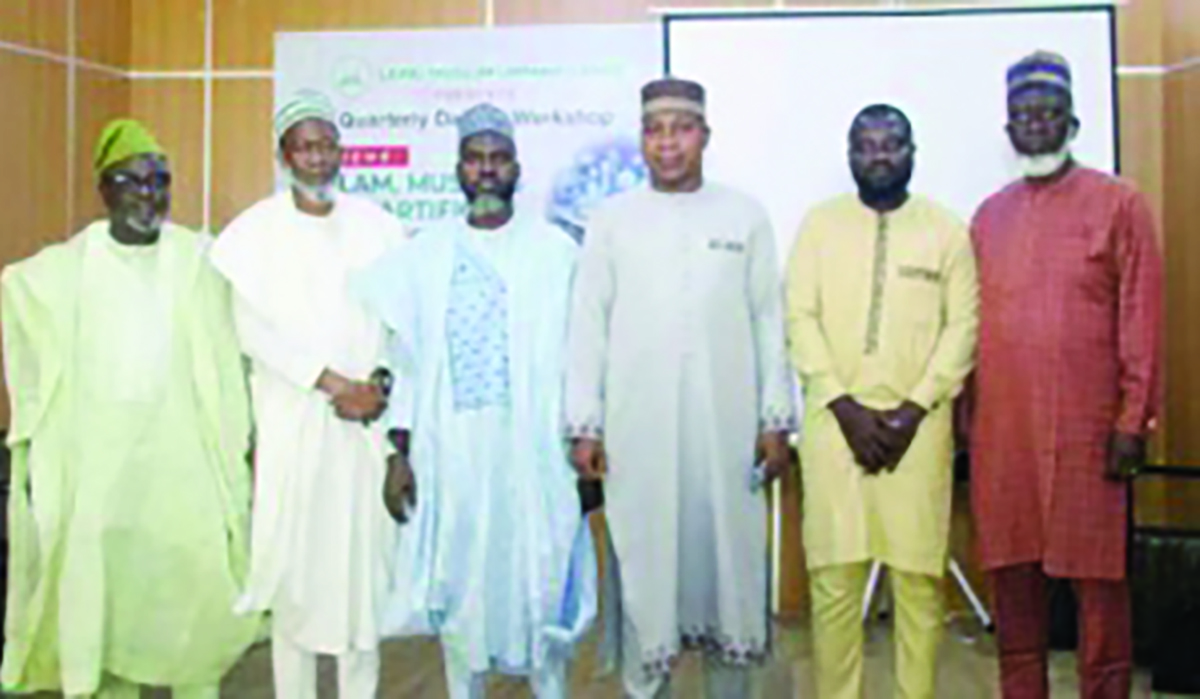
As the Fourth Industrial Revolution accelerates, the Lekki Muslim Ummah (LEMU) has issued a clarion call to action urging the Muslim community not be a passive observer of the AI era. Instead, it must be an active, ethical participant one that keeps its data protected and its spiritual heart grounded.
At a recent workshop themed ‘Islam, Muslims, and Artificial Intelligence’, scholars and tech experts converged on the Vice Admiral Jubrila Ayinla Multipurpose Hall to conduct a sophisticated audit of the digital age. The consensus was not a rejection of modernity, but a halal approach to the silicon revolution, a strategy of cautious embrace and digital sovereignty.
The Vice Chancellor of Summit University, Offa, Professor Musa Aibinu, in a presentation delivered by software engineer, Sodiq Akanmu, Aibinu reframed AI not as a threat to divine authority, but as a pinnacle of human creativity sanctioned by Islamic principles, provided it serves the common good.
“The prospects outlined were as practical as they were spiritual. The Silicon Minaret, as it were, includes AI-powered tajweed tools to correct Quranic recitation in real-time, smart qiblah locators, and automated financial analysis to tighten the rigour of halal investment screening.”
Beyond the mosque, Aibinu pointed to a future where AI-driven irrigation could stabilise Nigerian agriculture and faster diagnostic tools could revolutionise the country’s healthcare. Modern technology is permissible, provided it does not cause harm and is used in a responsible, ethical manner,” Aibinu noted.
Director at the Voice of Nigeria (VON), Ustadh Hussain Hyacinth, introduced a term that resonated deeply with the audience data colonialism. In a blistering critique of Big Tech, Hyacinth warned that Muslims are increasingly becoming instruments for generating data for companies that operate outside of Islamic ethical frameworks.

“A few powerful big tech companies have access to your data, your behaviour, location, photos and clicks. What happens when the sources of Islamic legislation and the private data of the Ummah fall into the hands of those indifferent or even hostile, to the faith?”
Chief Imam of Lekki Central Mosque, Dr Ridwan Jamiu, in his lecture, ‘Smartphones: Between Goodness and Villainy’, argued that while smartphones are tools for reformation, they have become engines of information disorder, inciting communal clashes and ruining reputations through the viral spread of falsehoods.
“Social media is a place to visit, not a place to stay,” Dr Jamiu warned, citing the corrosive effects of excessive screen time on spiritual focus and moral duties.
The workshop, chaired by Imam Nojeem Jimoh, concluded with a call for algorithmic modesty. “While AI can assist in the calculation of prayer times or the management of traffic, it must never replace human judgment or distract from spiritual obligation,” he said.

