 Follow Us on Google News
 Follow Us on Google Discover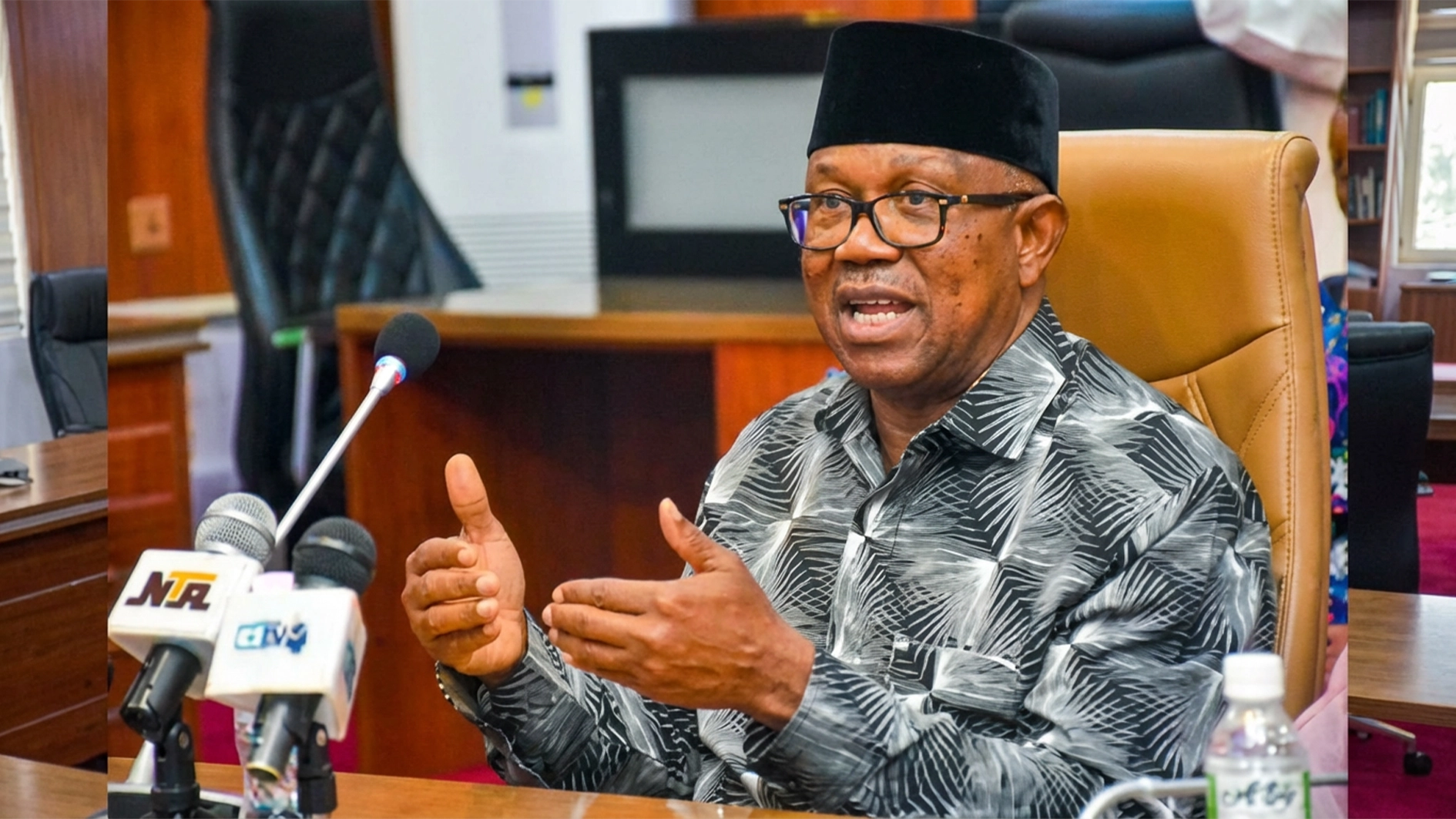
• Tax regime lacks public value, risks worsening hardship, Obi warns
• Kaigama: Unclear tax laws risk conflict, social strain
• Tax reforms require courage beyond political will, says Oyedele
• Arewa think tank backs tax reforms for offering lifeline
• WHO urges higher taxes on sugary drinks, alcohol to curb disease
Nigeria’s tax regime has continued to attract criticism, with former Labour Party presidential candidate, Peter Obi, raising fresh concerns over trust deficits, policy clarity and worsening hardship for citizens.
His remarks have also fed into a wider national debate involving government officials, economists, regional organisations and religious leaders over the legitimacy of the reforms and their impact on the public.
In a statement posted on his X handle yesterday, Obi said it had become “undeniable” that the tax laws had been “fundamentally altered”, noting that global accounting firm KPMG had identified 31 critical problem areas ranging from drafting errors to policy contradictions and administrative gaps.
He described it as “even more alarming” that the issues were reportedly acknowledged only after private meetings between the National Revenue Service and KPMG, questioning how ordinary Nigerians were expected to understand their tax obligations if experts required closed-door discussions to interpret the laws.
Obi stressed that taxation was more than a fiscal policy, describing it as a social contract between government and citizens. According to him, such a contract could not be enforced if it was neither understood nor trusted.
He argued that globally, tax policies were justified by clear public benefits such as improved healthcare, education, jobs, infrastructure and social safety nets, but said Nigeria’s approach focused largely on increased extraction from citizens rather than what the government was prepared to offer in return. A tax system without clear public benefits, he said, was “not reform” but “quite frankly, extortion”.
The former Anambra State governor also criticised the absence of broad consultations before the introduction of the tax laws, noting that in many countries, months or years were spent engaging businesses, workers and civil society before tax proposals were finalised and presented to the public.
He said Nigerians were still waiting for relief or tangible benefits following the removal of fuel subsidies, while grappling with rising food prices, high transport costs, shrinking purchasing power and worsening poverty.
According to Obi, introducing an expansive new tax regime amid these challenges, and despite what he described as 31 “alarming red flags” raised by a leading global accounting firm, did not reflect responsible governance.
“Without trust, taxation feels like punishment. Without clarity, it breeds confusion. Without evident public value, it amounts to robbery,” he said.
Obi called on the government to halt further burdens on citizens and instead focus on listening, effective communication and building national consensus, which he described as the only path to genuine reform, unity, growth and shared prosperity.
Kaigama raises concern over new tax regime amid hardship
OBI’S concerns came as Archbishop Ignatius Kaigama of Nigeria’s Catholic Archdiocese of Abuja worried over the implementation of the new tax regime, warning that it comes at a time when many Nigerians are already grappling with economic hardship.
Speaking amid public outcry following the commencement of the law on January 1, Archbishop Kaigama said the prevailing economic realities in the country had made taxation a particularly sensitive issue.
“We are starting a new regime of the tax act that has been signed into law. Nigerians are passing through difficulties, through difficult economic situations now. They are being taxed,” he said.
The Catholic cleric described the tax policy as complex and poorly understood by the general public, noting that inadequate information had fuelled anxiety and confusion among citizens.
“Yes, this tax issue is a bit complicated, and I think it is not as clear as we should expect it to be,” he said. “I just hope to get a clearer picture of what this is going to be and what the implications and consequences are, especially on citizens.”
Kaigama said that while government officials might understand the policy, many Nigerians did not, a gap he identified as a major source of tension.
“We have been doing a lot of seminars on this. I have watched programs on television and YouTube. I am still not clear. The government may be clear about what it wants, but the citizens are not clear about it. And this is what creates tension and conflict,” he said.
He said his greatest concern was the potential impact of the tax regime on the poor, particularly grassroots communities he serves through his pastoral work, warning against policies that could deepen poverty.
“My concern is for the local people — my calling, my constituency, the grassroots communities I serve — who are already poor,” he said. “If any tax regime is going to deepen poverty, then I am sorry that is not what we bargained for.”
He cautioned the authorities against measures that could worsen hunger, unemployment and the lack of basic services across the country, and urged the government to be more transparent about how the tax regime would operate and benefit citizens, especially the poor and marginalised.
“They should do more to tell us the implications of this tax regime, and hopefully it will be to the benefit of the poor and the marginalised,” he said.
Tax reforms require courage beyond political will, says Oyedele
HOWEVER, speaking in support of the initiative, Chairman of the Presidential Committee on Fiscal Policy and Tax Reforms, Taiwo Oyedele, said that beyond political will, leaders must have the courage to introduce and successfully implement reforms in Nigeria.
Oyedele made the remarks at the Hadiza Bala Usman @50 Governance Colloquium held in Abuja yesterday. He said reforms had become increasingly difficult to push through because of low public trust in government and its policies, noting that Nigeria’s tax culture remained weak despite the introduction of new tax laws.
According to him, many Nigerians have little or no understanding of the taxes they are required to pay, even under the old law, leading to widespread non-compliance. He added that tax reforms were harder to implement in Nigeria because citizens could not see visible or tangible returns from taxation.
“Reforms are hard to get around, and tough reforms are harder because they involve interest. I think it’s even more complex in Nigeria for three reasons. Number one is that there is low trust. The trust in government and within government is very low,” he said.
“The second reason is that the tax culture in Nigeria is very weak. A lot of Nigerians have no idea what taxes they are supposed to be paying, even under the old law, and they haven’t been paying them. Suddenly, there is a national awareness, and they just say the people have come with taxes all over the place when actually what the government is doing is to reduce those taxes they have been paying and harmonise them.”
Citing South Africa, Oyedele said taxes paid by Nigerians were small compared with those of other countries. He said Nigeria collected about N2 trillion from personal income tax in 2025, which he described as very low compared with over N60 trillion collected in South Africa.
“So even if you eliminate corruption 100 per cent, you eliminate waste 100 per cent, Nigeria is still a poor country today. So, if what you collect from personal income tax is N2 trillion, what can you do with that?” he asked. He said the country must address transparency and accountability alongside efforts to collect the right amount of tax from the right people.
CBN official says reforms fail when vision cannot withstand pressure
ALSO, Deputy Governor for Economic Policy at the Central Bank of Nigeria, Muhammad Abdullahi, said reforms often fail not because of weak intentions but due to the inability to translate vision into durable systems that can withstand pressure, political cycles and short-term public anxiety.
Abdullahi made the remarks at the Hadiza Bala Usman @50 Governance Colloquium held in Abuja yesterday. He said Nigeria was currently undergoing a major shift driven by reforms introduced by Bola Tinubu, adding that while the macroeconomic environment had improved significantly, the microeconomic space was still developing.
“Over the last two years, the reforms that have been implemented in our country have been the deepest and most far-reaching reforms in probably three or four decades and certainly in a long time since many of us have been alive,” he said.
“And that is because those reforms have touched the very core of the chains that have held Nigeria back for so many decades.” He said early signs of improvement were already visible, even though the country was “not yet out of the woods”.
“What we can already see, we’re not yet out of the woods, but we can already see the economy taking a significant turn. We had the first credit account surplus of $16 million and we’re seeing this in a way that our reserves are gradually increasing from $46 billion today as I speak,” Abdullahi said.
He said the key difference with the current administration was its capacity to endure short-term public anxiety and political pressure, while pursuing a long-term vision.
According to him, the Tinubu-led administration comprises individuals with the credibility to push through reforms and communicate the government’s vision effectively.
Arewa think tank backs tax reforms, says they offer lifeline for Northern states
SIMILARLY, the Arewa Think Tank (ATT) said the Federal Government’s tax reform laws present a major opportunity for Northern states to diversify their economies, boost internally generated revenue and reduce dependence on federal allocations.
The group made the assertion yesterday in Kaduna at a sensitisation summit on the benefits of the Renewed Hope Tax Reform Laws, which attracted youths and other stakeholders from across Northern Nigeria.
Speaking at the event, the convener of the ATT, Muhammad Alhaji Yakubu, said the reforms could reposition the North as a competitive economic bloc if they were properly embraced and implemented by state governments.
According to him, the tax reforms would promote innovation, responsible exploitation of solid minerals and other natural resources, as well as constructive engagement with the Federal Government and National Assembly on constitutional amendments that support resource-based development.
“These reforms hold big fortunes and long-term prospects for Northern states. If we embrace them now, future generations will benefit from a more sustainable and self-reliant regional economy,” Yakubu said.
He urged Northern political, traditional and opinion leaders to support the reforms and ensure that state governments leverage them to expand their revenue base and invest in key sectors, including education, healthcare, agriculture, solid minerals and infrastructure.
Yakubu stressed that tax reform should not be viewed as a burden but as a strategic investment capable of driving development, reducing poverty and strengthening governance across the region.
Also speaking, Kaduna State governor, Uba Sani, said the tax reforms were aimed at harmonising Nigeria’s multiple revenue streams into nine clearly defined lines to simplify compliance and improve the ease of doing business, particularly for youth-led enterprises and small businesses.
The governor, who was represented by the executive chairman of the Kaduna State Internal Revenue Service, Comrade Jerry Adams, said the success of the reforms would largely depend on public understanding, compliance and accountability.
WHO urges higher taxes on sugary drinks, alcohol to curb disease
IN a related development, the World Health Organisation has warned that sugary drinks and alcohol are too accessible and too cheap in most parts of the world, fuelling rising rates of obesity, diabetes, cancer and injury.
The WHO made the call yesterday as it urged governments to significantly increase taxes on sugary drinks and alcohol, following the release of two reports showing that levies on the products remain low across many regions.
Speaking virtually to journalists, the WHO Director-General, Tedros Adhanom Ghebreyesus, said health taxes were an effective tool for reducing consumption of harmful products.
“Health taxes have been shown to reduce consumption of these harmful products, helping to prevent disease and reduce the burden on health systems,” he said.
“At the same time, they generate an income stream that governments can use to invest in health, education and social protection.” One of the reports showed that while at least 116 countries tax sugar-sweetened beverages, including sodas and carbonated canned drinks, many high-sugar products, such as 100 per cent fruit juices, sweetened milk drinks, and ready-to-drink coffees and teas, are not taxed.
The report on alcohol taxes found that although 167 countries levy taxes on liquor, wine and beer, alcohol has become more affordable or remained unchanged in price in most countries since 2022, largely because taxes have not been adjusted for inflation and income growth.

