 Follow Us on Google News
 Follow Us on Google Discover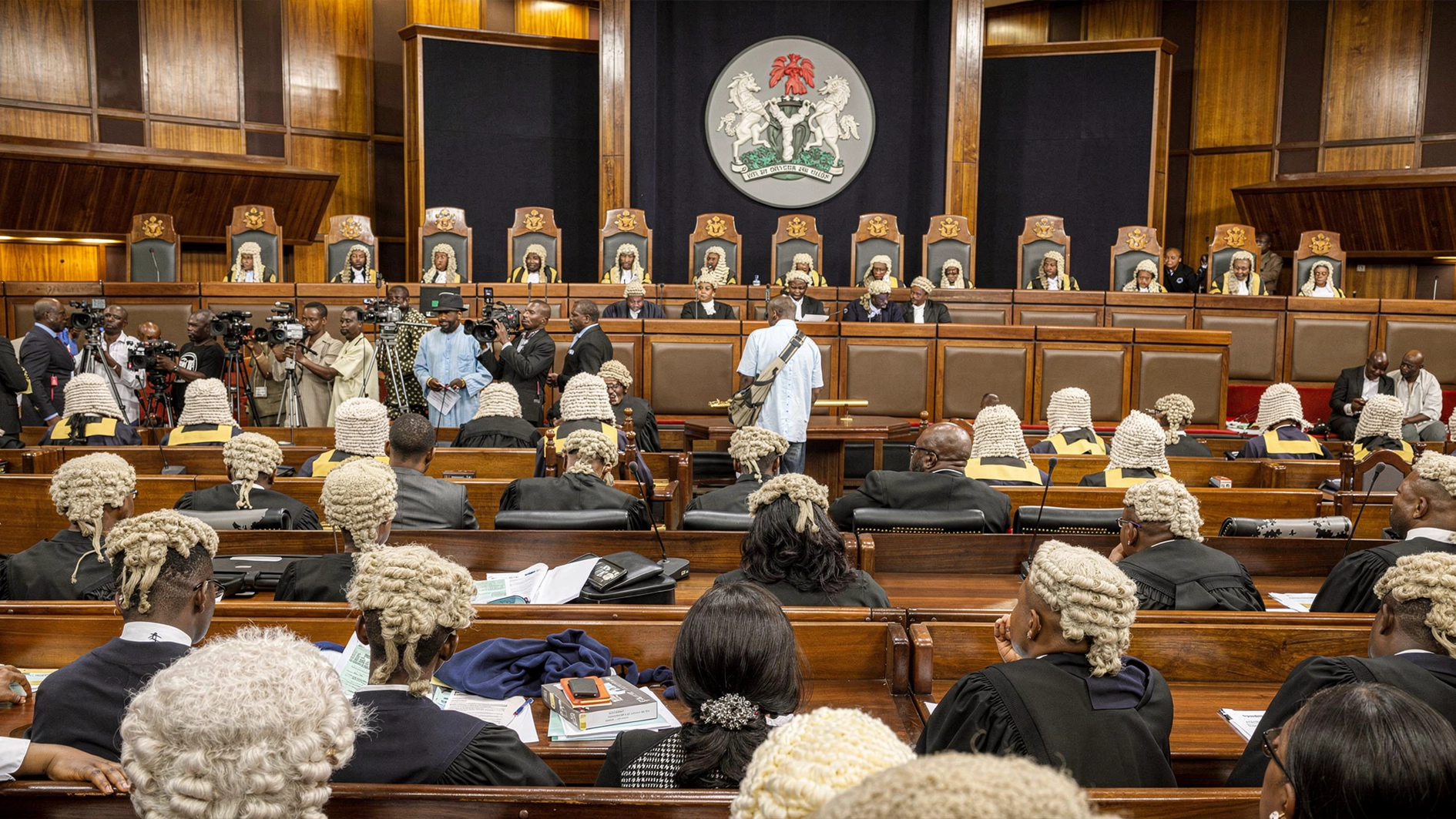
Notwithstanding the contentions over the actual meaning and correct interpretation of the Supreme Court’s decision on President Bola Tinubu’s declaration of emergency in Rivers State, it should be clear that the court was firm that the president had done no wrong. If anything, the lesson of that ruling is that while the country’s laws can be stretched beyond normal imagination at times, the country needs a leadership that is strong and firm, particularly one imbued with a passion for preserving democratic norms.
Were these virtues religiously observed, the events giving credence to the declaration of emergency in the first place would not have materialised; and even when they unfolded, the situation could have been handled differently, not just with a view to respecting the wish of the people and preserving cardinal principles of democracy but also carefully avoiding the heated controversy that ensued subsequently. Still, the emergency happened, and democracy was bruised. Have politicians learnt any lesson? Political events unfolding in Rivers State seem to point to the contrary.
Recall that on December 15, 2025, the Supreme Court dismissed the suit challenging the declaration of a State of Emergency in Rivers State on March 18, 2025. The Attorneys-General of 11 states hitherto governed by the Peoples Democratic Party (PDP) had approached the apex court on April 8, 2025, seeking interpretation of Section 305 of the 1999 Constitution with respect to the declaration of a state of emergency in Rivers State and the suspension of the state governor as well as the state legislators. Whereas the Supreme Court, by a six-to-one vote, dismissed the suit for lack of jurisdiction and locus standi of the complainants, it, however, upheld the president’s power to declare a state of emergency.
The apex court held in its judgment that the President holds the constitutional power to declare a state of emergency in any state where circumstances threaten public safety or governance. It held that the President, during a state of emergency, can suspend elected officials, but that such suspension must be within a limited period.
In the lead majority judgment, Justice Mohammed Idris held that Section 305 of the Constitution empowers the President to deploy extraordinary measures to restore normalcy where emergency rule is declared. He noted that Section 305 was not specific regarding the nature of the extraordinary measures, thereby granting the President discretion on how to proceed.
Earlier in upholding the objections raised by the Attorney General of the Federation (AGF) and the National Assembly (the defendants), the court held that the plaintiffs (the 11 PDP states) failed to establish any cause of action capable of activating the original jurisdiction of the apex court. The court struck out the suit for want of jurisdiction and proceeded to also determine the case on the merits and dismissed it.
However, Justice Obande Ogbuinya dissented and held that the case succeeded in part. Among others, Justice Ogbuinya held that although the President could declare a state of emergency, the President could not use such power as a tool to suspend elected state officials, including governors, deputy governors, and members of parliament.
The court’s proclamations on the subject clearly demonstrate the gravity of contending issues raised by the appellants. Obviously, there was no disagreement regarding the constitutional power of the president to declare a state of emergency. The issues before the Supreme Court border on the propriety or otherwise of the exercise of such power, particularly as it pertains to the conditions and processes outlined under Section 308 of the 1999 Constitution. The position of the Supreme Court was in line with the Constitution as the justices tacitly endorsed the suspension of the elected governor of Rivers State, Siminalayi Fubara and 27 legislators of Rivers State House of Assembly, thereby exacerbating contention over the issue.
Concerns regarding the decision of the Supreme Court are understandable. Beyond constitutionality, the appropriateness of the declaration of state of emergency in Rivers State and the suspension of elected representatives of the people remains contentious and raises concerns about the future of democracy.
Not a few people considered it curious that the Supreme Court, after declining jurisdiction following its findings that the complainants had no locus standi, still went on to consider the merits of the case’s substance. It would appear that this is deliberate, in order to guide future contention. Yet, vesting powers of the president to suspend an elected governor and a properly constituted House of Assembly appears to overreach democracy itself. Is this the intendment of the law or drafters of the constitution? If not, the Supreme Court has only signalled a possible need for an amendment of the country’s constitution as grundnorm.
Since lawmakers at both the state and national levels play a key role in amending the constitution, they may very well ponder appropriate steps to take when a crisis threatens a breakdown of law and order in a state. How can the president in such case safely intervene without seemingly undermining principles of democracy or trampling on the will of the people expressed through the ballot?
Unfortunately, the experience with Rivers State presents a conundrum, in spite of the proclamations by the Supreme Court, considering the predilection for political crisis that may serve as an incentive for the declaration of emergency rule, rightly or wrongly.
It is imperative, therefore, to assert that the interest of democracy is better served when the confines and limits of the power exercisable by political actors, at any given time, conform to the spirit and letter of the constitution. Issues bordering on the exercise of the power of the president and commander-in-chief should not be glossed over or entertained with prevarication. The role of the judiciary in ensuring that political actors act within the spheres of their constitutional powers, as codified, remains the hallmark of democracy. There should be no denying that the sweeping power of the president can be subject to abuse in a federal system; more so in a situation where political interest posits incentives for overstepping constitutional boundaries.
Notwithstanding, the expectation is that a declaration of a state of emergency, when and if inevitable, should only be founded on sound considerations; followed through with due process as outlined in the constitution, and with absolute restraint from any action that tramples the sacred mandate invested in the elected representatives of the people.
While the proclamations by the Supreme Court with respect to the suit challenging the declaration of emergency rule in Rivers State remain a watershed, the overriding quest of deepening democracy, in the long run, should be the ultimate consideration. Therefore, political actors should refrain from overzealousness and instead be guided by the need to ensure that democratic principles endure, above and beyond other motives driven by the exigencies of politics. The declaration of a state of emergency should not become a weapon for coercive politics, which is self-serving and counterproductive.

