 Follow Us on Google News
 Follow Us on Google Discover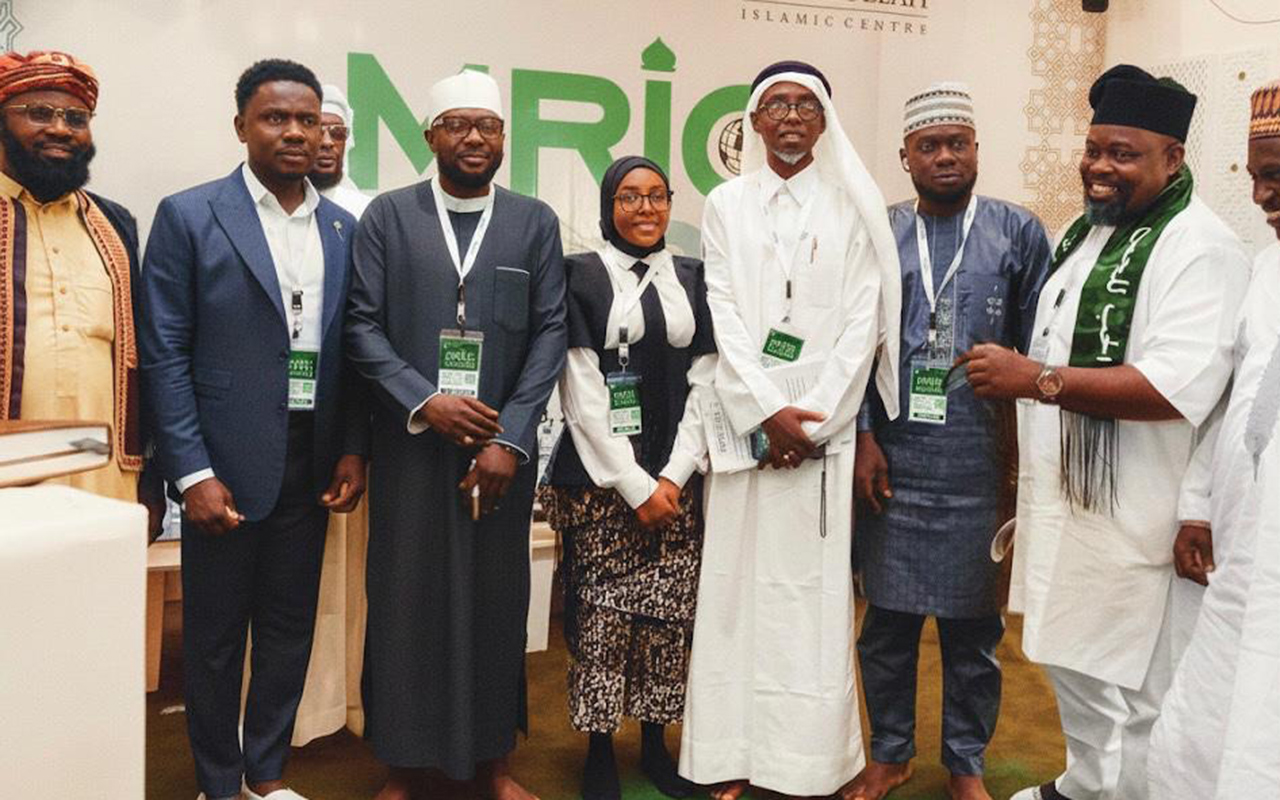
Against the backdrop of Nigeria’s shifting economic landscape, the Muhammad Rosulullah International has called for integration of spiritual integrity into the bedrock of national commerce.
The gathering, themed ‘The Ummuh Connection: Enhancing the Intersection of Faith-Based Principles and Business Practices’, brought together scholars, clerics and entrepreneurs to address a widening gap between Nigeria’s deep-seated religiosity and its struggling ethical business indicators.
At the 2026 Muhammad Rosulullah International Conference (MRIC), the founder, Sheikh Muktar Mohammed emphasized that “economic stability requires more than just policy, it demands a return to ethical faith. This core belief he said was the primary motivation behind organizing the event.
The Ameerah General, Alhaja Halimat Bolatito Fuja, stressed that educating the Ummah on the ethics of business is not merely an option, but a crucial necessity for collective progress, noting that our commercial dealings must always reflect spiritual values.
A lecturer at the Lagos State University (LASU), Prof. Saheed Timehin, argued that religion in Nigeria must transition from a private sentiment to a moral regulator of the ecosystem.
“Given the country’s deep religiosity, religion can function as a powerful form of social capital,” Timehin told the assembly.

He noted that the concern is not about which religion is right or wrong, but how the average Nigerian is influenced by religious ethics in business. “We must move beyond a mere show of religiosity and apply these frameworks to promote a healthy, sensitive business environment.”
The conference highlighted specific sectors, including banking, insurance, energy and real estate, where religious integrity trajectories could bridge the trust deficit currently hampering growth.
The discourse took a provocative turn when the founder and CEO of Viral Ad Media LLC and Humanity International, Lukman Adeyemo, challenged the audience to rethink the economic role of religious institutions, critiquing the traditional reliance on short-term hustles.
He urged Muslims to move beyond the mosque and embrace data-driven enterprise.
“The world is undergoing a fundamental shift. Opportunities are no longer generated by capital alone, but by knowledge,” Adeyemo remarked.
He pointedly addressed the economic standing of Muslim nations and individuals, noting that despite perceptions of wealth, the concentration of GDP in single entities such as Saudi Aramco or Nigeria’s Aliko Dangote, signals a need for broader systemic reform.
“We must stop hiding under the guise of being Shariah compliant while ignoring the realities of a capitalist nation,” he said.
He said the mosque itself should be understood as an enterprise. “We must use all the tools Allah has placed in our hands to uplift business beyond the mosque walls.”
The call for action was echoed by a passionate SDG advocate, TEDx speaker and youth ambassador, Zahra Ajetunmobi, who reminded the youth that the Prophet Muhammad himself was a successful merchant.
“Business is an act of ibadah (worship),” Ajetunmobi stated, adding, “We are too young to be doing nothing with our lives. It is not just about prayer; we must put in the efforts. The bounty of Allah is something we must actively seek through hard work that betters the nation.”
In a communique issued at the close of the summit, delegates called for the formal establishment of a Federal Ministry of Religious Affairs. The proposed ministry would not merely oversee worship but would act as a national organ to coordinate business activities, ensuring they align with values of equity, transparency and social responsibility.
Outlined in the communique were several urgent steps for the Federal and State governments:
An immediate call for the enforcement of laws against quack estate agents and other predatory actors exploiting citizens for selfish profits.
Inculcating religious values into business education, finance and investment curricula.
Encouraging businesses to prioritize social responsibility and human investment within their host communities.”

