 Follow Us on Google News
 Follow Us on Google Discover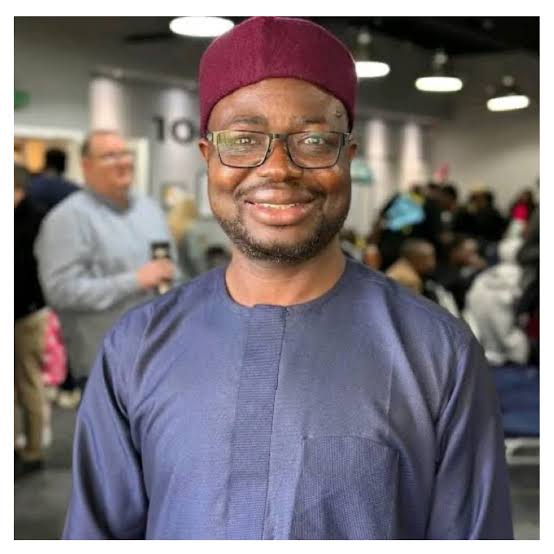
SIR: As we stand at the threshold of 2026, I find myself reflecting on the arduous yet rewarding journey of the Federal Ministry of Humanitarian Affairs and Poverty Reduction. For many Nigerians, the name of this ministry has historically evoked mixed emotions, often clouded by the shadows of past controversies.
However, witnessing the strategic leadership of the current Minister, Dr. Bernard Doro, particularly the momentum built throughout 2025 and into this first week of January 2026, I am convinced that we are no longer merely “managing” poverty, we are systematically dismantling its foundations.
The positive agenda for 2026 is not a collection of lofty dreams; it is a roadmap built on the concrete achievements of the past year. From the restoration of institutional integrity to the surgical precision of aid delivery, the Minister has proven that compassion and accountability can, and must, coexist.
One cannot look forward without acknowledging the cleanup that brought us here. When the Minister took the helm, the Ministry was reeling from allegations of diverted funds and the discovery of over 50 suspicious bank accounts linked to previous administrations. The recovery of $24 million was a victory for the Nigerian taxpayer, but the true triumph lay in the Minister’s commitment to “redeeming the image of the ministry,” as directed by President Bola Tinubu.
The lifting of the suspension on the Ministry’s account was not a mere administrative formality; it was a vote of confidence in a new local strategy rooted in transparency. By instituting rigorous principles of accountability, the Minister has turned a department once mired in scandal into a beacon of reform. This foundation is what makes our 2026 goals achievable.
As I write this in January 2026, the Minister was in Cross River State leading the maiden edition of the National Council on Humanitarian Affairs and Poverty Reduction. This is a watershed moment for Nigeria. For too long, humanitarian efforts were fragmented, with state and federal policies often operating in silos, leading to duplication and waste.

The launch of this Council provides a high-level coordination platform that ensures the most remote areas of our country, those often forgotten by the central government, are finally reached. By aligning the three tiers of government, Doro is ensuring that “poverty reduction” is not just a federal slogan but a national mandate. This synergy is the first pillar of the 2026 agenda: Total Geographic Inclusion.
Perhaps the most significant structural shift we’ve witnessed is the implementation of the National Policy on Cash and Voucher Assistance (CVA), launched in late 2025 in collaboration with the World Food Programme. This framework, which spans through 2030, solves the age-old problem of “double-dipping” and ensures that funds reach the intended hands.
I have seen the transition toward digital vouchers first-hand. By shifting away from physical cash where possible, the Ministry is enhancing accountability and ensuring that social transfers are spent on essentials like healthcare and nutrition.
This isn’t just about giving out money; it’s about providing a dignified lifeline.Furthermore, the expansion of the National Social Register (NSR) to capture over 19.8 million households, representing approximately 90 million Nigerians, is a feat of data-driven governance. The Minister has moved beyond guesswork, ensuring that the Renewed Hope Cash Transfer of N25,000 monthly reaches the truly vulnerable.
While the safety nets are vital, the Minister’s most inspiring vision for 2026 lies in the “Skill to Wealth Initiative.” We cannot simply fund our way out of poverty; we must train our way out. In the coming year, I advocate for an even more aggressive expansion of this vocational programme. We have already seen successes in training youth in solar technology, automobile maintenance, and computer diagnostics.
In 2026, the agenda must be to scale these programmes into every local government area. By equipping our youth with the tools of the modern economy, the minister is effectively moving millions from a state of dependency to one of self-sufficiency. This is the ultimate “poverty reduction”—creating a generation of earners rather than recipients.
I believe the minister can do even more. With the policy frameworks now in place and the “bureaucratic barriers” being dismantled, 2026 should be the year of Impact Optimisation. We have the data; we have the Council; we have the international partnerships.
The minister has already shown he can lead with a steady hand during crises, such as addressing the gaps left by the partial suspension of WFP operations in the North-East. Now, he must lead the charge in making Nigeria a model for humanitarian efficiency in Africa.
My optimism for 2026 is rooted in the minister’s refusal to accept the status quo. He has replaced chaos with coordination and suspicion with transparency. As the National Council begins its work this month, I see a future where every naira spent on humanitarian aid translates into a life changed, a skill learned, or a family fed.
Doro has set the stage. In 2026, it is time for the final performance: a Nigeria where poverty is no longer an inescapable trap, but a hurdle we have finally learned how to clear together.
Kennedy Elaigwu Awodi wrote from North Carolina, USA.

