 Follow Us on Google News
 Follow Us on Google Discover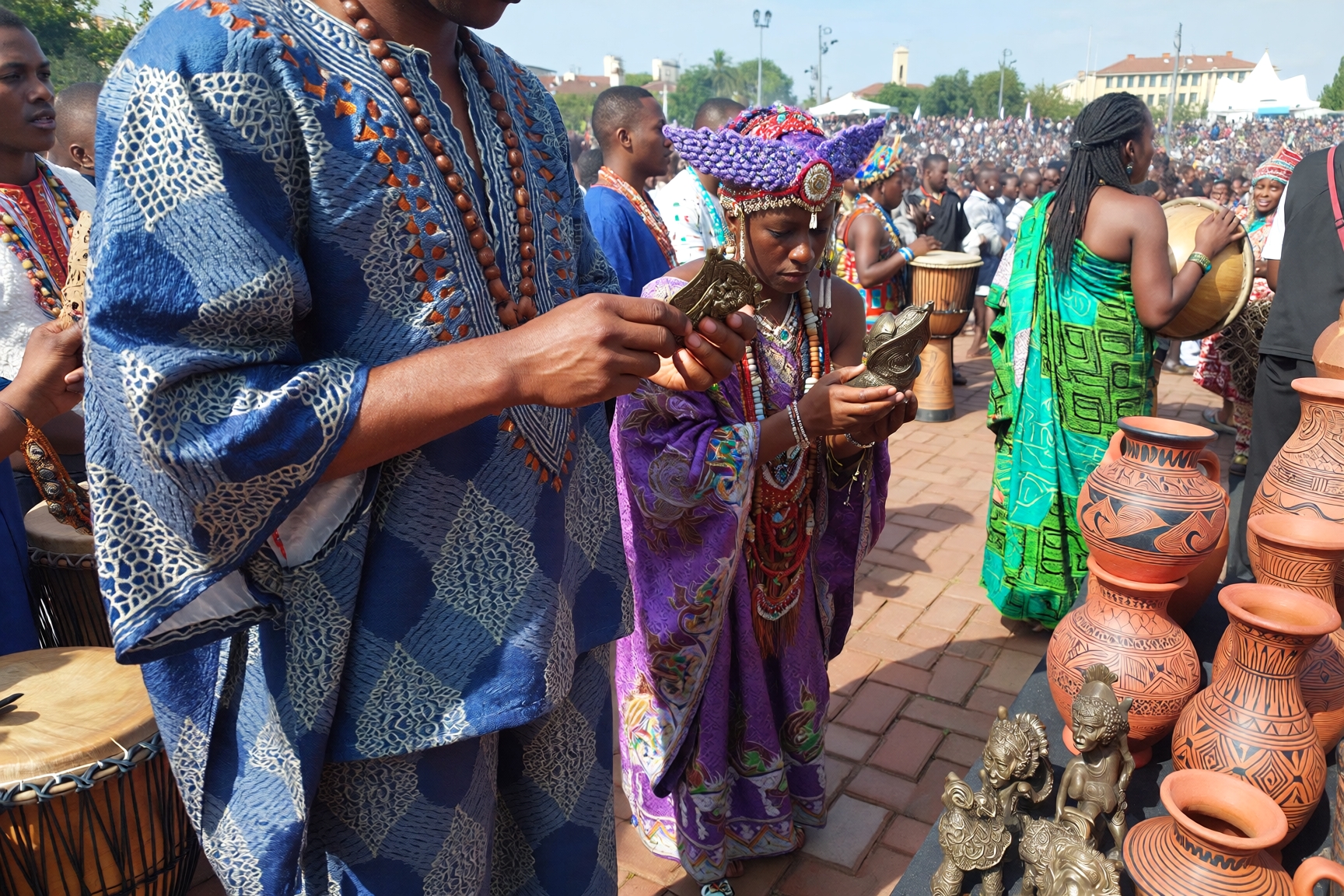
Hello, dear reader! I’m absolutely delighted to welcome you to this exploration of Nigerian traditions, a topic that has captivated me throughout years of cultural research and personal experiences across Nigeria’s diverse communities. This article represents the culmination of months of dedicated fieldwork, countless conversations with traditional elders, participation in cultural festivals from Lagos to Kano, and years of studying anthropological patterns that make Nigerian traditions so uniquely vibrant and enduring.
I still remember my first experience witnessing the elaborate Durbar festival in Kano. The thundering hooves of hundreds of horses, the glittering regalia of the Emirs’ cavalry, the deafening cheers from crowds lining the streets. That single day opened my eyes to the sheer magnificence of Nigerian cultural heritage, and I haven’t stopped exploring since.

What traditions do Nigerians have? Nigeria possesses an extraordinarily rich tapestry of cultural traditions spanning 371 ethnic groups, including elaborate marriage ceremonies with bride price negotiations (particularly prominent among Yoruba, Igbo, and Hausa-Fulani communities), traditional festivals celebrating harvests and deities (such as the Osun-Osogbo Festival and New Yam Festival), ancestral worship practices, naming ceremonies held eight days after birth, burial rites that honour the deceased with multi-day celebrations, traditional governance systems led by Obas, Emirs, and Igwes, oral storytelling traditions preserving history through griots, communal farming practices, age-grade systems organising social responsibilities, traditional crafts including textile weaving and bronze casting, masquerade performances embodying spiritual beings, and respect protocols requiring prostration and kneeling before elders. These traditions vary significantly across Nigeria’s diverse regions whilst maintaining common themes of community cohesion, ancestral reverence, and collective celebration.
The diversity is staggering, really. What works in the southwestern Yoruba territories might be completely foreign to the northern Hausa-Fulani communities or the southeastern Igbo people. Yet somehow, these different traditions coexist under one national identity, creating a cultural complexity that continues to fascinate scholars and visitors alike.
What Are Some Traditions in Nigeria?
Let me walk you through some of the most significant traditions you’ll encounter across Nigerian communities, because understanding these practices is key to appreciating the depth of Nigerian cultural life.
Traditional marriage ceremonies stand as perhaps the most elaborate and expensive of all Nigerian traditions. They’re not just about two people getting married (though that’s certainly important!). They’re about two families, sometimes even two communities, coming together. Among the Yoruba, you’ll witness the Engagement (Idana) where families formally meet, followed by Introduction ceremonies that can cost upwards of ₦2 million for middle-class families. The bride price negotiations involve presenting lists of items ranging from Bibles or Korans to live goats, yams, and substantial cash payments.
The Igbo take a different approach with their wine-carrying ceremony. The bride, elaborately dressed in coral beads that can cost ₦500,000 to ₦5 million depending on quality, carries a cup of palm wine through the gathering, searching for her husband-to-be. When she finds him and he drinks, the marriage is sealed in the eyes of traditional law. I’ve attended perhaps 50 such ceremonies, and the emotional intensity never diminishes. Grown men openly weep when their daughters identify their chosen partners.
The National Council for Arts and Culture actively documents and preserves these marriage traditions, recognising them as fundamental to Nigerian cultural continuity. Their archives contain detailed descriptions of marriage customs from virtually every Nigerian ethnic group, serving as invaluable resources for researchers and communities alike.
Naming ceremonies, called Isomoloruko among the Yoruba or Ikpoputu aha among the Igbo, represent another cornerstone tradition. They typically occur eight days after a child’s birth, though some communities observe different timelines. The ceremony involves gathering extended family, offering prayers, announcing the child’s carefully chosen names (which always carry significant meanings), and celebrating with food and drinks.
Each name tells a story. “Oluwatosin” means “God is worthy of worship” in Yoruba. “Chukwuebuka” translates to “God is great” in Igbo. “Aminatu” connects to Islamic heritage in Hausa communities. These aren’t random choices. Parents spend weeks, sometimes months, selecting names that reflect their hopes, experiences, and spiritual beliefs.
Burial ceremonies can be extraordinarily elaborate affairs lasting several days. Among the Igbo, a man who achieved high status through taking titles receives what’s called “Second Burial,” occurring months or even years after the actual interment. This involves feasting, masquerade performances, dancing, and enormous financial expenditure. It’s not unusual for families to spend ₦5 million to ₦20 million on these celebrations, particularly in southeastern communities where such displays indicate family honour and social standing.
The Yoruba approach death differently, with ceremonies depending heavily on the deceased’s age and status. An elderly person who lived well receives joyful celebration (after all, they’ve completed life’s journey), whilst younger deaths involve more somber proceedings. Traditional rulers and titled chiefs receive the most elaborate burials, with rituals that can stretch across weeks.
What Are Some of the Main Traditions?
When people ask about Nigeria’s main traditions, I always start with respect protocols because they underpin absolutely everything else in Nigerian social life.
The physical gestures vary by ethnic group but carry universal weight. Yoruba children learn to prostrate fully (dobale for boys, sitting with legs stretched for girls) when greeting elders. Among the Igbo, kneeling suffices, particularly for women. Hausa-Fulani communities emphasise verbal respect, using proper titles and maintaining physical distance during interactions with elders.
I made the mistake once of greeting a traditional ruler in Oyo whilst standing upright. The horrified looks from surrounding community members told me everything. My friend quickly pulled me aside and explained I’d committed a serious cultural offence. I returned, properly prostrated, and the Oba graciously accepted my apology. That lesson stayed with me permanently.
These aren’t empty rituals. They’re expressions of social order, acknowledgments that age brings wisdom, demonstrations of humility. Even wealthy, educated, successful Nigerians maintain these protocols. You’ll see company CEOs prostrating before their elderly parents, government ministers kneeling before traditional rulers, university professors using elaborate honorifics when addressing older relatives.
Traditional festivals form another pillar of Nigerian cultural life, with the Federal Ministry of Information and National Orientation officially documenting hundreds of celebrations across the country. Let me highlight a few major ones.
The Osun-Osogbo Festival occurs annually in Osogbo, Osun State, celebrating the river goddess Osun. UNESCO has recognised it as Intangible Cultural Heritage of Humanity. Thousands of devotees and spectators gather for two weeks of ceremonies culminating in a procession to the sacred grove where the Arugba (votary maid) carries a calabash of offerings to the river. The festival attracts international visitors, generates substantial tourism revenue (estimates suggest ₦200 million annually for local economies), and maintains spiritual practices predating Christianity and Islam.
The New Yam Festival (Iri Ji among the Igbo) marks the harvest season, typically falling between August and October. Communities gather to offer the first yams to deities and ancestors before anyone may eat the new harvest. The celebration involves masquerade performances, traditional wrestling, dancing, and feasting. Yams carry symbolic weight in Igbo cosmology, representing prosperity and male fertility, making this festival particularly significant.
Up north, the Durbar festivals in states like Kano, Katsina, and Sokoto coincide with major Islamic celebrations (Eid-al-Fitr and Eid-al-Adha). These spectacular displays feature hundreds of horsemen in elaborate regalia paying homage to Emirs. The horses themselves wear decorative armour, bells jangle, swords flash in sunlight, and the pageantry is absolutely breathtaking. Budget allocations for major Durbar festivals can exceed ₦50 million, covering everything from horse preparations to security arrangements.
Communal labour traditions, known as “Ajo” among the Yoruba or “Age grade systems” among the Igbo, organised collective work benefiting entire communities. Young men within specific age ranges would gather to clear paths, build community halls, or assist elders with farm work. Whilst modernisation has weakened these systems somewhat, they persist in rural areas and even manifest in urban contexts through community development associations.
The traditional governance system deserves special mention. Nigeria maintains parallel governance structures where traditional rulers (Obas, Emirs, Igwes, Obis) wield significant influence alongside government officials. These rulers settle disputes, preserve cultural knowledge, perform spiritual duties, and serve as custodians of tradition. The National Institute for Cultural Orientation works closely with traditional rulers to document and preserve cultural practices threatened by modernisation.
My conversations with the Ooni of Ife illuminated how traditional rulers balance ancient responsibilities with contemporary realities. They maintain courts, resolve conflicts using customary law, organise cultural festivals, and serve as symbols of ethnic identity. Government officials regularly consult traditional rulers on community issues, demonstrating their continued relevance.
Understanding Nigerian Traditions: A Seven-Step Guide
Let me share a practical framework I’ve developed for truly comprehending Nigerian traditions, based on fieldwork and academic study:
- Recognise Nigeria’s Ethnic Diversity First. Before studying any specific tradition, understand that Nigeria comprises 371 distinct ethnic groups. The three largest (Hausa-Fulani, Yoruba, Igbo) represent roughly 60% of the population, but the remaining 40% includes hundreds of communities with unique customs. Research your region of interest specifically. Don’t assume Yoruba marriage customs apply to Ijaw communities or that Hausa festival protocols work in Igbo territories. Use resources like the National Council for Arts and Culture’s ethnic documentation to identify which group’s traditions you’re studying. Budget time accordingly; superficial understanding takes weeks, but genuine cultural competence requires months or years of engaged study.
- Participate Respectfully in Cultural Events. Theory only carries you so far. Attend naming ceremonies, traditional weddings, festivals, and burial rites when invited. Dress appropriately (ask your host what’s expected). Bring appropriate gifts (cash gifts ranging from ₦5,000 to ₦50,000 depending on your relationship and the occasion’s significance). Observe protocols carefully. Don’t photograph sensitive moments without permission. Ask questions afterwards, not during ceremonies. Take notes mentally rather than conspicuously scribbling observations. I learned more from attending 20 traditional weddings than from reading 50 academic papers. There’s no substitute for embodied experience.
- Learn the Language and Terminology. English serves as Nigeria’s official language, but traditions are best understood through indigenous languages. Learn basic greetings in relevant languages (Yoruba, Igbo, Hausa at minimum). Understand key cultural terms that don’t translate well: “Omoluabi” (Yoruba concept of good character), “Ikenga” (Igbo symbol of personal achievement), “Zumunci” (Hausa concept of friendship and brotherhood). Consider enrolling in language classes. Lagos, Abuja, and Port Harcourt offer adult language instruction. Expect to invest ₦30,000 to ₦100,000 for a basic course spanning three months. Many traditions involve oral performances, proverbs, and storytelling that lose essential meaning in translation.
- Study Historical Context and Colonial Impact. Nigerian traditions didn’t develop in vacuum. Many were suppressed, modified, or driven underground during British colonial rule (1901-1960). Traditional governance systems were undermined, cultural practices labelled “pagan,” indigenous religions attacked. Understanding this history helps you appreciate why certain traditions nearly disappeared and how communities fought to preserve them. Read historical accounts, colonial records, and post-independence studies examining cultural resistance and revival. Recognise that what you observe today may be reconstructions rather than unbroken traditions, and that’s perfectly valid. Culture evolves and adapts.
- Examine the Intersection of Tradition and Religion. Nigeria is roughly 50% Muslim, 47% Christian, with traditional religions still practised. These faiths haven’t replaced traditional customs; they’ve merged with them. You’ll find Christians consulting Ifa diviners, Muslims participating in masquerade festivals, traditional worshippers attending church weddings. This syncretism confuses outsiders but feels natural to Nigerians who don’t see contradiction. Study how religious holidays incorporate traditional elements: Christmas celebrations feature traditional attire, Islamic Eid festivals include traditional dancing, traditional harvest festivals now include Christian prayers. Don’t expect clean boundaries between “traditional” and “religious.”
- Understand Gender Roles Within Traditional Systems. Nigerian traditions are deeply gendered, with distinct expectations, ceremonies, and responsibilities for men and women. Women’s traditions include practices like the Nkuho fattening rooms among the Efik (preparing young women for marriage), women’s secret societies like Umuada among the Igbo, market associations that give women economic and political power. Men’s traditions include age grade systems, masquerade societies (often restricted to initiated men), traditional title-taking ceremonies. Don’t judge these through Western feminist frameworks; understand them within their cultural contexts whilst acknowledging ongoing evolution and reform movements led by Nigerians themselves.
- Recognise Economic Dimensions of Traditions. Nigerian traditions aren’t just cultural; they’re economic systems. Traditional weddings employ caterers, tailors, musicians, decorators, rental companies. Festivals attract tourists, generate hotel bookings, create market demand. Burial ceremonies move massive amounts of money. The traditional textile industry employing weavers, dyers, embroiderers depends entirely on continued demand for cultural attire. When studying traditions, track the money. Who profits? How much does participation cost? How do economic pressures shape traditional practices? I’ve watched families modify elaborate traditions they can’t afford whilst maintaining core symbolic elements. Understanding this economic reality prevents romanticising traditions whilst appreciating their continued relevance.
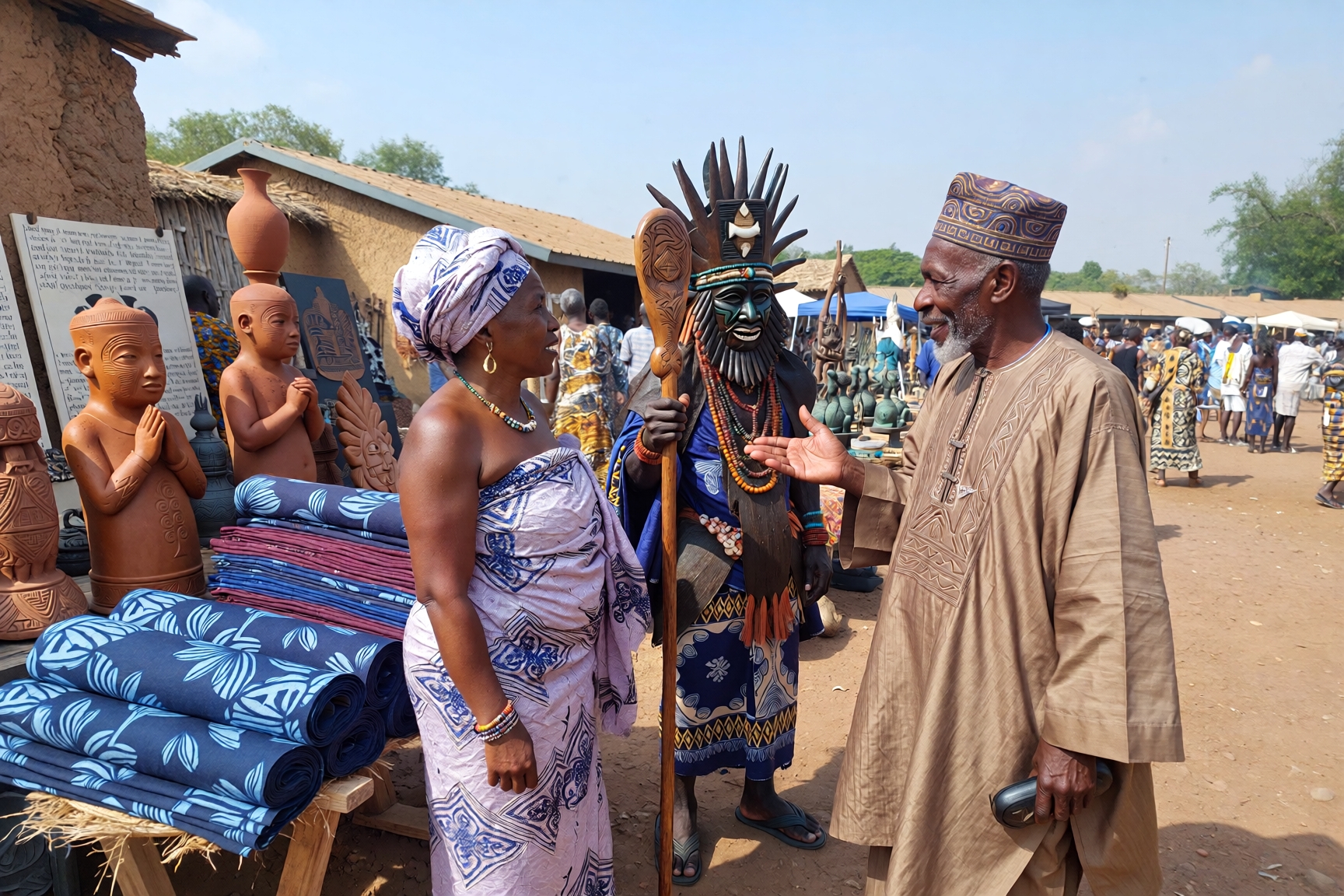
What Are the 10 Nigerian Traditional Art Forms and Their Significance?
Nigerian traditional art represents centuries of creative genius, technical mastery, and spiritual expression. Let me introduce you to ten significant art forms that continue shaping Nigerian cultural identity.
Traditional Art Comparison Across Nigerian Ethnic Groups
| Art Form | Ethnic Group | Materials Used | Cultural Significance | Typical Value (Naira) |
|---|---|---|---|---|
| Bronze Casting (Lost-wax) | Igbo, Edo | Bronze, copper, clay | Royal regalia, ancestral representation, spiritual objects | ₦150,000 – ₦15 million |
| Aso-Oke Weaving | Yoruba | Cotton, silk, metallic threads | Traditional ceremonies, status display, cultural identity | ₦50,000 – ₦500,000 per piece |
| Wood Carving (Masks) | Multiple (Igbo, Yoruba, Tiv) | Iroko wood, mahogany, ebony | Masquerade performances, ancestral veneration, cultural rituals | ₦30,000 – ₦2 million |
| Calabash Art (Gourd Decoration) | Hausa-Fulani | Calabash gourds, dyes, carving tools | Household items, ceremonial containers, decorative objects | ₦5,000 – ₦80,000 |
| Adire Textile (Indigo Dyeing) | Yoruba | Cotton fabric, indigo dye, cassava starch | Traditional clothing, artistic expression, women’s economic empowerment | ₦20,000 – ₦200,000 per cloth |
| Terra-cotta Sculpture | Nok, Ife | Clay, natural pigments | Archaeological heritage, spiritual representation, artistic tradition | Museum pieces (priceless) |
| Leather Work (Tanning & Crafting) | Hausa-Fulani | Animal hides, vegetable tannins, dyes | Footwear, bags, ceremonial items, military equipment | ₦15,000 – ₦300,000 |
| Beadwork (Coral & Glass) | Igbo, Edo, Yoruba | Coral beads, glass beads, threading materials | Royal regalia, bridal adornment, status symbols | ₦100,000 – ₦8 million for coral sets |
| Akwete Cloth Weaving | Igbo (Akwete) | Cotton threads, traditional loom | Cultural ceremonies, traditional attire, economic activity | ₦40,000 – ₦400,000 |
| Pottery & Ceramics | Multiple groups | Clay, natural glazes, organic dyes | Household vessels, ceremonial pots, artistic expression | ₦8,000 – ₦150,000 |
This table demonstrates the spectacular range of traditional arts flourishing across Nigerian communities, with price ranges reflecting quality variations from everyday functional items to museum-worthy masterpieces created by recognised master artisans.
Bronze casting, particularly the lost-wax technique perfected by Edo craftspeople in Benin City, produces intricate sculptures that astound art historians worldwide. The British Museum’s collection of Benin Bronzes (controversially acquired during the 1897 British invasion) showcases technical sophistication rivalling anything produced in Renaissance Europe. Contemporary bronze casters in Benin City continue these traditions, creating both traditional pieces for cultural purposes and contemporary art for international markets.
I spent weeks watching a master bronze caster work. The process is mesmerising. First, the artist sculpts the desired form in wax, adding extraordinary detail. Then they build a clay mould around it. When heated, the wax melts out (hence “lost-wax”), leaving a cavity. Molten bronze gets poured in, filling that space. After cooling, the clay breaks away, revealing the bronze sculpture. Each piece requires weeks or months of labour, explaining the substantial prices collectors pay.
Aso-Oke weaving represents Yoruba textile excellence. Weavers use traditional looms to create narrow strips of cloth featuring complex patterns in vibrant colours. These strips get sewn together creating larger fabrics for agbada (flowing robes), gele (head wraps), and other traditional attire. Quality Aso-Oke commands premium prices; a full agbada outfit for a man can cost ₦300,000 to ₦500,000, whilst women’s complete ensembles easily exceed ₦400,000.
The artistry involves more than just weaving. Weavers incorporate metallic threads creating shimmering effects, develop colour combinations with cultural significance, and maintain patterns passed through generations. Certain patterns are reserved for royalty or specific age groups, making Aso-Oke simultaneously functional clothing and visual communication system.
Adire textile art deserves particular attention because it’s overwhelmingly women’s domain, providing economic independence for female artisans. The indigo dyeing process involves multiple steps: preparing white cotton fabric, applying resist patterns using cassava starch or tying and stitching techniques, repeatedly dipping fabric in indigo baths, and oxidising the dye through exposure to air. The resulting patterns range from simple geometric designs to elaborate pictorial compositions.
I met an adire artist in Abeokuta who learned the craft from her grandmother and now supports her entire extended family through textile sales. She explained how each design tells stories: “This pattern represents water, this one means prosperity, this one honours my ancestors.” Her workshop employs 15 women, all learning traditional techniques whilst experimenting with contemporary designs appealing to younger markets.
Wood carving produces the masks used in masquerade performances across Nigeria. These aren’t mere decorations; they’re sacred objects embodying spirits, ancestors, or mythological beings. Igbo masquerades like Ijele (the largest masquerade in Africa, towering up to 15 feet) require extraordinary carving skill. Yoruba Egungun masks represent returning ancestral spirits. Tiv Kwagh-Hir incorporates carved figures in theatrical performances.
Carvers serve as more than craftspeople; they’re spiritual intermediaries who must observe taboos and perform rituals during the creation process. The wood itself carries significance (different trees for different purposes), and completed masks receive consecration before use. Collectors pay enormous sums for authentic masks, though many carvers refuse to sell pieces intended for spiritual use.
Beadwork, particularly coral bead sets worn by Igbo brides and Edo royalty, represents perhaps the most expensive traditional art form. A full coral bead set including necklaces, bracelets, anklets, and crown can cost ₦3 million to ₦8 million. The beads come from coral harvested in Mediterranean waters, imported to Nigeria, and meticulously strung by skilled artisans.
The weight alone is considerable. I watched a bride struggle under coral bead sets weighing perhaps 10 to 15 kilograms. When I asked why she’d endure such discomfort, she smiled and said, “My family loves me, and everyone can see their investment in my happiness.” That’s the cultural logic: visible displays of family resources and social status.
Pottery traditions, whilst perhaps less glamorous than bronze or beadwork, remain fundamental to Nigerian material culture. Women in communities like Suleja (near Abuja) create massive storage pots, cooking vessels, and ceremonial containers using techniques unchanged for centuries. They hand-build vessels without potter’s wheels, polish them with river stones, and fire them in open pits. Each piece is functional art combining utility with aesthetic beauty.
The leather-working traditions of northern Nigeria produce exquisite products from shoes to bags to ceremonial items. Hausa tanners and leather workers in cities like Kano have maintained their craft for centuries, creating products that combine functionality with decorative beauty. Traditional leather slippers (takalmi) feature intricate embroidery, whilst sword sheaths and scabbards for traditional rulers showcase technical mastery.
What Are Nigerians Known For? Cultural Contributions to the World
Nigerians have achieved remarkable global cultural influence, far exceeding what their geographic size might suggest. This influence stems from traditions that value artistic expression, entrepreneurial energy, and sophisticated communication.
Literature stands first in Nigeria’s global cultural contributions. Chinua Achebe’s “Things Fall Apart” has sold over 20 million copies worldwide, been translated into 57 languages, and remains required reading in schools across continents. The novel’s examination of colonialism’s impact on traditional Igbo society resonates universally whilst remaining distinctly Nigerian.
Wole Soyinka became Africa’s first Nobel Prize winner in Literature in 1986, followed by numerous Nigerian authors achieving international recognition. Chimamanda Ngozi Adichie’s novels grace bestseller lists globally, whilst her TED Talk “We Should All Be Feminists” has reached over 30 million viewers. Ben Okri won the Booker Prize, Helon Habila garnered critical acclaim, and younger writers continue this literary tradition.
What makes Nigerian literature powerful is its rootedness in oral traditions. The storytelling techniques, proverbs, and narrative structures employed by Nigerian writers draw directly from traditional storytelling practices. When you read Achebe or Soyinka, you’re experiencing centuries-old narrative traditions adapted for modern literary forms.
Music, particularly Afrobeats, has conquered global markets in ways few could have predicted a decade ago. Burna Boy headlines Coachella, Wizkid collaborates with Drake, Tems wins Grammy awards, and Rema’s “Calm Down” becomes the most-streamed African song in Spotify history. These aren’t isolated successes; they represent systematic cultural export changing global music landscapes.
The connection to traditional music remains strong. Afrobeats incorporates rhythms from talking drums, highlife guitar patterns, and call-and-response vocals drawn from traditional ceremonies. Modern producers sample traditional instruments, and artists frequently reference cultural practices in lyrics. When Burna Boy performs, he’s channelling Fela Kuti’s Afrobeat legacy, which itself drew from traditional Yoruba music.
Nollywood, Nigeria’s film industry, produces more films annually than Hollywood, making it the world’s second-largest film industry by volume. While budgets remain modest compared to Hollywood productions, Nollywood’s cultural impact is extraordinary. Films exploring traditional beliefs, contemporary social issues, and family dynamics reach audiences across Africa, the Caribbean, and African diaspora communities globally.
I find it fascinating how Nollywood incorporates traditional elements: juju (magical) practices appear in plots, traditional wedding ceremonies feature prominently, moral lessons reflect traditional wisdom, and language mixing (English, Pidgin, indigenous languages) mirrors actual Nigerian speech patterns. These films serve as cultural ambassadors, introducing global audiences to Nigerian traditions through accessible storytelling.
Fashion represents another area of global Nigerian influence. Designers like Lisa Folawiyo transform traditional ankara prints into high fashion retailing in international boutiques for thousands of pounds. Orange Culture challenges gender norms whilst celebrating Nigerian aesthetics. Kenneth Ize showcased aso-oke weaving on Paris Fashion Week runways, introducing traditional textile techniques to global fashion audiences.
The fashion success connects directly to traditional craft knowledge. Weavers maintaining centuries-old techniques suddenly find international demand for their work. Traditional tailors adapting time-honoured cutting methods create contemporary silhouettes. The global fashion industry isn’t discovering Nigerian fashion; it’s finally paying attention to traditions that existed long before European contact.
If you’re interested in exploring how Nigerian cultural practices manifest in specific social contexts, I’d recommend reading my article on Nigerian marriage culture and traditions, which examines how wedding ceremonies reflect broader traditional values and community bonds. Additionally, my piece on what Nigerian culture is known for provides comprehensive analysis of how tradition and modernity coexist in contemporary Nigerian life, showing how ancient customs adapt whilst maintaining their essential character.
How Nigerian Traditions Evolved and Adapted Over Time
Understanding Nigerian traditions requires appreciating their dynamic nature rather than viewing them as static museum pieces frozen in amber.
Colonialism profoundly disrupted traditional systems. British administrators undermined traditional rulers, imposed indirect rule favouring cooperative chiefs, criminalised certain cultural practices deemed “barbaric,” and promoted Christianity over indigenous religions. The colonial education system taught Nigerian children that their cultures were primitive whilst European culture represented progress and civilisation.
Yet Nigerians resisted in sophisticated ways. Traditional rulers maintained parallel authority structures even whilst appearing to cooperate with colonial administration. Cultural practices driven underground during colonial suppression re-emerged after independence in 1960. Artists and intellectuals deliberately revived traditional arts, languages, and ceremonies as acts of cultural resistance.
The post-independence period saw deliberate cultural revival efforts. Festivals that had been suppressed were reinstated. Traditional rulers regained official recognition and government support. The National Council for Arts and Culture was established to preserve and promote indigenous cultural heritage. Nigerian universities created departments studying indigenous languages, arts, and cultural practices.
Religious change has fundamentally altered some traditional practices. Many Nigerians now identify as Christian or Muslim rather than adherents of traditional religions. Yet rather than disappearing, traditional practices merged with imported faiths. Christians attend church but still pour libations for ancestors. Muslims participate in traditional festivals. Traditional spiritual practices coexist comfortably with Christianity and Islam for most Nigerians.
I’ve attended Christian wedding ceremonies that included traditional wine-carrying rituals. I’ve watched Muslim families consult Ifa diviners before important decisions. I’ve seen traditional priests blessing new churches. This syncretism confuses outsiders expecting clear boundaries between “traditional” and “modern” religion, but it feels natural to Nigerians who don’t experience contradiction.
Urbanisation and modernisation present perhaps the greatest contemporary challenges to traditional preservation. Young Nigerians moving to Lagos, Abuja, or Port Harcourt from rural communities lose daily contact with traditional practices. Time pressures of urban life make elaborate ceremonies difficult. The expense of traditional weddings, burials, and festivals excludes economically struggling families.
Yet traditions adapt rather than disappear. Traditional weddings now happen in event centres rather than family compounds but maintain essential ceremonial elements. Families hire professional videographers to record ceremonies, creating digital archives. Social media spreads awareness of cultural practices to diaspora Nigerians and younger generations. Online platforms sell traditional attire to buyers worldwide.
The economics of tradition have shifted dramatically. Traditional crafts that once served purely cultural functions now enter commercial markets. Adire textiles sell in international boutiques. Bronze casters create pieces for art collectors rather than exclusively for spiritual purposes. Musicians blend traditional instruments with electronic production, reaching global audiences whilst maintaining cultural authenticity.
Some traditions face genuine extinction threats. Languages die as speakers decline and young people adopt English. Certain artistic techniques requiring years of apprenticeship attract few learners when modern employment offers better income. Masquerade traditions struggle as Christianity and Islam discourage participation. Environmental change makes some agricultural-based festivals harder to celebrate.
Government and civil society have responded with preservation initiatives. The National Institute for Cultural Orientation documents endangered practices. UNESCO recognition of Nigerian traditions as Intangible Cultural Heritage of Humanity brings international attention and resources. Community-based organisations teach traditional arts to young people. Cultural festivals receive government funding, tourism promotion, and media coverage.
The digital age offers unexpected preservation opportunities. YouTube channels document traditional ceremonies. Instagram accounts showcase traditional fashion. Spotify playlists feature traditional music. Online language courses teach indigenous tongues. These technologies, initially feared as threats to tradition, become preservation tools connecting young Nigerians to their heritage regardless of physical location.
Understanding What Traditions Do Nigerians Have: The Complete Answer
So we return to our central question with deeper context: what traditions do Nigerians have?
The answer encompasses far more than any single article can fully capture. Nigerians have traditions governing every aspect of human existence from birth (naming ceremonies with chosen names carrying deep meanings) to death (elaborate burial rites honouring the deceased whilst supporting the bereaved community). They have marriage traditions involving multiple ceremonies, extensive family negotiations, and substantial financial commitments creating bonds between entire communities rather than just individual couples.
Nigerians maintain festival traditions celebrating agricultural cycles, honouring deities and ancestors, marking historical events, and reinforcing ethnic identities. These festivals like the Osun-Osogbo celebration, New Yam festivals across southeastern communities, and northern Durbar displays generate tourism revenue, preserve cultural knowledge, and provide spectacular entertainment.
They preserve artistic traditions producing textiles, bronze sculptures, pottery, beadwork, leather goods, wood carvings, and calabash art that combine functionality with aesthetic beauty whilst carrying spiritual and cultural significance. These artistic practices employ thousands of artisans, generate substantial economic value, and maintain technical knowledge passed through generations.
Nigerians honour respect traditions requiring specific physical gestures (prostration, kneeling), verbal protocols (using proper titles and honorifics), and behavioural codes acknowledging age and social status. These practices maintain social order, transmit values across generations, and create predictable interaction frameworks in diverse societies.
They follow traditional governance systems where Obas, Emirs, Igwes, and other traditional rulers parallel elected officials, settle disputes using customary law, preserve cultural knowledge, perform spiritual duties, and serve as living connections to pre-colonial political systems.
Most importantly, Nigerians maintain communal traditions emphasising collective responsibility over individual autonomy, extended family obligations over nuclear family isolation, and community welfare over personal advancement. These communal orientations shape everything from business partnerships to childcare arrangements to funeral planning.
The diversity means no single description captures all Nigerian traditions. Yoruba traditional religion differs fundamentally from Hausa-Fulani Islamic practices. Igbo masquerade traditions bear little resemblance to Ijaw water spirit worship. Yet common threads unite these diverse practices: reverence for ancestors, respect for elders, celebration of life transitions, artistic expression, and communal orientation.
Celebrating Nigerian Traditions in Contemporary Contexts
Modern Nigerians navigate fascinating tensions between traditional expectations and contemporary realities. Let me share some observations from urban centres where these tensions play out daily.
Lagos professionals might work 60-hour weeks in corporate offices wearing Western business attire, speaking English, and engaging with global commerce. Yet come Saturday, those same professionals don traditional agbada or gele, attend owambe parties (elaborate celebrations), speak Yoruba, and observe protocols their grandparents would recognise immediately. This cultural code-switching isn’t hypocrisy or confusion; it’s sophisticated cultural competence.
Young Nigerians increasingly question certain traditional practices, particularly those involving gender inequality, expensive ceremonies placing financial burdens on families, or practices conflicting with human rights principles. These generational debates happen across Nigerian society, in family meetings, social media discussions, and academic conferences.
I’ve witnessed heated arguments between parents insisting on elaborate traditional weddings costing ₦5 million to ₦10 million and children arguing such expense makes no sense when they’re struggling to afford housing. Yet remarkably, families often find compromises maintaining ceremonial essence whilst reducing financial strain. Perhaps they shorten celebrations from three days to one, reduce guest lists, or modify gift expectations.
The diaspora plays a crucial role in tradition preservation. Nigerian communities in London, New York, Houston, and Toronto organise cultural festivals, teach children indigenous languages, maintain traditional dress for ceremonies, and cook traditional foods. Paradoxically, Nigerians abroad sometimes preserve traditions more consciously than those still in Nigeria, precisely because distance makes cultural identity more precious.
Technology transforms how traditions operate. Families stream traditional weddings so relatives abroad can participate. YouTube tutorials teach young people how to tie gele or cook traditional soups. Social media groups connect people interested in traditional practices, sharing knowledge across geographical boundaries. Online stores sell traditional attire to global customers, sustaining artisans in Nigeria whilst serving diaspora populations.
The commercial dynamics deserve attention. Traditional ceremonies have become big business. Event planners specialise in cultural celebrations. Caterers prepare traditional dishes for thousands. Musicians perform traditional songs with modern instruments. Videographers create elaborate documentary records. This commercialisation raises questions about authenticity and commodification, yet it also ensures tradition’s economic viability.
Tourism represents both opportunity and threat. International visitors attending Nigerian festivals inject money into local economies. UNESCO recognition of Nigerian traditions brings global prestige. Yet tourist-focused presentations risk transforming living traditions into performances, spiritual practices into entertainment, and cultural authenticity into marketable spectacle.
Government cultural policies attempt balancing preservation with progress. The National Council for Arts and Culture promotes traditional arts whilst supporting contemporary creative industries. Traditional rulers receive official recognition and allowances whilst operating within democratic governance frameworks. Cultural festivals get government funding whilst being required to meet safety and logistical standards.
Educational institutions increasingly recognise traditional knowledge’s value. Universities offer courses in indigenous languages, traditional arts, and cultural practices. Primary schools teach children about Nigerian cultural heritage alongside mathematics and science. Museums preserve artefacts whilst explaining their cultural contexts. This institutional support helps legitimise traditional knowledge that colonial education systems dismissed as primitive.
Embracing Nigerian Traditions: Final Reflections
Nigerian traditions represent living, breathing cultural systems that continue shaping millions of lives whilst adapting to contemporary realities. They’re not museum relics frozen in time but dynamic practices responding to economic pressures, technological changes, religious shifts, and generational debates.
What impresses me most after years of study is Nigerians’ remarkable ability to maintain cultural continuity whilst embracing change. They don’t see tradition and modernity as opposites requiring choice between them. Instead, they fluidly navigate both, wearing business suits Monday through Friday and traditional attire on weekends, speaking English at work and indigenous languages at home, attending church or mosque whilst maintaining traditional spiritual connections.
The traditions endure because they serve genuine purposes beyond nostalgia. They create community bonds in increasingly atomised societies. They provide frameworks for navigating life transitions like birth, marriage, and death. They transmit values and knowledge across generations. They express identity in globalised contexts threatening cultural homogenisation. They generate economic activity supporting artisans, performers, and businesses.
Understanding Nigerian traditions requires moving beyond surface observations to appreciate underlying principles. It’s not about memorising specific ceremonies or practices (though that helps) but grasping worldviews emphasising communal orientation, ancestral reverence, respect for hierarchy, and celebration of life’s milestones.
For Nigerians themselves, these traditions offer anchors in turbulent times. They provide connection to ancestors, belonging to communities, and frameworks for understanding existence. They’re sources of pride, particularly given centuries of Western denigration of African cultures. Reclaiming and celebrating these traditions represents cultural resistance and affirmation of African humanity and dignity.
For outsiders seeking to understand Nigeria, engaging respectfully with traditions offers invaluable insights. You’ll learn why a Lagos businesswoman spends three months’ salary on her daughter’s wedding, why a university professor prostrates before his elderly father, why entire villages gather for burial ceremonies, why masquerades command such reverence, why food sharing carries such significance.
Nigeria’s 371 ethnic groups maintain traditions that collectively form one of Africa’s richest cultural heritages. These practices adapt whilst enduring, commercialise whilst maintaining spiritual significance, modernise whilst preserving essential character. They deserve appreciation, documentation, and celebration as remarkable achievements of human cultural creativity.
Key Takeaways:
• Nigerian traditions encompass elaborate life-cycle ceremonies (naming, marriage, burial), seasonal festivals, artistic practices, governance systems, and respect protocols that vary significantly across 371 ethnic groups whilst maintaining common themes of communal orientation, ancestral reverence, and collective celebration.
• Traditional practices actively adapt to contemporary contexts through technology integration, commercial opportunities, religious syncretism, and generational negotiations rather than remaining static, demonstrating cultural resilience and continuing relevance in modern Nigerian society.
• Engaging authentically with Nigerian traditions requires understanding historical context (particularly colonial disruption), recognising economic dimensions, learning appropriate respect protocols, appreciating ethnic diversity, and accepting syncretism between traditional, Christian, and Islamic practices as normal rather than contradictory.
Frequently Asked Questions About Nigerian Traditions
How do Nigerian naming ceremonies work across different ethnic groups?
Nigerian naming ceremonies typically occur eight days after birth (seven days in some communities) and involve gathering extended family, offering prayers, formally announcing the baby’s names, and celebrating with food and drinks. The ceremony’s specific elements vary by ethnic group: Yoruba ceremonies feature naming prayers and honey-tasting rituals, Igbo celebrations include palm wine libations and traditional blessings, whilst Hausa-Fulani communities emphasise Islamic prayers and Quranic recitations, but all ceremonies share the common purpose of formally welcoming the child into their community and establishing their identity through carefully chosen names carrying significant meanings.
What makes Nigerian traditional weddings so expensive compared to Western ceremonies?
Nigerian traditional weddings involve extensive financial obligations including bride price payments ranging from ₦100,000 to over ₦2 million depending on family expectations and ethnic customs, elaborate gift lists requiring items like live animals, yams, drinks, and household goods, coordinated traditional attire (aso-ebi) for potentially hundreds of guests costing ₦20,000 to ₦50,000 per outfit, professional catering for guest lists often exceeding 500 people, live music and entertainment, elaborate decorations, and multiple ceremony venues over several days. These expenses reflect cultural values emphasising visible family investment in the couple, communal celebration requiring generous hospitality, and social status display through wedding extravagance, making traditional weddings far more community-focused and financially demanding than typical Western ceremonies centring on the couple alone.
Why do Nigerians prostrate or kneel when greeting elders?
Physical submission when greeting elders expresses respect, acknowledges hierarchical social structures valuing age and wisdom, demonstrates humility before those who’ve accumulated life experience, and follows cultural protocols established over centuries of tradition. The specific gesture varies by ethnic group (Yoruba men fully prostrate whilst women kneel with legs stretched, Igbo people kneel regardless of gender, Hausa-Fulani communities emphasise verbal respect over physical submission), but the underlying principle remains constant: age commands respect in Nigerian society, and these physical demonstrations make that respect visible and undeniable, reinforcing social order and transmitting values about proper conduct across generations.
How do Nigerian festivals contribute to local economies?
Major Nigerian festivals generate substantial economic activity through tourism spending (visitors requiring accommodation, meals, and transportation), artisan income from selling traditional crafts and textiles, food vendor revenues from feeding attendees, entertainment fees paid to musicians and performers, increased business for local shops and services, employment opportunities for event workers and security personnel, and media coverage attracting future tourism. For instance, the Osun-Osogbo Festival generates an estimated ₦200 million annually for Osogbo’s economy, Durbar festivals in Kano create similar economic impacts, whilst smaller community festivals provide crucial income for rural artisans and vendors. These economic benefits incentivise festival preservation and justify government financial support for cultural events.
What role do traditional rulers play in modern Nigeria’s governance?
Traditional rulers (Obas, Emirs, Igwes, Obis) occupy parallel authority structures alongside elected officials, settling community disputes using customary law, serving as cultural custodians preserving indigenous knowledge and traditions, performing spiritual duties including crowning ceremonies and festival leadership, advising government officials on community issues, and symbolising ethnic identity and historical continuity. Whilst they lack official legislative power under Nigeria’s democratic constitution, traditional rulers wield significant informal influence through community respect, control customary land allocation in many areas, receive government allowances and recognition, and serve as essential bridges between modern governance systems and traditional community structures, making them indispensable figures in Nigerian political and social life.
How has Christianity and Islam affected traditional Nigerian practices?
Christianity and Islam have created syncretic religious landscapes where converts maintain traditional cultural practices whilst identifying as Christian or Muslim, resulting in fascinating combinations like Christian weddings incorporating traditional wine-carrying ceremonies, Muslims consulting traditional diviners before major decisions, and churches blessing traditional festivals. Rather than erasing indigenous traditions, imported religions merged with them, producing uniquely Nigerian forms of Christianity and Islam that accommodate traditional ancestor veneration, incorporate indigenous music and dance into worship, and accept parallel spiritual frameworks. This syncretism allows Nigerians to navigate multiple religious identities simultaneously without experiencing contradiction, though some Christian and Islamic leaders oppose traditional practices as incompatible with monotheistic faith, creating ongoing tensions between religious orthodoxy and cultural continuity.
Why are coral beads so expensive and significant in Nigerian culture?
Coral beads command premium prices (₦3 million to ₦8 million for complete sets) because they’re imported from Mediterranean coral harvests requiring significant international trade investment, involve labour-intensive stringing and finishing by skilled artisans, carry enormous cultural significance as symbols of royalty, wealth, and family investment in Igbo and Edo communities, and represent visible displays of social status and family resources. The beads’ weight alone (full sets weighing 10 to 15 kilograms) demonstrates the wearer’s ability to bear physical burden for cultural expression, whilst their distinctive red-orange colour holds spiritual meanings connected to vitality and life force. Authentic coral (as opposed to imitation) has become increasingly expensive due to environmental restrictions on coral harvesting, making genuine coral bead sets both cultural treasures and significant financial investments passed through generations as family heirlooms.
What’s the difference between bride price and dowry in Nigerian traditions?
Bride price (called owo ori in Yoruba, ịhe isi in Igbo) involves the groom’s family presenting money, gifts, and specified items to the bride’s family as compensation for raising their daughter and acknowledgment of the union’s significance, with amounts ranging from ₦50,000 to over ₦2 million depending on family expectations, educational achievements, and community customs. This contrasts with dowry systems where bride’s families pay groom’s families, which doesn’t exist in traditional Nigerian culture. Bride price isn’t purchasing the woman but represents symbolic compensation, demonstrates the groom’s financial capacity to support a wife, involves elaborate negotiations between families establishing relationships beyond the couple, and remains a controversial practice with critics arguing it commodifies women whilst defenders maintain it honours traditional values and ensures families seriously assess marriages.
How do Nigerian masquerade traditions maintain spiritual significance today?
Masquerades continue embodying spiritual beings, ancestral spirits, or mythological entities in traditional Igbo, Yoruba, Tiv, and other ethnic communities, participating in festivals, burial ceremonies, and community events where their appearances carry genuine spiritual weight rather than mere entertainment value. Initiated men who perform in masquerades undergo ritual preparation, observe taboos during performance periods, and receive community reverence as vessels for spiritual forces, whilst uninitiated people (particularly women and children in many communities) maintain respectful distance and follow prescribed protocols during masquerade appearances. Modern challenges include Christian and Islamic opposition to masquerade traditions as pagan practices, generational disinterest as young people pursue modern employment, and urbanisation separating communities from traditional performance contexts, yet masquerades persist particularly in rural areas and during major cultural festivals where they maintain their role as spiritual intermediaries connecting human and divine realms.
Why do Nigerian burial ceremonies often happen months or years after death?
Elaborate Nigerian burials, particularly “second burials” among Igbo communities, occur long after initial interment because families need time to accumulate the ₦5 million to ₦20 million required for proper ceremonies honouring accomplished individuals, extended family members must travel from distant locations requiring advance planning, seasonal considerations affect ceremony timing (avoiding rainy seasons and competing with farming activities), and proper mourning periods must elapse before celebration is culturally appropriate. These delayed ceremonies demonstrate family devotion, allow for elaborate preparation including commissioning masquerade performances and traditional music, enable wider community participation than immediate burials permit, and fulfil cultural obligations ensuring the deceased receives appropriate honour befitting their achievements and status. The expense and elaboration aren’t wasteful but represent final demonstrations of love, respect, and social standing, with family reputation depending on providing dignified burials for departed members.
How are traditional Nigerian languages being preserved for future generations?
Language preservation efforts include government policies promoting indigenous language instruction in primary schools, university departments offering degree programmes in Yoruba, Igbo, Hausa, and other major languages, community organisations teaching diaspora children their ancestral tongues, digital resources like online courses and mobile applications for language learning, media production in indigenous languages including radio programmes, television shows, and increasingly Nollywood films, and documentation projects recording endangered languages before speaker populations decline. However, preservation faces significant challenges from English dominance in education and business, urbanisation mixing linguistic communities and promoting English as common language, economic incentives favouring English fluency for employment, and generational preferences as young people associate indigenous languages with rural backwardness rather than cultural pride. Success varies dramatically: major languages like Yoruba, Igbo, and Hausa remain vibrant with millions of speakers, whilst smaller languages face genuine extinction threats requiring urgent intervention.
What economic opportunities exist in traditional Nigerian arts and crafts?
Traditional artists earn income through commission work for ceremonies and festivals ranging from ₦30,000 to over ₦1 million per piece depending on complexity and reputation, retail sales in markets, galleries, and increasingly online platforms reaching international customers, tourism-related sales to foreign visitors seeking authentic African art, government contracts for cultural centres and national events, international export through galleries and dealers connecting Nigerian artists with global collectors, teaching and apprenticeship programmes passing skills to next generations whilst earning instructor fees, and cultural festival performances and demonstrations generating both income and marketing exposure. Economic success varies enormously: recognised master artisans command premium prices and international reputations, whilst most practitioners earn modest incomes requiring supplementation through other employment. The National Council for Arts and Culture increasingly supports traditional artists through grants, exhibitions, and market connections, recognising that economic viability determines whether young Nigerians pursue traditional crafts or abandon them for more lucrative modern employment.

