 Follow Us on Google News


 Follow Us on Google Discover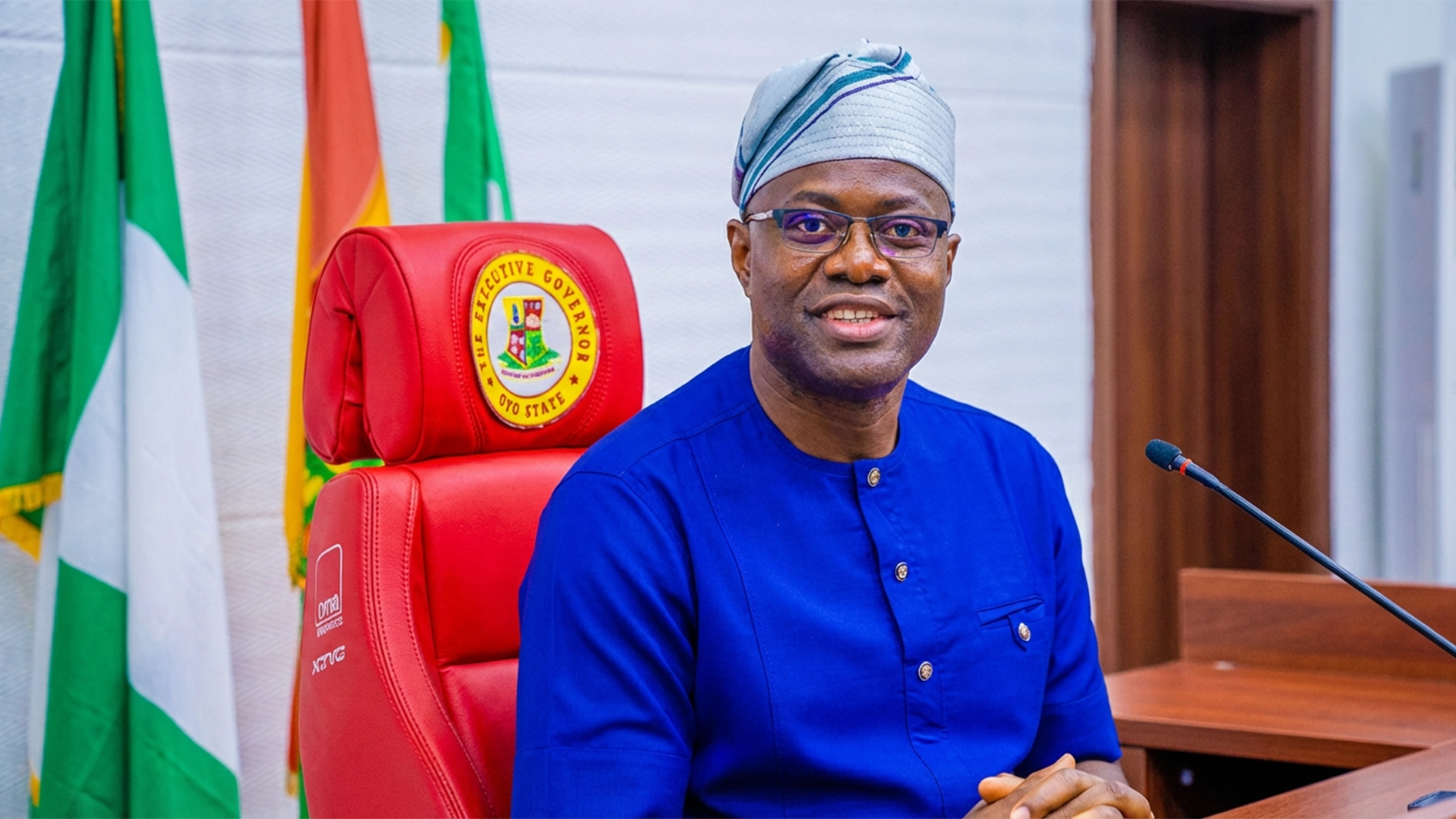
As Governor Seyi Makinde of Oyo State approaches the end of his tenure in 2027, the abandoned political coalition that propelled him to power in 2019 is roaring back to life. Once discarded after victory, the aggrieved ‘forces’ now threaten to upend his succession script and drag him deeper into the crisis in the Peoples Democratic Party (PDP), SEYE OLUMIDE reports.
When Governor Seyi Makinde assumed office on May 29, 2019, his victory marked both the collapse of a seemingly impregnable All Progressives Congress (APC) structure and the Peoples Democratic Party’s (PDP) return to Agodi Government House after eight years in opposition. It was a watershed moment in Oyo State politics.
Yet, the triumph was not merely the product of Makinde’s personal appeal. It was the outcome of a carefully negotiated coalition that fused rival PDP factions, defectors from the APC, labour unions, civil society groups, and regional power blocs spanning the Ibadan, Oke-Ogun, Ogbomoso, and Oyo zones.
More than six years later, that broad alliance has largely unravelled. Many of the stakeholders who mobilised votes and secured the PDP’s return to power had accused the governor of sidelining them in favour of a narrow inner circle. As Oyo inches towards the 2027 succession contest, amid a deepening PDP crisis at both state and national levels, these strained relationships are increasingly shaping the state’s political future.
Several influential figures within Oyo State, many of whom were central to Makinde’s rise in 2019 and whose voices later faded under the governor’s leadership, are former governor Rashidi Ladoja; ex–Deputy Governor Hazeem Gbolarumi; former House of Representatives Majority Leader Mulikat Akande-Adeola; former senators Olufemi Lanlehin and Ayo Adeseun; and party stalwarts such as Adebisi Olopoeyan, Bisi Ilaka, Elder Wole Oyelese, Kameel Akinlabi, and Dr Saka Balogun.
Others, including Michael Ogunlade, Mogaji Nureni Akanbi, Ademola Santos, and even the erstwhile Deputy Governor, Rauf Olaniyan, have expressed discontent at various times.

Collectively, they accused the Makinde-led administration of marginalisation, weak internal consultation and an increasingly centralised style of governance.
The coalition that changed Oyo in 2019
MAKINDE’S path to power was anything but smooth. He had twice lost the PDP governorship ticket, while the party itself was weakened by years of infighting. What altered the equation in 2019 was the crystallisation of a loose but effective coalition anchored on shared grievances against the APC government under the late Abiola Ajimobi.
Central to this alliance was the PDP Unity Forum, which brought together party elders disenchanted with internal impositions.
Influential figures from Oke-Ogun, long dissatisfied with what they perceived as Ajimobi’s Ibadan-centric power structure, also rallied behind Makinde, seeing him as a unifying bridge across zones.
Also in 2019, four gubernatorial candidates, which included Makinde of the PDP, Senator Lanlehin of the Action Democratic Congress (ADC), Sharafadeen Alli of the Zenith Labour Party (ZLP) and Bolaji Ayorinde of the Social Democratic Party (SDP), led coalition moves at Bodija to form a government of national unity with the incumbent governor. The group has since gone its separate way since Makinde took over power in 2019.
As early as 2019, when Lanlehin pulled out of the coalition, he wrote in a statement that the governor failed to honour the terms of the pre-election agreement reached among the coalition parties, just as Senator Alli, who now represents Oyo South, alleged before he withdrew from the coalition.
Alli, at the time, raised the alarm that Makinde had abandoned and relegated his party, the ZLP, in the scheme of things, especially in terms of political patronage.
Equally decisive were defections from the APC. Heavyweights and other Ajimobi-era power brokers weakened the ruling party’s base. Labour unions, notably the Nigeria Labour Congress (NLC) and the Trade Union Congress (TUC), mobilised aggressively against the APC over unpaid salaries, gratuities and pension arrears, framing the election as a referendum on workers’ welfare.
Civil society organisations, professional bodies and segments of the Ibadan political elite bought into Makinde’s reformist messaging, while grassroots structures, such as the now-defunct SENACO group, helped drive ward-level mobilisation. The result was a rare convergence of interests that swept Makinde into office with a decisive mandate.
Barely months into his first term, cracks began to emerge. Several coalition partners complained that appointments and strategic positions were skewed towards loyalists who had stood by Makinde during his years in opposition, rather than the broader alliance that secured victory.
Former allies cite the composition of the State Executive Council and strategic boards as early signs of consolidation. Many APC defectors who had played visible roles in dismantling Ajimobi’s structure were sidelined, while some PDP elders complained that their influence had been reduced to ceremonial consultations.
Labour unions, initially enthusiastic, also fell out with the government over wage adjustments and pension reforms, despite improvements in salary regularity. While Makinde maintained cordial public relations with labour leaders, the political intimacy of 2019 never fully returned.
By the build-up to the 2023 elections, it was evident that the coalition model had given way to a more centralised structure revolving around the governor’s office and a trusted circle of advisers, commissioners and party operatives.
The deputy governor episode
NOTHING symbolised the breakdown of the 2019 alliance more than the prolonged fallout between Makinde and his former deputy, Olaniyan.
Olaniyan, a political heavyweight from Oke-Ogun, also represented the APC bloc in Makinde’s government. He was widely seen as a strategic choice to balance regional interests.
By the middle of Makinde’s first term, relations had deteriorated sharply. Olaniyan complained of marginalisation and exclusion from key decisions, while the governor’s camp accused him of disloyalty.
The standoff culminated in Olaniyan’s impeachment in 2022—an episode that sent shockwaves through Oke-Ogun politics and reinforced perceptions that dissent within the ruling camp would not be accommodated.
For many stakeholders, the impeachment marked a turning point, confirming Makinde’s preference for control over accommodation.
PDP stakeholders and the politics of exclusion
THE unravelling of the 2019 coalition has left many PDP power brokers politically displaced. Olopoeyan, an Ibadan-based financier whose grassroots structure was instrumental in 2019, saw his influence wane after the election. His eventual defection to the New Nigeria Peoples Party (NNPP) ahead of the 2023 elections underscored the breakdown of trust; despite later leaving the NNPP, he has yet to rejoin Makinde in the PDP.
Jumoke Akinjide, former Minister of State (FCT) and a respected party mobiliser, similarly faded from strategic relevance. Former governor Ladoja, now Olubadan of Ibadanland, also fell out with Makinde and openly backed APC candidate Teslim Folarin in the 2023 election before reconciling with the governor as his ascension to the throne became imminent.
Other figures include Gbolarumi, who recently expressed interest in contesting the 2027 governorship election on the PDP platform, but is likely to run under the faction led by the Minister of the Federal Capital Territory (FCT), Nyesom Wike.
Collectively, leaders of the PDP Unity Forum, labour-aligned politicians, and elder statesmen lost influence as party structures came under the tighter control of Government House.
Within the PDP, Makinde’s grip has tightened considerably since 2019. State and ward executives are widely perceived to be aligned almost exclusively with the governor, leaving little room for autonomous power centres.
While this centralisation helped secure an easy re-election in 2023, critics argue that it weakened internal debate, consensus-building and conflict management.
Groups such as the Unity Forum and other legacy caucuses have been sidelined, breeding quiet resentment among members who remain in the party largely for lack of viable alternatives.
As Makinde approaches the end of his second term, attention has shifted to control of the PDP ticket in 2027. The succession debate has reopened unresolved zoning questions, particularly between Ibadan and non-Ibadan zones such as Oke-Ogun and Ogbomoso.
Excluded stakeholders are increasingly framing their ambitions around zoning justice, arguing that power should rotate after eight years of Ibadan dominance. Yet, Makinde’s influence over party machinery gives him significant leverage, heightening fears of imposition rather than negotiation, and increasing the risk of defections or protest candidacies.
National crisis and opposition manoeuvres
THE PDP’s national crisis—marked by leadership disputes, zoning controversies and lingering fallout from the G5 rebellion—has further weakened its capacity to manage state-level tensions. In Oyo, these national fault lines have emboldened aggrieved stakeholders.
Meanwhile, the APC is quietly rebuilding, while emerging platforms such as the African Democratic Congress (ADC) are courting disgruntled PDP figures who feel excluded from Makinde’s succession plans.
But a member of the party, who said he is not authorised to speak for Governor Makinde, argued that consolidation was necessary for stability, policy coherence and electoral success. He cites infrastructure expansion, fiscal reforms and two decisive victories as proof that a strong centre served Oyo well.
Yet, as the 2027 transition looms, the costs of dismantling the 2019 coalition are becoming clearer. A government that rose on inclusiveness now faces the challenge of managing exclusion, resentment and competing ambitions.
Makinde’s most enduring political weakness since 2019 has not been governance or electoral performance, but themismanagement of stakeholders.
By over-centralising power and personalising decision-making, he weakened party structures, reduced consultations and alienated key stakeholders whose loyalty once secured his emergence.
For a leader seeking to install a successor and shape Oyo politics beyond his tenure, reconciliation, not control, may prove the decisive test.
One of the disgruntled members of the 2019 coalition, who preferred not to be mentioned for now, said that old PDP members in Oyo are waiting for the Appeal Court’s ruling on the dispute between the Wike and Makinde factions of the PDP.
According to him, “Nobody will speak now until the Appeal Court delivers its judgment. We are just waiting to see if the judgment will favour the governor’s faction or the other side. If Makinde is eventually favoured, I can bet you many of the old members will defect to other platforms.”
He also said Makinde did not honour the agreement the coalition partners reached in 2019, immediately after he assumed office.

