 Follow Us on Google News
 Follow Us on Google Discover
Welcome, dear readers! After months of immersing myself in demographic research, poring over census data, and spending years documenting how Nigerians identify themselves across our remarkably diverse nation, I’m thrilled to share this comprehensive exploration of Nigeria’s race population with you. This question reveals something fascinating about the disconnect between Western racial categories and African realities, and understanding it opens a window into Nigeria’s complex demographic landscape.
Here’s something that might surprise you: Nigeria doesn’t actually collect race data in our national census. Why? Because the Western concept of “race” as understood in America or Europe doesn’t quite fit our reality. What we have instead is the world’s most ethnically diverse nation, with 371 distinct ethnic groups speaking over 500 languages.
The last comprehensive population census in Nigeria occurred in 2006, when the National Population Commission counted 140,431,790 residents. Current projections place Nigeria’s 2026 population at approximately 226-230 million people, making us Africa’s most populous nation and the sixth-largest country by population globally. But here’s where it gets really interesting: virtually 100% of Nigerians would be classified as “Black” or “Black African” under Western racial categories, yet that single label completely fails to capture the breathtaking diversity within our borders.
I remember attending a cultural festival in Cross River State where over twenty different ethnic groups displayed their traditional dances, each performance utterly distinct from the last. That experience crystallised something crucial for me: asking about Nigeria’s “race population” is rather like asking what colour the rainbow is. The question itself misunderstands what it’s trying to measure.
What is the Race Percentage in Nigeria?
If we’re applying standard international racial classification systems used by organisations like the World Health Organization or the United Nations, Nigeria’s racial composition appears deceptively simple. The overwhelming majority of Nigerians (approximately 99.8%) are Black African, with tiny minorities of Lebanese, Indian, Chinese, and European populations comprising less than 0.2% of the total population.
But here’s what those statistics completely miss: within that 99.8% “Black African” category, we have more cultural, linguistic, and ethnic variation than exists across entire continents elsewhere. The genetic diversity among Nigerian ethnic groups rivals the genetic diversity found across all of Europe.

Consider this analogy. Imagine describing all Europeans as simply “White” and stopping there. You’d be technically correct but practically useless. You’d miss the distinct identities of French, German, Polish, Greek, and dozens of other groups. That’s exactly what happens when people ask about Nigeria’s “race percentage” without recognising our ethnic complexity.
The Federal Ministry of Foreign Affairs emphasises Nigeria’s rich cultural heritage and diverse population as national strengths in international relations. When Nigerian diplomats represent our country abroad, they don’t emphasise racial homogeneity. They highlight ethnic diversity that creates both challenges and rich cultural tapestries.
Let me break down what demographic data we actually have. The 2006 census deliberately avoided questions about ethnic affiliation because such data has historically been politically sensitive in Nigeria. Previous censuses that included ethnic enumeration sparked accusations of manipulation and even contributed to political instability. The National Bureau of Statistics continues to project population figures based on the 2006 census baseline, but without ethnic breakdowns.
What we do know comes from demographic research, linguistic surveys, and state-level population distributions. Northern Nigeria, comprising roughly 19 states, contains approximately 53-56% of the national population. Southern Nigeria, with 17 states, holds about 44-47% of the population. This North-South divide matters enormously in Nigerian politics, economic development, and cultural identity.
The religious breakdown provides another dimension of Nigerian identity that often matters more than any racial classification. Nigeria is approximately 52-54% Muslim (predominantly in the North), 46-48% Christian (predominantly in the South), with 1-2% practising traditional African religions or holding no religious affiliation. Religion frequently intersects with ethnicity to create complex identity matrices that Western racial categories simply cannot accommodate.
When I worked on demographic mapping projects across Nigeria’s Middle Belt, I encountered communities where ethnic identity, religious affiliation, and historical migration patterns created identity layers that couldn’t be reduced to simple racial categories. A Tiv Christian farmer in Benue State shares Nigerian citizenship with a Kanuri Muslim trader in Maiduguri, but their daily lives, cultural practices, and community structures differ dramatically despite both being “Black African” under international racial classification.
Contemporary Nigerian society operates on what sociologists call “multiple identity layers.” A typical Nigerian might identify first by their specific ethnic subgroup, then their broader ethnic group, then their state of origin, then their religion, and finally as Nigerian. Notice how race doesn’t even feature in that hierarchy?
This becomes particularly evident when Nigerians travel abroad. In London, New York, or Dubai, Nigerians might for the first time identify primarily as “Black” because that’s how host societies categorise them. But back home in Lagos or Abuja, that same person would identify as Yoruba, Igbo, or Hausa-Fulani long before mentioning race.
What Are the Top 5 Largest Ethnic Groups in Nigeria?
Right, let’s tackle the demographic reality that actually shapes Nigerian life. Whilst Western racial categories might classify us all as Black African, ethnic identity determines everything from political alliances to marriage prospects, from business networks to residential patterns.
The Hausa-Fulani people represent Nigeria’s largest ethnic group, comprising approximately 29-32% of the population. That translates to roughly 65-73 million people, more than the entire population of the United Kingdom! Understanding how Nigeria’s major ethnic groups emerged and why they dominate certain regions requires looking at centuries of migration, trade, and cultural evolution across West Africa.
I spent several weeks in Kano researching traditional governance systems, and the sophistication of Hausa culture genuinely astonished me. The ancient city walls, the elaborate emirate system, the centuries-old trade networks connecting Nigeria to North Africa and the Middle East – it’s civilisation built over millennia, not decades.
The Yoruba people constitute the second-largest ethnic group at approximately 21-23% of Nigeria’s population, representing 47-52 million people. Concentrated in southwestern states like Lagos, Oyo, Ogun, Osun, Ondo, and Ekiti, the Yoruba culture boasts rich artistic traditions, complex religious systems (both traditional Orisa worship and substantial Christian and Muslim populations), and sophisticated urban centres that predated European colonialism.
What fascinates me about Yoruba society is how they’ve maintained cultural continuity whilst embracing modernity. Lagos, Africa’s largest city and Nigeria’s economic capital, is predominantly Yoruba yet functions as a cosmopolitan melting pot where all 371 ethnic groups converge.
The Igbo people represent the third-largest group at 18-20% of the population, comprising approximately 40-46 million people. Primarily concentrated in southeastern states including Abia, Anambra, Ebonyi, Enugu, and Imo, the Igbo are renowned for their entrepreneurial spirit, republican social structures (unlike the hierarchical systems of Hausa emirates or Yoruba kingdoms), and remarkable resilience following the devastating Nigerian Civil War (1967-1970).
The Igbo diaspora within Nigeria is particularly significant. Major cities across the country have substantial Igbo populations engaged in commerce, manufacturing, and professional services. Their business networks span the entire nation and extend internationally.
The fourth position gets complicated, with two ethnic groups competing for the spot depending on whose estimates you trust. The Ijaw people, with approximately 8-12 million members (3.5-5% of the population), claim fourth place based on absolute numbers. Concentrated in the Niger Delta states of Bayelsa, Delta, and Rivers, the Ijaw sit atop Nigeria’s petroleum wealth yet have historically been marginalised politically, sparking the Niger Delta militancy of the 2000s.
The Kanuri people, with approximately 6-10 million members (2.5-4% of the population), compete for fourth position based on their historical importance as descendants of the Kanem-Bornu Empire and their concentration in Borno State. Current security challenges in northeastern Nigeria have made demographic data about Kanuri populations particularly difficult to verify.
Most demographic analyses place the Tiv as Nigeria’s fifth-largest ethnic group, with approximately 5-8 million members (2-3% of the population). Concentrated in Benue State in Nigeria’s Middle Belt, the Tiv maintain distinct cultural practices and a strong agricultural tradition.
However, some scholars argue the Ibibio (4-6 million in Akwa Ibom and Cross River states) or the Edo (4-5 million in Edo State) deserve fifth place based on population density, political influence, or cultural significance.
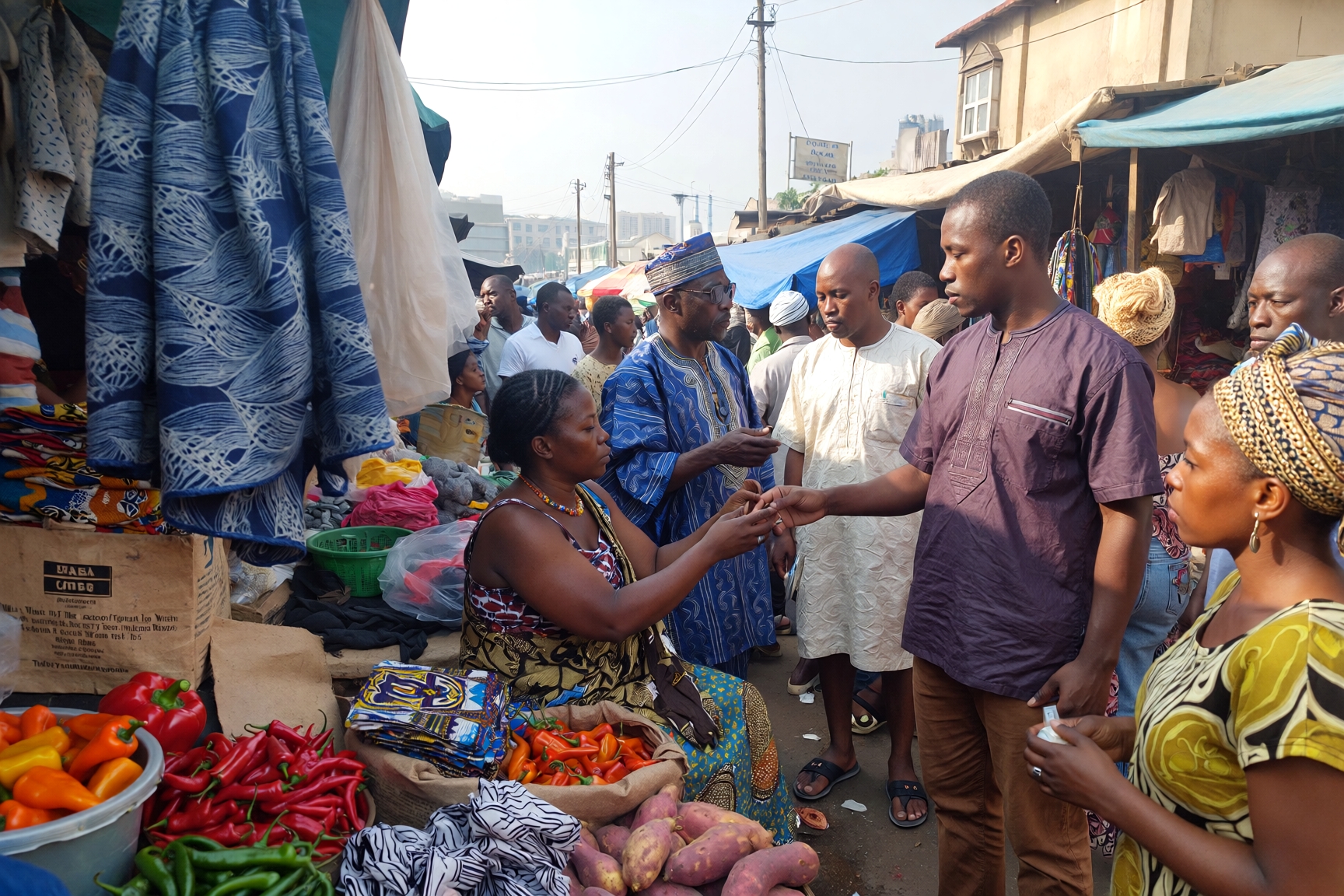
Key Demographic Data Across Nigeria’s Major Ethnic Groups
| Ethnic Group | Estimated Population | Percentage of Total | Primary Regions | Predominant Religion |
|---|---|---|---|---|
| Hausa-Fulani | 65-73 million | 29-32% | North (Kano, Katsina, Sokoto, Kaduna, Zamfara) | Islam (90%+) |
| Yoruba | 47-52 million | 21-23% | South-West (Lagos, Oyo, Ogun, Osun, Ondo, Ekiti) | Islam (50%), Christianity (48%) |
| Igbo | 40-46 million | 18-20% | South-East (Abia, Anambra, Ebonyi, Enugu, Imo) | Christianity (98%+) |
| Ijaw | 8-12 million | 3.5-5% | South-South (Bayelsa, Delta, Rivers) | Christianity (95%+) |
| Kanuri | 6-10 million | 2.5-4% | North-East (Borno, Yobe) | Islam (99%+) |
| Tiv | 5-8 million | 2-3% | Middle Belt (Benue, Taraba, Plateau) | Christianity (95%+) |
The table reveals something crucial about Nigerian demographics: the big three ethnic groups collectively represent only 68-75% of the population. That leaves 25-32% of Nigerians distributed among 368 other ethnic groups, representing approximately 57-73 million people belonging to ethnic communities that most Nigerians have never heard of.
What is My Race If I Am Nigerian?
This question perfectly captures the tension between Western racial classification systems and Nigerian self-identification. The straightforward answer? Under international racial categories used by organisations like the United Nations and most Western governments, if you’re Nigerian, you’re Black or Black African. On demographic forms in the United States, United Kingdom, Canada, or Australia, you’d tick the “Black African” or “African” box.
But here’s where it gets fascinating, and where many Nigerians feel these Western categories fail to capture our reality. Within Nigeria, we don’t primarily identify by this broad “Black” category. Identity operates on multiple, overlapping levels that Western racial taxonomies simply can’t accommodate.
Let me walk you through how a typical Nigerian actually thinks about identity. First comes ethnic group identification. Before anything else, most Nigerians identify as Igbo, Yoruba, Hausa, Ijaw, Tiv, Edo, Ibibio, Urhobo, or one of our 371 ethnic groups. This isn’t just abstract identity; it determines your native language, your traditional governance system, your marriage customs, your cuisine, and often your religious affiliation.
Second comes subgroup identification within larger ethnic groups. A Yoruba person might identify more specifically as Ijebu, Egba, Oyo, or Ondo Yoruba. An Igbo person might identify as Mbaise, Nsukka, or Anambra Igbo. These subgroups maintain distinct dialects and customs within broader ethnic identity.
Third comes geographical identification by state of origin. Nigerians frequently identify by their state, particularly in multi-ethnic urban centres. Someone might say “I’m from Benue” or “I’m from Kano” before specifying ethnic identity, especially when talking to fellow Nigerians who might not recognise smaller ethnic groups.
Fourth comes religious identification. For many Nigerians, being Muslim or Christian matters more than ethnic identity, particularly in mixed communities or when facing sectarian tensions. Religion shapes daily practices, social networks, marriage prospects, and political alignments.
Only fifth, if at all, comes national Nigerian identity. Young urban professionals increasingly identify as Nigerian first, especially when abroad or in cosmopolitan cities like Lagos and Abuja. But for many Nigerians, particularly in rural areas or among older generations, Nigerian identity feels more abstract than ethnic or religious affiliation.
Notice what’s missing? Race. Racial identity rarely features in Nigerian self-identification because everyone around you shares the same racial category. It’s rather like asking fish to identify their relationship to water. When everyone is Black African, that category loses practical meaning in daily life.
This changes dramatically when Nigerians travel abroad. I’ve watched friends experience racial consciousness for the first time when moving to Europe or America. Suddenly, they’re not “Igbo” or “Yoruba.” They’re “Black,” and they’re categorised, stereotyped, and treated based on that racial classification in ways that feel entirely foreign to Nigerian social dynamics.
The National Population Commission recognises this complexity in demographic data collection. Official census forms avoid ethnic enumeration precisely because such data has been politically manipulated in the past, but the forms also don’t ask about race because the question would be essentially meaningless in Nigerian context.
Contemporary genetic research adds another layer of complexity to racial identity. Studies show that Nigerian ethnic groups share common genetic foundations whilst showing variations reflecting different migration histories and settlement patterns developed over millennia. Yoruba and Igbo populations cluster closely together as southern Nigerian groups. Hausa-Fulani show slight northern influences distinguishing them from southern groups. Middle Belt populations show transitional genetic patterns.
But here’s the crucial finding: all Nigerian groups remain more genetically similar to each other than any is to non-African populations. The ethnic diversity that shapes Nigerian politics and culture primarily reflects ancient linguistic and cultural separation rather than fundamental genetic differences.
Which State in Nigeria Has the Highest Ethnic Groups?
This question reveals something fascinating about how Nigeria’s diversity distributes geographically. The answer might surprise you: it’s not Lagos, despite being our largest city and economic capital.
Taraba State, located in Nigeria’s Middle Belt region bordering Cameroon, hosts approximately 80-82 distinct ethnic groups within its boundaries, more than any other Nigerian state. This remarkable diversity stems from Taraba’s position as a geographical crossroads where northern, southern, and eastern Nigerian cultures converge, combined with mountainous terrain that historically isolated communities and allowed distinct ethnic identities to flourish.
I spent several months researching in Taraba, and the linguistic complexity was staggering. You could drive 30 kilometres and encounter three completely different languages with separate grammatical structures, vocabulary, and cultural contexts. The Jukun, Kuteb, Mambilla, Mumuye, and Chamba represent just a handful of Taraba’s ethnic groups.
Plateau State comes second with approximately 52-56 distinct ethnic groups. Positioned in the Middle Belt where Nigeria’s predominantly Muslim north meets the predominantly Christian south, Plateau State’s ethnic diversity reflects centuries of migration, trade, and cultural exchange. The state capital, Jos, functions as a microcosm of Nigerian diversity, with virtually every major ethnic group represented in its population.
The Berom people are Plateau State’s largest indigenous group, but dozens of smaller communities (Anaguta, Afizere, Mwaghavul, Rukuba) maintain distinct identities, languages, and traditional governance systems. Religious diversity adds another layer, with Christianity, Islam, and traditional African religions all practised extensively.
Cross River State ranks third with 45-47 ethnic groups. Located in southeastern Nigeria bordering Cameroon, Cross River’s diversity stems from its position as a historical entry point for migrations and trade. The Efik, Ejagham, Bekwarra, Mbembe, and dozens of smaller groups create a cultural mosaic unmatched elsewhere in the south.
Adamawa State hosts approximately 40-43 ethnic groups, making it the fourth most diverse state. Located in northeastern Nigeria, Adamawa sits at the junction of West and Central Africa, creating a meeting point for diverse populations. The Fulani, Bachama, Bura, Longuda, and numerous smaller groups reflect this geographical and historical complexity.
Benue State rounds out the top five with approximately 38-40 distinct ethnic groups. Home to the Tiv (Nigeria’s fifth-largest ethnic group) and the Idoma, Benue also hosts dozens of smaller communities, particularly in areas bordering Nasarawa and Plateau states.
Lagos State, whilst hosting Nigeria’s largest city and most diverse population in absolute terms, achieves this diversity through migration rather than indigenous variety. Lagos attracts people from all 371 ethnic groups seeking economic opportunities, creating a cosmopolitan melting pot rather than the indigenous ethnic mosaic found in Taraba or Plateau.
The states with highest ethnic diversity share common characteristics worth noting. First, they’re predominantly located in Nigeria’s Middle Belt, the transitional zone between the predominantly Muslim north and predominantly Christian south. This geographical position made them crossroads for centuries of migration, trade, and cultural exchange.
Second, they feature varied terrain including mountains, forests, and rivers that historically isolated communities. When populations couldn’t easily travel between valleys or across mountain ranges, distinct languages and cultures developed even among genetically similar populations.
Third, they sit on or near Nigeria’s international borders with Cameroon, Chad, or Niger, making them entry points for external migrations and creating porous boundaries where ethnic identities don’t align neatly with national borders. Many ethnic groups in Taraba, Adamawa, and Cross River have populations on both sides of Nigeria’s international boundaries.
Understanding ethnic distribution matters enormously for Nigerian governance. The federal character principle, enshrined in Nigeria’s constitution, requires that government appointments consider geographical spread and ethnic representation. States with higher ethnic diversity face additional challenges in ensuring all communities receive fair representation in state government, political appointments, and resource allocation.
Understanding Nigeria’s Racial Demographics vs Ethnic Demographics
Here’s where we need to get rather precise about terminology, because conflating race and ethnicity causes significant confusion when discussing Nigerian demographics.
Racial demographics, using international classification systems, present Nigeria as 99.8% Black African. This category includes all 371 ethnic groups, the Hausa-Fulani, Yoruba, Igbo, and the smallest ethnic communities with just a few thousand members. The remaining 0.2% comprises expatriate populations primarily from Lebanon (estimated 25,000-50,000), India (15,000-25,000), China (10,000-20,000), and various European and American expatriates working in Nigeria’s oil industry, diplomatic services, NGOs, and private sector.
Some historical mixing occurred during the colonial period (1861-1960), producing small mixed-race populations in Lagos, Port Harcourt, and other administrative centres where British officials stationed. However, colonial racial segregation policies actively discouraged intermarriage, and most European officials viewed permanent settlement in Africa as undesirable. The mixed-race children born during this period represent a tiny fraction of Nigeria’s genetic heritage.
Contemporary Nigeria sees increasing numbers of marriages between Nigerians and people of other backgrounds, particularly as Nigerians study and work abroad and as international businesses bring more expatriates to Nigerian cities. But these represent a minuscule percentage (less than 0.1%) of total marriages and don’t meaningfully change the overall demographic picture.
Ethnic demographics present an entirely different picture. Rather than 99.8% homogeneity, we see three major ethnic groups representing 68-75% of the population and 368 other ethnic groups representing 25-32% of the population. This creates a demographic structure where no single ethnic group commands an absolute majority, requiring coalition-building and power-sharing in national politics.
The political implications are profound. Nigeria operates a federal system partly to accommodate this ethnic diversity. The country has 36 states plus the Federal Capital Territory, with state boundaries drawn (sometimes controversially) to provide ethnic groups with home states where they form majorities. The federal character principle requires that federal appointments reflect Nigeria’s diversity, preventing any single ethnic group from dominating government institutions.
Resource allocation follows formulas that consider state population, landmass, and development indices. States with larger populations receive larger federal allocations from Nigeria’s oil revenue, creating intense political pressure to inflate population figures during census exercises. The controversial nature of demographic data in Nigeria stems from these direct connections between population counts and political power.
Electoral politics revolves around ethnic arithmetic. Presidential candidates typically emerge from pairing a northern Muslim with a southern Christian to balance ethnic and religious constituencies. Political parties structure their leadership to ensure representation across major ethnic groups. Campaign strategies focus heavily on securing ethnic bloc votes whilst building coalitions across group boundaries.
This is why the question “what is the race population of Nigeria” ultimately misunderstands what matters in Nigerian demographic reality. Race, as a category, tells you almost nothing useful about Nigerian society. Ethnicity, religion, and geography tell you almost everything.
Seven Steps to Understanding Nigerian Demographics Beyond Race
Getting your head around Nigerian population dynamics requires moving beyond Western racial categories. Let me walk you through the essential steps for understanding how demographics actually work in Nigeria.
1. Recognise That Ethnic Identity Trumps Racial Identity
Start with this fundamental truth: in Nigerian daily life, ethnic identity matters immensely whilst racial identity matters hardly at all. When Nigerians meet each other, they’re not thinking “we’re both Black.” They’re thinking “is this person Yoruba, Igbo, Hausa, or from one of the other groups?” That ethnic identification determines language choice, social expectations, and potential connections through shared cultural reference points.
I’ve watched countless introductions between Nigerians where the conversation immediately turns to ethnic background, state of origin, and home village. These aren’t idle curiosities. They’re establishing social connections, determining shared cultural frameworks, and assessing potential kinship or business networks. Learn to think ethnically rather than racially when analysing Nigerian demographics.
2. Understand the Big Three Plus Everyone Else Structure
Nigeria’s demographic structure follows a pattern where three major ethnic groups (Hausa-Fulani, Yoruba, Igbo) collectively represent 68-75% of the population, whilst 368 other ethnic groups share the remaining 25-32%. This creates unique political and social dynamics where no single group commands absolute majority, requiring coalition-building for national political success.
But don’t make the mistake of viewing the remaining 25-32% as insignificant. That represents 57-73 million people belonging to ethnic groups like the Ijaw, Kanuri, Tiv, Edo, Ibibio, and hundreds of others. Many of these groups have populations larger than entire African nations. The Ijaw alone, at 8-12 million people, outnumber the entire populations of Liberia, Mauritania, or Eritrea.
3. Map Regional Ethnic Patterns
Nigerian ethnic distribution follows clear geographical patterns that shape everything from politics to economic development. The North is predominantly Hausa-Fulani with significant populations of Kanuri, Nupe, and dozens of Middle Belt groups. The South-West is predominantly Yoruba. The South-East is predominantly Igbo. The South-South (Niger Delta) hosts remarkable ethnic diversity including Ijaw, Urhobo, Itsekiri, Edo, Ibibio, Efik, and many others.
The Middle Belt functions as a transitional zone with extraordinary ethnic diversity and roughly equal Christian-Muslim populations, making it a crucial swing region in national politics. Understanding where ethnic groups concentrate helps explain political alliances, resource allocation disputes, and regional development patterns.
4. Recognise Religion as a Cross-Cutting Cleavage
Religious affiliation intersects with ethnic identity in complex ways. Some ethnic groups (Igbo, Tiv, Ibibio) are overwhelmingly Christian. Others (Hausa-Fulani, Kanuri) are overwhelmingly Muslim. The Yoruba split roughly equally between Islam and Christianity. Religion creates alliances across ethnic lines whilst sometimes dividing people within ethnic groups.
Understanding Nigerian demographics requires mapping both ethnic and religious identities, recognising that a Christian Hausa person might have more in common politically with a Christian Igbo person than with a Muslim Hausa person, despite sharing ethnic identity. These cross-cutting cleavages create both complexity and flexibility in Nigerian political coalitions.
5. Account for Urban Migration Patterns
Major Nigerian cities function as ethnic melting pots where the demographic composition differs dramatically from surrounding rural areas. Lagos, though located in Yorubaland, hosts significant populations from all 371 ethnic groups. Abuja, as the purpose-built federal capital, was designed to represent Nigerian diversity and attracts migrants from across the country. Port Harcourt, Kano, Ibadan, and other major cities similarly host diverse populations drawn by economic opportunities.
This urban diversity creates spaces where pan-Nigerian identity develops more strongly than in rural areas, where ethnic homogeneity typically persists. Young urban professionals increasingly identify as Nigerian first, though they maintain connections to ethnic homelands for festivals, marriages, and family obligations.
6. Understand the Politics of Census and Enumeration
Demographic data in Nigeria carries political weight that’s difficult to overstate. Population figures directly determine resource allocation from federal coffers, political representation in national assemblies, and ethnic groups’ relative bargaining power. This creates intense pressure to inflate population figures, making demographic data politically contested and sometimes unreliable.
The 2006 census remains controversial, with some states and ethnic groups claiming undercounting. Plans for a 2023 census were postponed to 2024 and remain uncertain. The National Population Commission faces the challenging task of producing credible data that all stakeholders accept as legitimate, a task that has eluded Nigeria for decades.
7. Recognise Evolving Identity Dynamics
Nigerian demographics aren’t static. Urbanisation weakens ethnic identity for some whilst strengthening it for others seeking community in diverse cities. Interethnic marriage increases yearly, creating populations with mixed ethnic heritage. Globalisation and international migration expose Nigerians to racial consciousness that didn’t exist within Nigeria’s borders.
Younger Nigerians increasingly embrace pan-Nigerian identity whilst maintaining ethnic cultural practices. The explosion of Nollywood films, Afrobeats music, and Nigerian social media creates shared cultural references across ethnic lines. Understanding contemporary Nigerian demographics requires recognising these evolving dynamics rather than assuming static ethnic identities inherited from the past.
What Nigeria’s Demographics Mean for National Identity and Unity
Nigeria’s demographic reality creates both extraordinary challenges and remarkable opportunities for national unity. No other African nation attempts to unite such bewildering diversity within a single national framework.
The challenges are obvious and persistent. Ethnic competition for political power, economic resources, and federal appointments creates zero-sum dynamics where one group’s gain feels like another’s loss. The federal character principle, whilst intended to promote inclusion, sometimes encourages Nigerians to emphasise ethnic identity rather than national competence. Resource allocation formulas based on population create perverse incentives to inflate census figures and manipulate demographic data.
Regional inequalities compound ethnic tensions. Northern states generally lag southern states in educational attainment, infrastructure development, and economic indicators. The South-South (Niger Delta) region sits atop Nigeria’s petroleum wealth yet struggles with environmental degradation and underdevelopment. These disparities align uncomfortably with ethnic and religious differences, making it difficult to separate ethnic discrimination from regional development challenges.
Yet Nigeria persists. Despite predictions of imminent collapse that have circulated since independence in 1960, Nigeria has held together for over 60 years. The country has weathered civil war, military coups, religious violence, ethnic militancy, and economic crises whilst maintaining territorial integrity and continuing to function as a unified nation-state.
What holds Nigeria together? Several factors counterbalance centrifugal ethnic forces. Economic interdependence makes separation costly for all groups. Northern agriculture feeds southern cities. Southern ports handle northern trade. Eastern manufacturing supplies western markets. Disrupting these economic connections would impoverish all Nigerians, creating powerful incentives for compromise.
Interethnic marriage creates personal connections across group boundaries. Millions of Nigerian families include members from multiple ethnic groups, making ethnic conflict personal rather than abstract. These mixed families function as bridges, translating between ethnic communities and advocating for national unity.
Shared challenges unite Nigerians across ethnic lines. Corruption, infrastructure decay, insecurity, and economic hardship affect all ethnic groups, creating common interests in governance reform and economic development. Young Nigerians increasingly organise around these issues rather than ethnic identity, as seen in movements like EndSARS.
Nigerian popular culture creates pan-Nigerian identity. Nollywood films, watched across the country and throughout Africa, present Nigerian stories that transcend ethnic specificity. Afrobeats music fuses influences from multiple Nigerian ethnic groups whilst representing Nigeria globally. Nigerian Pidgin English functions as a lingua franca that no single ethnic group claims as their own, allowing communication across ethnic boundaries.
International sports provide rare moments of unified Nigerian identity. When the Super Eagles (national football team) compete, Nigerians rally behind them regardless of ethnic background. Olympic competitions, international athletics, and other sports create spaces where Nigerian national identity temporarily supersedes ethnic identification.
The truth is, Nigerian identity exists in tension with ethnic identity rather than replacing it. Most Nigerians experience both as legitimate and meaningful. The challenge isn’t eliminating ethnic identity in favour of national identity. It’s building national institutions strong enough to manage ethnic diversity without ethnic discrimination or violence.
What Race Are Africans: Putting Nigeria in Continental Context
Understanding Nigeria’s racial demographics requires stepping back to examine how racial categories apply to Africa broadly. The continent presents unique challenges for racial classification systems developed primarily to categorise populations in the Americas and Europe.
Under standard international racial classification, Africans are categorised as Black or Black African, with subdivisions sometimes distinguishing North African populations (who may be classified separately as Arab or Middle Eastern) from sub-Saharan African populations. This places virtually all Nigerians squarely in the Black African category.
But here’s what that simple categorisation obscures: Africa hosts humanity’s greatest genetic diversity. The genetic variation among African populations exceeds the genetic variation among all non-African populations combined. Ethnic groups within Nigeria show more genetic diversity than exists between Europeans and East Asians.
This makes sense from an evolutionary perspective. Modern humans originated in Africa approximately 200,000-300,000 years ago, and populations remained in Africa for the vast majority of human history before some groups migrated to other continents roughly 70,000-100,000 years ago. African populations had far longer to accumulate genetic diversity through mutation, migration, and adaptation to varied African environments.
What does this mean practically? It means the racial category “Black African” lumps together populations that differ from each other as much as any human populations differ anywhere. A Nigerian shares racial classification with someone from Ethiopia, South Africa, or Kenya, but the cultural, linguistic, and even genetic differences between these populations can be profound.
Physical appearance varies dramatically across Africa despite shared racial classification. Height, skin tone, facial features, and body proportions differ substantially between different African ethnic groups. Nilotic peoples from South Sudan and Kenya are famous for exceptional height. San peoples from southern Africa have distinctive physical features. West African populations, including Nigerians, show intermediate physical characteristics.
These variations reflect adaptation to different African environments over tens of thousands of years, yet Western racial categories treat all sub-Saharan Africans as a single racial group. This works politically and socially in contexts where race determines discrimination or social advantage, but it’s biologically crude and culturally inadequate.
Nigeria specifically sits in West Africa, a region that includes countries like Ghana, Senin, Togo, Cameroon, Ivory Coast, and others sharing similar genetic ancestry, cultural practices, and historical patterns. West African populations show genetic similarities suggesting shared ancestry within the last few thousand years, yet maintain remarkable ethnic and linguistic diversity.
Contemporary African identity increasingly pushes back against racial categories imposed from outside. African scholars, artists, and political leaders emphasise ethnic, national, and continental African identities rather than accepting racial categories that emerged from European colonial administration and American slavery.
This doesn’t mean race doesn’t matter. It certainly matters when Nigerians travel abroad and face racial discrimination or stereotyping. It matters in discussions of colonial history, development economics, and international relations. But within Nigeria, within Africa, race explains almost nothing about social organisation, political conflict, or cultural identity.
Moving Forward: Nigeria’s Demographic Future
As Nigeria’s population continues growing, demographic dynamics will shape our national future in profound ways. Current projections place Nigeria’s population at approximately 400 million by 2050, which would make us the third most populous nation on Earth after India and China.
This explosive growth presents both tremendous opportunities and daunting challenges. A young, large population could drive economic dynamism, innovation, and regional influence. But inadequate infrastructure, limited educational opportunities, and insufficient job creation could turn demographic dividend into demographic disaster.
The ethnic composition of Nigeria’s growing population will likely remain stable. Birth rates vary somewhat across ethnic groups, with northern states generally showing higher fertility rates than southern states, but these differences aren’t dramatic enough to fundamentally reshape ethnic population proportions over the next few decades.
What will likely change is how Nigerians think about ethnic identity. Urbanisation continues apace, with Lagos projected to become one of the world’s largest cities by 2100. Urban environments weaken rigid ethnic boundaries, creating spaces where pan-Nigerian identity flourishes. Young urban professionals increasingly identify primarily as Nigerian, maintaining ethnic cultural practices whilst embracing national identity.
Technology accelerates this shift. Social media creates pan-Nigerian conversations transcending ethnic lines. Nigerian Twitter doesn’t divide neatly along ethnic boundaries. Online activism around issues like corruption, police brutality, or infrastructure decay unites Nigerians across ethnic groups around shared grievances and common goals.
Economic interdependence deepens as Nigeria’s economy diversifies beyond oil. Manufacturing, technology, entertainment, and services create jobs and business networks that operate nationally rather than ethnically. Successful Nigerian entrepreneurs increasingly build businesses serving national markets rather than ethnic niches.
Climate change will reshape Nigeria’s demographic map. Desertification in northern states drives migration southward. Rising sea levels threaten coastal cities including Lagos. Agricultural disruption could force millions of Nigerians to relocate, potentially exacerbating ethnic tensions as migrants settle in areas historically dominated by other ethnic groups.
The diaspora dimension grows increasingly important. Millions of Nigerians live abroad, maintaining connections to Nigeria whilst adapting to racial categories and experiences that didn’t exist at home. These diaspora Nigerians return with changed perspectives, sometimes strengthening ethnic identity (through diaspora ethnic associations) and sometimes weakening it (through exposure to pan-Nigerian identity in multicultural contexts).
Political reform could significantly impact how ethnic demographics shape national life. Restructuring Nigeria’s federal system, reforming resource allocation formulas, or strengthening local government autonomy could reduce ethnic competition for federal resources. Electoral reforms might weaken ethnic voting patterns. Anti-corruption efforts could build national institutions that transcend ethnic loyalties.
The ultimate question isn’t whether Nigeria’s ethnic diversity will disappear. It won’t, and shouldn’t. The question is whether Nigeria can build national institutions strong enough, fair enough, and legitimate enough that ethnic diversity becomes a source of cultural richness rather than political division.
Nigeria’s experience offers lessons for other multicultural societies worldwide. We demonstrate daily that extraordinary diversity can coexist within national frameworks, albeit imperfectly and with persistent challenges. We show that ethnic identity doesn’t necessarily preclude national identity. We prove that nations don’t require ethnic homogeneity to function, even if heterogeneity complicates governance.
Understanding Nigeria’s demographics means accepting complexity. We are simultaneously one nation and 371 ethnic groups. We are all Black African yet remarkably diverse. We share citizenship whilst maintaining distinct cultural identities. We are Nigerian.
Conclusion: Rethinking Race and Understanding Nigeria’s True Diversity
So, what is the race population of Nigeria? The straightforward answer is that 99.8% of Nigerians are Black African under international racial classification systems. But that answer, whilst technically correct, misses everything that actually matters about Nigerian demographics.
Nigeria’s true diversity lies not in racial categories but in our 371 distinct ethnic groups, over 500 languages, nearly equal populations of Christians and Muslims, and the complex identity layers that shape how Nigerians understand themselves and relate to each other. When you ask about Nigeria’s population demographics, you’re really asking about one of humanity’s most remarkable experiments in diversity management.
The three largest ethnic groups (Hausa-Fulani, Yoruba, and Igbo) collectively represent 68-75% of our population, whilst 368 other ethnic groups share the remaining 25-32%. States like Taraba host 80+ distinct ethnic groups, creating microcosms of diversity that rival entire nations. Regional patterns intersect with religious affiliations to create complex identity matrices that Western racial categories simply cannot capture.
For Nigerians, race becomes relevant primarily when we travel abroad and encounter racial categorisation systems that treat all Africans as a monolithic group. Within Nigeria, ethnic identity, religious affiliation, state of origin, and linguistic group matter infinitely more than racial classification. We navigate daily life through these multiple identity layers, sometimes emphasising one, sometimes another, depending on social context.
Nigeria’s demographic future will be shaped by how successfully we balance ethnic identity with national unity, how fairly we distribute resources across diverse populations, and how effectively we build institutions that transcend ethnic loyalty whilst respecting ethnic distinctiveness. With 226-230 million people today and 400 million projected by 2050, these questions carry continental and global significance.
Understanding Nigerian demographics means moving beyond race to embrace the glorious, frustrating, fascinating complexity of ethnic diversity within national borders. It means recognising that the Western racial category “Black African” describes Nigeria’s population accurately in one sense whilst missing everything that makes Nigeria uniquely Nigerian.
Three Actionable Takeaways:
• Stop thinking about Nigerian demographics in racial terms. Focus instead on ethnic groups, religious affiliations, and regional identities that actually shape Nigerian social dynamics. Understanding that Nigeria has 371 ethnic groups rather than one racial group transforms how you analyse Nigerian politics, economics, and culture.
• Map the demographic geography. Recognise that northern Nigeria is predominantly Hausa-Fulani and Muslim, southwestern Nigeria is predominantly Yoruba with mixed Christian-Muslim populations, southeastern Nigeria is predominantly Igbo and Christian, and the Middle Belt and Niger Delta contain Nigeria’s greatest ethnic diversity. This geographical understanding explains political alliances, resource allocation disputes, and regional development patterns.
• Appreciate how ethnic diversity creates both challenges and opportunities. Nigeria’s ethnic complexity makes governance difficult but creates cultural richness, economic dynamism, and social innovation that ethnic homogeneity couldn’t produce. Learning from Nigeria’s experience managing diversity offers insights for multicultural societies worldwide.
If you’re interested in understanding how Nigeria’s ethnic diversity manifests in specific cultural practices, exploring traditional marriage negotiations and customs across different ethnic groups reveals how communities unite families while maintaining distinct traditions. The interplay between ethnic identity and modern life becomes even clearer when examining how traditional and religious ceremonies blend in contemporary Nigerian unions, demonstrating how cultural diversity shapes family formation beyond abstract demographic categories.
Frequently Asked Questions About Nigeria’s Race Population
What is the Race Population of Nigeria?
Nigeria’s population is 99.8% Black African under international racial classification systems, with approximately 226-230 million people as of 2026. The remaining 0.2% comprises small expatriate populations from Lebanon, India, China, Europe, and America working in Nigeria’s oil industry, diplomatic services, and private sector.
What Percentage of Nigeria’s Population is Black?
Approximately 99.8% of Nigeria’s 226-230 million people are Black African, making Nigeria the world’s largest Black nation by population. This racial homogeneity masks extraordinary ethnic diversity, with 371 distinct ethnic groups speaking over 500 languages within Nigeria’s borders.
How Does Ethnic Identity Differ From Racial Identity in Nigeria?
Ethnic identity determines language, culture, traditional governance, marriage customs, and political affiliation in Nigerian daily life, whilst racial identity rarely factors into social interactions since virtually all Nigerians share the same racial category. Nigerians identify first by ethnic group (Yoruba, Igbo, Hausa, etc.) rather than by the broader racial category of Black African.
What Are Nigeria’s Three Largest Ethnic Groups?
The Hausa-Fulani represent 29-32% of Nigeria’s population (65-73 million people), the Yoruba represent 21-23% (47-52 million people), and the Igbo represent 18-20% (40-46 million people). These three groups collectively comprise 68-75% of Nigeria’s total population, with 368 other ethnic groups sharing the remaining 25-32%.
Why Doesn’t Nigeria Collect Race Data in the Census?
The National Population Commission doesn’t collect race data because virtually all Nigerians belong to the same racial category (Black African), making race statistics meaningless for understanding Nigerian demographics. The census deliberately avoids ethnic enumeration as well, because such data has historically been politically manipulated and contributed to instability.
How Many Languages Are Spoken in Nigeria?
Nigeria hosts over 500 distinct languages across its 371 ethnic groups, making it one of the world’s most linguistically diverse nations. English serves as the official language, Nigerian Pidgin functions as a common lingua franca, and Hausa, Yoruba, and Igbo are recognised as major Nigerian languages spoken by tens of millions.
What is the Religious Breakdown of Nigeria’s Population?
Nigeria is approximately 52-54% Muslim (predominantly in northern states), 46-48% Christian (predominantly in southern states), with 1-2% practising traditional African religions or holding no religious affiliation. Religious identity often intersects with ethnic identity, though some ethnic groups like the Yoruba are split roughly equally between Islam and Christianity.
Which Nigerian State Has the Most Ethnic Diversity?
Taraba State hosts approximately 80-82 distinct ethnic groups, more than any other Nigerian state. Taraba’s position as a geographical crossroads in Nigeria’s Middle Belt, combined with mountainous terrain that historically isolated communities, allowed extraordinary ethnic diversity to develop and persist within state boundaries.
How Do Nigerians Identify Themselves When Living Abroad?
Nigerians living abroad often experience racial consciousness for the first time, being categorised as “Black” rather than by their ethnic identity as occurs in Nigeria. Many maintain strong ethnic associations in diaspora communities whilst simultaneously embracing pan-Nigerian identity in multicultural contexts where ethnic distinctions matter less than national origin.
What is Nigeria’s Projected Population by 2050?
Nigeria’s population is projected to reach approximately 400 million by 2050, which would make Nigeria the third most populous nation on Earth after India and China. This explosive growth presents both opportunities for economic dynamism and challenges for infrastructure, education, and job creation.
How Does Urban Migration Affect Ethnic Identity in Nigeria?
Major Nigerian cities like Lagos and Abuja function as ethnic melting pots where pan-Nigerian identity develops more strongly than in rural areas. Young urban professionals increasingly identify as Nigerian first whilst maintaining connections to ethnic homelands for festivals, marriages, and family obligations.
Why is Demographic Data Politically Sensitive in Nigeria?
Population figures directly determine resource allocation from federal coffers, political representation in assemblies, and ethnic groups’ relative bargaining power, creating intense pressure to inflate census figures. The politically contested nature of demographic data makes census exercises controversial and sometimes leads to disputed results that different groups refuse to accept.

