 Follow Us on Google News
 Follow Us on Google Discover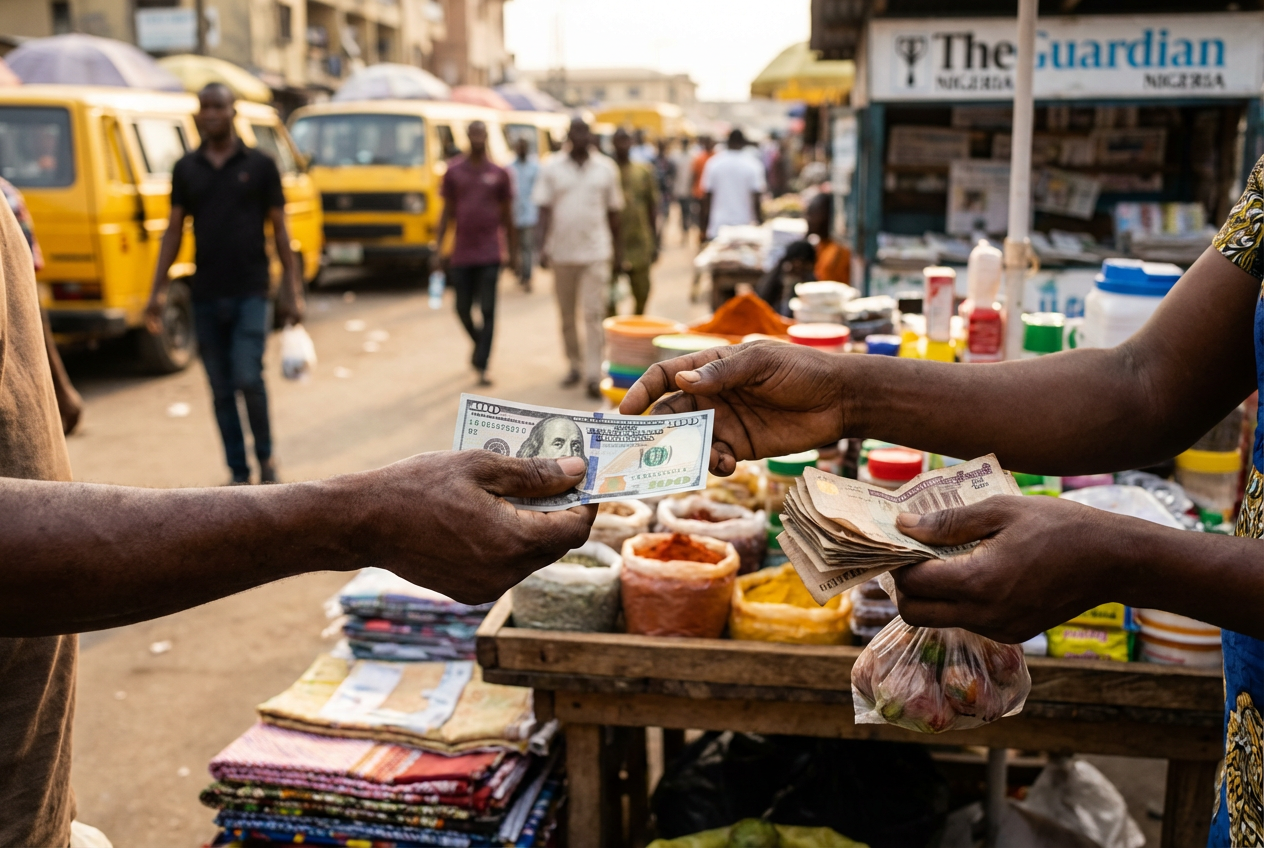
Hello there! I’m absolutely delighted you’ve found your way to this article. After months of research into Nigerian purchasing power dynamics and years spent navigating the practical realities of dollar-to-naira economics, I’m thrilled to share what I’ve learned about how much can $100 get you in Nigeria today. Whether you’re receiving remittances from abroad, planning a visit, or simply curious about the value of American currency in Africa’s most populous nation, this comprehensive guide will walk you through everything from market prices to smart spending strategies.
The purchasing power of $100 in Nigeria has become a fascinating study in economic contrasts, particularly as exchange rates continue their unpredictable dance and inflation shapes daily life for 220 million people.
Understanding the Current Dollar-Naira Exchange Landscape
Right, let’s start with the foundation that determines everything else: the exchange rate. I remember when I first began tracking this seriously back in 2019, thinking the fluctuations were temporary aberrations. How wonderfully naive I was! The naira’s journey against the dollar has been rather like watching a marathon runner gradually lose steam over miles and miles of economic terrain.
As of January 2026, the dollar trades at approximately ₦1,415 to ₦1,500 depending on whether you’re accessing the official market through banks and the Central Bank of Nigeria or navigating the parallel market that most ordinary Nigerians actually use. This means your crisp $100 note translates to roughly ₦141,500 to ₦150,000 in spending power, though I’ll explain shortly why the number you get on paper and what you can actually buy are sometimes two different conversations entirely.
The National Bureau of Statistics tracks these dynamics through their Consumer Price Index, which recently underwent rebasing to reflect 2024 realities. Their data shows that 56.65% of total household expenditure goes toward food, a staggering figure that shapes how far any amount of money stretches.
What makes Nigeria particularly interesting from a purchasing power perspective is the persistent gap between official and parallel market rates. When I need to exchange dollars for naira, I typically face a choice: get ₦1,415 per dollar at the bank with proper documentation, or venture to a Bureau de Change where rates might reach ₦1,500 per dollar. The difference on $100? An extra ₦8,500, which could buy you a week’s worth of transportation or several good meals.

The truth is, most Nigerians don’t actually handle physical dollars regularly. But for those who receive remittances (and Nigeria receives billions annually from the diaspora), understanding how dollars convert into practical purchasing power becomes absolutely crucial. I’ve watched friends receive $100 from relatives abroad and make wildly different decisions about how to maximise that value, decisions shaped by where they shop, what they buy, and how cleverly they navigate Nigeria’s multi-tiered pricing system.
How Much Will $100 Get You in Nigeria Right Now?
Let me give you the straight answer you’re probably seeking. With $100 converted to naira at current rates (let’s use ₦1,450 as a realistic middle ground), you’re looking at ₦145,000 in your pocket. What does that buy you in practical terms?
Quite a lot, actually, if you shop locally and avoid imported goods. You could purchase a month’s worth of groceries for a small family shopping at traditional markets rather than premium supermarkets. I’m talking rice, beans, yam, plantain, tomatoes, peppers, onions, palm oil, fish, and chicken portions – the foundation of Nigerian cuisine. A 50kg bag of local rice costs roughly ₦65,000, leaving you ₦80,000 for proteins, vegetables, and cooking essentials.
Alternatively, ₦145,000 could cover two months of rent for a modest room in many Nigerian cities outside Lagos, Abuja, or Port Harcourt. In places like Enugu, Kaduna, or Ilorin, single-room accommodation in decent neighbourhoods runs between ₦50,000-₦80,000 monthly, meaning your $100 provides genuine housing security.
For transportation, that amount represents extraordinary mobility. At ₦300 per litre for petrol (prices fluctuate but this is roughly current), you could buy approximately 483 litres, enough fuel to drive from Lagos to Kano and back with fuel to spare. Or if you prefer public transport, ₦145,000 buys you months of commuting via danfo buses and okada motorcycles.
Now, here’s where it gets interesting. The moment you shift toward imported goods or premium services, that same $100 shrinks dramatically. A bottle of imported wine that would cost $15 in the United States sells for ₦25,000-₦30,000 in Nigerian supermarkets. Brand-name electronics, clothing from international retailers, or dining at upscale restaurants quickly devour what seemed like substantial purchasing power.
I learned this lesson rather painfully during my first year working in Lagos. I’d mentally convert my salary to dollars and think I was doing reasonably well until I tried maintaining the consumption patterns I’d known abroad. Suddenly my money evaporated! It taught me what millions of Nigerians know instinctively: your purchasing power depends entirely on whether you’re buying Nigerian or buying foreign.
What Can $20 Get You in Nigeria? The Smaller Denominations
Sometimes you don’t have $100, you’ve got $20, and you need to make it work. At current rates, that’s approximately ₦29,000, and I can tell you from experience that ₦29,000 is still meaningful money in Nigeria if you spend wisely.
For food, ₦29,000 buys you a week of solid meals for one person eating at local bukkas (small restaurants). A plate of rice and stew costs ₦800-₦1,500 depending on location and portion size. Two meals daily for seven days would run you ₦11,200-₦21,000, leaving money for breakfast items like bread (₦1,200 per loaf), akara and pap from street vendors (₦500-₦800 per morning).
In terms of transportation, ₦29,000 represents a month of moderate commuting for someone living and working within the same city. If your daily commute costs ₦500 each way (₦1,000 daily), you’d spend ₦22,000-₦26,000 monthly assuming 22 working days, with a bit left over for weekend movements.
Clothing is interesting at this price point. You could buy two or three quality items from Nigerian designers or local tailors. Traditional wear like ankara dresses or agbada outfits made by neighbourhood tailors typically cost ₦8,000-₦15,000 depending on fabric quality and style complexity. Alternatively, shopping at popular markets like Balogun in Lagos or Wuse Market in Abuja, ₦29,000 buys you several pairs of shoes, trousers, shirts, or dresses, though you’d be avoiding premium brands.
Entertainment and leisure? A cinema ticket costs ₦3,500-₦5,000 at Filmhouse or Silverbird Cinemas, meaning ₦29,000 covers five to eight movie outings with popcorn and drinks included. Or you could purchase a monthly subscription to local streaming services, mobile data bundles for a month, and still have money for a nice dinner out.
The beauty of $20 in Nigeria is that it remains genuinely useful. It’s not pocket change, it’s real purchasing power for everyday needs. I’ve had weeks where an unexpected $20 gift from a relative abroad solved immediate problems: phone screen repairs, medical clinic visits, restocking pantry essentials, replacing worn-out work shoes. In wealthier countries, $20 barely registers, but here it moves the needle.
How Much Is a $100 Amazon Gift Card in Nigeria?
Ah, now we’re entering fascinating territory! Amazon gift cards have developed their own peculiar exchange economy in Nigeria, creating what I call a “parallel market within the parallel market.” The value of a $100 Amazon gift card in naira differs quite substantially from exchanging $100 cash, and understanding why reveals a lot about how Nigerians navigate international commerce.
Currently, a $100 Amazon gift card sells for approximately ₦44,000 to ₦48,000 on platforms like Cardtonic, KolaCash, or Snappy Exchange. Yes, you read that correctly – about 30-35% less than what you’d get exchanging physical dollars. Why such a dramatic haircut?
Several factors create this discount. Gift card trading platforms must protect themselves against fraud, which is rampant in this space. They verify cards, ensure they haven’t been used, confirm their regional validity (US cards, UK cards, and European cards trade at different rates), and manage the risk that cards might be disputed after purchase. This verification and risk management costs money, hence the discount.
Secondly, these platforms need to profit from reselling the cards, either to people who actually want to shop on Amazon or to international partners who purchase Nigerian-sourced gift cards at wholesale rates. The spread between what they pay you and what they sell for creates their business model.
Thirdly, Amazon gift cards can’t be used to purchase everything. You’re limited to Amazon’s marketplace, which is brilliant for electronics, books, household goods, and certain categories but doesn’t help if you need to pay rent, buy fuel, or purchase fresh food at the local market. This limited utility suppresses the price compared to freely spendable cash.
I remember when a friend received a $100 Amazon gift card as payment for freelance writing work. Initially excited, she quickly realised that redeeming it through Nigerian platforms meant accepting ₦45,000 instead of the ₦145,000 that $100 cash would fetch. She could either shop on Amazon (paying international shipping fees to Nigeria, which often doubled the effective cost of items), or accept the discounted naira payout. She chose the payout because she needed money for immediate expenses, not electronics arriving in three weeks.
Different gift card types trade at different rates, too. iTunes cards, Google Play cards, Steam cards – each has its own pricing dynamics based on demand among Nigerian buyers. Amazon cards generally trade higher than Steam cards (which are primarily for gaming) but lower than Apple cards (which have strong demand for app purchases and music).
The gift card exchange market has become a legitimate industry in Nigeria, employing thousands and processing millions in transactions monthly. It’s how many young Nigerians monetise international earnings from freelancing, online businesses, or gifts from relatives abroad. Rather like how people used to change foreign currencies at bureaux de change, they now trade digital gift cards through mobile apps.
How Much Is $1 Dollar in Naira Today?
This might seem like a straightforward question, but in Nigeria, asking “how much is $1 in naira?” requires you to specify: which market, which transaction type, and which day?
Let me break down the current rates as of January 2026. At the official Nigerian Foreign Exchange Market (NFEM) – the formal rate published by the Central Bank – $1 trades at approximately ₦1,415. This is the rate banks use for official transactions, what corporations use for international payments, and what you’ll see quoted on financial news platforms.
However, the parallel market (black market, Bureau de Change market, Aboki rate – it has many names) typically prices $1 at ₦1,480 to ₦1,500. This is where most ordinary Nigerians access foreign currency for travel, education expenses, or business imports. The rate fluctuates daily based on supply and demand, sometimes swinging ₦20-30 in a single day during periods of volatility.
Then there’s the bank rate for personal transactions. If you’re receiving dollar remittances through Western Union, MoneyGram, or international bank transfers, the rate you receive often falls somewhere between the official and parallel rates, typically ₦1,430-₦1,450 per dollar after bank charges and fees.
I’ve learned to check rates every morning because they genuinely matter. When I needed to exchange $500 recently for a family emergency, the difference between Monday’s rate (₦1,465) and Wednesday’s rate (₦1,495) meant ₦15,000 more in my pocket – nearly enough to cover another week of the medical expenses I was addressing.
Why do these rates diverge? Nigeria operates what economists call a managed float system, where the Central Bank influences but doesn’t completely control the exchange rate. Limited dollar supply (Nigeria’s foreign exchange reserves fluctuate based on oil revenues), high demand (for imports, travel, business), and speculative trading all push the parallel market rate above the official rate.
During certain periods, the gap widens dramatically. I remember when the spread reached ₦300 per dollar during the COVID-19 period – absolute madness! The government periodically attempts to close this gap through various policies, but market forces are rather like water: they find their level regardless of what channels you try to direct them through.
For practical purposes, when someone asks me “how much is dollar today?” I tell them to check the parallel market rate because that’s what they’ll actually get if they need cash quickly. The official rate is lovely for your calculations but rather theoretical for ordinary transactions.
7 Smart Strategies for Maximising $100 in Nigeria
After years of observing how money moves in this economy, I’ve identified specific strategies that genuinely increase what $100 can buy you. These aren’t theoretical – I use them myself and recommend them based on direct experience.
1. Master the Art of Market Shopping
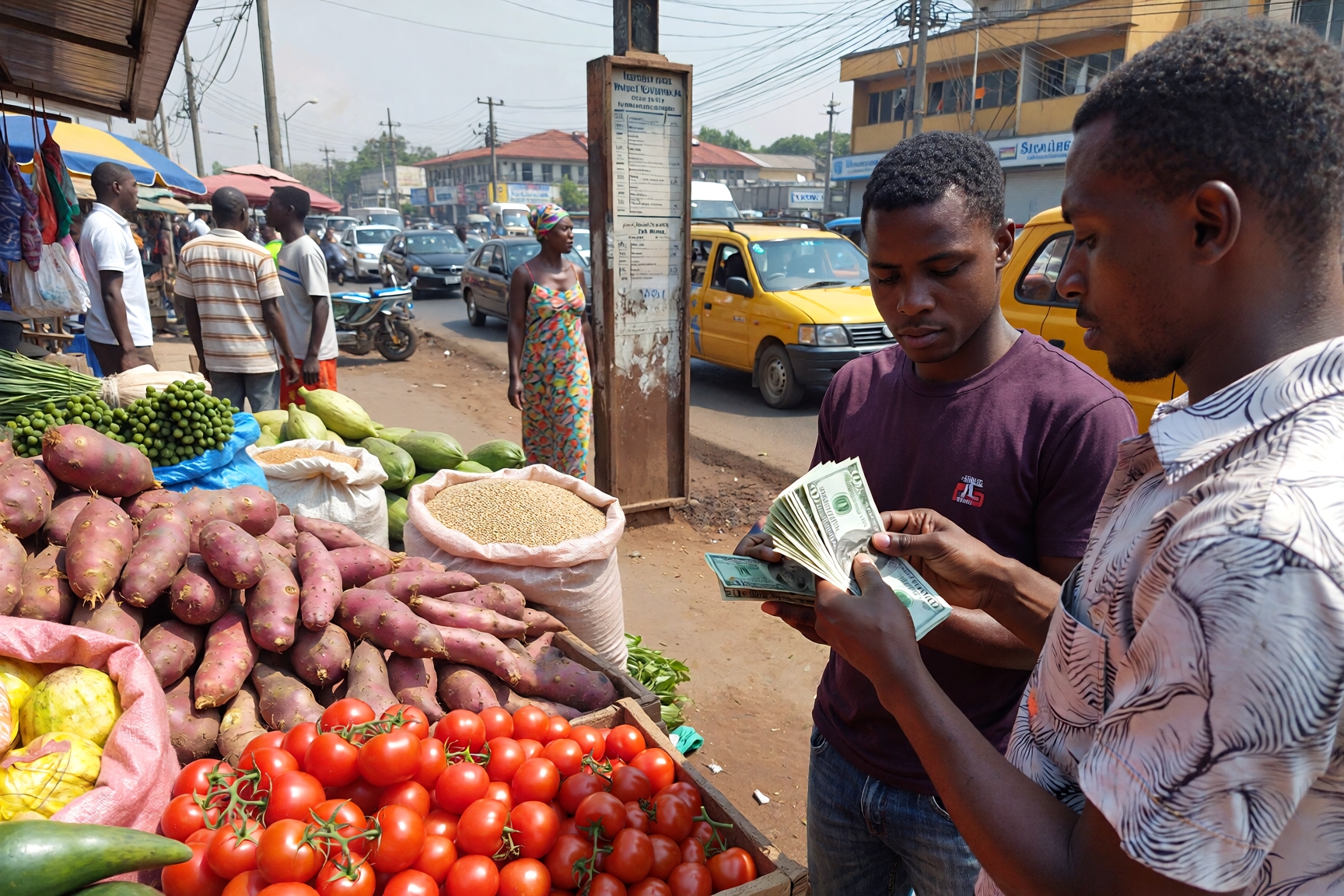
The first strategy is deceptively simple: shop at traditional markets rather than supermarkets whenever possible. That $100 converted to ₦145,000 buys you perhaps 40-50% more groceries at Oshodi Market, Mile 12 Market, or your local area market compared to shopping at Shoprite or Spar. I’ve done direct price comparisons, and the difference genuinely shocked me.
A kilogram of tomatoes costs ₦2,500 at the supermarket but ₦1,200-₦1,500 at the market. Rice, beans, yams, vegetables, fish, meat – almost everything runs cheaper when you buy from traders who source directly from farms or fishing communities rather than through formal retail supply chains that add multiple profit margins.
2. Time Your Exchanges Strategically
Exchange rates fluctuate, and timing matters more than people realise. I monitor the naira’s movement throughout the month and I’ve noticed patterns. Rates often improve slightly toward month-end when diaspora remittances flood in, increasing dollar supply. Conversely, rates typically worsen during December (everyone travelling needs forex) and September (school resumption means parents buying foreign exchange for students abroad).
If you have flexibility about when to exchange your $100, waiting a few days for a better rate could mean an extra ₦2,000-₦5,000. Over multiple transactions annually, this adds up to significant savings.
3. Split Your Purchases Between Local and Imported Goods
Rather than spending all ₦145,000 on imported goods (which would barely buy three items), allocate perhaps 70% to locally produced alternatives and 30% to imports you genuinely need. Nigerian rice, locally raised chicken, vegetables from Nigerian farms, clothing from local tailors – these give you maximum value. Reserve the minority of your budget for imported items that have no good local substitute.
4. Leverage Bulk Buying and Neighbourhood Cooperatives
Many Nigerians belong to informal savings groups or neighbourhood cooperatives where members pool money to buy items in bulk. Joining one of these (they’re called esusu or ajo depending on region) means your ₦145,000 combines with others’ money to purchase wholesale quantities at lower per-unit costs. You then divide the goods proportionally. It’s brilliant for non-perishable items like rice, beans, oil, soap, and toiletries.
5. Negotiate Everything (Seriously, Everything)
Unlike many cultures where prices are fixed, Nigerian markets operate on negotiation. The first price quoted is almost never the final price. I’ve learned to politely negotiate even in contexts where foreigners assume prices are firm. That willingness to haggle respectfully has saved me thousands of naira on everything from electronics to furniture to car repairs. Your $100 simply goes further when you’re comfortable with price discussions.
6. Prioritise Experiences Over Things When Appropriate
Here’s a slightly philosophical strategy that nonetheless affects purchasing power. ₦145,000 can buy you one moderately nice imported gadget that provides temporary satisfaction, or it can buy you multiple experiences: weekend trips to nearby states, cultural events, concerts, restaurant meals with friends, or local adventures. I’ve found that prioritising experiences rather than accumulating things often yields better value and certainly better memories.
7. Understand the 70-30 Rule for Dollar Allocation
If you regularly receive dollars, consider this allocation strategy I developed: convert 70% to naira immediately for current expenses (because you’ll need naira for daily life), but hold 30% in dollars as a hedge against further depreciation. This balances immediate purchasing needs against preserving some value if the naira weakens further. Your $100 becomes ₦70 worth converted now (about ₦101,500) and $30 saved (₦43,500 at current rates, but potentially more later).
What $100 Buys Across Different Nigerian Spending Categories
Now let me paint you specific pictures of what ₦145,000 (our $100 equivalent) actually purchases across various spending categories. I think concrete examples help more than abstract discussions.
Food and Groceries
Shopping at traditional markets with ₦145,000 gets you:
- 50kg bag of local rice (₦65,000)
- 10kg beans (₦12,000)
- 5 litres of vegetable oil (₦10,000)
- Crate of eggs – 30 eggs (₦4,000)
- 5kg frozen chicken portions (₦12,000)
- Fresh tomatoes, peppers, onions for a month (₦15,000)
- Garri, yam flour, or semolina (₦5,000)
- Seasonings, salt, spices (₦8,000)
- Fresh fish or stockfish (₦10,000)
- Remaining ₦4,000 for fruits or vegetables
That’s genuinely a month of solid nutrition for a small family eating Nigerian meals.
Transportation and Mobility
₦145,000 in the transportation category means:
- Monthly transport subscription in Lagos (₦80,000 for moderate commuting)
- Plus fuel for a small generator for a month (₦30,000)
- Plus occasional taxi rides (₦20,000)
- Plus motorcycle repairs or maintenance (₦15,000)
Or alternatively, you could purchase a fairly decent used bicycle for ₦50,000 and have ₦95,000 remaining for other transport needs over several months.
Clothing and Personal Items
Shopping wisely at markets rather than boutiques:
- Three quality ankara outfits from local tailors (₦45,000)
- Two pairs of shoes (₦20,000)
- Underwear and accessories (₦15,000)
- Hair styling or barber visits for several months (₦20,000)
- Toiletries and cosmetics (₦25,000)
- Remaining ₦20,000 for bags or additional accessories
Housing and Utilities
In many Nigerian cities outside the major metropolises:
- One month’s rent for a single room (₦60,000-₦80,000)
- Electricity prepaid for a month (₦20,000)
- Water supply (₦5,000)
- Waste disposal (₦2,000)
- Remaining money for minor household repairs
Education and Learning
For a student, ₦145,000 covers:
- JAMB registration and materials (₦10,000)
- Several months of tutorial classes (₦40,000)
- Textbooks (₦30,000)
- School supplies and stationery (₦15,000)
- Exam preparation materials (₦20,000)
- Internet data for research (₦15,000)
- Plus transportation to classes (₦15,000)
Healthcare and Wellness
Medical expenses that ₦145,000 addresses:
- Consultation at a general hospital (₦5,000-₦10,000)
- Routine medications for chronic conditions for 1-2 months (₦30,000)
- Dental cleaning and basic dental work (₦25,000)
- Eye examination and prescription glasses (₦35,000)
- Basic laboratory tests (₦20,000)
- Remaining for pharmacy needs
The key insight across all these categories is that your $100 delivers maximum value when you’re purchasing locally produced goods and services rather than imports. In fact, the difference in purchasing power based on that single choice is rather like experiencing two different economies within the same country.
How Inflation and Exchange Rates Affect Your Dollar’s Value
I need to address something that fundamentally shapes how much $100 gets you in Nigeria: the twin pressures of inflation and exchange rate volatility. These aren’t just abstract economic concepts; they directly determine whether your money buys more or less month after month.
Nigeria’s inflation rate has been running above 20% annually for extended periods, which means prices increase roughly 2% monthly on average. The naira you convert from dollars today loses purchasing power steadily over time. I’ve watched the cost of a local rice bag increase from ₦42,000 to ₦65,000 within eighteen months – a massive jump that no salary increase could match for most Nigerians.
This creates an interesting dilemma for anyone receiving dollars. Should you convert all $100 immediately, or hold some dollars and convert gradually? The answer depends on whether you believe the naira will weaken faster than inflation erodes dollar purchasing power. Historically, the naira has depreciated faster, meaning holding dollars has preserved more value. But if you need money for immediate expenses, you can’t eat dollars – you need naira.
I’ve developed what I call the “rolling conversion” strategy: convert what you need for the next two weeks rather than the full amount at once. This balances immediate needs against hedging future purchasing power. It’s more work (requiring multiple exchange transactions) but over a year, it genuinely helps.
Food inflation runs particularly hot in Nigeria because of the sector’s vulnerability to factors like insecurity affecting farming regions, poor road infrastructure raising transportation costs, seasonal variations in harvest, and our dependence on imported inputs like fertiliser. When food prices surge, your $100 buys fewer calories, less protein, smaller portions – the impact on family nutrition becomes visible rather quickly.
Understanding these dynamics helps explain why Nigerians often appear obsessed with exchange rates. We’re not economists engaging in intellectual exercises; we’re watching the practical purchasing power of our money either strengthen or evaporate based on forces largely beyond individual control. That $100 gift from a relative abroad means something different in March than it did in January, and being aware of this shapes how we spend it.
Regional Variations in $100 Purchasing Power
Here’s something fascinating that many people miss: ₦145,000 buys you dramatically different lifestyles depending on which Nigerian state you’re spending it in. Nigeria’s 36 states plus Abuja operate rather like sub-economies with distinct cost structures.
In Lagos, Africa’s largest city, ₦145,000 represents perhaps two weeks of modest living for a single person. Rent alone for a single room in a decent area costs ₦150,000-₦300,000 monthly, meaning your $100 doesn’t even cover housing. Food costs run 30-40% higher than the national average because Lagos imports most consumables from other states, adding transportation and middleman margins.
Contrast this with Katsina or Yobe states in the north, where ₦145,000 could cover a full month’s expenses for a small family including rent (₦30,000-₦50,000 monthly for decent accommodation), food, transport, and utilities. I have friends living comfortably on what would constitute poverty-level income in Lagos.
Abuja, our capital city, falls somewhere between Lagos and smaller states. ₦145,000 covers perhaps three weeks of moderate expenses. Port Harcourt mirrors Lagos in cost structure, though accommodation sometimes runs even higher due to the oil industry’s influence on property markets.
Mid-sized cities like Ibadan, Kano, Kaduna, Enugu, or Jos offer perhaps the best purchasing power for your converted dollars. You get urban amenities – universities, hospitals, markets, entertainment – without the extreme costs of Lagos or Abuja. ₦145,000 in Ibadan comfortably covers three to four weeks of decent living.
The implication? If you’re receiving regular dollar remittances and have flexibility about location, choosing where in Nigeria you live dramatically affects how far your money stretches. I know several remote workers who deliberately relocated from Lagos to Ibadan or Enugu specifically because their dollar earnings bought 40-50% more lifestyle quality in these cities.
H3: Comparative Purchasing Power Data Across Nigerian Regions
The table below shows what ₦145,000 (approximately $100 at current rates) typically purchases across different spending categories in various Nigerian regions. These figures represent January 2026 estimates based on market research across major cities in each geopolitical zone.
| Region | Monthly Rent (1 Room) | Weekly Groceries | Transportation (Monthly) | Utilities (Monthly) | Restaurant Meal | Cinema Ticket |
|---|---|---|---|---|---|---|
| South-West (Lagos) | ₦150,000-300,000 | ₦25,000-35,000 | ₦40,000-60,000 | ₦25,000-40,000 | ₦5,000-10,000 | ₦4,500-6,000 |
| South-East (Enugu) | ₦60,000-120,000 | ₦15,000-22,000 | ₦20,000-35,000 | ₦15,000-25,000 | ₦3,000-6,000 | ₦3,500-4,500 |
| South-South (PH) | ₦100,000-200,000 | ₦20,000-30,000 | ₦30,000-50,000 | ₦20,000-35,000 | ₦4,000-8,000 | ₦4,000-5,500 |
| North-Central (Abuja) | ₦120,000-250,000 | ₦20,000-28,000 | ₦35,000-55,000 | ₦20,000-35,000 | ₦4,500-9,000 | ₦4,000-5,000 |
| North-West (Kano) | ₦40,000-80,000 | ₦12,000-18,000 | ₦15,000-25,000 | ₦10,000-20,000 | ₦2,000-4,000 | ₦2,500-3,500 |
| North-East (Maiduguri) | ₦35,000-70,000 | ₦10,000-16,000 | ₦12,000-22,000 | ₦8,000-18,000 | ₦1,800-3,500 | ₦2,000-3,000 |
This data reveals substantial regional cost variations driven by factors including proximity to ports, local agricultural production, population density, security conditions, and income levels. Lagos and Abuja clearly demand the highest expenditure across almost all categories, while northern states generally offer better value per naira spent. Your $100 consequently delivers anywhere from one to four weeks of comparable lifestyle depending purely on geography, making location choice a crucial variable in maximising purchasing power.
The Amazon Gift Card Market: A Deeper Look
Since I’ve touched on Amazon gift cards earlier, let me explore this fascinating parallel economy more thoroughly because it represents a genuine financial innovation in how Nigerians access international purchasing power.
The gift card trading industry emerged to solve a specific problem: how do Nigerians monetise international digital payments when traditional banking infrastructure makes cross-border transactions difficult? Platforms like Cardtonic, Snappy Exchange, Patricia, and KolaCash created marketplaces where gift cards become liquid assets convertible to naira within minutes.
Currently, different Amazon gift card types trade at varying rates. A $100 USA Amazon cash receipt (where you purchased the card with physical cash and have the receipt) commands the highest rates, typically ₦470-₦480 per dollar (so ₦47,000-₦48,000 total). A $100 USA Amazon e-code (digital delivery, no receipt) trades lower at ₦440-₦460 per dollar (₦44,000-₦46,000 total). UK Amazon cards trade slightly lower than US cards due to lower liquidity in the Nigerian market.
The verification process is quite sophisticated now. You photograph the card (front and back), submit the code, provide receipt if available, and answer questions about how you acquired it. Platforms check the card’s validity, ensure it hasn’t been previously used, confirm it matches the regional store you claimed (mixing up US and UK cards costs you money), and verify you’re not involved in fraudulent schemes.
Processing typically takes 5-30 minutes depending on platform and verification complexity. Payment arrives via bank transfer directly to your Nigerian bank account. Some platforms offer cryptocurrency payment as an alternative, which some users prefer if they’re looking to hold value in something more stable than naira.
What drives someone to trade a $100 Amazon gift card for ₦45,000 instead of keeping the card to shop on Amazon? Several factors. Shipping costs to Nigeria are horrendous, often doubling the effective price of items. Customs duties add another 20-30% to the landed cost. Delivery times stretch weeks or months. Many items simply won’t ship to Nigerian addresses. And frankly, ₦45,000 in hand solves immediate problems that electronic gadgets arriving in six weeks cannot.
I know freelancers who receive 50% of their international income as gift cards (clients prefer paying this way to avoid banking fees) and have become expert at maximising returns through strategic timing – trading when rates peak, building relationships with specific platforms that offer loyalty bonuses, and understanding which card types command premium prices.
The market has also spawned an entire ecosystem of informal traders who buy cards from individuals at slightly below platform rates, then sell to platforms at standard rates, pocketing the spread. It’s rather like money changing businesses, except dealing in digital vouchers instead of physical currency. Some people make their entire living facilitating these transactions.
Comparing Nigeria to Other African Countries in Purchasing Power
To truly understand how much $100 gets you in Nigeria, comparing against other African nations provides useful context. Nigeria occupies an interesting middle position in continental purchasing power rankings.
In Kenya, $100 converts to approximately 13,000 Kenyan Shillings, which buys you roughly comparable value to Nigeria for basic goods like food and transportation, but significantly less for housing in Nairobi (more expensive than Lagos) and significantly more for quality fruits and vegetables (Kenya’s agricultural sector is more developed).
Ghana offers arguably better purchasing power than Nigeria for $100. Converting to approximately 1,600 Ghana Cedis, you’d find accommodation, food, and services generally cost 10-20% less than Nigerian equivalents, particularly outside Accra. I have friends who’ve relocated from Lagos to Accra specifically for better quality of life at lower cost.
South Africa presents a fascinating case. While $100 converts to roughly 1,800 Rand, the purchasing power feels weaker than Nigeria’s because South Africa is a more developed economy with correspondingly higher prices for most goods and services. Your $100 buys perhaps 60-70% of what it would purchase in Nigeria.
Egypt and Ethiopia offer substantially higher purchasing power per dollar than Nigeria, particularly for basic food items and transportation. Countries like Morocco or Tunisia, however, run more expensive than Nigeria across most categories.
What makes Nigeria unique is the extreme divergence between local and imported goods pricing. For purely Nigerian products and services, $100 goes remarkably far. The moment you touch imports, purchasing power collapses to levels comparable with middle-income countries elsewhere. This dual economy reality means your experience of $100’s value depends entirely on your consumption patterns.
Practical Tips for Receiving and Using Dollar Remittances
Given that billions in diaspora remittances flow into Nigeria annually, I want to offer practical guidance for anyone receiving dollars from abroad and trying to maximise their naira value.
First, compare receiving channels carefully. Western Union, MoneyGram, WorldRemit, and bank wire transfers all charge different fees and offer different exchange rates. I’ve found WorldRemit sometimes offers rates ₦10-20 per dollar better than competitors, which matters when you’re receiving $100 or more regularly. The fees vary too, from ₦500 to ₦2,000 per transaction typically.
Second, consider receiving directly into a domiciliary account (dollar account at a Nigerian bank) rather than auto-converting to naira. This gives you control over when to convert based on rate monitoring. Most Nigerian banks offer these accounts with minimal documentation. You then convert strategically rather than accepting whatever rate applies when the money arrives.
Third, build relationships with reliable Bureau de Change operators. If you regularly receive dollars, finding trustworthy money changers who offer fair rates and secure transactions saves you money compared to always using banks. I have three BDC contacts I’ve used for years; they know me, offer competitive rates, and conduct exchanges securely.
Fourth, never change large dollar amounts through informal street changers or social media contacts offering “amazing rates.” Counterfeiting, scams, and outright theft are real risks. The ₦20-30 per dollar premium someone offers over legitimate rates simply isn’t worth the risk of losing your entire $100.
Fifth, if possible, request remittances in amounts that align with current conversion needs. Rather than receiving $500 once quarterly, ask for $170 monthly. This averages out exchange rate volatility rather than exposing you to whatever rate prevails on one specific date. It’s rather like dollar-cost averaging in investment.
Finally, maintain basic records of rates you received over time. This helps you spot patterns, identify the best exchange channels, and make informed decisions about whether to convert immediately or wait a few days for potentially better rates.
Real Stories: How Nigerians Actually Spend $100
Let me share a few real examples (names changed for privacy) that illustrate diverse approaches to using $100 in Nigeria:
Chioma in Enugu receives $100 monthly from her brother in Canada. She immediately converts ₦100,000 (roughly 68% of the total) to cover rent, food, and utilities. The remaining $32 stays in her domiciliary account as savings, slowly accumulating toward her daughter’s school fees due in September. This split strategy gives her immediate liquidity plus dollar savings that preserve value against naira depreciation.
Tunde in Lagos operates differently. When he receives $100 for freelance work, he converts only ₦50,000 immediately for urgent expenses, uses $20 worth (₦29,000) to purchase items on Amazon he genuinely needs and can’t find locally, and converts the final $30 when his account runs low, typically 2-3 weeks later. This approach balances immediate needs, leveraging Amazon’s selection for hard-to-find items, and hedging against further devaluation.
Aisha in Kano represents yet another pattern. Her $100 monthly remittance from her husband working in Qatar gets entirely converted immediately because she needs every naira for household expenses supporting three children. The ₦145,000 covers groceries (₦60,000), transport (₦20,000), utilities (₦15,000), children’s school supplies (₦25,000), healthcare (₦15,000), and miscellaneous needs (₦10,000). She has no luxury of holding dollars; naira pays for life.
These diverse approaches reflect different circumstances, risk tolerances, and financial sophistication. There’s no single “correct” way to manage $100 – it depends entirely on your situation, location, and immediate versus long-term needs.
Looking Ahead: What Might $100 Buy in Nigeria Tomorrow?
Forecasting purchasing power is delightfully tricky because it requires predictions about inflation, exchange rates, and economic policy – none of which Nigerian economists agree about! However, we can examine trends and scenarios.
If current trajectories continue, with inflation running 20-25% annually and the naira depreciating 5-10% yearly against the dollar, $100 in late 2026 might convert to ₦1,550-₦1,600, seemingly better purchasing power. However, domestic inflation would simultaneously increase local prices by 20%, meaning the real purchasing power improves only marginally, if at all.
Oil price trends matter enormously. Higher global oil prices strengthen Nigeria’s foreign exchange position, potentially stabilising or even strengthening the naira. Lower prices force further devaluation. Nigeria’s 2026 oil production targets suggest stable to improving foreign exchange supply, which could support the naira – though I’ve learned that oil forecasts rarely materialise as predicted!
Government policies around foreign exchange management, agricultural productivity, security in farming regions, infrastructure development, and monetary policy all influence how much $100 buys. The current administration has emphasised forex market liberalisation and improving agricultural output, policies that could theoretically strengthen purchasing power if successfully implemented.
My personal prediction? $100 will likely convert to more naira in nominal terms by year-end 2026, but won’t necessarily buy dramatically more goods and services in real terms. Inflation and devaluation tend to roughly cancel out over 12-month horizons, though specific categories (especially imported goods) might see sharper price increases than locally produced alternatives.
The encouraging news is that Nigeria’s informal economy demonstrates remarkable resilience and adaptability. Even as official statistics show challenging conditions, millions of Nigerians continue finding creative ways to maximise whatever purchasing power they possess, including the humble $100 many receive from relatives abroad.
How Much Can $100 Get You in Nigeria: The Complete Picture
Now that we’ve explored exchange rates, purchasing patterns, regional variations, gift card economics, and strategic approaches, let me synthesise everything into a clear, comprehensive answer to our central question: how much can $100 get you in Nigeria?
At current January 2026 exchange rates, $100 converts to approximately ₦141,500 to ₦150,000 depending on whether you access official banking channels or parallel market rates. This amount represents genuine purchasing power for essential needs if spent wisely on locally produced goods and services.
Your ₦145,000 could cover a full month of groceries for a small family shopping at traditional markets, or two months of rent in many Nigerian cities outside Lagos and Abuja, or three to four months of moderate transportation needs, or a substantial wardrobe of quality locally made clothing, or comprehensive healthcare for routine medical needs, or several months of educational materials for a student.
However, that same ₦145,000 shrinks dramatically when directed toward imported goods, premium services, or major Nigerian cities with inflated cost structures. In Lagos, it might barely cover two weeks of modest living. Spent on imported electronics or luxury items, it purchases surprisingly little.
The key insight is that Nigeria operates as a dual economy where your dollar’s purchasing power depends almost entirely on whether you’re buying Nigerian or buying foreign, living in Lagos or living in Kano, shopping at markets or shopping at malls. This isn’t one economy with one answer; it’s multiple realities coexisting within the same borders.
For maximising your $100, the strategies that actually work include shopping at traditional markets rather than supermarkets, timing currency exchanges to capture favourable rates, splitting purchases between essential local goods and carefully selected imports, negotiating prices wherever possible, understanding regional cost variations, and converting only what you need immediately while holding the balance in dollars against further depreciation.
From my perspective having watched these dynamics for years, $100 represents meaningful money in Nigeria – not wealth, but genuine utility. It solves problems, provides security, enables purchases that materially improve quality of life. The challenge and opportunity lie in understanding the complex economic landscape well enough to extract maximum value from every dollar you receive.
Conclusion: Making Every Dollar Count in Nigeria’s Economy
After this comprehensive journey through exchange rates, purchasing patterns, regional variations, and strategic approaches, I hope you’ve gained genuine insight into the question of how much $100 can get you in Nigeria. The answer, as we’ve discovered, is remarkably complex because it depends on where you are, what you’re buying, how you’re exchanging currency, and how strategically you approach spending.
Nigeria’s economic landscape presents both challenges and opportunities for anyone handling dollars. Yes, exchange rate volatility creates uncertainty. Yes, inflation erodes purchasing power over time. Yes, the gap between local and imported goods pricing can feel frustrating. But within these realities exist genuine opportunities to maximise value through informed choices, cultural understanding, and strategic financial management.
Your $100, converted wisely and spent thoughtfully on locally produced goods in cost-effective regions, delivers remarkable purchasing power that can cover essential needs for weeks. The same $100, converted carelessly and spent on imported luxuries in expensive cities, evaporates frighteningly fast. The difference isn’t the money itself but the knowledge and approach you bring to using it.
For anyone receiving regular dollar remittances from abroad, developing competency in navigating Nigeria’s foreign exchange markets, understanding regional cost structures, and balancing immediate needs against longer-term value preservation genuinely improves financial outcomes. The strategies I’ve shared, from timing conversions to shopping at traditional markets to maintaining dollar reserves, reflect years of observation and practical application.
If you’re exploring questions around money and Nigerian customs, you might find it helpful to understand why Nigerians often prefer spraying dollars rather than naira at celebrations, which reveals fascinating cultural attitudes toward foreign currency. Similarly, learning about the financial obligations embedded in Nigerian marriage customs provides context for understanding how families allocate resources and prioritise spending.
The fundamental truth is that money in Nigeria requires active management rather than passive spending. Your $100 won’t simply “work” on its own; you need to work with it, understanding the systems, leveraging opportunities, avoiding pitfalls, and making informed choices that align with your specific circumstances and goals.
Key Takeaways
• Exchange strategically: At current rates (January 2026), $100 converts to ₦141,500-₦150,000, but timing your conversion and choosing the right channels (official market at ₦1,415/$, parallel market at ₦1,480-₦1,500/$, or gift card platforms at ₦440-₦480/$) substantially affects the naira you receive – potentially varying by ₦10,000-₦100,000 depending on amount and method.
• Maximise purchasing power through local spending: Your converted naira buys 40-50% more when directed toward locally produced goods (Nigerian rice, market vegetables, local tailors, traditional meals) rather than imports (foreign wine, electronics, premium brands), making consumption choices the single biggest lever for stretching purchasing power.
• Location dramatically affects dollar value: The same ₦145,000 covers one week in Lagos, two to three weeks in Abuja, or a full month in cities like Kano, Enugu, or Ibadan, meaning geographic arbitrage offers remote workers and flexible individuals genuine opportunities to improve living standards without earning more money.
Frequently Asked Questions: Understanding Dollar Value in Nigeria
How Much Will $100 Get You in Nigeria Compared to Five Years Ago?
Five years ago in January 2021, $100 converted to approximately ₦47,000 at official rates and ₦48,000-₦50,000 at parallel market rates, whereas today the same $100 yields ₦141,500-₦150,000 – nearly triple the naira amount. However, domestic inflation over this period has eroded the naira’s purchasing power by roughly 150%, meaning your $100 actually buys only marginally more in real terms despite converting to far more naira. The cruel mathematics of simultaneous devaluation and inflation means nominal gains translate to minimal real purchasing power improvements.
How Much Is a $100 Amazon Gift Card in Nigeria Using Cardtonic or Similar Platforms?
A $100 USA Amazon gift card with cash receipt currently trades for approximately ₦47,000-₦48,000 on platforms like Cardtonic (roughly ₦470-₦480 per dollar), while e-code versions without receipts fetch ₦44,000-₦46,000 (₦440-₦460 per dollar), representing a 30-35% discount compared to converting physical dollars. This significant haircut reflects platform risk management, fraud protection costs, verification expenses, liquidity considerations for reselling cards internationally, and the limited utility of gift cards compared to freely spendable cash.
How Much Can $20 Get You in Nigeria for a Week’s Budget?
Twenty dollars converting to approximately ₦29,000 provides a week of modest but adequate living for one person: two daily meals at local restaurants cost ₦1,000-₦2,000 daily (₦7,000-₦14,000 weekly), transportation within one city runs ₦3,000-₦5,000 weekly, basic groceries if cooking at home total ₦10,000-₦12,000 weekly, leaving ₦5,000-₦10,000 for utilities, communication, or miscellaneous expenses. This assumes local lifestyle choices avoiding imported goods and premium venues; attempting Western consumption patterns would exhaust ₦29,000 in 2-3 days.
How Much Is $1 Dollar in Naira Today at the Black Market Rate?
As of January 2026, one dollar trades at ₦1,480-₦1,500 at the parallel market (often called black market or Aboki rate) compared to ₦1,415 at the official Central Bank rate – a spread of ₦65-₦85 per dollar. This gap fluctuates daily based on dollar supply from oil revenues and diaspora remittances versus demand from importers, travellers, and students, with the spread typically widening during periods of forex scarcity (December travel season, September school resumption) and narrowing when dollar inflows strengthen. Ordinary Nigerians generally access parallel market rates rather than official rates for cash transactions.
Where Can You Exchange $100 for the Best Naira Rate in Nigeria?
The best rates typically come from established Bureau de Change operators in major commercial areas (Marina in Lagos, Wuse Market in Abuja, Ariaria Market in Aba), where competition keeps rates competitive and you can compare multiple offers within minutes – expect ₦1,485-₦1,500 per dollar currently. Banks offer convenience and security but lower rates around ₦1,415-₦1,430 per dollar, while informal street changers occasionally quote ₦1,510-₦1,520 but carry substantial fraud risks. Building relationships with reliable BDC operators over time often yields priority service and slightly better rates for repeat customers.
Can You Buy Property or Land with $100 in Nigeria?
One hundred dollars (₦145,000) cannot purchase property or land outright anywhere in Nigeria, as even the cheapest rural plots start around ₦500,000-₦1,000,000 (approximately $350-$700), while urban land costs millions. However, ₦145,000 could serve as a deposit or initial payment toward property in informal land purchase arrangements where buyers pay incrementally over time, or could cover legal fees, survey costs, and documentation expenses associated with property transactions. Some co-operative property schemes accept ₦100,000-₦150,000 as monthly contributions toward eventual property ownership, making $100 monthly contributions a viable pathway to property accumulation over several years.
How Much Does $100 Worth of Groceries Look Like in a Nigerian Market?
Shopping at traditional markets with ₦145,000 yields impressive quantity: 50kg rice bag (₦65,000), 10kg beans (₦12,000), 5-litre oil container (₦10,000), crate of 30 eggs (₦4,000), 5kg frozen chicken (₦12,000), substantial quantities of tomatoes, peppers, onions, and vegetables (₦15,000-₦20,000), 10kg garri or semolina (₦5,000-₦6,000), stockfish and dried fish (₦8,000-₦10,000), plus seasonings and condiments (₦5,000). This represents 3-4 weeks of solid meals for a family of four eating traditional Nigerian cuisine, though shopping at premium supermarkets would reduce quantity by 40-50% due to retail markup.
What’s the Difference Between Official and Parallel Market Rates for $100?
The current gap between official Central Bank rate (₦1,415/$) and parallel market rate (₦1,480-₦1,500/$) means $100 converted officially yields ₦141,500 while parallel market conversion delivers ₦148,000-₦150,000 – a difference of ₦6,500-₦8,500 per hundred dollars. This spread exists because official rates serve regulated transactions (government payments, formal exports/imports, international bank transfers) with limited access, while parallel markets serve broader demand from individuals, small businesses, and anyone needing cash dollars immediately. The spread narrows when CBN supplies more dollars to banks and widens during scarcity periods.
How Do Nigerians Typically Receive and Convert $100 Remittances from Abroad?
Most diaspora remittances arrive through established money transfer services like Western Union (still dominant with extensive agent network), MoneyGram, WorldRemit, or direct bank transfers, with collection available in naira at prevailing rates or into domiciliary accounts maintaining dollar value. Recipients typically choose between immediate full conversion to naira for urgent expenses (most common pattern), maintaining dollars in domiciliary accounts to hedge against depreciation (growing trend among financially sophisticated recipients), or hybrid approaches converting 60-70% immediately while preserving 30-40% in dollars. Collection locations include bank branches, dedicated money transfer agents, and increasingly, direct bank account deposits eliminating need for physical collection.
What Items Should You Never Buy with $100 in Nigeria Due to Poor Value?
Avoid directing converted naira toward imported premium alcoholic beverages (single bottle costing ₦25,000-₦40,000), brand-name electronics at Nigerian retail markups (same item costs 30-50% less if ordered online despite shipping), premium imported cosmetics and toiletries (when excellent Nigerian alternatives exist at 70% lower cost), dining at upscale hotel restaurants (₦15,000-₦25,000 per meal for imported ingredients and ambiance you’re paying primarily for setting), imported clothing brands at boutique prices (when local tailors produce comparable quality at fraction of cost), and luxury imported packaged foods available at specialist stores (astronomical prices for essentially same products you’d buy cheaply abroad). Focus purchasing on items where Nigeria offers genuine value: local agricultural products, traditional crafts, services, and locally manufactured goods.
How Has the Value of $100 Changed in Nigeria Over the Past Decade?
In January 2016, $100 converted to approximately ₦19,900 at official rates, climbing to ₦36,000 in 2018, ₦47,000 in 2021, ₦77,000 in 2023, and ₦145,000 in January 2026 – nearly sevenfold increase in nominal naira received. However, Nigeria’s cumulative inflation over this decade exceeded 350%, meaning real purchasing power of $100 has actually declined roughly 15-20% despite the dramatic rise in naira conversion. This illustrates the critical distinction between nominal exchange rates (naira per dollar) and real purchasing power (what those naira actually buy), reminding us that currency weakness and inflation often move together, partially offsetting nominal conversion gains.
Is It Better to Hold $100 in Dollars or Convert to Naira in Nigeria?
The optimal strategy depends on your timeline and needs: if you need money within days for immediate expenses, convert to naira immediately as holding dollars you cannot spend serves no purpose. For medium-term horizons (1-6 months), splitting the amount with 60-70% converted for near-term needs and 30-40% held in domiciliary accounts often preserves more value since naira depreciation typically outpaces dollar strength. For longer timeframes exceeding six months, dollars generally preserve purchasing power better than naira due to Nigeria’s persistent inflation and gradual exchange rate weakening, though this assumes you can genuinely afford to lock away these funds without needing them for emergencies or daily expenses requiring naira.

