 Follow Us on Google News
 Follow Us on Google Discover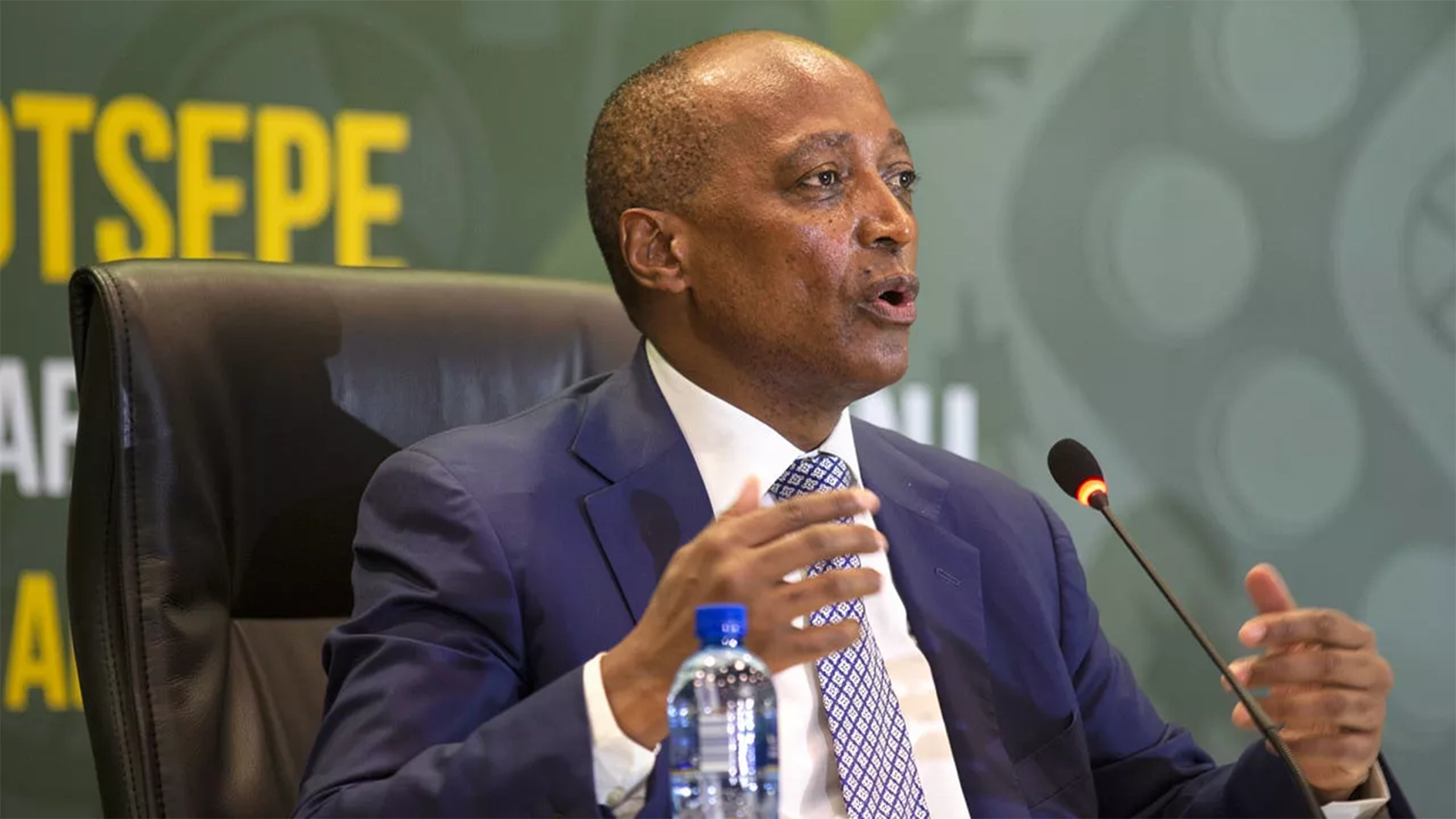
THE recent Africa Cup of Nations (AFCON) tournament in Morocco was one of the most successful, despite the controversial end to the final match. World-class football pitches in Rabat, Casablanca, Fez, Marrakech, Tangier, and Agadir were reached by state-of-the-art high-speed rail networks and glistening new airports in the country of the co-host (with Spain and Portugal) of the 2030 World Cup.
Last year’s harshly suppressed protests by Moroccan youths against the lavish spending, however, raised troubling questions about Africa’s misplaced priorities. In the final, Senegal’s determined Teranga Lions vanquished Morocco’s Atlas Lions, as well as overcoming biased refereeing and a hostile Moroccan crowd, most of whom unsportingly left the stadium before the trophy was presented to Senegal’s talismanic captain, Sadio Mané.
But questions continue to swirl around the Cairo-based Confederation of African Football (CAF), headed by Patrice Motsepe, the 64-year old South African billionaire and owner of the country’s all-conquering football powerhouse, Mamelodi Sundowns. Motsepe was controversially elected to a four-year term as CAF president in March 2021.
FIFA’s (International Federation of Association Football) megalomaniac Italian-Swiss president, Gianni Infantino, heavy-handedly intervened to pressure the three other candidates – Ivorian Jacques Anouma, Senegal’s Augustin Senghor, and Mauritania’s Ahmed Yahya – to step down from the race in exchange for senior posts in CAF, in order to allow Motsepe to be elected unopposed.
Infantino then patronisingly touted this as evidence of “African unity”. All three candidates had decades of football administration experience which Motsepe lacked. Anouma later diplomatically noted that the process was “not too democratic.”
Infantino’s Congolese friend from the University of Fribourg, Veron Mosengo-Omba, a former FIFA official and Swiss citizen, was also installed as CAF’s new general secretary.
Motsepe fulfilled his Faustian bargain by delivering CAF’s 54 votes – over a quarter of FIFA’s membership – in support of Infantino’s imperial third presidential term in March 2023.
Though these issues have been massively under-reported across Africa, the Guardian of London has published a series of articles detailing Mosengo-Omba’s apparently autocratic and unaccountable leadership of CAF involving charges of mismanagement, fraud, personal enrichment, and forgery of documents.
He was accused of transferring bonuses into his personal Swiss bank account worth five times the maximum perks in his employment contract. Though the Swiss public prosecutor’s office declined to press charges due to a lack of sufficient evidence, the damning allegations have damaged CAF’s reputation.
The Congolese was also reported to be running CAF as his “proprietorship” and of having created a toxic environment of fear and intimidation in which employees have been punished and sacked for speaking out, and whistleblowers silenced.
Notable expulsions include Hannan Nur, the former head of CAF’s governance, risk and compliance unit, and Abiola Ijasanmi, its chief operating officer. Mosengo-Omba was also accused of appointing Congolese nationals to senior positions for which they were unqualified.
The main allegations made against Mosengo-Omba were contained in a report by its governance unit which accused him of obstructing its work, violating internal governance and auditing regulations, and creating a “stressful, unethical and unprofessional environment” within CAF.
The Congolese was further accused of seeking to “whitewash” the internal investigation, with CAF’s audit committee alleging “unauthorised interference” after Mosengo-Omba hired an external auditor without any consultation with internal regulators.
The audit committee thus rejected the report, instead recommending the general secretary’s suspension. Motsepe instituted an independent investigation, but failed to suspend Mosengo-Omba who has denied all charges. The CAF president also expressed “total confidence” in his beleaguered general secretary.
Mosengo-Omba was further accused of having ignored a recommendation that the head of Gabon’s football federation, Pierre-Alain Mounguengui, was ineligible to join the CAF Executive Committee (EXCO) due to accusations that he had covered up widespread sexual abuse and the rape of young footballers. Motsepe reportedly visited Mounguengui during his six-month detention. Mosengo-Omba has now reached the statutory retirement age of 66, and had been expected to step down from his post.

Another damning allegation, reported by the Guardian of London as having been made against Motsepe by a senior CAF staff, was that: “In four years of his mandate, he only came [to Cairo] twice and met the staff once. He doesn’t have a clue what’s going on inside his own confederation.” This staff member was thus suggesting that Motsepe has continued to live in Johannesburg, leaving the running of CAF in Cairo largely to Mosengo-Omba.
More positively, Motsepe has been able to attract 1.4 billion viewers to AFCON, resulting in a $72 million profit from the 2024 tournament. He has further increased annual contributions to the 54 African federations from $150,000 to $400,000 (promising last year to raise this to $1 million), and boosted prize money to countries participating in AFCON. CAF is also negotiating a $1 billion 8-year television broadcasting deal for hosting future AFCON tournaments.
The South African had inherited a $41 million debt in March 2021, with CAF reporting a $9.48 million profit in 2023/2024. However, its audit committee alleged, in 2024, that over $16 million in “unrecognised expenses” were excluded from official accounts, meaning that the confederation had incurred losses of over $25 million, half of which reportedly related to funds that should have been allocated to clubs, federations, and host countries across the continent.
Worryingly, amidst these serious challenges, Motsepe was again elected unopposed as CAF chief in March 2025. Just before the start of AFCON last December, he unexpectedly announced that the biennial continental competition would be held every four years from 2028, with an African Nations League also to be introduced. AFCON has traditionally been CAF’s main money spinner, which was why it was held every two years. This decision, made with the 24-member CAF EXCO, caught many African football federations by surprise, and closer consultation should at least have occurred with all 54 members.
At a CAF meeting in Rabat in February 2020, Infantino had dismissed AFCON’s arrangements as “useless,” suggesting the tournament be staged every four years like the European Championship. He also subsequently sought to move the holding of the tournament to between September and November.
Accusations have therefore persisted that FIFA controls CAF by remote control from Zurich – through Infantino’s “Trojan horse” in Cairo, Mosengo-Omba – with the Italian-Swiss playing the role of grand puppeteer. Infantino’s buffoonery has been widely ridiculed, having awarded the warmongering and hate-spewing U.S. president, Donald Trump, a meaningless FIFA peace prize two months ago. The FIFA boss also opened an office in Trump Tower in New York last July.
Just before AFCON, Infantino was again accused of showing a total lack of respect for African football in order to ingratiate himself with European clubs. FIFA changed the release date of Europe-based African players from the mandatory two weeks to one week, leaving insufficient time for African teams to train together before the competition started. Infantino also opened a FIFA base in Rabat last year, and has shown a clear bias towards a country which he clearly prefers visiting over black African cities.
There are troubling signs that African football may be relapsing into the era of corruption-riddled favouritism and skulduggery of the autocratic Cameroonian, Issa Hayatou’s three-decade misrule (1988-2017). CAF is yet to explain why Morocco has been assigned the unprecedented hosting of three consecutive Women’s Africa Cup of Nations (WAFCON) tournaments, or why the country was simultaneously awarded the hosting of this year’s AFCON, having belatedly withdrawn from hosting the tournament in 2015 following racist arguments about cases of Ebola in three West African countries. Rabat was subsequently suspended and fined by CAF. Motsepe must now urgently explain to soccer-mad Africans what is going on in his confederation.
Professor Adebajo is a Senior Research Fellow at the University of Pretoria’s Centre for the Advancement of Scholarship in South Africa.

