 Follow Us on Google News


 Follow Us on Google Discover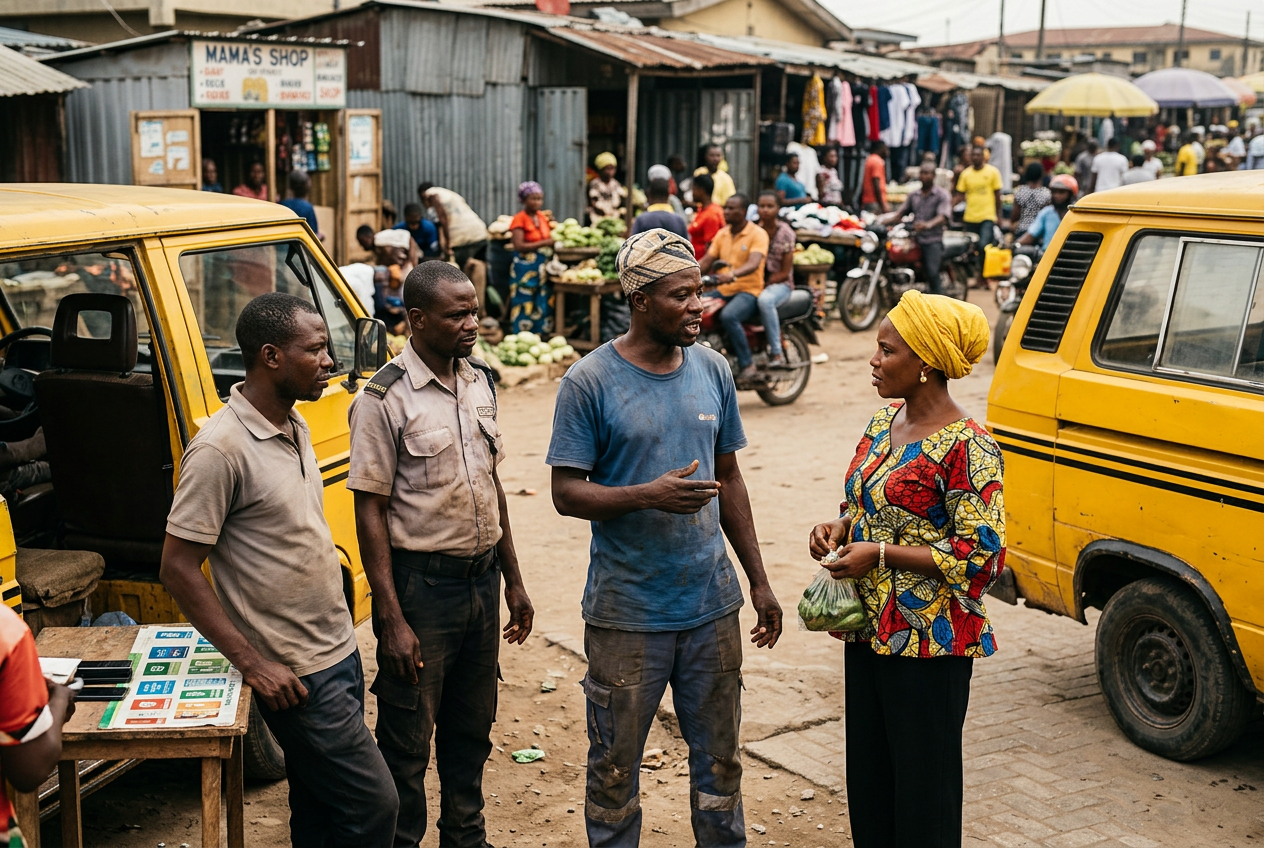
Welcome, and do sit down, because this one has been sitting on my desk for a long time.
I have spent months on this question, working through household surveys, wage bulletins and a great many conversations conducted in market stalls and danfo queues rather than conference rooms. After years of writing about Nigerian money, I can tell you that most people asking who are the low income earners in Nigeria are picturing somebody else. Somebody poorer. Somebody further down the road. The uncomfortable arithmetic, once you set it against the consumption threshold statisticians use to sort households, is that this group is not a minority clustered at the edges of the economy.
It is the economy.
That is the finding I kept arriving at from different directions, and it is the one I want to lay out for you properly, with the numbers attached and the caveats visible. Because the honest picture here is not a sad statistic to shake your head at. It is a description of the country most Nigerians actually live in, including a great many people who would never describe themselves as low income at all.
Let me start with the money, then work outwards to the people.
What is the lowest salary earner in Nigeria?
The legal answer is tidy. The real answer is not.

Since July 2024, the national wage floor has been ₦70,000 per month, set by the National Minimum Wage (Amendment) Act, which more than doubled the previous ₦30,000 figure. As of this month it has not moved, although the pressure to move it is considerable. The Nigeria Labour Congress spent the early part of 2026 pressing for an early review, and the Federal Government has publicly acknowledged that ₦70,000 no longer matches what workers face at the market. States have improvised around the gap in their own ways, with Lagos paying ₦85,000, Ebonyi ₦90,000, Kebbi ₦75,000, and one or two paying north of ₦100,000, while others have taken well over a year to pay the legal floor at all.
So far, so much like a wage negotiation anywhere.
Here is where Nigeria diverges sharply from the countries whose wage debates we borrow our vocabulary from. The minimum wage is a rule about employees, and most working Nigerians are not employees in any sense the law recognises. The National Bureau of Statistics labour force survey put informal employment at 93 per cent in the second quarter of 2024, and that figure has barely twitched since. Ninety three per cent. The vulcaniser at the junction, the woman selling akara from six in the morning, the keke driver, the apprentice tailor on a two-year agreement, the farm labourer paid by the day during harvest, the security guard hired through a small agency that conveniently employs fewer than twenty five people and is therefore exempt from the wage floor entirely.
None of them has a payslip. None of them is covered by the number everyone argues about on television.
The genuinely lowest earners in Nigeria, then, are not the people on ₦70,000. They are the people for whom ₦70,000 would represent a raise. Rural farm labour in parts of the North West can pay ₦2,000 to ₦3,000 for a day’s work, and the work is seasonal. House help arrangements, often involving a young person sent from a village to a relative’s flat in the city, may involve no cash wage at all beyond food, a mattress and school fees that sometimes materialise and sometimes do not. Apprentices in the trades frequently earn nothing for years, on the understanding that a settlement comes at the end.
Set against this, the official poverty line is almost quaint. The National Bureau of Statistics poverty and inequality report drew the line at ₦137,430 per person per year in 2018 and 2019 prices, which works out at roughly ₦376 a day. At the time, 40.1 per cent of Nigerians fell below it, about 82.9 million people. You could not buy a sachet of water and a bus fare with ₦376 today, which tells you rather a lot about what has happened to the naira in between.
And that is the crux of it. Nominal wages have risen. Real wages have collapsed. A Guardian opinion piece on the long erosion of what a pay packet buys made the point some years ago that the cost of living had outrun the wage floor so thoroughly that earnings had roughly halved in real terms. Everything since, the subsidy removal, the exchange rate unification, the food inflation that is still running at 17.52 per cent as of June 2026 while headline inflation sits at 15.91 per cent, has widened rather than closed that gap.
Rather like running up a descending escalator. You are moving. You are working hard. You are not arriving anywhere.
Who are the low income earners in Nigeria, in plain terms?
Here is the direct answer, and I want to state it plainly before adding any nuance to it.
Low income earners in Nigeria are the roughly two thirds to three quarters of working adults whose monthly income sits below about ₦100,000, a group that includes smallholder farmers, petty traders, artisans, transport operators, casual and daily-paid labourers, domestic workers, apprentices, junior public servants on the lower grade levels, private school teachers, security personnel and the enormous population of self-employed people whose earnings swing wildly from week to week. They are overwhelmingly informal, largely unbanked or thinly banked, concentrated but by no means confined to rural areas and the northern zones, and they are the demographic that both the national poverty line and the multidimensional poverty measures are designed to count. The Bureau’s 2022 multidimensional poverty survey found 63 per cent of Nigerians, some 133 million people, poor on measures spanning health, education, living standards and employment shocks, with incidence ranging from 27 per cent in Ondo to 91 per cent in Sokoto. Two thirds of that poor population, roughly 86 million people, live in the North.
Who, concretely, are we talking about? The list is less exotic than the statistics make it sound:
- Smallholder farmers, who make up the single largest occupational bloc and whose income arrives in two or three lumps a year
- Market traders and hawkers, working on margins measured in tens of naira per item
- Artisans and their apprentices, including tailors, mechanics, welders, carpenters and hairdressers
- Commercial transport operators, the okada, keke and danfo drivers who often rent rather than own the vehicle
- Domestic workers, cleaners, cooks, gatemen and drivers in private households
- Junior civil servants and local government staff on the lower grade levels, many still waiting on full minimum wage implementation
- Teachers in low-fee private schools, frequently paid less than the legal floor and paid late
- Casual labourers on building sites, in warehouses and at ports, hired by the day
Notice how many of those jobs are visible to you every single day. That is the point I keep returning to. This is not a hidden underclass. It is the person who sold you breakfast.
The state has not been entirely absent, although the scale of its response is dwarfed by the scale of the need. The National Cash Transfer Office, working from the National Social Register of poor and vulnerable households, runs the conditional cash transfer programme with a target of 15 million beneficiary households under the scaled-up safety nets project. Fifteen million households sounds enormous until you set it beside 139 million people the World Bank estimated were below the national poverty line in 2025.
I should flag something here, because you will hear these numbers thrown about with more confidence than they deserve. The poverty figures are genuinely contested. A Guardian columnist recently published a careful methodological critique of how these statistics get deployed in public argument, and the point stands regardless of where you land politically. Estimates of informality alone swing by twenty percentage points depending on whether you define it by enterprise or by employment. The Presidency has publicly disputed the World Bank’s headline poverty rate. The last full living standards survey was conducted in 2018 and 2019, and much of what has been published since involves modelling and extrapolation on top of it.
None of which changes the direction of travel. It just means you should hold the second decimal place loosely.
What salary is considered middle class in Nigeria?
Now to the question that quietly bothers everyone, because almost every Nigerian who owns a laptop believes themselves to be middle class and a good number of them are wrong.
There is no official definition. The African Development Bank has put the Nigerian middle class at around 23 per cent of the population, using consumption-based measures. Nigerian commentators and recruiters typically use a band of ₦300,000 to ₦1.5 million monthly, sometimes stretching the floor down to ₦250,000 for household rather than individual income. A World Bank study took a more interesting approach, defining the middle class not by income but by security, the level of consumption at which your probability of falling back into poverty drops to about ten per cent. By that logic, a great many people earning what looks like a middle class salary are not middle class at all. They are one hospital admission away from the bottom.
That last framing is the one I find most useful, and it is why I distrust the neat bands.
Consider a Lagos household on ₦400,000 a month. On paper, comfortable. In practice, rent demanded a year in advance, a generator that eats ₦60,000 of petrol monthly, school fees for two children, a car that needs its suspension seen to after the third rainy season, and no health insurance because the employer does not provide it and the premiums looked optional in January. That household is one serious illness from disaster. Meanwhile the same ₦400,000 in Ilorin or Calabar buys genuine breathing room.
Geography is doing far more work in these numbers than income is.
Monthly income bands and what they actually buy in Nigeria
The table below sets out the income distribution most usefully documented in Nigerian survey work, drawn from the Nigerian Financial Services Market report, which sampled both formal and informal earners. The shares are approximate and the survey is a few years old, so treat them as shape rather than precision.
| Monthly income (₦) | Share of working Nigerians | Where it sits | What it realistically covers |
|---|---|---|---|
| Below 35,000 | About 27.8 per cent | Well beneath the legal wage floor | Food and transport, with nothing left over |
| 35,000 to 50,000 | About 21.2 per cent | Still under the ₦70,000 minimum | A room in a shared compound, no savings |
| 50,000 to 100,000 | About 19.3 per cent | Around and just above the wage floor | Survival for one adult, real strain for a family |
| 100,000 to 150,000 | About 8.3 per cent | Lower middle in urban terms | A modest flat away from the city centre |
| 150,000 to 200,000 | About 3.7 per cent | Comfortable in a small town, tight in Lagos | School fees for one or two children |
| Above 200,000 | About 2.4 per cent | The top of the national distribution | Savings, private healthcare, some slack |
What this table shows so starkly is that roughly seven in ten working Nigerians earn under ₦100,000 a month, and that the entire population above ₦200,000 fits into a sliver barely larger than a rounding error. A further 17.1 per cent of respondents reported no earnings at all, which sits outside the bands above and pushes the real picture darker still.
What percentage of Nigerians earn 200k monthly?
About 2.4 per cent, if you count everybody who works.
That is the figure from the Nigerian Financial Services Market survey, covering formal and informal earners together, and it is the number that circulates most widely online, usually accompanied by considerable disbelief. The same survey found only around 10 per cent of Nigerians earning above ₦100,000 monthly.
Now, you will also see estimates of 25 to 30 per cent for the share of formal sector employees clearing ₦200,000, and both figures can be true at once. The formal sector is a small, unrepresentative slice of Nigerian working life. If 93 per cent of employment is informal, then a statistic about formal employees is a statistic about roughly one worker in fourteen. Quoting it as a national figure is how people end up believing ₦200,000 is an ordinary salary.
My own working estimate, weighing the survey evidence against tax data and the sheer size of the informal economy, lands somewhere between three and eight per cent of all income earners above ₦200,000 monthly. Wide, I know. The honest range is wide.
What does ₦200,000 actually mean in practice? At roughly ₦1,366 to the dollar as of mid-2026, it is about $146 a month. It is nearly three times the legal minimum wage. It is also, in Lagos, a salary on which a single person rents a self-contained flat in a middling area, fuels a generator, feeds themselves, and saves very little. Add one child and the sums stop working. Add a parent needing medication and they stop working faster.
I wrote at some length about the other end of this distribution in a piece on the country’s dollar millionaire population, and the contrast is worth sitting with. Roughly seven thousand Nigerians hold a million dollars or more in investable assets. Roughly one hundred and forty million live below the national poverty line. There is very little in between, which is precisely what economists mean when they describe a distribution as hollowed out.
What percentage of Nigerians earn 500k monthly?
Around five per cent, according to the most recent consumer survey work, and I would treat that as an upper bound.
The Nigerian Consumer Outlook survey published in 2025 found roughly 4.9 per cent of respondents earning ₦500,000 or more per month, including about 0.4 per cent above ₦1 million. That group skewed heavily towards entrepreneurs, senior professionals, and Nigerians earning in foreign currency, which is its own quiet commentary on where naira salaries have landed.
You will have spotted the tension immediately. One survey says 2.4 per cent are above ₦200,000. Another says roughly 5 per cent are above ₦500,000. Those cannot both be right, and the discrepancy comes down to sampling. Consumer outlook surveys recruit online and skew urban, educated and connected. Household surveys reach the village. Neither is lying; they are measuring different Nigerias, and the gap between them is itself a finding worth noticing.
What I would say with confidence is this. Fewer than one working Nigerian in twenty earns ₦500,000 a month, and the true figure is probably closer to one in fifty once rural and informal earners are properly weighted. ₦500,000 converts to roughly $366. In global terms that is a modest income. In Nigerian terms it puts you comfortably in the top few per cent, able to afford private healthcare, private schooling, a car and meaningful savings, which is exactly the bundle of things the state does not reliably provide and therefore the bundle that defines class here.
The governors’ proposal earlier this year for a ₦100,000 minimum wage, and the argument it triggered about who holds the constitutional authority to set wages at all, is documented in a useful Guardian analysis of the standoff. Labour, for its part, has since floated ₦500,000 as its own target. Reading those two numbers side by side tells you everything about how far apart the parties currently sit.
Practical steps if you are on the wrong side of these numbers
Advice columns about poverty tend to be insulting, so let me be careful. Nothing below solves a structural problem with individual effort. But there are moves that measurably improve outcomes for people earning below the national average, and I have watched enough of them work to list them honestly.
- Get the arithmetic on paper before anything else, because most people underestimate their own spending by twenty to thirty per cent and cannot plan around a number they have not measured. Track every naira for one full month.
- Attack the transport line first, since it is usually the second largest cost after food and the most compressible. Moving closer to work, or shifting to a monthly arrangement with a driver rather than daily fares, can free ₦15,000 to ₦30,000 a month in a big city.
- Register for whatever social protection you qualify for, starting with your local government’s enumeration for the National Social Register, and for state health insurance schemes where they exist, since out-of-pocket medical spending is the single most common route from low income into outright poverty.
- Build a buffer of ₦20,000 before you build anything else, because the buffer is what stops a burst tyre from becoming a loan at forty per cent interest. Ajo and esusu contributions count, and for many people they work better than a bank account precisely because the social pressure to keep paying is real.
- Add a second income stream that does not depend on your first, rather than chasing a raise in a job with no ladder. Weekend trading, a skill sold on Saturdays, a small stock of something that does not spoil.
- Invest in one certifiable, in-demand technical skill and get the certificate, since survey after survey shows that documented technical skills move people between income bands more reliably than general degrees do.
- Insist on the wage floor if you are formally employed, in writing, through your union or through the state labour office, because the ₦70,000 minimum is law and non-payment by state governments and private employers persists largely on the assumption that nobody will formally complain.
None of that is glamorous. All of it compounds.
Final Thoughts
So, who are the low income earners in Nigeria? They are not a category at the margin. They are farmers and traders and drivers and tailors and teachers and cleaners and gatemen, they are somewhere between two thirds and three quarters of everyone who works in this country, and a great many of them are people who would tell you, sincerely, that they are managing.
What struck me hardest across months of this research was not the poverty figures. It was the compression. Nigeria does not have a gently sloping income distribution with a broad middle. It has a very long, very crowded floor, a narrow staircase, and a tiny landing at the top. The gap between ₦100,000 and ₦500,000 contains almost nobody, which is why the jump feels impossible to the people below it and invisible to the people above it.
The practical takeaway for a reader is less about resignation than about calibration. If you earn ₦250,000 a month and feel poor, the feeling is real and so is the arithmetic; you are also in a small national minority, and that tension is worth holding without guilt or denial. If you earn ₦70,000, you are not failing at money management. You are running the escalator.
And if you are anywhere on this ladder, the moves that matter are the boring ones. Measure your spending. Build the small buffer. Get the certificate. Claim what you are legally owed.
- Work out honestly which income band you occupy nationally, not which one your social circle occupies, because the two are rarely the same
- Treat out-of-pocket medical costs as the single biggest threat to your financial position and get insured through any scheme available to you
- Pursue one documented technical skill rather than three vague ambitions, since certified skills are what actually move Nigerians between income bands
Related Articles
If the top of this distribution interests you as much as the bottom, my earlier piece on how many people here actually hold seven figures in dollars works as a direct companion to this one, and the contrast between the two populations is genuinely startling when you set the counts beside each other. And since medical costs are the mechanism that pushes more Nigerian households below the line than any other single shock, I would point you towards my longer examination of how care is actually financed and delivered across the country, which explains why a single admission can undo a decade of careful saving.
Key Takeaways
- Between two thirds and three quarters of working Nigerians earn under ₦100,000 a month, and roughly 93 per cent of all employment is informal and therefore outside the ₦70,000 legal wage floor
- Only about 2.4 per cent of all earners clear ₦200,000 monthly and fewer than five per cent reach ₦500,000, which means the Nigerian middle is far thinner than public conversation assumes
- The survey numbers genuinely disagree with one another because they sample different populations, so read the direction of travel confidently and the decimal places sceptically
Frequently Asked Questions
Who are the low income earners in Nigeria?
They are the roughly two thirds to three quarters of working Nigerians earning below about ₦100,000 monthly, including smallholder farmers, petty traders, artisans, transport operators, casual labourers, domestic workers, apprentices and junior public servants. The overwhelming majority work informally, which places them outside the protection of the national minimum wage entirely.
What is the lowest salary earner in Nigeria?
Legally the lowest is a formal employee on the ₦70,000 national minimum wage, in force since July 2024. In practice the lowest earners are informal workers such as daily-paid farm labourers, apprentices and domestic staff, many of whom earn far less than that or receive no cash wage at all.
What salary is considered middle class in Nigeria?
There is no official definition, but Nigerian commentators typically place the middle class between ₦300,000 and ₦1.5 million monthly, while the African Development Bank has estimated the group at around 23 per cent of the population. A more useful test is security rather than income, meaning the point at which your risk of falling back into poverty drops meaningfully.
What percentage of Nigerians earn 200k monthly?
About 2.4 per cent of all working Nigerians earn above ₦200,000 monthly according to the Nigerian Financial Services Market survey, which covers both formal and informal earners. Estimates of 25 to 30 per cent apply only to formal sector employees, who represent roughly one worker in fourteen.
What percentage of Nigerians earn 500k monthly?
Around five per cent according to the 2025 Nigerian Consumer Outlook survey, including roughly 0.4 per cent earning above ₦1 million. That survey skews urban and online, so the true national share is likely closer to two per cent once rural and informal earners are properly weighted.
Is the ₦70,000 minimum wage enough to live on in Nigeria?
No, and the Federal Government has publicly acknowledged as much, with organised labour pressing through 2026 for a substantial upward review. At roughly $51 a month it covers food and transport for a single adult in most cities and very little else.
How many Nigerians live below the national poverty line?
The World Bank estimated about 139 million people, or roughly 61 to 63 per cent of the population, were below the national poverty line in 2025, up from 40 per cent in 2018 and 2019. The Presidency has disputed these figures, so treat the exact percentage as contested while the trend itself is well supported.
Does the national minimum wage apply to every employer in Nigeria?
No, the National Minimum Wage Amendment Act 2024 exempts employers with fewer than 25 workers, which excludes an enormous share of Nigerian businesses. Enforcement is also weak among those covered, with several state governments taking more than a year to implement the rate.
Why do informal workers earn less than the legal minimum wage?
Informal workers are not employees in the legal sense, so the wage floor simply does not apply to them, and their earnings are set by daily market conditions rather than by contract. Since informal employment accounts for about 93 per cent of Nigerian jobs, the minimum wage governs only a small fraction of national income.
Which parts of Nigeria have the most low income earners?
The northern zones carry the heaviest concentration, with roughly two thirds of multidimensionally poor Nigerians living in the North according to Bureau of Statistics survey work. Poverty incidence ranges from about 27 per cent in Ondo to about 91 per cent in Sokoto, and rural poverty runs far higher than urban poverty everywhere.
Do low income earners in Nigeria receive government support?
Some do, through the conditional cash transfer programme run from the National Social Register of poor and vulnerable households, which targets 15 million beneficiary households. Coverage remains far below need, and enrolment depends on local government enumeration that has not reached every community.
Can a low income earner in Nigeria still save money?
Yes, and rotating savings arrangements such as ajo and esusu remain the most effective route for people without stable banking access. The realistic first goal is a small emergency buffer rather than long-term investment, because the buffer is what prevents an unexpected cost from becoming high-interest debt.

