 Follow Us on Google News


 Follow Us on Google Discover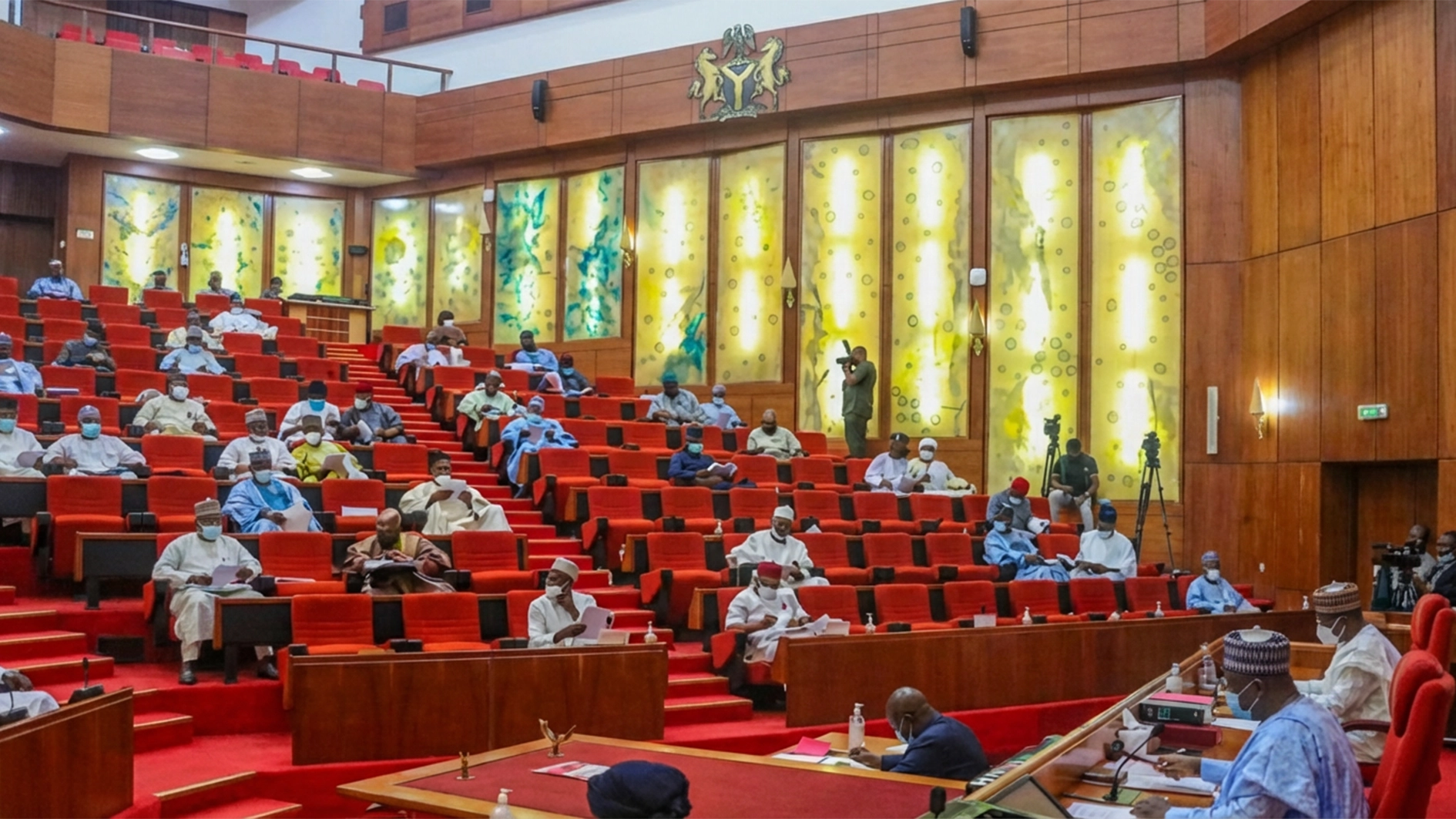
There are strong indications that the amendments passed by the National Assembly on electronic transmission of election results could put the 2027 elections at risk if the version passed is what is eventually assented to by the President.
While the Bill is yet to be harmonised between the House of Representatives and Senate, the current provisions which may guarantee electronic uploads to the INEC Results Viewing Portal but leave legally recognised collation of results vulnerable to manual override could trigger disputes during the 2027 elections.
After much pressure and protests, the Senate on Tuesday approved the e-transmission of results while at the same time permitting manual collation to serve as a backup where technology fails. The decision followed a reconsideration of a disputed clause in the Electoral Act Amendment Bill during an emergency plenary.
But the upper chamber stopped short of making electronic transmission compulsory and also rejected the provision for real-time upload of results.
Section 60(3) of the Electoral Act, 2022 states that “the presiding officer shall transfer the results, including the total number of accredited voters and the results of the ballot in a manner as prescribed by the Commission.”
The new version approved by the senates states: “That the presiding officer shall electronically transmit the results from each polling unit to the IReV portal. And such transmission shall be done after the prescribed Form EC8A has been signed and stamped by the presiding officer and/or countersigned by the candidates or polling agents, where available at the polling units, PROVIDED that if electronic transmission fails and it becomes difficult to transmit the results, Form EC8A shall be the primary means of collation.”

The House of Representatives, in contrast, had initially approved a version of the Bill that required presiding officers to electronically transmit results from each polling unit to IReV, with real-time uploads, and only after Form EC8A was signed and stamped by the presiding officer or countersigned by polling agents, where available.
With the Senate now inserting a proviso that allows manual collation to take precedence when electronic transmission fails, the two versions must still be reconciled by a conference committee before the Bill can be transmitted to the President for assent.
But already, there are serious concerns that the amendments passed by the House of Representatives and the Senate fail to recognise the history of electoral reforms in the country, the progress achieved, and the interventions of the Supreme Court of Nigeria as the guardian of the Constitution.
Indeed, while the lawmakers might believe that the amendment strengthens the electoral process, a closer examination has revealed a fundamental flaw.
The amendment as passed by Senate, requires presiding officers to upload results to INEC’s Results Viewing Portal (IReV), which is intended for public viewing, not for official collation. At the same time, it allows manually compiled Form EC8A results to take precedence whenever electronic transmission fails or is delayed.
This distinction, experts warn, creates a legal and operational gap. This is because in situations where electronic transmission fails or is delayed, manually collated Form EC8A results could take precedence, potentially overriding what was uploaded to the portal.
The experience of the 2023 general elections also revealed the risks embedded in the current amendment.
Despite widespread deployment of electronic systems like Bimodal Voter Accreditation System (BVAS), disputes over the collation of results and allegations of manipulation led to prolonged litigation after the 2023 general elections.
Both Peter Obi of the Labour Party and Atiku Abubakar of the Peoples Democratic Party (PDP) took their grievances over the 2023 presidential election all the way to Nigeria’s election tribunals and the Supreme Court.
Part of the litigation was because of how results were handled, including issues around electronic transmission.
Obi and Atiku contended that INEC did not follow technological and legal procedures as prescribed in the Electoral Act 2022. They argued that the use of electronic systems, including the Bi-modal Voter Accreditation System (BVAS) and the INEC Results Viewing Portal (IReV), were meant to be mandatory and integral to the result transmission and collation process under the Electoral Act, 2022.
Atiku’s appeal specifically argued that INEC’s failure to transmit election results electronically to the collation system and IReV undermined the purpose of the Electoral Act’s technological provisions and opened the process to manipulation.
Obi and the Labour Party likewise challenged the tribunal’s handling of these issues, saying the lower court failed to give proper weight to evidence and arguments about the legal and procedural importance of electronic transmission.
But, the Supreme Court ultimately upheld President Bola Tinubu’s election and rejected the appeals, holding that the unavailability of results on the IReV portal alone was not a ground for nullifying an election and that the Electoral Act did not make electronic transmission compulsory.
The court also reaffirmed the legal distinction between the IReV portal and the official result collation system.
It should be noted that on paper, the amendments by the Senate might suggest a move toward technological progress in elections, but in practice, they may create confusion.
The debate centred on “real-time” uploads, yet what the law actually addresses is transmission to IReV, which is a viewing portal for public transparency, not part of the official collation system.
The Supreme Court has repeatedly distinguished between the collation system and IReV, noting that while the collation system is central to validating results, IReV exists merely to allow the public to see what happens at polling units.
By failing to clarify which system takes precedence, the National Assembly risks leaving Nigerians uncertain whether electronic uploads will actually count in the final collation, or whether they are just informational.
For instance, after the 2023 elections, the Supreme Court responding to appeal by opposition candidates, held that the failure by the INEC to transmit election results live did not affect the outcome of the election as the IREV is not a results collation system.
The seven-member panel presided by Justice Inyang Okoro said the non-transmission of the results could not warrant the nullification of the result of the presidential election.
If the 2027 elections proceed under a framework where electronic uploads to IReV are legally secondary to manually collated results, similar or even more complex disputes are likely to arise.
The combination of legal ambiguity, technological reliance, and the preserved fallback to Form EC8A means that voters and political parties may once again find themselves contesting not just the outcome of elections but the very validity of the process.
An analysis of data from INEC done by The Guardian show that between 2007 and 2023, Nigeria recorded 4,675 election petitions arising from five general election cycles.
The 2007 elections, widely regarded as the most flawed since the return to democracy in 1999, produced a record 1,282 petitions. The number fell to 727 petitions in 2011 and 663 in 2015, only to rise again to 807 in 2019 and 1,196 following the 2023 general elections.
These figures illustrate a persistent pattern of electoral disputes, even with the incremental introduction of electronic systems. If the 2027 elections proceed under a framework in which electronically transmitted results seems subordinate to manual collation, the country risks a repeat or an escalation of litigation, challenges, and questions over the credibility of declared results.
Another issue that might arise from the amendment is that history and past operational planning reveal the risks of the current amendment.
Recall that in 2018, INEC and the Nigerian Communications Commission (NCC) collaborated closely to prepare for electronic transmission of results ahead of the 2019 elections. A joint technical committee, co-chaired by INEC and NCC officials, mapped out strategies to reduce human intervention in results transmission while ensuring data security and electoral integrity.
The committee proposed using a dedicated Access Point Name (APN) and Virtual Private Network (VPN) across all mobile operators to secure and standardise the electronic transmission of results from polling units.
Document released during that period revealed that telecommunication companies including MTN, Airtel, Globacom, and 9Mobile confirmed the practicability of the solution, pointing to similar systems they had deployed for JAMB and FIRS.
INEC had also provided GPS coordinates for nearly all polling units, which were to be matched to mobile network coverage, enabling technically feasible, secure electronic transmission.
Yet, despite this extensive groundwork, the system was not implemented in 2019 due to lack of legal backing. It was not until after the Electoral Act 2022 was birthed that INEC deployed the BVAS election for the 2023 general elections across the country.
Now, with the Senate’s amendment allowing manual collation at same time with electronic uploads, the lessons of the past are at risk of being ignored.
While network coverage is indeed uneven in some parts of the country, documents show that INEC had built the technical capacity for electronic transmission long before 2019, vetted by both the NCC and the telecoms.
It was gathered that the shift in the NCC’s position at time that which said less than half of the polling units in Nigeria have the needed network coverage for the transmission of election results influenced the Senate this time to indeed retain manual collation, despite prior evidence that secured electronic transmission is feasible.
What this means is that the current amendment is not merely a legislative technicality, it also reflects a tension between legal frameworks, political calculations, and Nigeria’s technological readiness.
Ignoring these factors could once again compromise transparency, delay results, and fuel disputes in the 2027 elections.
Speaking to The Guardian, former Spokesman of INEC, Festus Okoye, warned that the amendments passed by the House of Representatives and the Senate fail to recognise the history of electoral reforms in the country, the progress achieved, and the interventions of the Supreme Court of Nigeria as the guardian of the Constitution.
He said the amendments, on their face, indicate a move towards scientific and technological progress in free and fair elections, but in reality, pose a risk of electoral confusion and set a trap for the electoral process.
Okoye, who was a national commissioner at the commission, explained that the confusion stems from a misunderstanding of what electronic transmission to the INEC Results Viewing Portal (IReV) actually means in law and in practice.
According to him, Section 60 of the Electoral Act 2022 only empowers the Commission to determine how results are transferred, without tying such transfer to the IReV portal or making it part of the legal collation architecture.
He noted that while the House of Representatives version provided for real-time transmission from polling units, the Senate’s amendment introduced a proviso that makes Form EC8A the primary instrument for collation whenever electronic transmission becomes “difficult”.
He said this is vague enough to be easily exploited.
He recalled that the Supreme Court had already drawn a clear distinction between the Collation System and the Result Viewing Portal, stressing that only results transmitted into the collation system assist collation officers in verifying polling unit outcomes, while IReV serves the public accountability purpose.
According to him, by failing to make this distinction clear in the amendment, the National Assembly risks creating a legal and operational trap for INEC in 2027, where Nigerians will expect electronically uploaded results on IReV to determine collation, while the law still recognises the manually compiled Form EC8A as superior whenever transmission fails.
Okoye warned that unless the ambiguity is resolved before presidential assent, the Commission could find itself caught between public expectation and legal limitation during electoral disputes.
He urged the National Assembly to clarify whether electronic transmission is meant for collation or merely for public viewing, warning that failure to do so could erode public trust in the electoral process and trigger avoidable litigation after the 2027 polls.
His words, “The provision is unclear, and if results are sent to the collation system for processing, the proposed proviso would make the entire provision ineffective and allow repeated bypassing of the electronically transmitted results.
“With the law as written, the network will fail or be sabotaged in every community where professional election manipulators operate. They can also create conditions that hinder the transmission of election results, then blame those conditions and the law, which will be on their side.
“We must avoid damaging trust in democracy and the electoral process. We should never create the impression that democracy in Nigeria is a game of manipulation and opacity. The most valuable asset of democracy is trust and accountability. Democracy begins to weaken the moment people believe that their votes do not matter and that those elected are not accountable to them.
“The electoral management body must speak out now. The Electoral Operations, Information Communications Technology, Legal Drafting and Clearance, as well as Litigation and Prosecution departments, must advise the Commission on the implications of the new provisions in the Act.
“The Commission will then be able to consult the Conference Committee of both houses and possibly advise the President on whether to give assent to the Bill. This is crucial because the Nigerian public believes that the issue at stake and what has been approved concern the electronic transmission of results, when in fact nothing of the sort has been approved by both houses of the National Assembly.”
On his part, executive director of the Civil Society Legislative Advocacy Centre (CISLAC), Auwal Rafsanjani, described the amendment as falling far short of what Nigerians demanded during weeks of protests and advocacy for real-time electronic transmission of results.
“What Nigerians are looking for is a genuine reform that reduces opportunities for electoral manipulation and corruption. What the Senate has done is to give with one hand and take with the other,” he said.
Rafsanjani warned that if the Bill is transmitted to the President in its current form, it would be seen by many Nigerians as an attempt to retain the analogue loopholes that have historically undermined electoral credibility.
“If the President truly cares about electoral integrity, he should be careful about assenting to this kind of arrangement. Nigerians are tired of electoral fraud, and this does not remove the conditions that allow it to thrive,” he added.
He also noted that the Senate’s reconsideration of the clause was largely influenced by sustained public pressure rather than a fundamental shift in legislative conviction.
National Coordinator of the Coalition of Northern Groups (CNG), Jamilu Aliyu Chiranchi, told The Guardian that the retention of manual collation under the guise of network challenges creates a ready-made justification for bypassing electronic transmission in 2027.
Drawing from his personal experience during the introduction of the Bimodal Voter Accreditation System (BVAS), Chiranchi said the argument about network limitation is often overstated.
“In practice, transmission takes minutes. Even in rural areas, once you move slightly to a better coverage point, uploads are possible. We did this repeatedly during BVAS deployment,” he said.
According to him, the proviso allowing manual collation where transmission ‘fails’ opens a window that could be easily exploited.
“With electronic transmission, manipulation becomes very difficult. But once manual collation is reintroduced as a fallback, that is where the real game begins,” he added.

