Follow Us on Google News
 Follow Us on Google Discover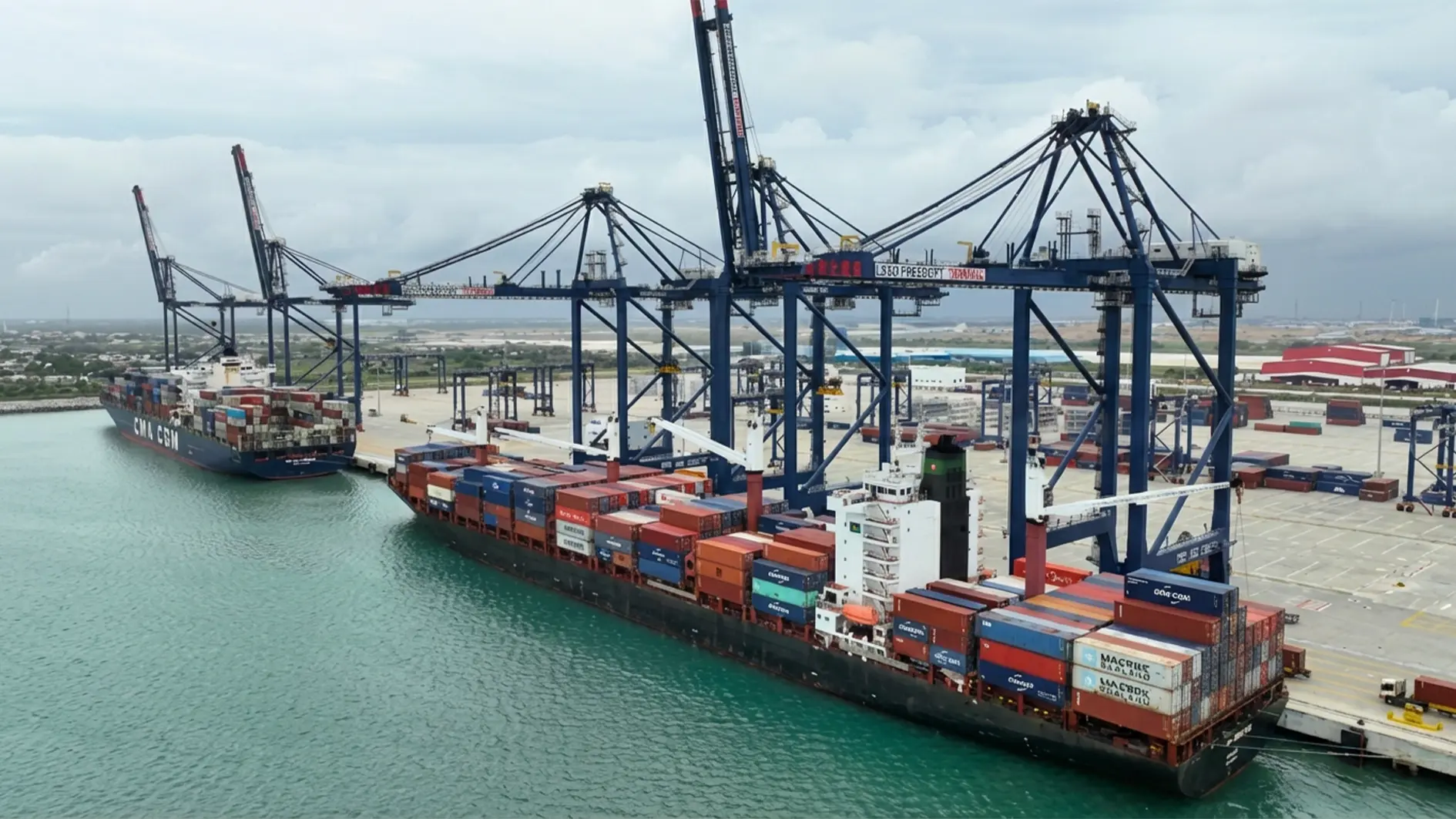
Designed to handle over 1.2 million standard containers yearly, the Lekki Deep Sea Port, the first of its kind in the country and one of the biggest ports in West Africa, remains the nation’s pride. According to the Minister of Marine and Blue Economy, Adegboyega Oyetola, the port has the potential to generate about $200 billion in government revenue over its 45-year concession period.
Aside from this, the port is expected to ease congestion at the country’s ports, boost trans-shipment within Africa, especially West Africa; as well as handle cargoes in transit for other destinations across the globe.
Lying within the Lekki Free Zone in Lagos, the port, for some time now, has been a delight to freight agents because of its state-of-the art infrastructure, promptness of officials in attending to clients and transparency at clearing containers and handling other cargo related issues.
However, these attributes, which are catalysts to trade, have begun to wane, making clients now see the port like any other in the country.
The complaints stemming from freight-forwarding agents at the facility, as a result of sharp practices from the quarantine department, are contrary to the government’s intention of making the port an outlet to decongest other ports in Lagos as well as enhance Nigeria’s competitiveness as a logistics hub.
During an undercover visit to the port, The Guardian witnessed first-hand some of the complaints by the agents.

Heading the Quarantine Unit is a man generally referred to as Alagba, who allegedly issues and collects arbitrary fees from freight forwarding companies before clearing their goods at the port. His actions constitute a bone in the neck for these freight forwarders. He was seen talking to a freight forwarder who was pleading for a reduction in the charges which he had been ordered to pay for the wedges that accompanied his containers before it could be cleared.
“You can go to our office at Ikeja, if you want,” he yelled. “But I am sure the officers there will make you pay higher; maybe N70, 000 per container. It is then that you will know that I am fair by asking you to pay just N15, 000 per wedge. I have to get the money before going through your document and granting you the permission to go.
“I am working for the government and any money I collect has to go to government coffers; of course, I have to make mine too. After all, this is where I work. So, I have to make some money for myself. If you like to go to our head office at Ikeja, you will only end up suffering double tragedy, because you will be made to pay higher and at the end your containers may not be speedily worked on. In fact, you will be referred to me. So, pay and release yourselves. Am I not fair enough? Or do you not collect enough money from your clients to execute their jobs?” he queried.
A freight agent, who gave his name simply as Clifford for fear of being persecuted by the port authorities, alleged that Alagba has turned himself into an emperor at the port, adding that whatever he says is law.
According to him, mandating agents to pay for the wedges that come with cargos in the containers is unethical, adding that the wedges are used to firmly hold the cargos in the containers so that they will not swing to one side any time the container shifts or the vehicle conveying it enters a pothole. He revealed that those small pieces of wood are necessary accompaniment of any cargo, especially if the items come in fluid and are in drums or other movable vessels. “That is a standard upheld across the globe,” he added.
Clifford stressed that wedges have no tariff attached on them across the world because they are not cargos or goods by themselves, but appendages like ropes and wrappers that protect the goods for safe delivery.
Revealing that Alagba and his team cleverly tagged them quarantine items and fixed N5, 000 per one, Clifford disclosed that though agents kicked against it, they have been coerced to accept it by the officers as they don’t release their containers until the money is paid.
Continuing, he noted that Alagba and his team unilaterally increased this underhand collection from N5, 000 to N15, 000 in 2025, and also threatened not to issue clearance to any company that fails to pay the new rate, saying this has further constituted a challenge, as it made the clearing of containers more expensive, especially where a company has to clear up to 60 containers at a time.
“For my company that has over 60 containers to clear and with over 20 wedges in each container, it means increasing the rate of each container clearance from N6 million to N18 million. This is unfair and unhealthy for business,” he said.
Calling on the government to look into the activities of officers at the Lekki Port, Clifford observed that some of these arbitrary charges create barriers to trade and unnecessarily hike the prices of goods imported into the country, as well as other services in the shipment of these goods.
For Etikwe, another freight-forwarding agent, the officers were unbending on their stand that he must pay over N3 million in December last year to stop his over 20 containers from being delayed till January 2026.
According to him, “Alagba and his boys use the powers bestowed on them to arm-twist agents by coming up with different policies to support the levies they collect.”
This sector of the port services called the quarantine, he alleged, is famous for extorting clients.
“The worst of it all is that a greater per cent of the money they collect goes into private purses. They do not care about the consequences of their action on the nation’s economy and on businesses generally. Their interests are to make as much money as possible for themselves and their families. They are, indeed, business killers.
“Imagine the extra cost of over N3 million I had to pay on a container for a business that had been concluded and sealed; it is unbearable. Though my company has absorbed it, in the real sense of it, it is the end users that have to suffer the most. This is because as I pass the burden to my client, he will as well spread it on the items imported and if it is a raw material, that would mean increasing the overheard cost of production and automatically increasing the unit prices of the final goods produced.
“Most times, it is the activities of government officials that make imported goods expensive in our local markets and not the foreign currencies used for imports. When these officers charge reprehensive fees, they do it to the detriment of the economy. They sabotage the Federal Government’s ease of doing business policy. They should be checked before things get out of hand,” he stated.
For Hilary, who had to pay to ease client’s mounting pressure, the officers have a method of withholding agents’ papers to make his containers and vehicles to be withheld by port officials for overstaying the officially-allotted time for the vehicles, thus making them pay for the excess days.
Highlighting that no agent would want to pay demurrage on the articulated vehicles or lorries, which in most cases are hired, he revealed that the fear of this has made them to easily succumb to the demands of the officials to save their names and clients.
Posing as a freight-forwarding manager, The Guardian asked Alagba the rationale for fixing rates for the wedges and for the sudden increase in the rates too?
He said: “You may say the wedges are accessories, but you may as well understand that these items are most times offloaded from the containers to our soil. This means they can carry the disease of the country of export to the country of import, which is the reason we fumigate them, and this comes with a price because the chemicals are not free.”
On the increase, he disclosed that it was to appease his superiors to keep them at their various duty posts in 2026.
“The increase is part of our drive for increase in revenue. We have to make more money for our superior officers to guarantee our continued stay in the port in 2026. We have to satisfy them to keep us in the port, because calling us to sit in the office would mean dealing with papers and handling administrative matters, which I would not want to do,” he said.
When The Guardian visited the quarantine office, Ikeja, to find out if the fees being imposed on freight-forwarding agents at the Lekki port were official, the environment was a bit organised, with a pocket of agents that have one or two issues to settle with the officials found moving around. However, due to bureaucracy, the visit was repeated several times before a senior officer who gave his name as Adebayo revealed that the body has not imposed any charges on wedges at any of the ports, adding that whenever such is done, it would be made public.
Stressing that the officers collecting fees on wedges were doing so illegally, Adebayo called on freight-forwarders that have suffered any form of unjust treatment from quarantine officers at the port to voice out, noting that doing so would enable the authorities concerned to know what is going on in the ports.
“I am convinced that this matter will be adequately investigated and due punishment meted out to the erring officers. We are meant to check items and not constitute a bottleneck to businesses at any of the ports,” he said.