 Follow Us on Google News
 Follow Us on Google Discover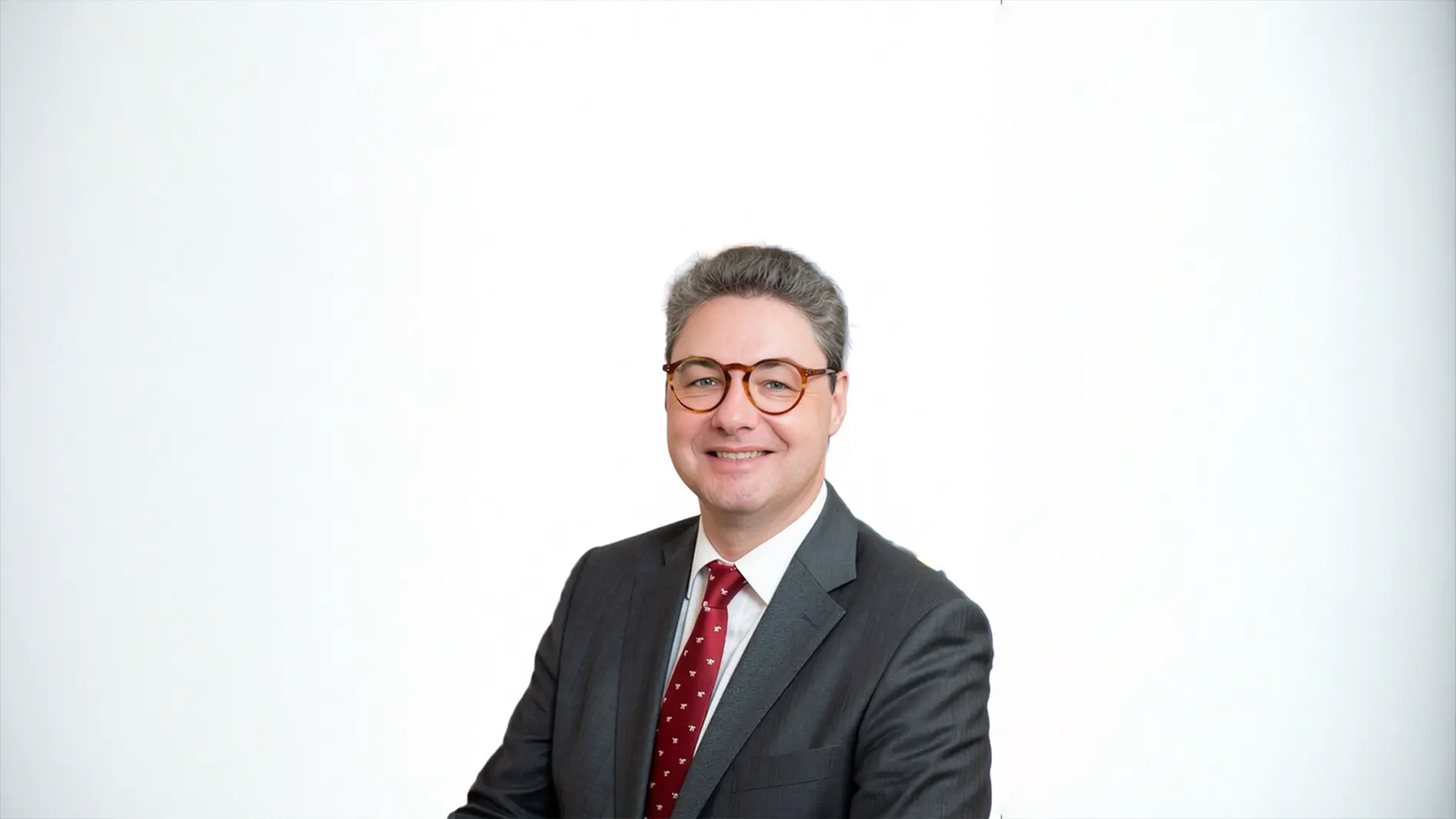
In the fast-evolving international system masterminded by world super powers, the Austrian Ambassador to Nigeria, Peter Guschelbauer, has urged Africans to refocus with a view to exploring inherent socio-economic opportunities in the mutual relationship with the European Union.
In the face of a seemingly polarised world structure, he told BRIDGET CHIEDU ONOCHIE of his country’s commitment to the rules-based international order. Guschelbaue also noted that Nigeria has a dynamic private sector, adding that the country has great potential to create jobs for citizens in sectors like services or in the digital sphere.
What is your view on the seeming disruption of the rules-based international order by some world super powers such as the United States exits from most United Nations agencies and inauguration of the Peace Board by President Donald Trump?
This is something that our Foreign Minister has talked about, that we see a rapidly changing international system. Faced with this change, Austria remains a staunch supporter of a rules-based international order.
At the same time, we have to build up our own strengths to be able to maintain this system. This is a challenge for Austria, for all law-abiding countries and for the whole of the European Union as well.
How do these events affect your country particularly and the rest of the European Union in general?
These changes have a profound impact. We see that the things that we hold dear – free and fair trade and the rules-based international order – are coming under attack from many sides, and that we need to redouble our efforts to maintain this system.
We also need to cast our net a bit wider and invest into new partnerships with those that are interested in maintaining peace, prosperity and stability. And it is in this context that I appreciate your question very much. We are now looking more strongly than ever before to the African continent, which is so close to Europe.

Austria is currently working on a new Africa strategy that should allow us to engage more strongly with Nigeria and the countries on the African continent and to tap all the potential that we see here for cooperation, for investment, for trade and also for cooperation to maintain a rules-based international order.
So, which sectors of the economy are you looking at expanding bilateral relations with Nigeria?
There are several areas where both sides are very interested in strengthening bilateral relations right away. They include, of course, the area of economic exchange, whether it is trade or investment.
Currently, our bilateral trade tends to be more in the hundreds of millions region and I think it is very clear that there is potential for much more in this regard. Austria has for many decades engaged in exports in the field of textiles – Austrian lace – which is very much appreciated by many people in Nigeria and that is one area that is a traditional strength.
We want to widen this and redouble our efforts in areas like machinery, technical equipment, especially in such sectors as green tech, renewable energy and machinery that goes along with Nigeria’s efforts to modernise its agricultural sector. So, I see in these areas, a lot of complementarity and potential for more trade.
Is there any plan or project towards youth development, especially in the area of education?
We see a very strong interest from Nigeria’s youth to study at Austrian universities. This is also something that is facilitated by our embassy and it is imperative that we cooperate closely with the Nigerian government on reducing the challenges of irregular migration while at the same time have opportunities for regular migration, whether it is in the field of education or skilled labour.
There are certainly opportunities for both sides here and we are encouraged by the strong interest that we see. There are many very bright young Nigerians, who are interested in studying at Austrian universities.
It is good to hear that there are several Nigerians studying in Austria. But how enabling are your foreign student policies, including visa regime for intending scholars?
Austria is a member of the Schengen group of countries. The rules apply to all the countries that are in the Schengen area and the rules have to be followed. But, if everything is in good order, then travel is possible.
And on the question of tertiary education, if people have the necessary qualifications to study at Austrian universities, then it is absolutely possible to do so. The number of visas issued for students has been increasing in recent years.
Media exchange programme was part of the topics of discussion in your meetings with government officials. What is it all about and how would that contribute to strengthening existing relationship between Austria and Nigeria?
There are two things to unpack here. One is our engagement with Nigerian officials and I think it was an auspicious moment for that. We just had a very cordial and successful visit by our Vice Minister for Foreign Affairs with the Minister of State at the Ministry of Foreign Affairs here in Abuja in order to strengthen our bilateral relations, especially with regards to all the things that we have already mentioned, like expanding trade and investment, having a mutually beneficial partnership, also strengthening our cooperation in the area of management of migration, seeing how we can extend that also into the security area.
And last but not least, of course, our cooperation to maintain a functioning multilateral and rules-based international order. So, there are many areas, where we already cooperate successfully. Of course, there is always room to do more and we have the intention to further strengthen our bilateral relationship.
On the question of outreach to media, it is important to highlight our work here, highlight Austrian activities in Nigeria and the areas, where there is room for mutually beneficial cooperation. For example, we are in the course of implementing a new media fellowship programme that is also addressed to journalists from the African continent to bring them to Austria to get to know the country better.
I found out during my time here that for most Nigerians, their picture of Austria tends to be closely associated with an old Hollywood film called The Sound of Music, which is a lovely movie; but Austria has to offer much more than music, mountains and great nature. There is a lot there in terms of our economic possibilities, our strong industrial and technological sector, and of course, our great universities.
There have been sustained talks and training programmes on misinformation and disinformation in Nigeria in the previous year by the EU countries. Are you concerned Nigerians or Africans are fed with wrong information?
The question of disinformation and misinformation is one that transcends this region, but that is also a challenge in this part of the world. It is something that we see very strongly and becoming a widespread problem, not least in the context of Russia’s war of aggression against Ukraine with all the negative impact that has on the European continent.
These malign disinformation activities are a problem on the European continent and in other parts of the world. We see in this region too, there can be destabilising effects of such activities. As democratic countries, we need to counter such activities and make sure that our public discourse remains well-informed and as free as possible from disinformation.
Beyond the example you gave, are there other areas you think misinformation is impacting negatively on the relationship between Nigeria and the EU?
You just need to look at social media platforms and the sort of stories that get peddled there. Often enough, it is difficult to know which really is the right information. Our efforts should focus on how to distinguish between right information and disinformation.
This is a common challenge for all countries that are democratic and have a pluralistic media landscape. In countries where all information gets controlled, you cannot distinguish between information and disinformation but as free and democratic societies, we need to make these careful distinctions.
In the face of socio-political and economic hegemony currently being perpetuated by world super powers, what do you think Africa should do to remain solid?
Well, my advice would be to make the most of the opportunities that are already there. My country Austria and the whole European Union, which is by the way, the largest investor and largest trading partner for Nigeria, offer plenty of opportunities. Nigeria and other African countries should make good use of these opportunities.
Let me highlight a very positive example from Nigeria’s dynamic private sector that I found here just recently. I met with a dynamic young entrepreneur who has founded his company in Nigeria. They are called,‘Fastest Cakes’, and their business is to deliver cake as quickly as possible, when you order it over the internet or the telephone.
They have already expanded this business model from Nigeria to other African countries and are now in the course of expanding to Europe. They will also bring their business to Austria and to Vienna, which is the cake capital of the world. I think this is a very positive thing to see, this entrepreneurial dynamism, not just in the traditional sectors of raw commodities, but in sectors like services or in the digital sphere.
I think that is where the great potential is for Nigeria to create jobs for its people and to create the economic growth and the value that will take this country forward. And we as Austria, are here to help, cooperate and contribute as good as we can.

