 Follow Us on Google News


 Follow Us on Google Discover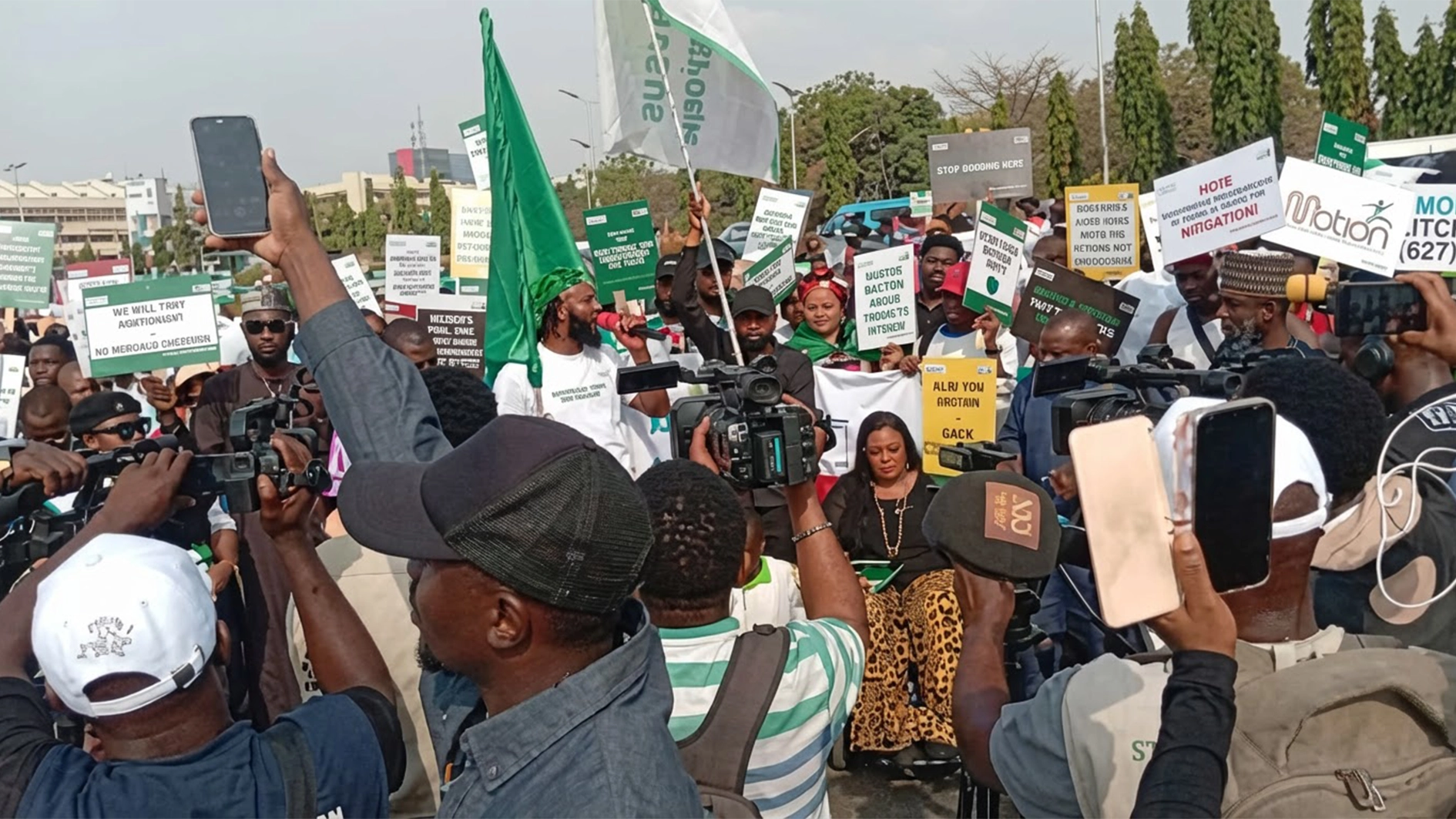
• CSOs, labour leaders plan protest to demand mandatory real-time e-transmission
• Senate, House set to reconcile differences over electronic transmission clause
• Stakeholders caution against weakening key provisions of electoral reforms
• Divergent views emerge over proposal to shift polls due to Ramadan
• Lawyers disagree on feasibility, infrastructure, practical implications
• Ezekwesili insists real-time transmission essential for credible 2027 polls
The National Assembly reconvenes today to debate the Electoral Act amid renewed protests over reforms seen as critical to the credibility of the 2027 general elections.
The two chambers are meeting to resolve their differences over the electronic transmission of polling unit results, with attention focused on whether the House of Representatives’ position will stand or be modified in line with the Senate’s conditional clause.
They will also seek to resolve the controversy surrounding the 2027 general election timetable released by the Independent National Electoral Commission (INEC).
Meanwhile, the Movement for Credible Elections (MCE), a coalition of civil society and labour leaders, has announced plans to stage a peaceful protest at the Assembly today to push for comprehensive electoral reforms ahead of the 2027 general elections.
In a statement signed by its Media Coordinator, Comrade James Ezema, the coalition said the action is aimed at intensifying civic pressure on lawmakers to adopt reforms outlined in its public petition submitted last month.

The Head of the MCE National Secretariat, Comrade Olawale Okunniyi, described the planned rally as a continuation of peaceful democratic engagement to ensure that Nigeria’s electoral laws reflect the will of the people.
“Credible elections are fundamental to strengthening democracy, promoting political accountability and restoring public confidence in governance,” Okunniyi said.
The protest is expected to feature addresses by Mr Femi Falana, SAN; Dr Usman Bugaje; Prof Pat Utomi; Comrade Ayuba Wabba; Dr Oby Ezekwesili; Dr Olisa Agbakoba, SAN; Comrade Joe Ajaero; Senator Shehu Sanni; and other leaders of civil society and labour movements.
The coalition reiterated its commitment to peaceful civic engagement and urged Nigerians to support efforts to ensure transparent and credible elections in 2027.
Pressure intensified yesterday on the National Assembly, particularly the Senate, as civil society groups, religious leaders and political stakeholders insisted that anything short of clear legislative backing for real-time electronic transmission would amount to a betrayal of democratic principles.
They argued that the National Assembly, as a representative institution, must reflect the will of the electorate by strengthening rather than diluting electoral reforms.
Some stakeholders cautioned that any reversal or weakening of provisions supporting electronic transmission could be perceived as anti-democratic and contrary to the spirit of representative governance. According to them, lawmakers must bear in mind that their mandate derives from the people and that their actions on such a critical issue would be closely scrutinised by constituents. A few warned that perceived attempts to undermine transparent electoral processes could trigger accountability measures, including recall efforts in some constituencies.
They maintained that federal legislators have a responsibility to give legislative effect to the aspirations of citizens, particularly on matters affecting the integrity of elections.
The debate over electoral reforms is also unfolding amid fresh controversy surrounding the proposed timetable for the 2027 general elections. Mixed reactions have trailed calls by some Muslim groups for a shift in the election dates due to Ramadan. While proponents argue that holding elections during the fasting period may pose logistical and participation challenges for Muslim voters, others contend that Nigeria’s plural and secular character requires electoral timetables to remain neutral and inclusive.
Speaking on the matter, the Chief Executive Officer of the Centre for Anti-Corruption and Open Leadership (CACOL), Mr Debo Adeniran, said it was incumbent on the National Assembly to respect Nigerians’ preference for real-time electronic transmission of results.
Adeniran acknowledged concerns about possible human interference, noting that since Nigeria has not adopted full electronic voting, some manual interaction would still occur in the transmission process. However, he argued that if electronic transmission reflects the majority’s preference, it should be adopted. He also urged lawmakers to consider assurances by the Nigerian Society of Engineers that network challenges would not constitute insurmountable obstacles.
On proposals to shift election dates on account of Ramadan, Adeniran opposed any alteration of constitutional provisions, urging Muslim faithful to recognise Nigeria’s secular status. “Lawmakers should not tamper with the Constitution on account of Ramadan or fasting,” he said.
Similarly, a chieftain of the Pentecostal Fellowship of Nigeria and Presiding Pastor of Livingspring Chapel International, Mr Femi Emmanuel, urged the Senate to align with the House of Representatives in supporting electronic transmission of results. “Anything outside this is unacceptable,” he said.
On the Ramadan issue, Emmanuel argued that since the fasting period is not fixed to specific Gregorian calendar dates and shifts yearly, it would be inappropriate to amend electoral laws to accommodate it. He added that fasting does not prevent adherents from carrying out daily activities. “Muslims go to work during fasting. I see no reason they cannot vote while fasting is ongoing,” he said.
However, offering a different perspective on the proposed shift in election dates, Mr Tanko Yinusa, spokesman for Mr Peter Obi, argued that fasting could make it difficult for voters to cope with the physical and mental demands of voting and monitoring results to ensure their ballots count.
In a contrasting view on electronic transmission, Senior Advocate of Nigeria, Mr Niyi Akintola, cautioned lawmakers against yielding to public pressure. “Heeding that call on e-transmission is an invitation to disaster and anarchy,” he said.
Citing proceedings at the 2023 Election Petition Tribunal, Akintola noted that despite widespread public discourse, the Labour Party and its presidential candidate deployed polling agents to only about 13 per cent of over 80,000 polling units nationwide.
“Elections are won and lost at the polling units where you have agents on ground,” he said, questioning the likelihood of parties effectively deploying agents across the 176,000 polling units expected for the 2027 elections.
He also cited infrastructural challenges, including network failures in parts of the country, as practical constraints. Recalling the 2023 elections, he referred to instances of malfunctioning Bi-Modal Voter Accreditation System devices, including a case involving former President Goodluck Jonathan, as evidence of technological vulnerability. In his view, the Senate’s cautious stance reflects prudence under prevailing conditions.
Akintola further argued that no opinion poll had established that a majority of Nigerians support electronic transmission.
As deliberations resume, today’s session is widely regarded as a defining moment for the legislature, one that could shape public confidence in electoral reforms and influence preparations for the 2027 general elections.
Meanwhile, the General Secretary of the Nigeria Union of Journalists, Mr Achike Chude, urged the National Assembly to heed calls for electronic transmission, dismissing concerns over inadequate infrastructure.
Lawmakers revisit election timetable amid Ramadan concerns
Apart from the conference committee meeting expected to fast-track the passage of the crucial Electoral Act for President Bola Ahmed Tinubu’s assent, lawmakers have also convened today’s plenary to address concerns raised by Muslim faithful over the election timetable, which coincides with the fasting period.
The Guardian learnt that the lawmakers’ focus will shift from budget defence sessions to the controversy surrounding the 2027 general election timetable released by the Independent National Electoral Commission (INEC).
INEC fixed the 2027 presidential and National Assembly elections for February 20, 2027, and the governorship and State Assembly elections for March 6, 2027. The decision sparked protests among some Muslims, who argued that the dates clash with Ramadan, which runs from February 7 to March 8, 2027.
Many Nigerians, including politicians, lawmakers and clerics, have expressed concern over the potential overlap with Ramadan, prompting the two chambers of the National Assembly to reconvene today.
According to the Clerk to the National Assembly, Mr Kamoru Ogunlana, who announced the resumption, lawmakers were urged to adjust their schedules to ensure attendance, as crucial decisions are expected during the sessions.
Although the Clerk did not specify the agenda for plenary, indications from the House of Representatives suggest that lawmakers may deliberate on issues arising from INEC’s publication of the 2027 election timetable.
The House of Representatives’ spokesman, Akin Rotimi, said members were notified of the emergency sitting via an internal memo from the Office of the Speaker, which explained that legislators would discuss matters related to the 2027 general election dates.
“The emergency session,” Rotimi said, “will enable lawmakers to review the constitutional and national implications of the election timetable and take necessary legislative action.”
INEC has defended its decision, stating that the timetable was drawn strictly in line with the Constitution of the Federal Republic of Nigeria, 1999 (as amended), the Electoral Act, 2022, and its Regulations and Guidelines for the Conduct of Elections.
For instance, under Sections 76(1) and 132(1) of the Constitution, elections into the National Assembly and the office of President must be held not earlier than 150 days and not later than 30 days before the expiration of the current tenure, which ends on May 29, 2027.
Checks by The Guardian show that this constitutional window places the permissible period for the 2027 general elections between late December 2026 and late April 2027. Within that window, Section 28(1) of the Electoral Act, 2022 empowers INEC to appoint election dates by notice published in the Gazette and on its website, while Section 28(2) requires that such notice be issued not later than 360 days before the election.
Further, INEC’s Regulations and Guidelines provide that presidential and National Assembly elections shall be held on the third Saturday of February in a general election year, which in 2027 falls on February 20, indicating that the commission’s action is consistent with existing statutory and regulatory provisions.
Likely scenarios in today’s proceedings
Debates during today’s plenary are likely to focus less on whether INEC acted within the law and more on whether the law itself provides sufficient flexibility in light of religiously sensitive concerns.
It was gathered that lawmakers may consider several options, including adopting a resolution urging INEC to review the timetable within the constitutional window.
This option may be pursued since the “third Saturday of February” requirement originates from INEC’s Regulations rather than directly from the Constitution. The commission, therefore, technically retains the power to amend its guidelines, provided any adjustment remains within the 150–30-day constitutional timeframe.
Alternatively, the National Assembly could initiate amendments to the Electoral Act to clarify or expand flexibility in fixing election dates.
Given that the harmonisation committee on the Electoral Act Amendment Bill has yet to submit its report, it was learnt that lawmakers may seize the opportunity to incorporate provisions addressing the issue, while still preserving constitutional timelines.
Navigating that course would enable the legislature to respond to public concerns without directly encroaching on the operational independence of the electoral umpire, which retains statutory authority under Section 28 of the Electoral Act to appoint election dates within the constitutionally prescribed window.
Meanwhile, INEC has said it will consult the National Assembly over the controversy surrounding the 2027 general election timetable.
Making the decision public through the National Commissioner and Chairman of the Information and Voter Education Committee, Mohammed Kudu Haruna, INEC acknowledged the concerns expressed by stakeholders regarding the coincidence of the dates with nationally recognised religious observances, stating: “In view of these representations, the Commission is currently undertaking consultations and may, where necessary, seek appropriate legislative intervention to address the concerns raised, while ensuring that any adjustment remains consistent with constitutional and statutory requirements.”
Debate over electronic transmission
In the course of ongoing efforts to review and amend certain provisions of the Electoral Act, 2022, the two chambers of the bicameral federal legislature have differed on the contentious issue of real-time transmission of results from polling units.
While the lower chamber, which has 360 members, favoured an amendment to Section 60(3) to provide for real-time transmission, the upper chamber inserted a conditional clause stipulating that such transmission should be subject to the availability of a mobile network.
Many Nigerians have expressed reservations about the conditional clause, describing it as an attempt to revive the era of incident forms, which created room for manipulation and other forms of electoral malpractice.
Former INEC Resident Electoral Commissioner for Akwa Ibom State, Mr Mike Igini, in a statement, explained that the Bi-Modal Voter Accreditation System (BVAS) device was designed to function both online and offline. He stressed that results entered at polling units are queued and automatically uploaded once network connectivity is restored.
“The Senate’s proviso invites mischief, affording opportunities for collusion between influential actors, collation officials and telecommunication providers to engineer deliberate network failures on election day,” he stated, adding that BVAS eliminates the need for incident forms.
He noted that before leaving office in 2022, INEC and the Nigeria Communications Commission conducted a survey of 2G and 3G network coverage, which showed over 97 per cent coverage across the country. According to him, this informed the commission’s successful real-time electronic transmission of polling unit results to the INEC Result Viewing Portal (IReV) in more than 105 off-cycle elections, including five governorship polls held before the 2023 general election. “Network concerns are therefore largely mere excuses and completely specious,” he declared.
The former REC maintained that “publicly viewable results serve as deterrence and would render tampering manifest and actionable,” asserting that reintroducing discretionary clauses would create confusion and encourage manipulation.
However, discreet inquiries by The Guardian indicate that the conference committee may bypass the issue of real-time transmission of results, particularly as leaders of the House of Representatives who approved the amendment to Section 60(3), mandating real-time transmission, were reportedly summoned to the Presidency.
It was gathered that the leadership of the All Progressives Congress (APC) prevailed on the House leaders to align with the position adopted by the Senate committee, even as lawmakers may consider adopting an earlier date for the 2027 general election.
Ezekwesili insists on mandatory e-transmission
Former Minister of Education and founder of the FixPolitics Initiative, Mrs Obiageli Ezekwesili, yesterday declared that mandatory real-time electronic transmission of election results is non-negotiable if Nigeria is to conduct credible polls in 2027.
She spoke as protesters returned to the National Assembly for the second consecutive week, demanding that lawmakers retain compulsory real-time electronic transmission of results in the Electoral Act Amendment Bill, 2026.
The demonstrators, including civil society organisations such as Situation Room and ActionAid, called for the complete elimination of manual collation of results, arguing that it creates room for manipulation during the collation process.
Security operatives barricaded the entrances to the National Assembly complex, forcing protesters to stage their demonstration outside the gates.
The protest followed a five-day legislative break after assurances were reportedly given at last Tuesday’s sitting.
Ezekwesili specifically urged the Senate to mandate direct transmission of polling unit results to the Independent National Electoral Commission’s Result Viewing Portal (IReV).
According to her, democracy cannot thrive in opacity, stressing that transparency is not optional but the foundation of credible elections and public trust.
She warned that without real-time transmission of results, the people’s mandate would remain vulnerable to manipulation during collation.
The former presidential candidate maintained that electronic transmission would strengthen electoral integrity, reduce post-election disputes and restore citizens’ confidence in the democratic process.
She called on senators to rise above partisan and personal interests in considering the amendments and to prioritise national interest.

