 Follow Us on Google News
 Follow Us on Google Discover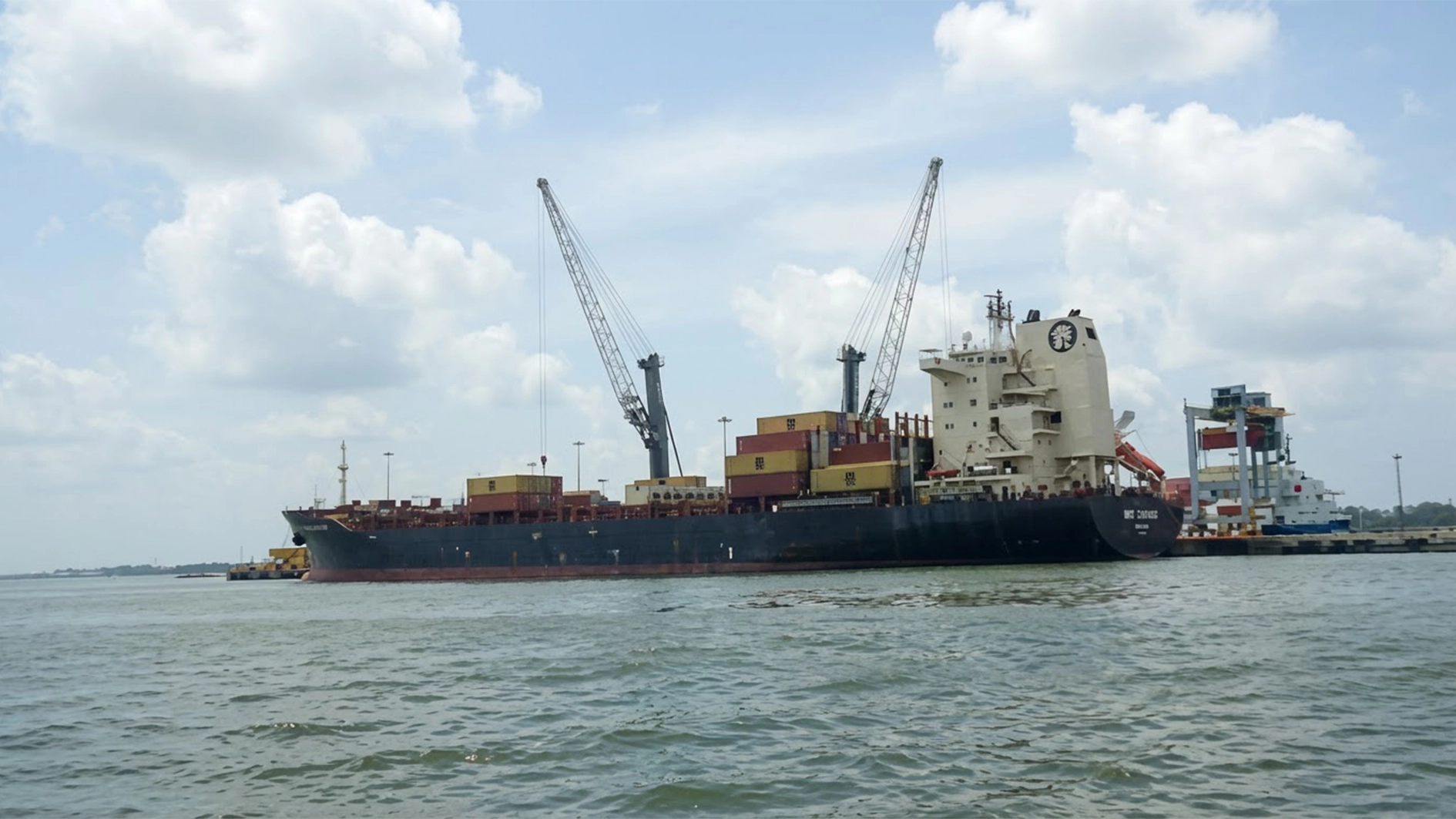
With four years remaining to the International Maritime Organisation (IMO) net-zero carbon framework target of a 20 per cent reduction in greenhouse gas (GHG) emissions, the path to port decarbonisation threatens Nigeria’s trade position in West Africa, ADAKU ONYENUCHEYA reports.
The Nigerian maritime sector accounts for over 90 per cent of trade, handling millions of tonnes of cargo yearly and contributing to economic growth through revenue generation and job creation.
Ports in Apapa and Tin Can Island in Lagos, as well as Onne, Warri, Calabar, River, and other eastern parts, handle trade, making activities in these facilities significant contributors to greenhouse gas (GHG) emissions, air pollution, and environmental degradation of their host environments.
This is despite global calls to achieve net-zero emissions across all sectors due to the impending climate crisis, with the World Bank noting that climate change already takes its toll on ports and maritime chokepoints, putting global supply chains at risk.
The International Maritime Organisation (IMO) had stated that the maritime sector contributes about three per cent of total global GHG emissions and adopted a Net-Zero Framework that targets a 20 per cent reduction in emissions by 2030, 70 per cent by 2040 and 100 per cent by 2050.
Port states are expected to implement these instruments and align infrastructure, regulations and operational practices with decarbonisation goals in line with global standards.
While major ports in developed countries have already responded with investment in smart port operations, alternative fuels, electrification, digital equipment and shore power, which reduce vessel waiting times and idling emissions, Nigeria’s ports still operate an outdated and high-emission system, which does not meet international standards.
Nigeria, with its strategic location in the Gulf of Guinea and a member state of the IMO, is obligated to domesticate and implement international conventions to reduce carbon emissions, as non-compliance could expose the country to reputational damage, regulatory scrutiny and potential trade disadvantages.
However, the country is yet to fully implement the IMO decarbonisation framework in its maritime sector. This is despite the Federal Government’s assurance and commitment to reduce greenhouse gas emissions in the maritime sector.
Presently, the operations across the country’s maritime sector are mostly diesel, with no stable electricity.
From the cargo handling equipment at the terminals to vessels running auxiliary engines and trucks, stakeholders have said maritime and port decarbonisation is difficult to achieve in Nigeria, as all operations rely solely on diesel.
Stakeholders also stressed that Nigerian ports remain the most expensive in the world, as the lack of power supply and the high cost of diesel remain major factors militating against pricing and other charges associated with cargo clearance.
The Vice President, Kashim Shettima, had, at a Decarbonising Infrastructure in Nigeria (DIN) Summit in Abuja, cautioned that the country would struggle to compete or catch up with the world if it didn’t align with its development realities.
However, the ports are yet to experience these promises, even though some terminal operators have stated their plans to go green in their facilities.
This is just as stakeholders warned that vessels would no longer berth in Nigerian ports due to the country’s non-compliance with green investment.
Lagging behind decarbonisation
IMO has put global lines under increasing pressure to demonstrate carbon accountability.
Member countries that remain non-compliant with zero-carbon emissions face trade isolation risks, high operational costs from the old diesel infrastructure, climate vulnerability, and reputational damage.
Already, Nigeria is experiencing coastal erosion, rising sea levels and extreme weather events that threaten port infrastructure due to high emissions.
Also, as global supply chains embrace sustainability, ports of member states perceived as environmentally negligent risk exclusion from major shipping routes.
Stakeholders warned that if Nigerian ports fail to provide green infrastructure, shipping lines may prioritise regional competitors with better environmental compliance, especially as port competition is intensifying in West Africa.
They noted that a zero-carbon port strategy would enhance Nigeria’s reputation as a forward-looking maritime hub and preserve its strategic position in the Gulf of Guinea.
Chairman of Starzs Investments Company Limited, Greg Ogbeifun, said the future of global shipping is firmly tied to emission control and monitoring of carbon footprints, stressing that failure to align with international carbon reduction standards may make Nigerian ports unattractive to vessels.
Ogbeifun warned that Nigeria’s ports could soon face reduced vessel traffic if urgent steps are not taken to ensure environmental compliance.
According to him, vessels operating internationally are already categorised based on their level of carbon compliance.
He explained that Category A vessels are fully compliant with carbon reduction standards and are allowed to trade freely across major global destinations, including the United States and Europe, while Category B vessels face restrictions in some regions.
Ogbeifun added that Category C, which are lower ships, are increasingly barred from entering environmentally sensitive ports.
“There will come a time when certain ships will not come into Nigerian ports because we are not environmentally compliant in our port areas. As we progress, you will find that more ships will be refusing to come to Nigeria until we are genuinely intentional to do something about our emission control,” he warned.
The shipping expert emphasised that environmental compliance must go beyond regulatory paperwork, cautioning against a situation where ships that meet global emission standards berth at Nigerian ports, only to be confronted with heavy pollution from port-side generators and other diesel-powered infrastructure.
The Managing Director, Harsecom Logistics Limited, Haruna Omolajomo, said Nigerian ports are far from implementing decarbonisation plans, noting that at the Lagos port, there has been no electricity supply for years.
He added that businesses solely run on diesel at a high cost and loss to them as companies working on maximum capacity spend over N10 million monthly.
The path forward
Nigeria, as an IMO member, is legally and morally obligated to implement carbon reduction conventions, as non-compliance could undermine its position as a maritime hub in West and Central Africa.
For Nigeria, a realistic pathway for zero-carbon ports, as stated by experts, includes electrification of cargo handling equipment, deployment of shore power systems to curb vessel emissions at berth, and investment in solar, wind and other renewable energy sources within port premises.
Others include digital traffic management systems to reduce congestion and idling, incentives for vessels using low-carbon fuels, continuous carbon monitoring and reporting frameworks.
Meanwhile, experts emphasised that these steps require coordination among the Federal Ministry of Marine and Blue Economy, the Nigerian Ports Authority (NPA), the Nigerian Maritime Administration and Safety Agency (NIMASA), terminal operators, shipping lines, and other businesses at the ports.
Head of Research, Sea Empowerment and Research Centre (SEREC), Dr Eugene Nweke, said most major terminals in the country are currently operated by private concessionaires, yet green and eco-port programmes have not been mainstreamed or made mandatory components of concession agreements.
According to him, the absence of enforceable green standards has allowed environmental externalities such as air pollution, poor waste management practices and poor stormwater handling to persist across Nigerian ports.
He noted that Nigeria’s ports continue to lag behind the global race for decarbonisation, shore power deployment and green cargo handling systems.
Nweke said shore power and green retrofits could reduce emissions costs and improve competitiveness, attracting over $500 million in climate-linked investment financing.
To address the gap, Nweke proposed that environmental Key Performance Indicators (KPIs) be made contractual conditions for concession renewals, covering emissions reduction targets, management efficiency, stormwater control systems and shore power readiness..
Nweke also recommended mandatory public reporting of Environmental, Social and Governance (ESG) performance metrics for all terminal operators to enhance transparency and accountability.
He further advocated the creation of a dedicated “Green Ports” financing window structured around blended finance mechanisms to support terminal operators in retrofitting existing infrastructure to improve energy efficiency, enable cleaner dredging operations for fuel-efficient vessel calls, and deploy shore power systems.
Nweke, however, projected that green-port retrofits could unlock between $200 million and $400 million in blended climate finance over the next 36 to 60 months, while broader decarbonisation initiatives could attract over $500 million in climate-linked investment financing.
Already, some terminal operators in Nigeria have shown interest in deploying renewable energy in their operations.
Vice President, had last year disclosed the discussions between the government and the private investors to commit nearly $60 million to electrify Onne Port and transform it into Nigeria’s first green port.
He said this would ensure a robust green economy through an integrated hybrid energy system, which will phase out diesel dependency, slash carbon emissions and provide 24/7 sustainable and affordable power to terminal operators and port users.
Former president of Shippers Association Lagos State (SALS), Rev. Jonathan Nicol, expressed concern over Nigeria’s slow progress toward achieving port decarbonisation, warning that the country is far behind the IMO 2030 green energy targets of 20 per cent and risks further setbacks in maritime competitiveness.
Nicol noted that only one terminal in Nigeria has been certified as eco-friendly, while other major ports and terminals have not achieved even one per cent of the required decarbonisation benchmark.
He said that with the 2030 deadline for emission reduction fast approaching, Nigeria’s ports and terminals have made little to no progress toward transitioning to green energy.
According to him, the challenge goes beyond terminal infrastructure to include vessels and regulatory enforcement.
Nicol also highlighted the environmental impact of diesel-powered trucks operating within port corridors, noting that thousands of trucks emit carbon dioxide daily, significantly contributing to pollution.
“If 1,000 trucks load at a time, imagine the level of polluted fumes released into the atmosphere,” he said.
He observed that Nigeria’s environmental performance remains below five per cent in many maritime areas and recalled that during the COVID-19 lockdown, atmospheric pollution dropped to about two per cent, showing that improvement is possible under controlled conditions.
He further questioned the effectiveness of environmental agencies, stating that while they may face challenges, more decisive action is required.

