 Follow Us on Google News


 Follow Us on Google Discover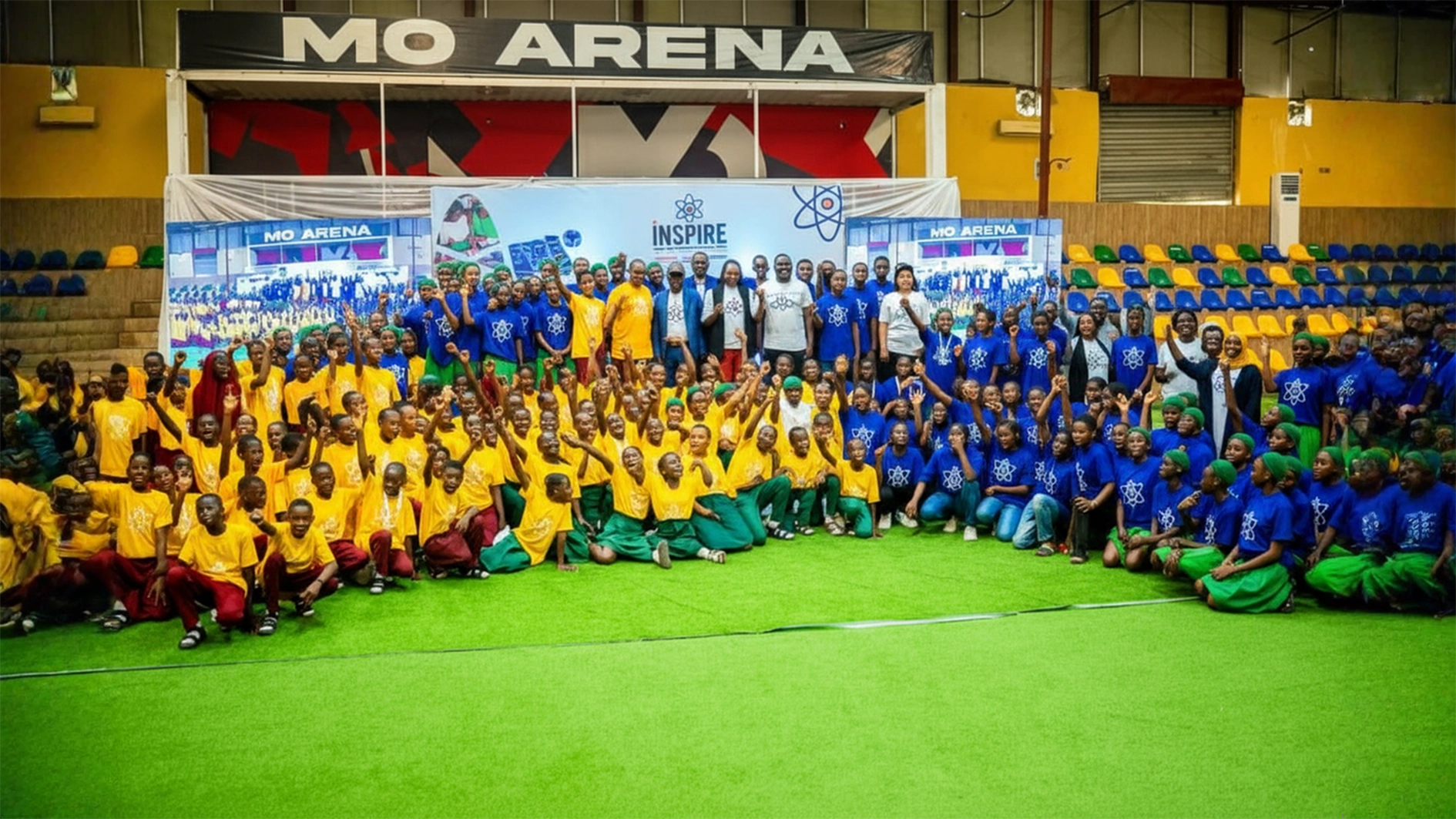
Winners have been announced in the grand finale of the Innovation, STEM, and Partnerships for Inclusive and Relevant Education (INSPIRE) Project National Innovation Challenge, distinguishing themselves as rising young technology leaders.
The Guardian reports that more than 200 students drawn from both junior and senior secondary school categories, alongside 20 Science, Technology, Engineering and Mathematics (STEM) teachers representing the six geo-political zones, gathered in Abuja for the grand finale of the INSPIRE Project.
A number of schools presented their projects, including scalable inventions and innovative solutions designed to motivate and shape the next generation.
In the Junior Robotics and Innovation Project categories, General Hassan Usman Katsina Unity College, Bauchi and Oginigba Comprehensive Secondary School, Rivers emerged champions. Also, in the Senior Robotics category, Government Day Technical College, Bauchi came tops while Community Secondary School Olanada, Rivers State emerged as winners in the VR and Innovation Project categories.
The INSPIRE Project is funded by the ExxonMobil Foundation and delivered through a strategic partnership between the TechWomen Alumni Association Nigeria and PanAfricare Nigeria.
In his remarks, the Community Relations Manager of ExxonMobil Nigeria, Nigel Cookey-Gam, said the initiative had significantly strengthened the Science, Technology, Engineering and Mathematics (STEM) capabilities of both participating students and their teachers. He explained that the programme had deepened practical knowledge, encouraged critical thinking, and improved classroom application of STEM concepts.

He noted the high level of excitement surrounding the students’ projects, describing their progress as impressive and forward-looking. Expressing confidence in the long-term impact of the intervention, he stated that the initiative is well-positioned to stimulate innovation and accelerate technological development across the country.
Cookey-Gam added that sustained investment in education-focused programmes such as this is essential for nurturing home-grown talent and building a pipeline of future innovators. According to him, empowering young people with relevant technical skills not only prepares them for emerging opportunities but also strengthens the nation’s capacity to compete in a rapidly evolving global knowledge economy.
Also speaking, the President, TechWomen Alumni, Dr Carolyn Seaman, stated that the initiative is designed to close a significant gap in resources affecting STEM education. She noted that limited access to tools, mentorship, and hands-on learning opportunities has long constrained the full potential of students and educators, stressing that the project seeks to directly address these shortcomings.
According to her, the programme goes beyond theoretical instruction by providing practical exposure, collaborative learning platforms, and access to modern technological resources. She explained that such targeted interventions are essential in equipping both teachers and students with the competencies required to thrive in an increasingly technology-driven world.
Dr Seaman further emphasised that strengthening STEM education is not merely an academic objective but a strategic investment in national development.
Her words: “We promised to reach the underserved, to empower girls, and to include students with disabilities. We have moved the need of student interest in STEM from a baseline of 40 per cent to a staggering 88 per cent.
“Our classrooms are now vibrant hubs of diversity, with 66.1 per cent female participation, and a successful inclusion of students with disabilities”.
For his part, the Country Public Diplomacy Counselor at the United States Embassy Abuja, Lee MacManis, highlighted the programme’s impressive reach within a short period, revealing that in under one year, it engaged 123,000 students and provided specialised training to 105 teachers.
He further disclosed that 14 participating schools have been transformed into innovation hubs, equipped to promote creativity, experimentation, and hands-on STEM learning.
Earlier, giving an overview of the project, the Project Manager of INSPIRE, Terfa Akpoyibo, said the initiative has closed critical resource gaps in 14 underserved government secondary schools across Abia, Bauchi, the Federal Capital Territory (FCT), Kaduna, Lagos, and Rivers States.
Akpoyibo said since its launch in 2025, the programme has recorded remarkable progress in nurturing a new generation of innovators.
The Project Manager said: “Student interest in STEM subjects increased significantly from a 40 per cent baseline to 88 per cent by the end of the project. Similarly, interest in pursuing STEM-related careers rose sharply from 38 per cent to over 91 per cent upon completion. The project also surpassed its gender-inclusion target, achieving 66.1 per cent female participation—representing 463 girls—while ensuring that three per cent of participants were students with disabilities.
“In addition, a total of 105 STEM teachers successfully completed advanced Training-of-Trainers programmes in Robotics, 3D Modelling, and Augmented and Virtual Reality (AR/VR), with each committing to integrate these innovative methodologies into their classrooms. More than 13,000 science students are now benefiting from state-of-the-art “INSPIRE Boxes,” equipped with 3D printers, microcontrollers, and essential laboratory kits to enhance hands-on learning and experimentation”.

