 Follow Us on Google News
 Follow Us on Google Discover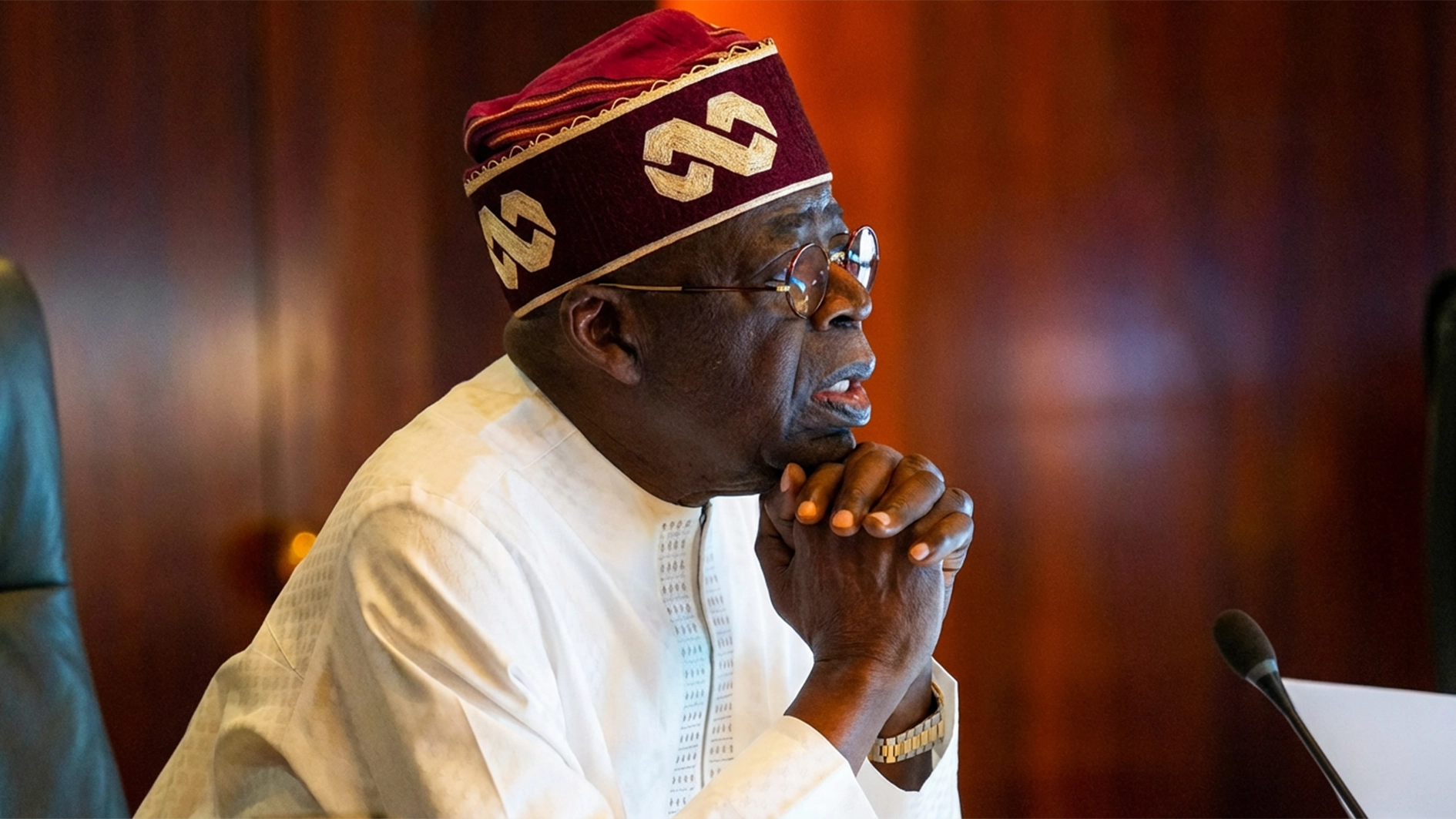
NIGERIA’S active oil rigs stagnated at 41 in January as prices surged yesterday following an abrupt end to peace talks between Ukraine and Russia.
Consequently, President Bola Tinubu has signed an Executive Order directing the immediate remittance of key oil and gas revenues to the Federation Account, in a sweeping reform aimed at curbing revenue leakages, eliminating duplicative deductions and strengthening fiscal transparency in the petroleum sector.
Nigeria’s January 2026 rig disposition statistics released by the Nigerian Upstream Petroleum Regulatory Commission (NUPRC) showed that the country recorded 40 active rigs during the month, alongside 11 on standby and eight stacked rigs, with a total fleet of 72 rigs.
The development, which shows sustained upstream momentum, revealed Nigeria has 11 rigs on standby and another 13 undergoing relocation, while eight are either warm or cold stacked.
The active rigs are largely concentrated onshore, with operators such as British Oil & Gas Exploration Limited (BOGEL), Hilong Oil Service and Engineering Limited, Henan Petroleum, Charlvon Nigeria Limited and Geoplex DrillTeq Limited driving drilling, completion and workover campaigns.
Offshore activity remains comparatively limited, but steady as units operated by Shelf Drilling Nigeria Limited, including Adriatic 1, Shelf Drilling Achiever and Main Pass IV are active across shallow water fields.
However, licensing gaps persist as over 36 of the rigs and barges are either processing their licences or not licensed at all, including many active, standby and stacked units, NUPRC noted.
Beyond drilling rigs, the report lists two intervention vessels operated by Marine Platforms Limited and nine barges supporting field operations, though most barges are not licensed for 2026.
With an active rig utilisation rate of about 56 per cent, the figures suggest a moderate but cautious recovery in Nigeria’s upstream oil and gas sector.
Data from Baker Hughes indicate that Nigeria operated 41 rigs in November, down slightly from 43 in October and unchanged from the same period a year earlier. The stagnation stands in contrast to other members of the Organisation of the Petroleum Exporting Countries (OPEC), which collectively increased their rig count to 1,271 — a seven per cent rise year-on-year.
TINUBU’S Executive Order, signed pursuant to Section 5 of the Constitution, is anchored on Section 44(3), which vests the ownership and control of all minerals, mineral oils and natural gas in the Government of the Federation.
According to a statement issued by Special Adviser to the President on Information and Strategy, Bayo Onanuga, yesterday, the directive seeks to restore constitutional revenue entitlements of the federal, state and local governments, which were significantly reduced under the current operational framework of the Petroleum Industry Act (PIA) 2021.
Under existing arrangements, the Nigerian National Petroleum Company Limited (NNPCL) retains 30 per cent of the federation’s oil revenues as a management fee on Profit Oil and Profit Gas derived from Production Sharing Contracts (PSCs), Profit Sharing Contracts and Risk Service Contracts.
In addition, the company retains 20 per cent of its profits for working capital and future investments.
The Federal Government considers the additional 30 per cent management fee unjustified, given the existing 20 per cent profit retention, and argues that the combined deductions significantly erode revenue to the Federation Account.
Meanwhile, yesterday, oil prices surged after peace talks between Ukraine and Russia deadlocked, a development that shows that sanctions on Russian crude will remain in place and prolong supply constraints in global markets.
Although the price was slightly above the 2026 budget benchmark, the gains are being eroded by the country’s inability to produce the projected volume.
Brent crude for April delivery rose 2.74 per cent to $69.15 per barrel in early trading, while West Texas Intermediate (WTI) for March gained 2.79 per cent to $64.05 per barrel. But Nigeria’s grades, especially Brass and Qua Iboe, were trading slightly lower at $68.91 and $68.81 per cent barrel, respectively.
Ukrainian President, Volodymyr Zelenskyy, described the discussions as “difficult”, accusing Moscow of failing to engage meaningfully towards ending the war, now in its fourth year.
Prior to the talks, traders had begun to price in the possibility of a “peace dividend”, which could have led to more Russian crude re-entering global markets if sanctions were eased. The breakdown of negotiations quickly reversed that sentiment, pushing geopolitical risk back to the forefront of oil trading.

