 Follow Us on Google News
 Follow Us on Google Discover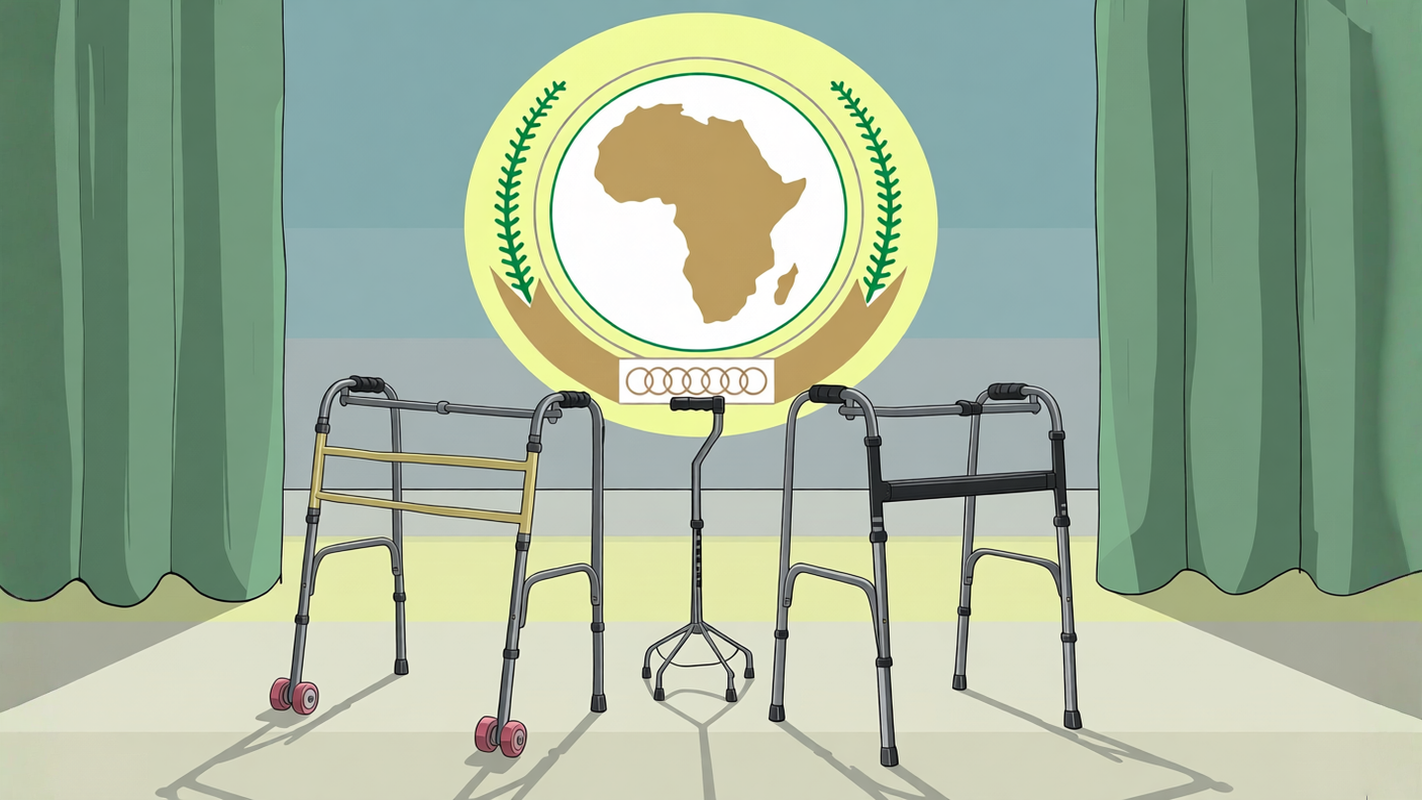
From using dirty money for state capture to running down national economies, in the process sponsoring unending crises in opposition parties, and persecuting strong critics, Africa’s octogenarian and septuagenarian leaders have been more of a curse than a blessing to the world’s youngest continent. While their vice-like grip on power has closed the shutters against the youth, it has not translated into good governance but has worsened the plight of a continent where 70 per cent of its population is under 30. ENO-ABASI SUNDAY reports that strengthening democratic institutions, respect for term limits, and strong advocacy for a constitutional amendment that reduces age limits for elective offices could help phase out the brigade of old, rugged leaders who have severely stunted the continent’s growth.
President Emmanuel Jean-Michel Frédéric Macron, who was born on December 21, 1977, replaced Napoleon as the youngest president in French history after he took the reins on May 14, 2017.
Before becoming President of France at the age of 39, Macron served as Minister of Economy and Finance under President François Hollande, from 2014 to 2016.
Notably, Macron was only two years old when Teodoro Obiang Nguema Mbasogo was first sworn in as president of Equatorial Guinea on August 3, 1979. Mbasogo is the longest-serving president on the continent.
In Cameroon, Paul Barthélemy Biya got into the saddle on November 6, 1982, when Macron was only four years old. Biya, the longest consecutively serving current non-royal national leader in the world, at the age of 93, is also the oldest current president in the world.
In East Africa, 81-year-old President Yoweri Kaguta Museveni, who came into power in 1986 following an armed rebellion that swept away Milton Obote, has gone on to become one of the world’s longest-serving leaders.

Viewed from the prism of political freedoms, social and economic factors that affect the standard of living of people in a country, including real GDP per capita, literacy rates, access to safe water, political stability and security, the last 30 years of the Biya-led administration have been some of the worst for Cameroonians.
The above scenario presents a brief montage of the vicissitudes of fortunes that have plagued the beleaguered people of the Central African country.
Last November, the World Bank Group, in a new report – the Equatorial Guinea Poverty and Equity Assessment, the first of its kind, found that despite the oil wealth that transformed the country into an upper-middle-income economy, and one of the richest economies in Sub-Saharan Africa, nearly half of the population of the country still lives in poverty according to the national poverty line.
For a leader who has been in office for four decades, this constitutes a huge dent in Mbasogo’s character, managerial abilities and democratic credentials.

Barely three months after Biya, the world’s oldest leader, won his eighth term as president at 92, in a controversial October poll that was marred by bloody protests, Museveni, on January 16, this year, was also declared the winner of Uganda’s presidential poll.
Since first coming to power as a rebel leader in 1986, he has won seven elections, with the latest extending his 40-year rule. Thus far, Museveni, who has shown no sign of losing grip on power, has created a veritable atmosphere for entrenched corruption, a highly restrictive environment for human rights, and facilitated democratic backsliding among others.
For millions of Equatorial Guineans, Cameroonians and Ugandans, who are plus or minus 40, Biya, Mbasogo and Museveni are the only presidents that they have ever known, and the chances of the situation changing soon are reasonably slim.
These millions are not alone in their misery, they have company spread across the length and breadth of Africa as reflected in the line-up of leaders that were born in the 1930s, 1940s and 1950, which includes Togo’s Jean-Lucien Savi de Tové, 86 (born 7 May 1939); Alassane Ouattara of Cote D’Ivoire, 84 (January 1, 1942); Emmerson Mnangagwa of Zimbabwe, 83 (September 15, 1942); Denis Sassou Nguesso of Republic of the Congo, 82 (November 23, 1943); Joseph Boakai of Liberia, 81 (November 30, 1944); Algeria’s Abdelmadjid Tebboune, 80 (November 17, 1945); Ismail Omar Guelleh of Djibouti, 78 (November 27, 1947); Netumbo Nandi-Ndaitwah of Namibia, 73 (October 29, 1952), Cyril Ramaphosa of South Africa, 73 (17 November 1952); Salva Kiir Mayardit of South Sudan, 74 (September 13, 1951); Angola’s João Lourenço, 71 (March 5, 1954); Lazarus Chakwera of Malawi, 70 (April 5, 1955) and Nigeria’s Bola Ahmed Adekunle Tinubu, 73 (March 29, 1952).
With a rich repertoire of some of the world’s oldest leaders, Africa is bound to lag seriously behind several critical development parameters.
Among other things, the physical toll of age, which is unavoidable, explains in part why real development has continually eluded the continent. Apart from frequent medical trips abroad, diminished mental acuity and visible frailty create a power vacuum, leaving, in most cases, room for security chiefs and unaccountable family members, especially “first families,” rather than elected officials to wield power.
The late President Muhammadu Buhari was sincere enough to inform a bewildered country that old age would slow him down, but he lacked the willpower to do the right thing by stepping aside. Not only was he sick and sought medical comfort abroad routinely, but he also left the flanks so open that his aides and lieutenants had a field day engaging in sleaze.
Evidence of Buhari’s ‘anti-corruption’ campaign is found in the coterie of his senior figures that are now being investigated and prosecuted for alleged corruption totalling N3.47 trillion.
Africa is the youngest continent, with over 70 per cent of sub-Saharan Africa under the age of 30. These young people are not just the future; they are the decision-makers of today, but their brimming energy and bustling potential, which is key to the continent’s sustainable development, is whittled down daily by the collective drudgery of its octogenarian and septuagenarian club of leaders.
According to the United Nations, such a high number of young people represents an opportunity for the continent’s growth, but only if these new generations are fully empowered to realise their best potential.
The body also emphasised that it is especially important that young people are included in decision-making and given appropriate work opportunities to innovate. But the sad reality speaks to the contrary.
The achievements and track records of cerebral, youthful and charismatic leaders within the age range of 35 to 49 years that are emerging as presidents across the world have shown that youthfulness plays a key role in contemporary governance.
Conversely, gerontocracy, experts insist, is the enemy of meritocracy as talented, younger politicians find their paths to leadership permanently blocked, thereby leading to frustration – a brain drain of the best and brightest leaving politics or migrating abroad, thereby depriving their nations of the skills, expertise and energy essential for the country’s development.
Without a doubt, the entrenchment of elderly leadership in most parts of the continent, not only creates a cycle of stagnation, which prevents the natural renewal of political ideas, it also blocks the rise of younger generations into leadership roles, even as it builds pressure for change that often explodes in the form of civil unrest or military coups, rather than going through the ballot box. Simply put, the entrenchment of elderly leadership trades long-term democratic health and economic potential for the short-term stability of keeping a single individual in power.
Age of an idea versus idea of an age
WHILE some of the primary drivers of gerontocracy are internal, foreign powers, especially from the West, lurking around as friendly nations often play supporting roles by prioritising their own strategic and economic interests over the political development of African nations.
This mostly results in a self-perpetuating system where ageing leaders, shielded from both internal and external pressure, plunder and mismanage their countries, block a younger generation from leading, and severely hamper the continent’s vast developmental potential.
With dissenters discountenanced, persecuted, jailed and even killed in some cases, the burgeoning clan of young people on the continent are bothered by this concerning and horrendous scenario that has ensured that the continent’s potential continues to remain latent, while its democratic evolution stays fledgling.
As all these happen, except for the election of 45-year-old Bassirou Diomaye Diakhar Faye as president of Senegal, and the coming on stream of young military leaders, who are displeased with the status quo, recent elections on the continent do not offer much hope of a renaissance or a chance for Africa to overcome the reign of a brigade of oldies that have severely stunted the continent’s growth, cornered its resources and lived a life of filthy lucre to the disenchantment of the entire continent.
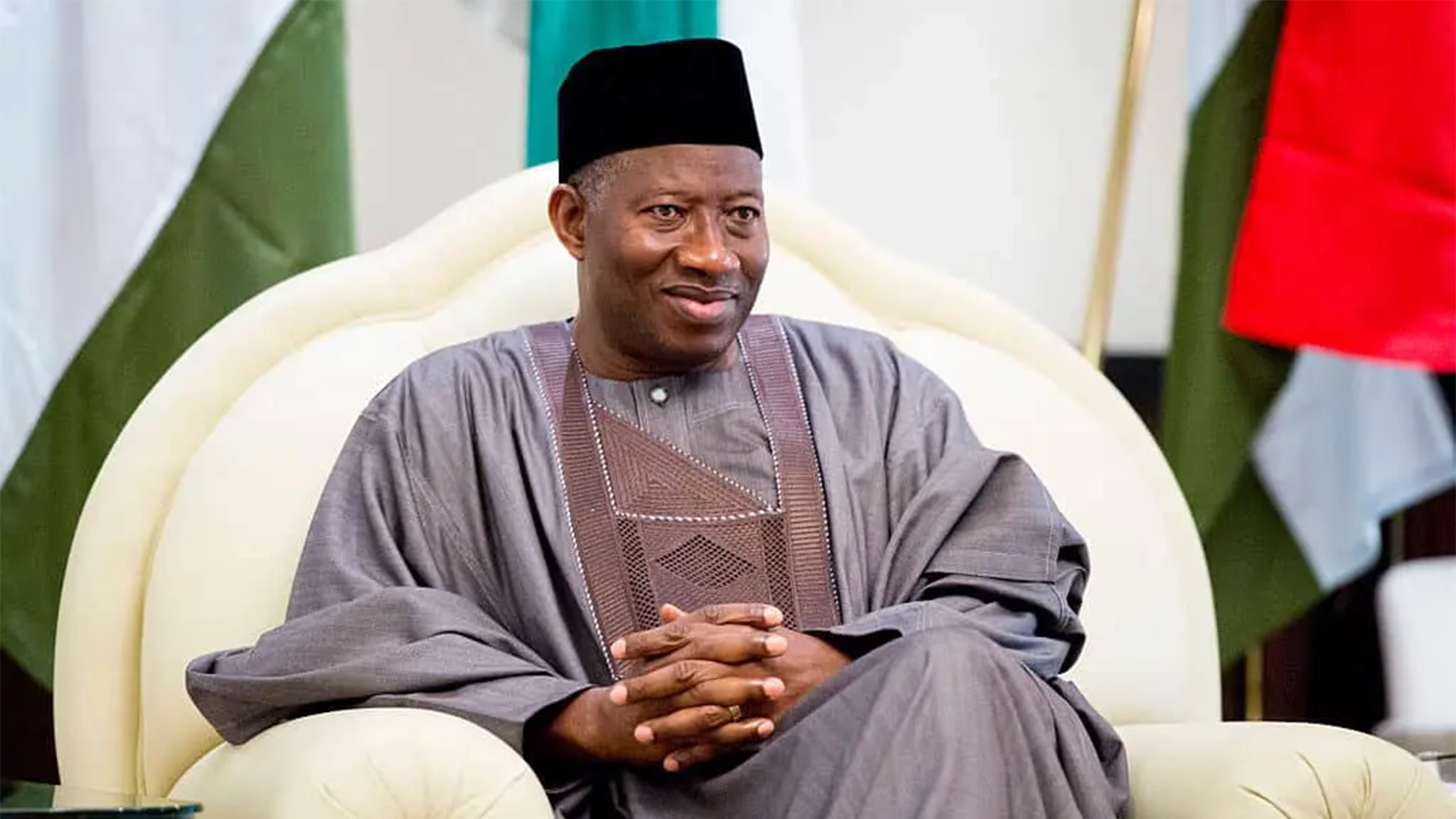
Ex-President Goodluck Jonathan recently expressed concern over the unfortunate state of affairs, making age an issue, thereby sparking a political skirmish that aides of President Tinubu viewed as a veiled dart directed at the boss.
From the commencement of his journey to the Presidency, to the penultimate week’s state visit to Turkey, Tinubu has left many guessing not just his real age, but also his fitness and general state of health.
The administration’s vigorous fight against those peddling claims of Tinubu’s frailty was raised a notch higher after the president was sent sprawling on the red carpet in Turkey recently. That development effectively reawakened talks about his fitness.
The Presidency, in explaining the president’s latest fall, blamed “a poorly laid carpet” and said there was “absolutely no health issue.”
In March 2021, Tinubu, who was then vying for the number one office, tripped over his foot and crashed into two chairs on arrival at the 11th Arewa House Lecture in Kaduna. Aides and nearby guests quickly supported the tumbling former Lagos State governor and got him back to his feet.
Again, during the Democracy Day event in June 2024, Tinubu slipped and fell as he climbed into a vehicle meant to take him around Eagle Square in Abuja. He was helped back to his feet by aides. Later that evening, he recalled: “I was all over social media after falling.”
Jonathan, in his remarks, noted that Muhammed’s administration was driven by clarity of purpose as he led with decisiveness and an unshakable sense of national duty based on a clear vision, noting that leadership is not measured by how long one governs, but the courage to act decisively when the nation needs direction and the impact a leader makes in society.
The former president emphasised that Africa’s greatest governance challenge is not the absence of regular elections, but the absence of a lasting democratic culture built on credible and transparent elections.
Addressing Nigerian youths, who listened with enthusiasm to different speakers, Jonathan urged them to see leadership as service, not entitlement and governance as stewardship, not a right.
“The president we are celebrating today was Head of State at the age of 38. If we are looking for people who can run nations in Africa, we should look at people between 30 and 40 years old. That is the way you can be very vibrant, physically strong and mentally sound. If they need to stay awake for 24 hours, they can, but if you subject an older person to that kind of stress, the person will spend 50 per cent of the time in the hospital,” the former president said.
The former president at the event, whose theme was “Has Africa Come of Age?” wondered why leaders spend 50 per cent of their time outside the country if the continent has come of age, stressing that in countries such as America, some governors do not leave the country throughout their tenure in office.
In a sharp response to the issue of old leaders, Tinubu, represented by the Secretary to the Government of the Federation (SGF), Senator George Akume, said leadership is not about physical age, but about the implementation of ideas.
Tinubu’s response notwithstanding, the National Coordinator of the Human Rights Writers Association of Nigeria (HURIWA), Emmanuel Onwubiko, agrees with Jonathan’s assertion that the guard must change from the old to the young.
“Yes. Nigeria is in serious need of vibrant minds with innovative leadership ideas to turn around the tides and bring about sustainable development, good governance and structural democracy deeply entrenched in the modus operandi of governing Nigeria. So, Nigerians should eschew ethnicity and religious sentiments and vote for younger people who would bring about positive changes in the country,” Onwubiko said.
Not-Too-Young-To-Lead
EVEN though the whistle for the 2027 presidential election is yet to be blasted, a glimpse at potential presidential hopefuls reveals that most of them would be in their 70s and late 60s, a development that again brings to the fore generational talks, as well as questions the viability of the Not-Too-Young-To-Run Bill, which is sadly observed in the breach.
If Atiku Abubakar throws his hat into the ring in 2027, he would be 81 years old; Senator David Mark would be 79 years old, Tinubu would be 75 years old, Ibrahim Shekarau would be 72 years old, and another former Kano State governor, Rabiu Musa Kwankwaso, would be 71 years old.
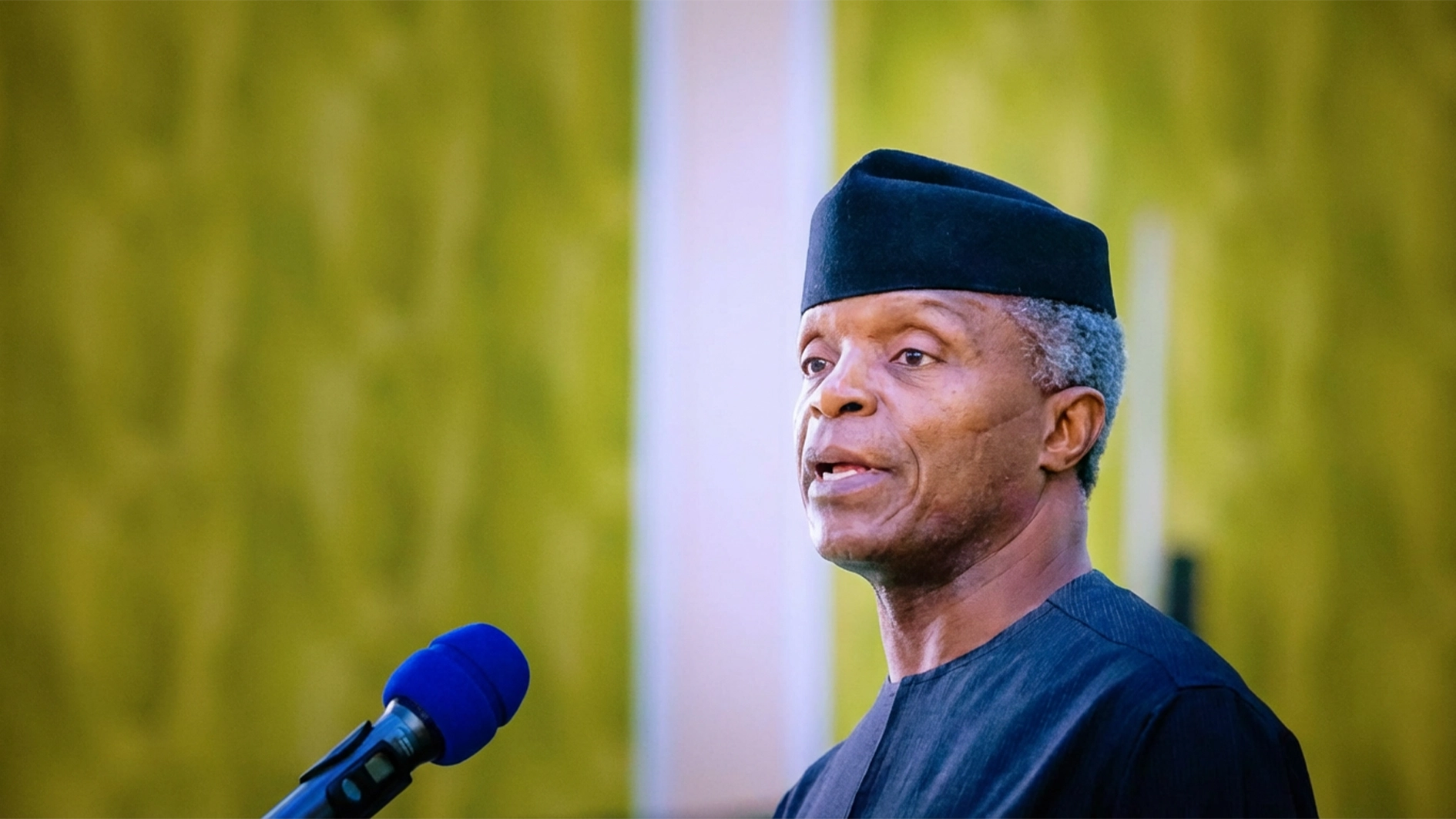
Former Vice President, Prof. Yemi Osinbajo, would be 70 years old, former President Goodluck Jonathan would be 70 years old, Governor Bala Mohammed of Bauchi State would be 69 years old, Nasir el-Rufai would be 67 years old, Peter Obi would be 66 years old, and Chibuike Amaechi would be 62 years old.
When Buhari, on May 31, 2018, signed into law the “Not Too Young To Run Act” (officially the Constitution Alteration Bill), he described it as a landmark piece of legislation that was conceived, championed and accomplished by young Nigerians.
“The coordinators of the Not Too Young To Run Movement have now established a formidable legacy – which is that, in our maturing democracy, if you really want to change something in Nigeria, and if you can organise yourselves and work hard towards it, you can achieve it. The outcome of such efforts is this remarkable feat,” Buhari enthused.
Among other things, that law reduces the eligible age for aspirants for members of the State Houses of Assembly from 30 to 25 years; the eligible age for aspirants for members of the House of Representatives is reduced from 30 to 25 years, and the eligible age for aspirants for the Office of the President is lowered from 40 to 35 years. Surprisingly, the age limits for senators and governors were not reduced, as originally proposed by the sponsors of the Bill.
For the Executive Director of the Civil Society Legislative Advocacy Centre, Auwal Ibrahim Musa, the Not-Too-Young-To-Run Bill is in the books, but its implementation remains an illusion, as political parties have yet to mainstream it or even give it serious thought.
Insisting that only the political restructuring of the country can bring about the needed turn around in political fortunes, he lamented that political heavyweights, including some past and present African leaders are using “dirty money” for state capture, after which they live dangerously while aligning with foreign powers to give them cover while they in turn protect such foreign powers political and economic interests.
He further noted that with President Tinubu as the father of the ruling party nationally, and state governors playing the same roles at the state level, empirical evidence shows that the “youths assuming key leadership offices of the land or studying leadership is not in their agenda. They only feature as tools for political violence and election manipulation”.
The CISLAC boss called for extensive leadership recruitment “as the leaders that we have now are not prepared for the task, and have no capacity to lead.”
Gerontocracy clogs Africa’s progress
IN a continent with the world’s most youthful population, younger leaders could potentially connect better with the predominantly youthful electorate. But, as we have also seen in many instances across the continent, both at national and sub-national levels, the record has been mixed. Younger leaders do not automatically guarantee more democratic, accountable or progressive leadership.
However, according to the Senior Adviser, Nigeria, at Crisis Group International, Nnamdi Obasi, aged, sit-tight leaders in Africa have significantly hindered the continent’s progress, and often with negative consequences for democracy and development.
He said: “To maintain power, these rulers frequently manipulate constitutions, silence opposition through coercion or corruption, and weaken state institutions. These actions fuel public frustration, erode confidence in democratic governance and ultimately increase the risks of coups or armed conflict. By prioritising personal survival over national progress, these rulers often drive their countries deeper into poverty and insecurity.”
Onwubiko agrees with Obasi that sit-tight leaders have hindered the continent’s rapid progress.
He said: “By allowing persons who have reached their retirement age of 70 and above to lead countries in Africa is a fundamental cause of the lack of development, advancement and growth in the economy and all other sectors of the nation. Old age is full of health challenges, and it will be a gross disservice to any nation that permanently allows old people to be at the helm of affairs of their country.
“Old age, aside from the issue of health complications, wouldn’t allow such a political leader to provide good governance that embodies the strictest observance of the twin principles of accountability and transparency by officials of government, since the elderly president will often be going in and out of the hospital and so wouldn’t pay adequate attention to the work that his appointees are doing.
“We can see how the frequent travels of President Bola Ahmed Tinubu have made the country virtually ungovernable with insecurity, terrorism and the near collapse of the national economy. So, it is safe to say that allowing old and sick people to lead a country such as Nigeria is definitely a sure way to underdevelopment and the crisis of soaring cost of living.”
How to close generational gap in Africa’s leadership
ASKED to proffer ways of closing the generation gap in Africa’s leadership, Obasi said deliberate and determined efforts are required, but must keep focus on three key areas.
He said, first, citizens, civil society groups, political parties and international partners must demand constitutional provisions that limit executive tenures. “It is essential to insist on the respect of these limits and resist any manipulations intended to extend terms in office,” he said.
Secondly, stakeholders must work together to strengthen democratic institutions, in particular, ensuring that electoral commissions remain truly independent and are not subjugated by sit-tight leaders or their political parties.
Thirdly, youth and other citizens should advocate for constitutional amendments that reduce age limits for elective offices, as Nigeria’s “Not Too Young To Run” campaign did in 2018.
“However, as Nigeria’s subsequent electoral experience has also shown, legal or constitutional changes alone are not enough to start closing the generation gap. Youths and other citizens must also demand that political parties reduce the high costs of participation, from the excessive fees for registration forms and expression of interest forms to the staggering expenses of running a campaign,” he said.
He also deplored the trend where foreign powers back leaders who serve their specific interests by giving them financial, military and diplomatic support, describing it as “deeply damaging as it undermines both democratic progress and economic development in Africa”.
For Onwubiko, it would take uncommon political strategies to achieve a change of guard.
“I believe that African nations that have remained backwards and have seen their country controlled by old people, almost going to existential doom, would have to organise, mobilise themselves, and demand good governance.
“Ultimately, I believe that only a revolution can force the old guards away from holding on to power. I don’t exactly understand how a revolution is possible in most African nations, where ethnicity, religion, and other sentiments have become pervasive.”
According to the National Publicity Secretary of the group, Jare Ajayi: “The panacea for sit-tight syndrome in Africa is to ensure that institutions that have roles to play in ensuring adroit political practices are in place, and are performing their tasks effectively. The judiciary must be such that justice is dispensed with dispatch, so that perpetrators of illegal acts are sanctioned and their experience serves as a deterrent to others.
“The way many African leaders conduct themselves provides an alibi for powerful and gluttonous foreign powers to poke their noses into national or local affairs. They use such tactics to blackmail the leader who, to be allowed to continue in office, would become subservient to the foreign powers. In such situations, the people are always at the receiving end. That has been the lot of most African countries.”
Ajayi emphasised that strong and effective institutions put leaders and the led on their toes and ensure that everyone makes the effort to put in their best.

