 Follow Us on Google News
 Follow Us on Google Discover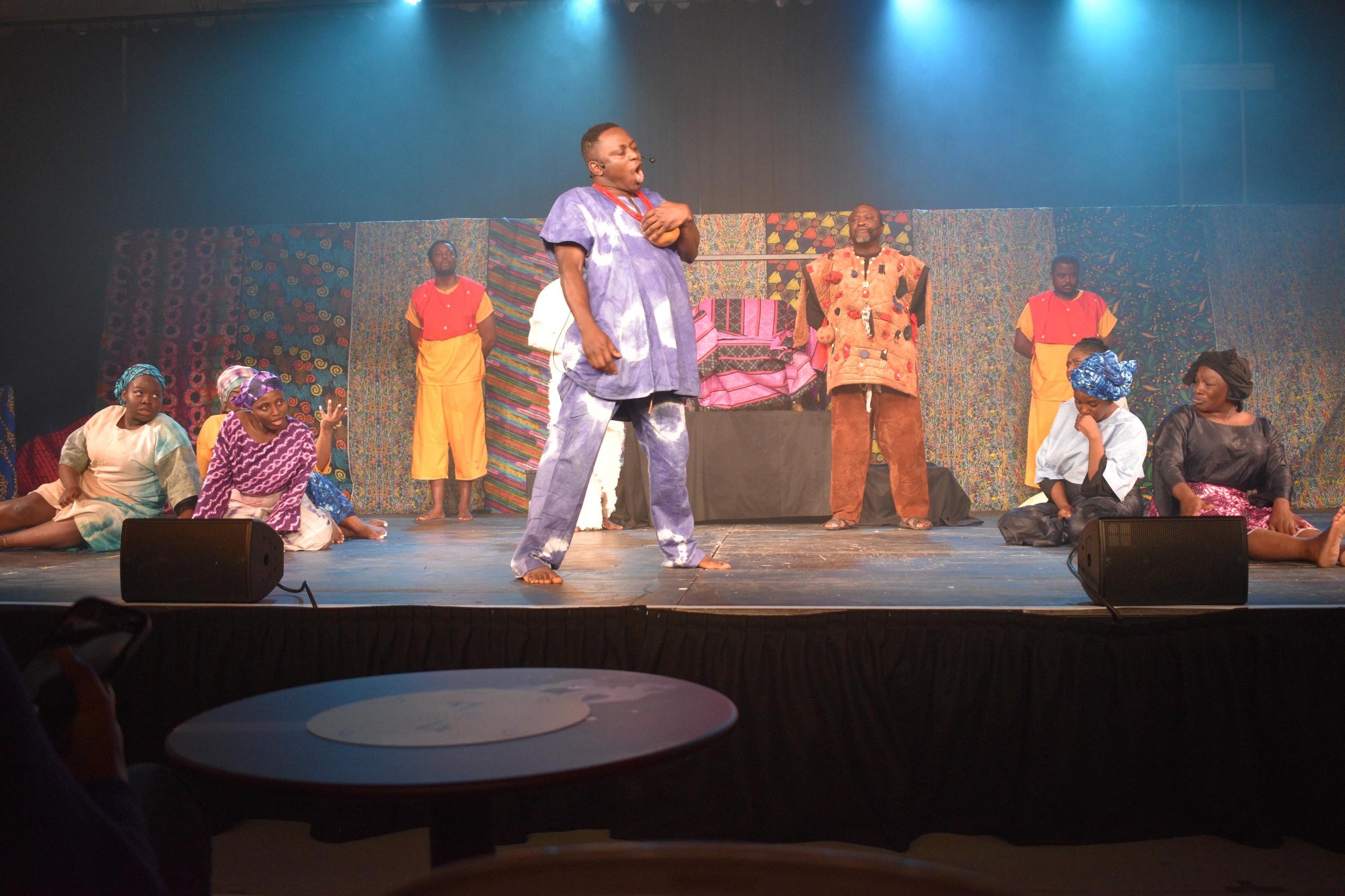
Throne of Ashes: Iku Baba Yeye, a historical stage play produced by The Sumi Group, is more than just a historical stage play, it is a living and breathing memory that has been taken from the heart of Yoruba history. The stage play took place in Igboho during the peak of the Oyo Empire, and it premiered in the United Kingdom at the Woolwich Works – Fireworks Factory on February 13 and 14, 2026. During the stage play, nearly 1,000 people attended in a 1,800-capacity venue, which is quite an impressive turnout.
Essentially, the tale explores the age-old questions: What constitutes a good leader? At what point does prudence border on weakness? And just how perilous can ambition prove to be?
Following the passing of the prudent Oba Olujimi, a king who preferred to avoid war even when threatened, the kingdom is left exposed, especially to the influence of the Nupe kingdom. His son, Aremo Tadenikawo, is set to ascend to the throne with a completely different set of values in mind: aggressive, provocative, and willing to fight for his people no matter what the cost. However, before things can look up, a stab in the back occurs. The prince is poisoned in a palace coup engineered by his own sister, Princess Olubikin. His husband, the powerful warlord Balogun, takes his place.
What ensues is not only political intrigue—but heartbreak. The drama serves as a reminder of how flimsy authority is and how readily ambition can overrun a monarchy.
At the heart of it all is Faloh Jagaban, whose performance as Aremo Tadenikawo is both powerful and relatable. He does not portray the prince as perfect. Rather, it is the contradictions that are revealed: a prince who can be rash and reckless, yet fiercely loyal and brilliant when it comes to defending his people. When he is drunk and vulnerable, Faloh Jagaban brings that to the fore. When he is resolute, he looms large. His voice rings with power, his body language speaks of tension, and his emotional nuances ring true.
Much of the play’s relevance comes from the conflict between generations, from father to son. Akin Lewis’s composed and restrained rendition of Oba Olujimi represents custom and caution.His performance is very quiet but very effective, symbolizing a leader who thinks that peace is strength. Conversely, Aremo’s passion symbolizes a new generation that is tired of being humiliated and wants change.

The supporting characters add to the emotional richness of the play. The drama serves as a reminder of how flimsy authority is and how readily ambition can overrun a monarchy. The father-son dialogues are very engrossing, while the political undercurrents of Balogun are fraught with danger.This paid off in performances that seemed to be living, breathing, and not rehearsed.
Audience response developed throughout the two-day performance. The crowd on Friday was initially looking forward to possibly absorbing the richness of the historical and cultural overtones. However, their investment was worth it at the en.end of the day, By Saturday night, the atmosphere had changed, with more spontaneous clapping, more laughter, and more noticeable gasps.It was electric. During the feedback session after the performance, audience members commended the performances for their emotional truth while thoughtfully reflecting on what had touched them most.
The effect was not limited to applause. At the end of the show, Faloh Acquired three more movie roles, clearly showing that his stage performance had been noticed in the industry. Already recognized for his award-winning work as a performance artist and cultural producer, he continues to blend Yoruba oral tradition, satire, music, and drama in a way that is both grounded and innovatively contemporary
Ultimately, ‘Throne of Ashes: Iku Baba Yeye’ succeeds because it feels relevant. Though it takes place centuries ago, the issues of leadership, betrayal, inter-generational conflict, and ambition are the same that exist in the political climate of today. It is a testament to the fact that Yoruba history is not simply something of the past, but something that has the power to move people across the globe.
In London, for two nights, history did not simply speak, it roared.

