 Follow Us on Google News
 Follow Us on Google Discover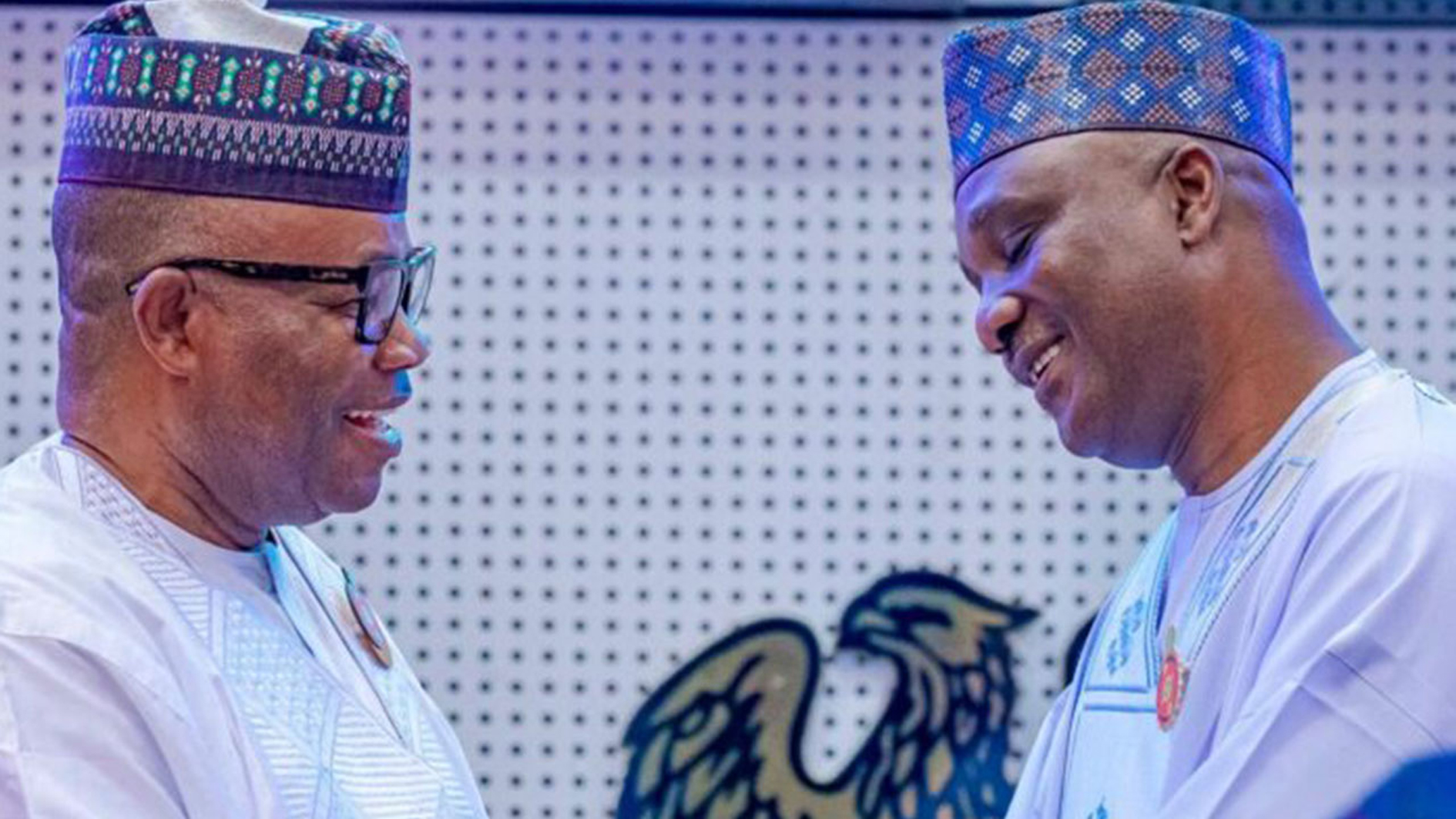
The verdict of the Federal High Court indicting the leadership of the National Assembly over the purchase of very expensive vehicles for themselves is a landmark that speaks truth to power. Besides, the ruling should put a stop to the controversy that engulfed the entire legislative process on procurement of the vehicles given the wide public criticisms against it, even as the federal lawmakers struggled to justify their action.
The Court sitting in Lagos with Justice Yellim Bogoro presiding declared unlawful the National Assembly’s controversial N110 billion vehicle and allowance schemes, ruling that the spending of N40 billion on 465 vehicles for lawmakers and N70 billion in support allowances for newly elected members breached procurement laws, constitutional obligations and the public trust.
The court also ordered the Senate President, Mr Godswill Akpabio and Speaker of the House of Representatives, Mr Tajudeen Abbas, “to ensure that all future procurements or expenditure of public funds by the National Assembly comply strictly with due process requirements and are also guided by the principles of transparency, accountability and value for money.”
The suit was instituted by the Socio-Economic Rights and Accountability Project (SERAP) against the leadership of the National Assembly in August 2023, following plans to spend N40 billion on 465 vehicles and N70 billion in allowances for new lawmakers amid worsening economic hardship across the country.
In her judgment, Justice Bogoro held that: “Looking at the magnitude of the expenditure, coupled with the absence of demonstrable due process, leads me to conclude that the procurement is arbitrary, disproportionate and inconsistent with statutory procurement standards.”
Justice Bogoro also held that: “The beneficiaries of the expenditure are the very officials approving it, and the expenditure confers direct pecuniary and material benefits. This, to my mind, constitutes a case of self-dealing and conflict of interest.”
Justice Bogoro’s judgment, read in part: “I have taken judicial notice of the economic realities in Nigeria and the widespread financial hardship affecting Nigerian citizens. In this context, the allocation of N110 billion for the benefit of lawmakers demonstrates a failure to prioritise national interest.”
The court is right. Against the backdrop of existing social and economic realities in the country, the expenditure was self-serving, insensitive, and less than honourable. This ruling indeed summarises the angst of Nigerians when the federal lawmakers awarded the vehicles to themselves about two years ago. Curiously, some of the lawmakers had sought to justify the vote on the excuse that they needed to go round their constituencies, and they needed the vehicles to navigate bad roads. Besides, they said it was their entitlement that was not different from what the executive awarded to its members. Many Nigerians had posited reasonably that the huge fund could have been better spent, for instance, to repair critical roads to serve the generality of Nigerians.
The Public Procurement Act, 2007, spells out in copious detail, especially in sections 16 to 52, a transparent and value-for-money process by which public institutions can procure goods and services. For example, Section 16 (c) – (f) stipulates procurement ‘by open competitive bidding’; ‘in a manner which is transparent, timely, equitable for ensuring accountability and conformity with this Act and regulations deriving therefrom’; ‘with the aim of achieving value for money and fitness for purpose’; and ‘in a manner which promotes competition, economy and efficiency’. Section 18 (a) and (c) charges a ‘procuring entity’ to prepare ‘needs assessment and evaluation’, and carry out ‘appropriate market and statistical surveys and on that basis prepare an analysis of the cost implications of the proposed procurement’. Section 19 states that a procuring entity shall ‘(a) advertise and solicit for bids in adherence to this Act… (b) … invite two credible persons as observers in every procurement process, one person each representing a recognised (i) private sector professional organisation whose expertise is relevant to the particular goods or service being procured, and (ii) non-governmental organisation working in transparency, accountability and anti-corruption areas, and the observers shall not intervene in the procurement process but shall have right to submit their observation report to any relevant agency or body including their own organisations or associations…’
The pertinent question is: did the purchase of almost 500 high-end vehicles at about N100 billion for elected public officials comply with the provisions of the very law that the National Assembly enacted? Having heard from both sides in the case instituted since 2023 by the Socio-Economic Rights and Accountability Project (SERAP), the learned judge held otherwise.
The point must also be made that a breach of the act provides that the Bureau of Public Procurement (BPR) may prevent the purchase Section 16(18); and holds ‘responsible and accountable’ (21) ‘the accounting officer of a procuring entity and any officer to whom responsibility is delegated… for any actions taken or omitted to be taken either in compliance with or in contravention of this Act.’ Furthermore,
Section 57 (2) and (4) stipulate that ‘the conduct of all persons involved with public procurement, whether as official of the Bureau, a procuring entity, supplier, contractor or service provider shall at all times be governed by principles of honesty, accountability, transparency, fairness and equity’ and ‘all persons in whose hands public funds may be entrusted for whatever purpose should bear in mind that its utilisation should be judicious.’ Section 53 empowers the BPR to ‘review and recommend for investigation by any relevant authority any matter related to the conduct of procurement proceedings by a procuring entity, or the conclusion or operation of a procurement contract if it considers that a criminal investigation is necessary or desirable to prevent or detect a contravention of [the law]’. Deriving from the findings of the Federal High Court in Lagos, did the BPR satisfy itself that the relevant provisions of the PPA were adhered to by the procuring entity? It does not appear so.
The judge also faulted the humongous purchase as a breach of the 1999 Constitution. Section 4(2) of the Constitution grants the National Assembly the ‘power to make laws for the peace, order, and good government of the Federation…’ It is reasonable to read into this broad charge a duty not to do anything that will support in any way or form what can be considered an injudicious application of public funds, even more so as it bears on the self-interest (some would say selfish interest) of ‘distinguished’ and ‘honourable’ members of the House. Put differently, it will be unreasonable to read into Section 4(2) the power to incur injudicious expenditure that, to boot, supports a luxurious lifestyle of electees in the face of increasingly impoverished electors.
It is only commonsensical to argue that apportioning an unfair portion of public resources to pander to the comfort of a tiny fraction of the population denies the rest of the citizens the enjoyment of their fair and just entitlements of the commonwealth. Indeed, where and when public officials entrusted with the duty to act in the best interest of the common good appropriate (some may even say misappropriate) a large portion of the public wealth for their own use, the State is denied the resources to fulfill its duty as enjoined in Section 15(3) (a) to ‘provide adequate facilities for and encourage free mobility of people, goods, and services …’ But it goes beyond this.
To be continued tomorrow.

