 Follow Us on Google News
 Follow Us on Google Discover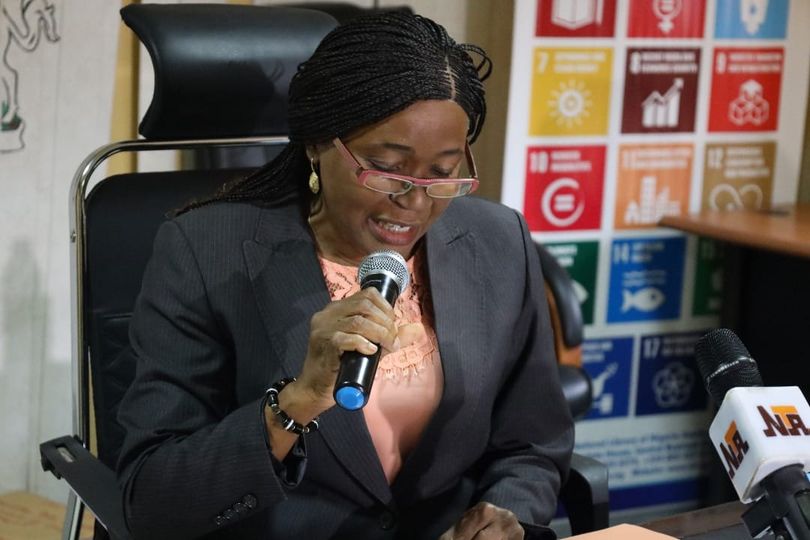
National Librarian/Chief Executive Officer of the National Library of Nigeria, Prof. Chinwe Anunobi, has sounded the alarm that about 40 per cent of the world’s population lacks access to education in their indigenous languages.
According to her, access to education in one’s indigenous language plays a critical role in improving literacy levels, comprehension, and overall academic performance.

Anunobi spoke in Abuja yesterday at the 2026 International Mother Language Day.
Speaking on the theme: ‘Youth voices on multilingual education’, the National Librarian stressed that young people must be placed at the centre of conversations on language preservation and inclusive learning.
She noted that multilingual education is not merely a cultural aspiration but a developmental necessity that can unlock the full potential of children and adolescents across diverse communities.
According to Anunobi, when learners are taught in languages they learned in their formative years, they are more confident, more participatory, and better equipped to grasp complex concepts.
On the other hand, she warned that denying children access to education in their mother tongue would often lead to poor comprehension, reduced classroom engagement, and, in some cases, higher dropout rates.
She said: “Since 2022, shortly after I assumed office, the National Library of Nigeria institutionalised the observance of International Mother Language Day. This was not accidental. It aligns with my responsibility as a Member of the UNESCO Steering Committee for the International Decade of Indigenous Languages (IDIL 2022–2032) and the Lead Expert in the Communication and Information Sector of the Nigerian National Commission for UNESCO.
“The broad targets of the International Decade of Indigenous Languages include revitalisation, promotion, preservation, and the encouragement of multilingualism. At the National Library of Nigeria, we have translated these goals into measurable action”.
She expressed deep concern about the steady decline of indigenous languages worldwide, warning that many are gradually facing extinction due to neglect and reduced intergenerational transmission.
According to her, the erosion of native tongues poses a serious threat to cultural identity, traditional knowledge systems, and the rich diversity that defines communities.
On her part, a representative of the United Nations Educational, Scientific and Cultural Organisation (UNESCO), Yachat Nuhu, highlighted the global significance of preserving indigenous languages to safeguard cultural diversity and promote inclusive education.
She noted that the international agency has been actively supporting initiatives that encourage mother-tongue instruction, strengthen local content development, and empower communities to maintain their linguistic heritage.

