 Follow Us on Google News
 Follow Us on Google Discover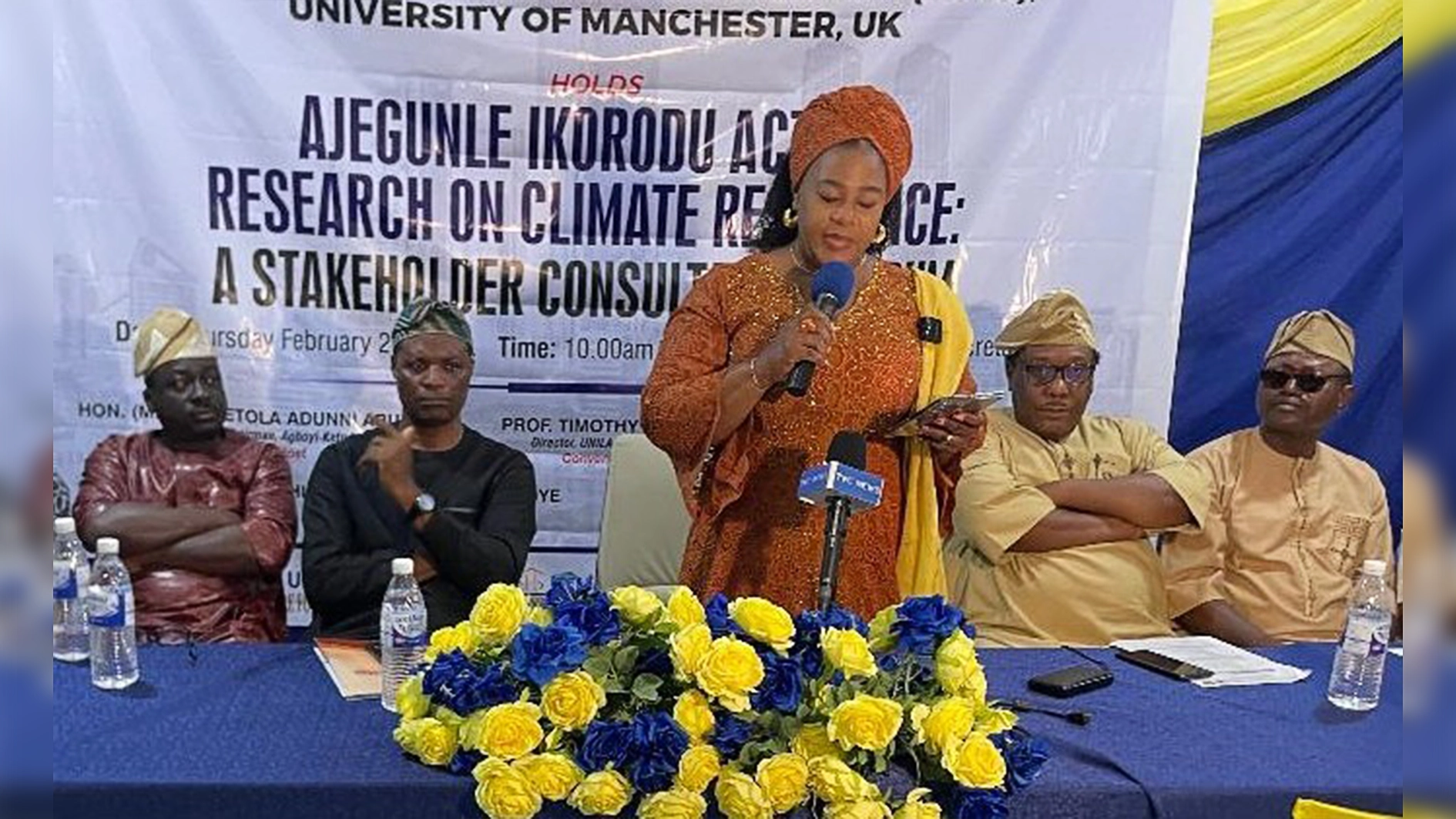
Experts from the Centre for Housing and Sustainable Development (CHSD), University of Lagos, and the African Cities Research Consortium (ACRC) have called for urgent intervention in high-risk, flood-prone areas of Lagos to prevent severe damage to lives and property.
The experts, who spoke at a Stakeholder Consultation Forum on the Ajegunle-Ikorodu Action Research on Climate Resilience held at the Agboyi-Ketu Local Council Development Area (LCDA), emphasised that while climate change is a global challenge that cannot be eliminated, its impacts can be effectively managed through appropriate and forward-looking strategies.
Speaking on the project, the Co-Director of CHSD and Action Research for Climate Resilience Lead, Prof. Peter Elias, said precipitation levels in Lagos are projected to double by 2050, potentially contributing to sea-level rise and leaving nearly 50 per cent of the city underwater by 2100 if proactive measures are not taken.
He noted that communities located in vulnerable areas of Lagos, particularly informal settlements along the lagoon and ocean frontiers, are most at risk. Elias explained that Ajegunle-Ikorodu was selected for the study because it is a low-lying coastal community already experiencing escalating rainfall and sea-level threats. He added that flooding in the area is not solely linked to rainfall or dam releases, but also to ocean surges caused by backflow from the Atlantic Ocean.
According to him, rapid urban growth, poor drainage infrastructure and indiscriminate waste disposal have compounded the situation, placing homes, businesses and roads at heightened risk. “The study found that over 44,000 people and more than 6,000 buildings in Ajegunle-Ikorodu are exposed to flood risks, with the lowest-lying areas facing the greatest danger,” he said.
He warned that current infrastructure design standards in Ajegunle-Ikorodu are inadequate for projected future climate conditions. “Local drainage systems designed for five- to 10-year storms should be upgraded to accommodate 25-year storms under RCP 4.5 and 50-year storms under RCP 8.5 scenarios.

“Major channels should be expanded from a 25-year to a 50- to 100-year design capacity. Roads and culverts require additional freeboard of 0.5 to 1.0 metres, while critical facilities such as schools and markets should be elevated above projected flood levels,” Elias stated.
The City Manager of ACRC, Dr Temilade Sesan, reaffirmed the global relevance of the programme in driving climate-smart urban transformation. She stressed that Lagos is contributing meaningfully to global discussions on climate resilience and inclusive urban development.
“ACRC is a global programme with a deliberate theory of change. We define our long-term goals and then work backwards to identify the steps that must be taken today to achieve those outcomes in the coming years,” she said.
In her welcome address, the Chairman of Agboyi-Ketu LCDA, Adetola Abubakar, underscored the importance of research-driven solutions to address community challenges, describing flooding and other climate-related threats in the area as surmountable.
She commended the efforts of CHSD and ACRC in seeking sustainable solutions and assured them of the council’s cooperation in implementing recommendations arising from the research. “Ajegunle is one of the most important communities in our LCDA. Agboyi-Ketu is perhaps the most unique LCDA in Lagos State in terms of its climate and ecological diversity. The Agboyi I, II and III communities are islands that adorn the Lagos Lagoon, while Ajegunle sits along the creeks of Agboyi. Due to its riverine nature and unique climatic conditions, Ajegunle-Ikorodu is highly prone to flooding,” she said.
Earlier, the Founding Director of CHSD, University of Lagos, Prof. Timothy Nubi, described Ajegunle-Ikorodu as highly vulnerable to climate-related hazards. He noted that the collaboration between ACRC and CHSD is aimed at fostering a more resilient and sustainable future for the community and beyond, with practical, community-based strategies to address the crisis.
Speaking on behalf of residents, Olawale Oyeneye, who has been involved in the research since it began in June 2025, commended the organisations for actively engaging the community in the data-gathering process.
He said their participation had helped residents identify additional challenges previously overlooked. Oyeneye also appealed to the local government to intensify efforts to restore both primary and secondary schools within the community and ensure that healthcare centres operate on a 24-hour basis.

