 Follow Us on Google News
 Follow Us on Google Discover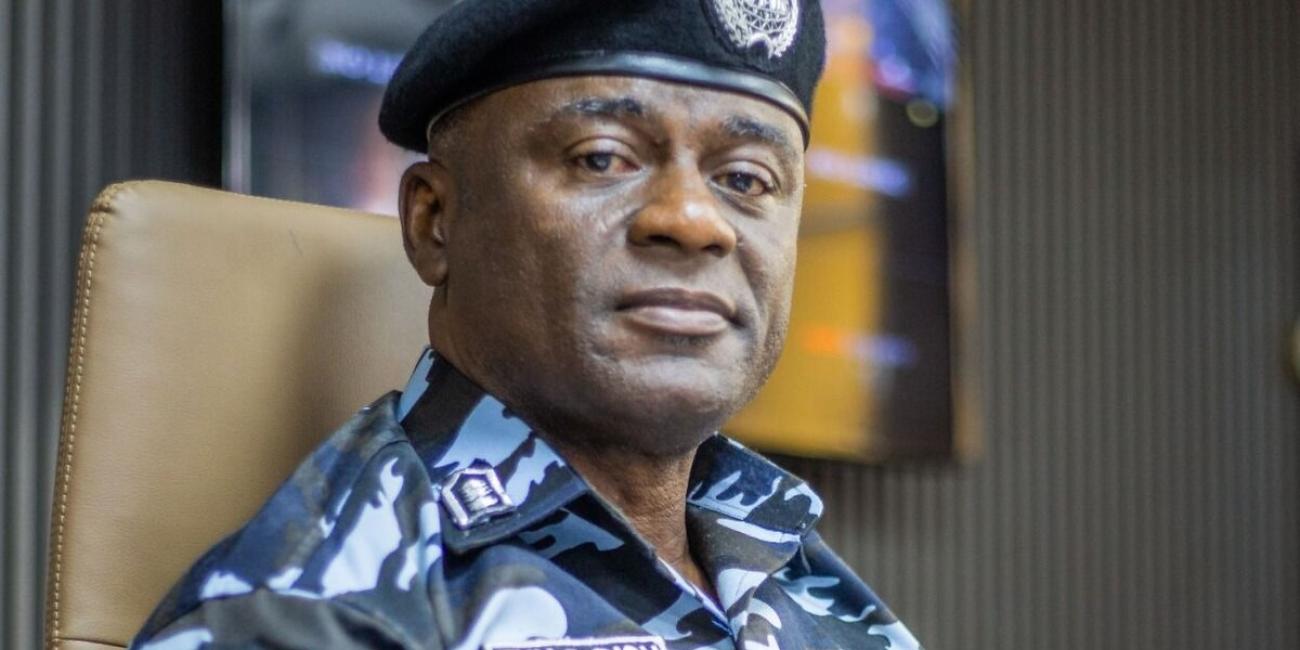
The Nigeria Police Force in Nigeria in the last few years, especially at the top of its hierarchy, has battled some image challenges. This is more unlike in the past when the agency was defined more by the rank and file.
The immediate past Inspector General of Police, Kayode Egbetokun, Ph.D initiated and walked some policies. Few of these would impact the police by the time they become operational. For example, I’m aware of the efforts being made to deconstruct the training curriculum of police personnel, the bulk of which have been in use from pre-independence.
The new Police helmsman, Mr Olatunji Rilwan Disu, the 23rd indigenous IGP from 1964 to date, no doubt has policing experience and trajectory to his credit. And as I commented on the wall of Misigbodu Amuda a few days ago, “it would be a hurried conclusion to give the new IGP a thumbs up given the fact that the police architecture in Nigeria has some foundational orbits that the hierarchy has not departed from”.
The new Ag. IGP is therefore urged to make a difference. It is then his administration would receive due recognition from the public. The new IGP would influence new narratives if he can drive the police agency to be more pro-people. Much has been said about his antecedents in this regard especially in respect to his Rapid Response Squad gallantry in Lagos State during the 2020 #EndSARS.
The police are the public and the public is the police as entrenched in one of policing principles. Two of the principles aptly validate the above by noting that, the power of the police to fulfill their functions and duties is dependent on public approval of their existence, actions and behaviour, and on their ability to secure and maintain public respect; and to recognise always that the extent to which the cooperation of the public can be secured diminishes, proportionately, the necessity of the use of physical force and compulsion for achieving police objectives. The IGP is, therefore, to note that his administration should be people-centred.
The new IGP (I’m sure of his confirmation) would do well by immediately recognising the imperativeness of state policing structure. His predecessor’s body language and public comment were to the contrary even when the presidency was disposed to it.

The truth is that Nigeria as a federal republic with 36 ‘federating’ states including the Federal Capital Territory, Abuja deserves a sub-national policing structure. In this way, Section 214, sub section 1 of the 1999 Constitution of the Federal Republic of Nigeria (as amended), which expressly stipulates establishment of one Police Force for the country, has to give way to policing structures at the state levels. This call has received unprecedented attention in the last five years as a result of overwhelming internal security that is now hydra-headed and multifaceted.
The President, Bola Ahmed Tinubu in an emergency meeting held on Thursday, February 15, 2024 with the 36 state governors and the National Security Adviser harped on the need for state police. He again, validated the call with the Senate on Wednesday, February 25, 2024, urging it to amend the impediment section of the 1999 Constitution with a view to paving the way for the state police. Much more than this call and urge, the President should have sent an Executive Bill on Creation of State Police instead of asking the Senate to do so. It should also be noted that the House of Representatives has also to be involved because it requires a constitutional amendment. Making it an Executive Bill would make it faster unlike asking the parliament to initiate it.
Be that as it may, the continuous disposition of the presidency is in tandem with the mandate given to the new IGP by the President during his decoration to fight terrorists and bandits and make our society safer. As he himself granted in his maiden statement after his decoration at the seat of power, he has to be more intentional on his pedigrees as a combatant police officer.
Recently, the Nigeria Police under retired IGP Egbetokun showcased its operational aerial surveillance and reconnaissance to fight banditry and terrorism on some black spots in the Northeast, Northwest and North central.
This must be sustained on a large scale using intelligence-led policing. The new IGP should lead the police agency to be more responsive, proactive, and re-skilled for counterterrorism and counterinsurgency (COIN) asymmetry warfare. The traditional policing operations and strategic skills cannot only match what is on ground; there is a need to do more in terms of real COIN warfare and exposure to more advanced training using interagency intelligence and technologies.
In the last few months, attacks on schools have been more frequent and devastating. Between November 2025 and January this year, *there have been close to 15 school attacks with hundreds of students and pupils kidnapped. The IGP should also know that the fear of school attacks has also made some schools to still be closed especially in the North Central till date. On this, the IGP Disu would do well by giving more attention to the Nigerian Police School Protection Squad (SPS).
To make this more impactful, the IGP, should, in the spirit of interagency collaboration, relate with the Nigeria Security and Civil Defense Corp’s Safe School Special Response Squad (SSSRS). Joint operations and intelligence sharing by Nigerian Police SPS and Civil Defense’s SSSRS with the military will therefore be a hard nut for the bandits to attack our schools and kidnap our children.
The new IGP would do well if he can be amenable to the above. May his tenure be what Nigerians would be proud of after four years as captured in the Nigeria Police Act, 2024, Section 7,6 (amended).
Professor Aremu of the University of Ibadan is a police scholar and security expert and Acting Vice-Chancellor, Achievers University, Owo, Ondo State.

