 Follow Us on Google News
 Follow Us on Google Discover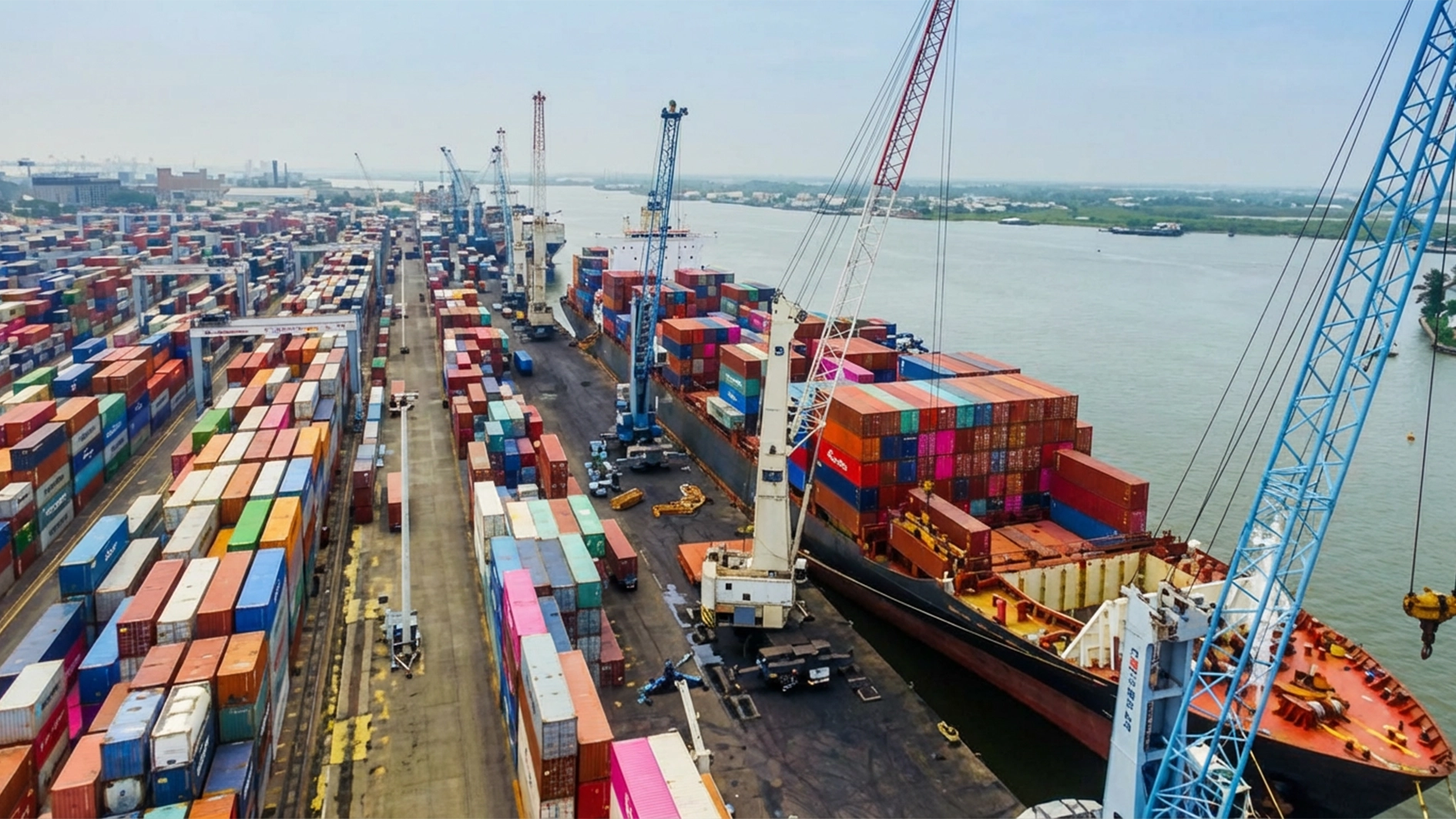
• Back proposed green, climate finance bank
The House of Representatives’ Ad-hoc Committee investigating the pre-shipment inspection of exports and the alleged non-remittance of crude oil proceeds, yesterday, queried the roles of key government agencies in the export value chain while directing them to submit comprehensive documents to aid its probe.
Chairman of the Committee, Seyi Sowunmi, who issued the directive at a resumed investigative hearing in Abuja, said most of the agencies involved in the probe made incomplete and outdated submissions.
Those directed to furnish detailed records include the Nigeria Customs Service (NCS), Central Bank of Nigeria (CBN), Nigerian Ports Authority (NPA), and the Nigerian Association of Chambers of Commerce, Industry, Mines and Agriculture (NACCIMA).
Sowunmi said the investigation was critical to addressing revenue leakages, ensuring that all export proceeds due to the federation are fully accounted for.
“Part of the problem the President is trying to cure is that we should account for every kobo that accrues to the nation. That is what this committee seeks to achieve,” he said.
Earlier in their separate submissions, representatives of the agencies outlined their statutory roles in the pre-shipment process for oil and non-oil exports.
A Deputy Comptroller-General, Caroline Diagwan, who represented the Comptroller-General of the NCS, Bashir Adeniyi, said the Service’s responsibility is limited to verifying export documentation and conducting physical examination of goods at the point of exit.
According to her, Customs ensures that export documents, including the Nigeria Export Proceeds (NXP) form, certificate of inspection, and export permits, tally with the goods presented for shipment.
She stressed that the Service does not collect export duties nor determine the amount paid to the government, noting that its mandate is confined to compliance checks at export terminals under its various commands.
On his part, Director of Trade and Exchange at the CBN, Dr Musa Nakurji, who represented the CBN Governor, Yemi Cardoso, clarified that the apex bank’s role in pre-shipment inspection is administrative, as provided under the Pre-Shipment Inspection Act of 1992.
He said the CBN does not appoint pre-shipment inspection agents, explaining that the bank operates an automated Trade Monitoring System through which commercial banks process the NXP form on behalf of exporters.
Nakurji added that pre-inspection agents issue a Clean Certificate of Inspection (CCI) after verifying the quantity, quality, and value of goods, and that the process is electronically integrated with Customs.
Representing the Managing Director of the NPA, Dr Abubakar Dantsoho, the General Manager, Tariff, Ibrahim Lukman, told the committee that the Authority deploys agents at export terminals to monitor activities and transmit relevant information.
He maintained that the NPA operates within its jurisdictional mandate and collaborates with other government agencies in line with existing laws.
Also, a Director at NACCIMA, Dr Emmanuel Akeh, told the panel that the body has no role in crude oil exports. He explained that NACCIMA issues Certificates of Origin only for non-oil exports to authenticate and certify products shipped out of the country.
After listening to the submissions, the committee resolved to formally communicate fresh dates for the agencies to reappear with all the requested documents.
MEANWHILE, the Chairman of the House Committee on Renewable Energy, Afam Victor Ogene, has endorsed a proposal to establish Nigeria’s first dedicated Green and Climate Finance Bank, describing the initiative as timely and crucial to unlocking the country’s estimated $104 billion climate investment potential.
Speaking at a press briefing alongside promoters of the proposed institution, Ogene said the initiative aligns with the Federal Government’s renewable energy agenda and Nigeria’s commitments under the Paris Agreement.
“We are gathered here to introduce an innovative and important initiative, the establishment of Nigeria’s first dedicated green and climate finance bank,” he said.
Citing data from the International Finance Corporation, Ogene noted that Nigeria has an estimated $104 billion in climate-smart investment opportunities by 2030 but faces a significant financing gap in achieving its energy transition and climate targets.

