 Follow Us on Google News
 Follow Us on Google Discover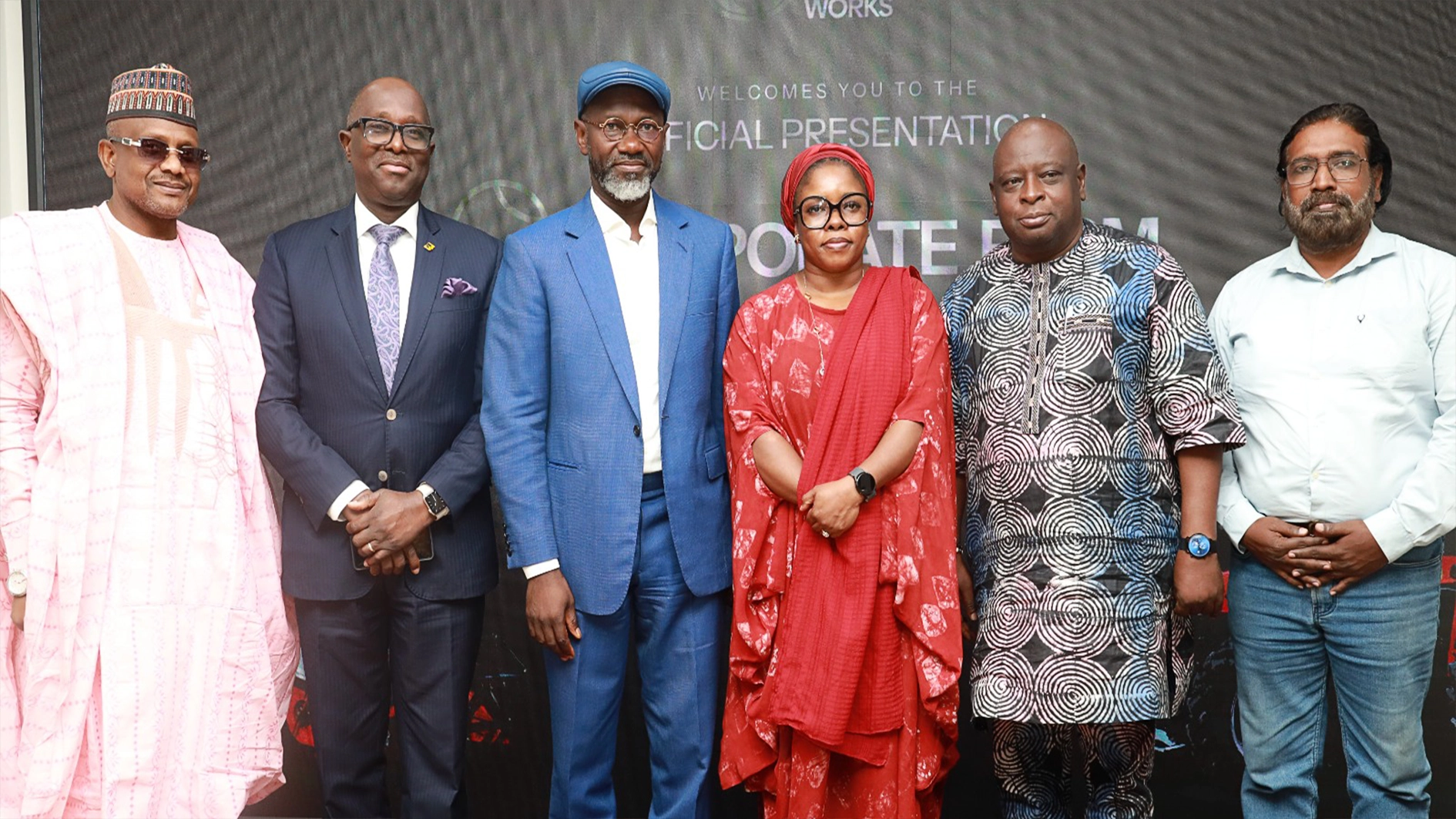
Nigeria’s drive to strengthen food security under the administration of Bola Ahmed Tinubu is drawing renewed attention from private sector players, as stakeholders push for large-scale commercial farming to tackle food shortages, post-harvest losses and financing risks in the agricultural sector.
At a launch gathering of government officials, bankers, farmers and agribusiness operators in Lagos, stakeholders said Nigeria must move beyond fragmented smallholder farming to structured commercial agriculture capable of delivering higher productivity and reducing food losses across the value chain.
Against this backdrop, Origin Tech Group unveiled its corporate farm model in Lagos, describing the initiative as a platform designed to support large-scale farming by providing technical support, financing structures and guaranteed markets for produce.
Executive Chairman of Origin Tech Group, Prince Samuel, said the company’s new Corporate Farm model was conceived to address persistent risks that have discouraged investment in agriculture despite the sector’s potential.
He said several banks and investors had previously lost money financing agriculture because farming operations were often unstructured, scattered and lacked reliable markets, adding that inefficiencies across the food supply chain also contribute to heavy losses, with as much as 50 per cent of food in Lagos wasted before reaching consumers.
According to him, the initiative is designed to support investors willing to enter agriculture by providing technical management, access to land, financing support and guaranteed market outlets for produce, while addressing the challenges of Nigeria’s largely scattered smallholder farming system, which makes agricultural services expensive and discourages investment.
Under the model, farms are expected to operate at a minimum scale of 1,000 hectares, with investors providing between 20 and 30 per cent equity, while financial institutions and Origin Tech provide the balance.
Samuel explained that the model also includes technical support for two farming cycles and continued advisory support for up to five cycles to help farmers achieve projected yields and returns.
“If we say it is 10 tonnes per hectare, you achieve that 10 tonnes per hectare,” he said, adding that the company also plans to provide guaranteed markets through an aggregation platform known as Bulk Food, which will purchase farm output once production is completed.
The chairman, linking the initiative to agricultural reforms and policy direction under the President Tinubu administration, said efforts by the government to prioritise food security had created momentum for new investment in the sector.
He said the company is already working with about 14 states and has a land bank of about 150,000 hectares that could be deployed for agricultural investment.
He added that Nigeria’s agricultural sector is valued at over $143 billion annually, although a large share of food consumed in the country is still imported.
“Agriculture in Nigeria is a huge business,” he said. “More than a third of what we consume is imported, even though we have enormous potential.”
Speaking on farm mechanisation, Leo Edwards, Chief Operating Officer of Origin Automobile Works, said that Nigeria’s low level of mechanised farming remains a major constraint to productivity.
Citing available statistics, he said the Food and Agriculture Organisation (FAO) recommends 1.5 horsepower per hectare for effective mechanised farming, but Nigeria currently operates at about 0.0027 horsepower per hectare.
Lagos State Commissioner for Agriculture and Food Systems, Abisola Olusanya, stated that the country must adopt large-scale commercial farming to address food insecurity, noting that Nigeria’s heavy reliance on smallholder farming has contributed to food losses and inefficiencies across the system.
“We have millions of small holder farmers, yet we continue to see food waste, food loss and insecurity,” she said. “It tells you that the model we have adopted must change,” Olusanya said.

