 Follow Us on Google News


 Follow Us on Google Discover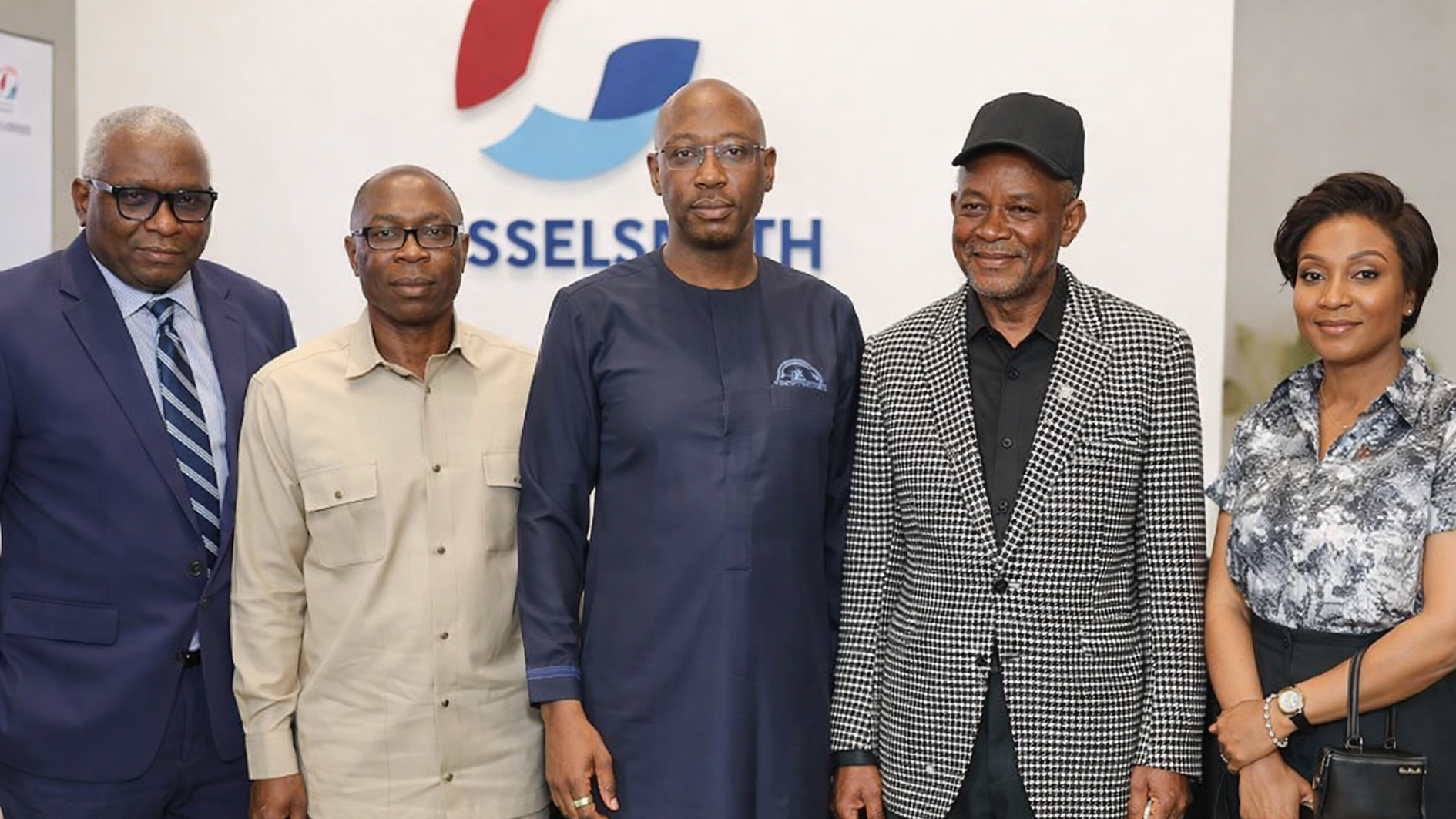
Senator John Enoh, Minister of State for Industry, Trade and Investment, has called for innovative partnerships to boost local skills development and industrial growth, praising the innovation of RusselSmith for its potential to make Nigeria self-sufficient.
The remarks were made during the inaugural West Africa Industrialisation, Manufacturing and Trade (WAIMT) Summit and Exhibition, held from March 3 to 5, 2026, at the Landmark Events Centre, Victoria Island, Lagos. Organised by DMG Events Nigeria and officially endorsed by the Federal Ministry of Industry, Trade and Investment, the three-day event convened policymakers, manufacturers, technology providers, and investors from Nigeria, Benin, Cameroon, and other West African nations.
On the opening day, RusselSmith CEO Kayode Adeleke participated in a panel titled Harnessing Digital Innovation and Technology to Unlock and Scale Industrial Progress. He emphasized that digitalization cannot outpace industrialization, noting that clear manufacturing priorities, aligned policies, targeted incentives, and patient capital must precede technological deployment.
Adeleke added that WAIMT 2026 confirmed West Africa possesses the industrial ambition, natural resources, and policy environment to build competitive manufacturing capacity. “RusselSmith’s role is to demonstrate that advanced manufacturing at international standards is not a future aspiration for the region—it is happening here, now,” he said.
RusselSmith’s team, including Business Development Manager Adedoyin Yusuf and Senior Deputy Manager, Advanced Manufacturing Dr. Gabriel Farotade, co-presented Driving Supply Chain Resilience and Regional Development through Industrial 3D Manufacturing. Their presentation highlighted how localizing parts production reduces lead times, lowers import dependency, and closes regional supply chain gaps. Yusuf also moderated Easing the Movement of People, Goods, and Services Across the World’s Largest Liberalised Market, which focused on regulatory alignment, logistics efficiency, and cross-border trade under the African Continental Free Trade Area (AfCFTA).
Panelist Jude Abalaka, Managing Director of Tranos, aligned with Adeleke’s viewpoint, stressing that industrial capacity must precede digitalization. He highlighted supply chain management as a domain where technology delivers gains only when the industrial base is sufficiently developed.

The second day of the summit featured an international exhibition where RusselSmith engaged with industry professionals, investors, and government representatives. Senator Enoh was briefed on the company’s additive manufacturing capabilities and their alignment with federal industrial policy objectives. The day concluded with the WAIMT Awards Gala Dinner.
On the final day, Senator Enoh led a delegation on a site visit to RusselSmith’s facilities. Adeleke showcased the company’s portfolio of over a thousand completed projects, its supply chain sovereignty value proposition, and the Omnifactory roadmap, with commissioning of the first phase scheduled for Q1 2026 and a third phase in Q1 2027. He appealed to the government for continued support and patient capital.
Senator Enoh announced that RusselSmith would be the first company invited to present at the upcoming Industrial Revolution Work Group (IRWG) meeting, describing the visit as the start of a formal partnership between the Ministry and the company. During the tour, the Minister personally operated one of the metal manufacturing machines.
“The innovation by RusselSmith will make Nigeria self-sufficient. What ordinarily takes six months in the supply chain can now be achieved in a fraction of the time, and that matters enormously for industry and for the future of this country,” Senator Enoh said.
A second delegation of industry leaders also toured the Omnifactory, gaining firsthand insight into the company’s metal manufacturing operations. RusselSmith emphasized that its participation in WAIMT 2026 aligns with the Nigeria Industrial Policy 2025, which aims to raise manufacturing’s contribution to GDP to between 20 and 25 percent by 2030 through import substitution, local value addition, and advanced manufacturing—a gap the Omnifactory is positioned to fill.
Over the three days, RusselSmith demonstrated that the tools, expertise, and ambition to build a competitive industrial base in West Africa are not merely aspirational—they are operational.

