 Follow Us on Google News
 Follow Us on Google Discover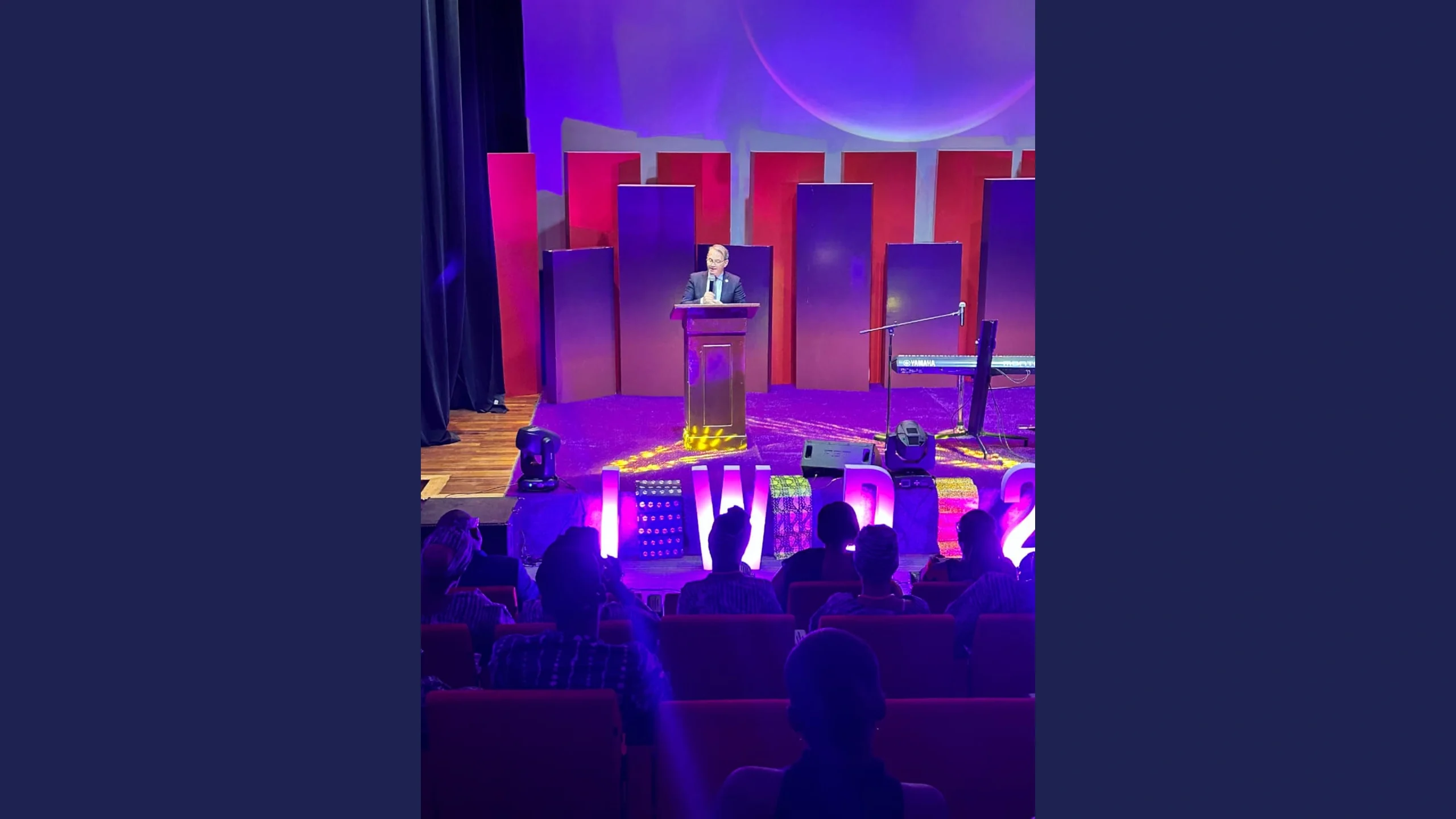
The Embassy of France in Nigeria has reinforced its commitment to gender equality and inclusive development with the launch of the Art X Impact Campaign, a hybrid artistic initiative designed to amplify women’s rights advocacy across multiple Nigerian states in commemoration of International Women’s Day 2026.
Unveiled at the Alliance Française, the event gathered a cross-section of stakeholders, including representatives of Nigerian institutions, members of the diplomatic corps, civil society actors, private sector leaders, captains of industry, cultural practitioners, partners and friends.

Opening the evening in a tone that blended diplomacy with cultural familiarity, the Consul General of France in Lagos, Laurent Favier, greeted the audience warmly, saying: “Dear partners, dear friends, ladies — bonsoir, good evening.”
The initiative, developed through collaboration between local artists, civil society organisations and digital influencers, seeks to deploy creative expression as a tool for social sensitisation. Through paintings, music, sculptures, murals and dance, the campaign aims to highlight issues surrounding gender equality while celebrating the resilience and leadership of women in Nigerian communities.
As part of the programme, exhibitions documenting the stories and portraits of women participating in empowerment projects will be hosted across the network of French Alliances in Nigeria, providing both visibility and continuity to the advocacy effort.
Partnership and Co-construction
The campaign builds on the achievements of the French Embassy Fund for Civil Society Organisations (FEF-OSC) — a flagship initiative supporting women’s economic empowerment, climate resilience, peacebuilding and the prevention of gender-based violence.
Implemented in partnership with Nigerian civil society organisations and the Federal Ministry of Women Affairs, the fund has supported 21 projects across 16 states, reflecting what officials described as the effectiveness of community-driven solutions.
In his remarks, Favier described the programme as a strategic embodiment of France’s foreign policy orientation towards feminist diplomacy.
“It is a great honour to stand before you tonight in the context of International Women’s Day — a global moment that reminds us of our shared responsibility to act for all women and girls,” he said.
He emphasised that gender equality remains central to sustainable development and governance outcomes.
“Gender equality is more than a goal in itself. It is a precondition for reducing poverty, promoting sustainable development and building good governance,” he added.
According to him, the civil society fund represents not merely a development intervention but a political and institutional statement about the nature of Franco-Nigerian cooperation.
“This fund is a deliberate expression of the kind of partnership France seeks to build with Nigeria — one grounded in trust, mutual learning and co-construction. The initiative was designed as a direct response to priorities expressed by Nigerian civil society organisations themselves,” Favier noted.
He further explained that France sees its role as supportive rather than directive.
“We view our responsibility as that of an accompanist — committed to strengthening local leadership and expertise. When solutions are rights-based, community-driven and locally owned, their impact becomes sustainable,” he said.
Measuring Social Impact
Highlighting outcomes recorded so far, Favier pointed to the programme’s broad reach and measurable returns.
“Supporting projects across 16 states has revealed extraordinary diversity and innovation. Investment in gender equality and women’s economic empowerment is not charity. Its ripple effects extend from households to communities, local markets and the wider economy,” he observed.
He encouraged stakeholders across public, private and civic sectors to contribute actively to the empowerment agenda.
“Think about how you can invest your talent, expand visibility, open access to networks, train, recruit or shape corporate responsibility strategies. If you are unsure where to begin, the French Embassy stands ready to build bridges,” he said.
In a lighter moment that resonated with the audience, the Consul General concluded his address by speaking in pidgin English, drawing laughter and applause.
“Forgive my accent — E go better o,” he said, a phrase widely understood to mean “It will be better.”
Stories of Transformation
Beneficiaries of the initiative also shared testimonies reflecting the programme’s human impact.
Achi Rebecca, a participant in the She Elevates Tech project implemented by Hopesalive Initiative for Africa, said the training reshaped her aspirations.
“Today, I am working towards becoming a software engineer who creates second chances — a woman empowering other women,” she said.
Similarly, Adeleye Balikis Arike, who benefited from the HEAR project by HUFFPED, described the intervention as transformative.
“It was truly an eye-opener. I learned how to manage my finances and become accountable,” she noted.
Expanding Bilateral Cooperation
Speaking with journalists after the event, Favier underscored that the celebration reflected both global advocacy and the strength of Franco-Nigerian relations.
“This event is part of how we celebrate International Women’s Day around the world. France is proud to defend human rights, and it was important to do this in partnership with Nigeria — here in Lagos, in Abuja and across other cities,” he said.
He disclosed that more than 500 beneficiaries had been reached through various empowerment interventions under the civil society fund.
“The social impact is significant. For every €1 invested, there is an estimated €4.3 return in impact. This demonstrates how empowerment translates into tangible economic value,” he explained.
On broader relations between both countries, Favier described cooperation as dynamic and expanding.
“Nigeria and France are working closely on global issues — from gender equality and climate change to security and artificial intelligence. Bilaterally, over 100 French companies operate in Nigeria, creating about 16,000 direct jobs alongside numerous indirect opportunities,” he said.
He added that collaboration spans sectors such as energy, technology, agriculture and agribusiness.
“We are very proud to stand in Nigeria. We have many shared interests, and the future of this relationship is even broader,” he stated.
Culture as a Tool for Change
Organisers noted that the Art X Impact Campaign aligns with continental priorities, including the African Union’s Agenda 2063, while reinforcing the role of cultural diplomacy in advancing social transformation.
By harnessing artistic expression and grassroots partnerships, the initiative seeks to strengthen public awareness and policy engagement around gender equality.
For many participants, the launch represented not only a celebration of women’s achievements but also a renewed call for collective responsibility.
As Favier concluded, achieving gender equality requires the participation of all segments of society.
“It is not only a matter of justice,” he said. “It is essential for progress.”

