 Follow Us on Google News
 Follow Us on Google Discover
Islamic scholars have cautioned against returning to forbidden acts after Ramadan, stressing that the spiritual growth achieved during the holy month must be preserved in order to fully reap the rewards promised by Allah to the righteous.
The clerics gave the admonition at the annual Ramadan lecture organised by the Al-Habibiyyah Islamic Centre Lagos, held at the Medina Estate Mosque, Gbagada, Lagos.
In his lecture titled ‘Maintaining Inner Fulfilment Beyond Ramadan’, the Chief Imam, Falomo Police Central Mosque, Ikoyi, Dr. Tajudeen Adebayo, stressed that Ramadan is not meant to make Muslims better for just 29/30 days, but to instil lasting discipline, faith, and righteousness that continue throughout one’s life.
“During Ramadan, we hear people saying they have completed the Qur’an many times but after Ramadan, they fail to continue reading it,“ he said.
The Imam emphasised that the true success of Ramadan lies not only in the acts of worship performed during the month but in the ability to maintain those good deeds year after year.
He further stressed that the essence of the holy month is the attainment of taqwa (the fear of God) that would lead one to deep spiritual satisfaction and inner fulfilment.
The cleric said that the major acts of worship during the holy month which include the recitation of the Qur’an, dhikr (remembrance of Allah), tahajjud (night prayers), Solat, and giving sadaqah (charity) are not meant to be seasonal.
“Ramadan comes once a year, but solat is every day. Sadaqah should be every day. The good deeds we observe in Ramadan should not end with Ramadan. What we have built in Ramadan this year, we should try as much as we can to sustain them. So that we will not be empty by the time the next Ramadan comes,” he said.
He also encouraged believers to abstain totally from what Allah has made forbidden which they abstain from during the holy month, warning that “If someone returns to wrongdoing immediately after Ramadan, then he has not truly benefited from the gains of Ramadan.”
The Chief Missioner, Al- Muwafiq Islamic Society, Mushin, Lagos, Sheikh Hameed Olawale Tirmisy, in his lecture entitled, ‘Healing the Heart’s Emptiness After Ramadan’, re-echoed that Muslims should sustain the momentum built during the holy month throughout the year.
He expressed optimism that maintaining such consistency could positively influence society and even inspire non-Muslims to embrace Islam.
“If we continue these good deeds after Ramadan until the next Ramadan, it will strengthen our faith and may also invite others to Islam,” he said.
Coordinator of Al-Habibiyyah Islamic Centre in Lagos, Abdulrahman Thabit, reflected on the centre’s growth over the years particularly the Ramadan Food Bank, an humanitarian programme impacting hundreds of families annually across Lagos State.
He said: “This year’s marks the 11th edition of our Ramadan Food Bank Project – a journey of compassion, dignity, and shared humanity. Through direct food distribution and financial support, we have been able to ease the burdens of vulnerable households during Ramadan – a month that should be marked by spiritual elevation, not hinder or anxiety.”
Clerics urge Muslims to sustain spiritual consistency after Ramadan
Date: 13 March 2026 4:11am WAT
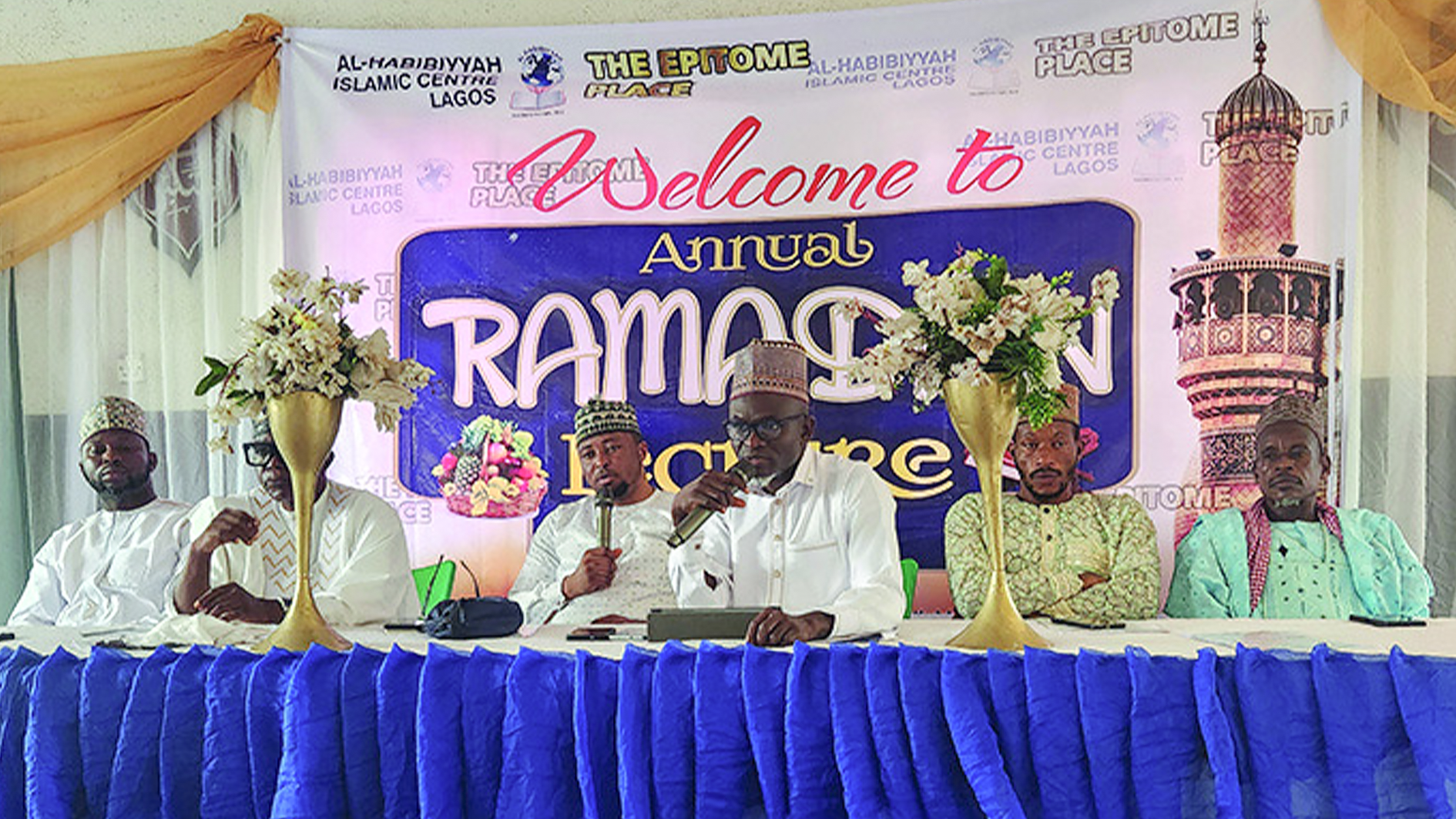
Coordinator of Al-Habibiyyah Islamic Centre in Lagos, Abdulrahman Thabit (left); Chief Missioner, Al- Muwafiq Islamic Society, Mushin, Lagos, Sheikh Hameed Olawale Tirmisy; Chief Imam, Falomo Police Central Mosque, Ikoyi, Dr. Tajudeen Adebayo (4th left); and other clerics at the annual Ramadan lecture in Lagos.
Coordinator of Al-Habibiyyah Islamic Centre in Lagos, Abdulrahman Thabit (left); Chief Missioner, Al- Muwafiq Islamic Society, Mushin, Lagos, Sheikh Hameed Olawale Tirmisy; Chief Imam, Falomo Police Central Mosque, Ikoyi, Dr. Tajudeen Adebayo (4th left); and other clerics at the annual Ramadan lecture in Lagos.

