 Follow Us on Google News
 Follow Us on Google Discover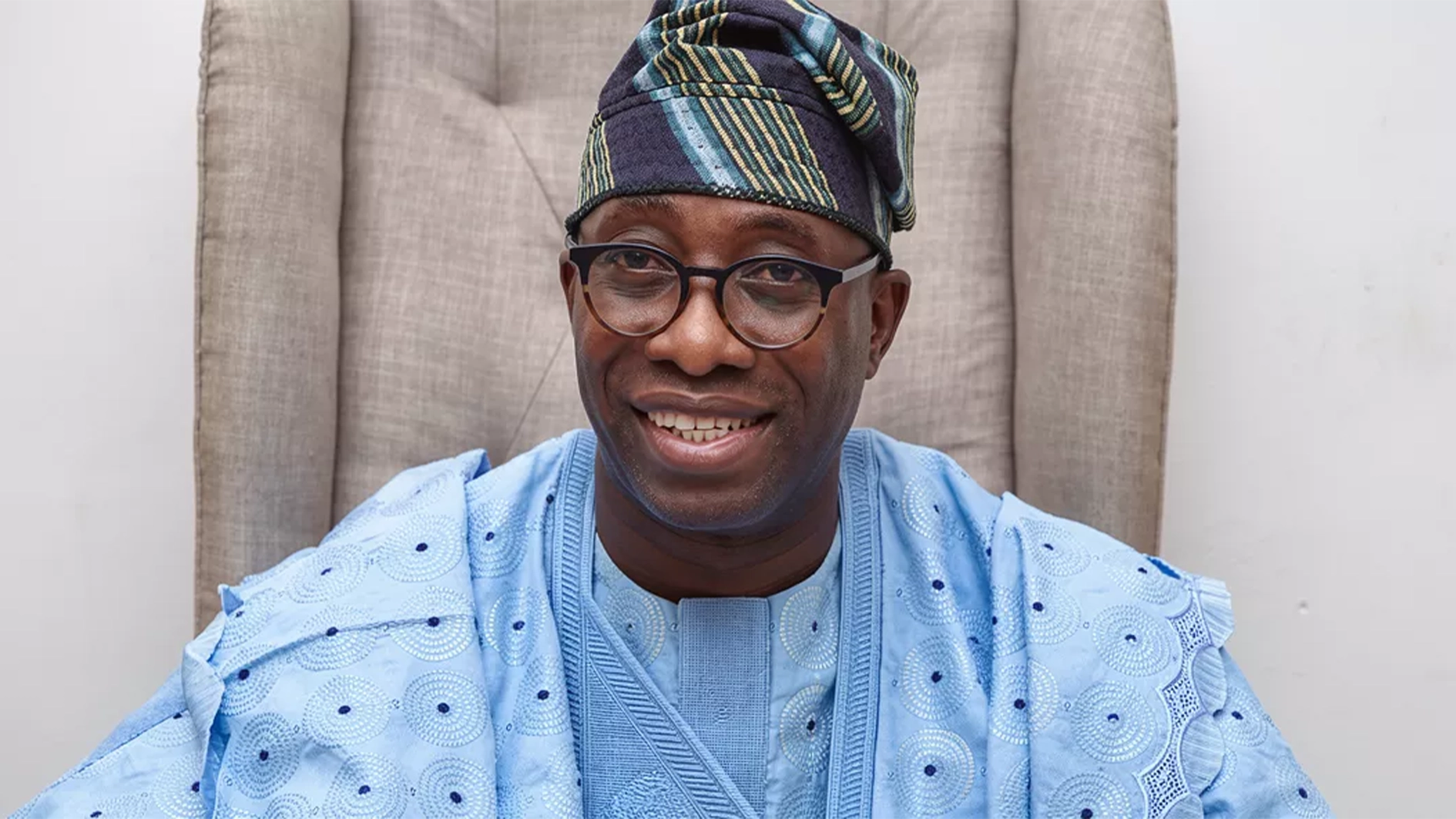
Former governorship aspirant in Ogun state Segun Showunmi has called for a fundamental reset of Nigeria’s civil service, arguing that the country’s development challenges cannot be sustainably addressed without restoring professionalism, institutional discipline and clear boundaries between political office holders and career public servants.
In a commentary shared on his Twitter account, Showunmi argued that Nigeria’s bureaucratic system possesses significant expertise and institutional memory that should be strengthened rather than sidelined by political actors. He also cited the administration of Chief Obafemi Awolowo in the old Western Region as an example of how political leadership and a professional bureaucracy can work together to achieve developmental goals.
Showunmi wrote:
“Nigeria Must Fix Its Civil Service Before It Can Fix Nigeria.
There is an uncomfortable truth that Nigeria must confront: our political class is still institutionally immature, while much of our bureaucratic class is considerably more developed than we give it credit for.
This is not an argument for an unaccountable bureaucracy. It is an argument for restoring the professional bureaucracy to its proper place in the architecture of government. Nigeria has thousands of career public servants who understand the machinery of government, know the rules, understand institutional memory and possess considerable technical competence. Yet, too often, they are shouted down, circumvented, displaced or reduced to the role of providing technical material for political appointees to present to political principals as their own work.

That is not good governance. It is institutional vandalism. The Permanent Secretary is not supposed to be an ornamental figure in a ministry. The Director-General, Director, Accountant, procurement professional, planning officer and other career officials are not merely administrative assistants to political appointees. They are components of the institutional machinery through which the Nigerian state is supposed to function.
The political class determines political direction. The bureaucracy provides continuity, technical competence and institutional execution. When these boundaries collapse, government becomes personalised.
And once government becomes personalised, due process becomes negotiable, institutional controls become inconvenient and accountability becomes increasingly difficult to locate.
The Awolowo Lesson
Nigeria has historical evidence that political leadership and professional bureaucracy can work exceptionally well together. The administration of Chief Obafemi Awolowo in the old Western Region remains an important case study—not because the circumstances of the 1950s can simply be transplanted into contemporary Nigeria, but because the underlying philosophy remains relevant.
Awolowo’s political leadership was ideological, developmental and intensely demanding. His government had clear objectives. But it also understood that transforming those objectives into schools, roads, agricultural programmes, public institutions and social infrastructure required a competent administrative machinery.
The bureaucracy was given room to function.
But that autonomy was not an invitation to indiscipline. It existed alongside high standards, rigorous supervision, personal discipline and an expectation that public service was genuinely a service to the public. That distinction is critical. A professional civil service should be independent enough to tell political leaders the truth, but disciplined enough to implement lawful political decisions once those decisions have been properly made.
That is the balance Nigeria has increasingly lost.
What Have We Become?
Today, we frequently see the political class intrude into areas that should ordinarily be governed by established administrative processes. There are situations in which expenditures are initiated without adequate institutional involvement of the Permanent Secretary or relevant accounting officers. Staff matters are sometimes handled by political appointees. Technical responsibilities are reassigned to people whose principal qualification is proximity to political power.
The consequences are predictable. Institutional control weakens. Due process becomes blurred. Accountability becomes fragmented. And when something goes wrong, everybody can claim that somebody else was responsible.
This is how states become dysfunctional without necessarily becoming visibly chaotic. The problem is not always the absence of rules. Sometimes it is the deliberate or gradual erosion of the people and institutions responsible for enforcing those rules.
Political Appointees Are Not the Enemy
We should be careful here.” Showunmi’s argument ultimately centres on the need to restore a functional relationship between political leadership and the permanent bureaucracy, rather than treating the two as competing centres of power.
His position is that political appointees have a legitimate role in setting policy direction, while career civil servants should retain the professional space required to provide technical advice, preserve institutional continuity and implement approved government decisions.
The broader message is that strengthening Nigeria’s institutions requires more than creating new policies or appointing new political leaders. It also requires protecting the administrative structures that ensure government decisions are implemented according to established rules.
For Showunmi, rebuilding the civil service is therefore not simply an administrative reform. It is a necessary foundation for restoring accountability, continuity and effective governance in Nigeria.

