GDN SIDEBAR
From content and distribution to marketing, digital strategy and guest experience, the women across Filmhouse Group are helping shape the systems that keep African cinema moving while redefining what leadership looks like behind the scenes.
If your life were a movie or a TV show, what would yours be?
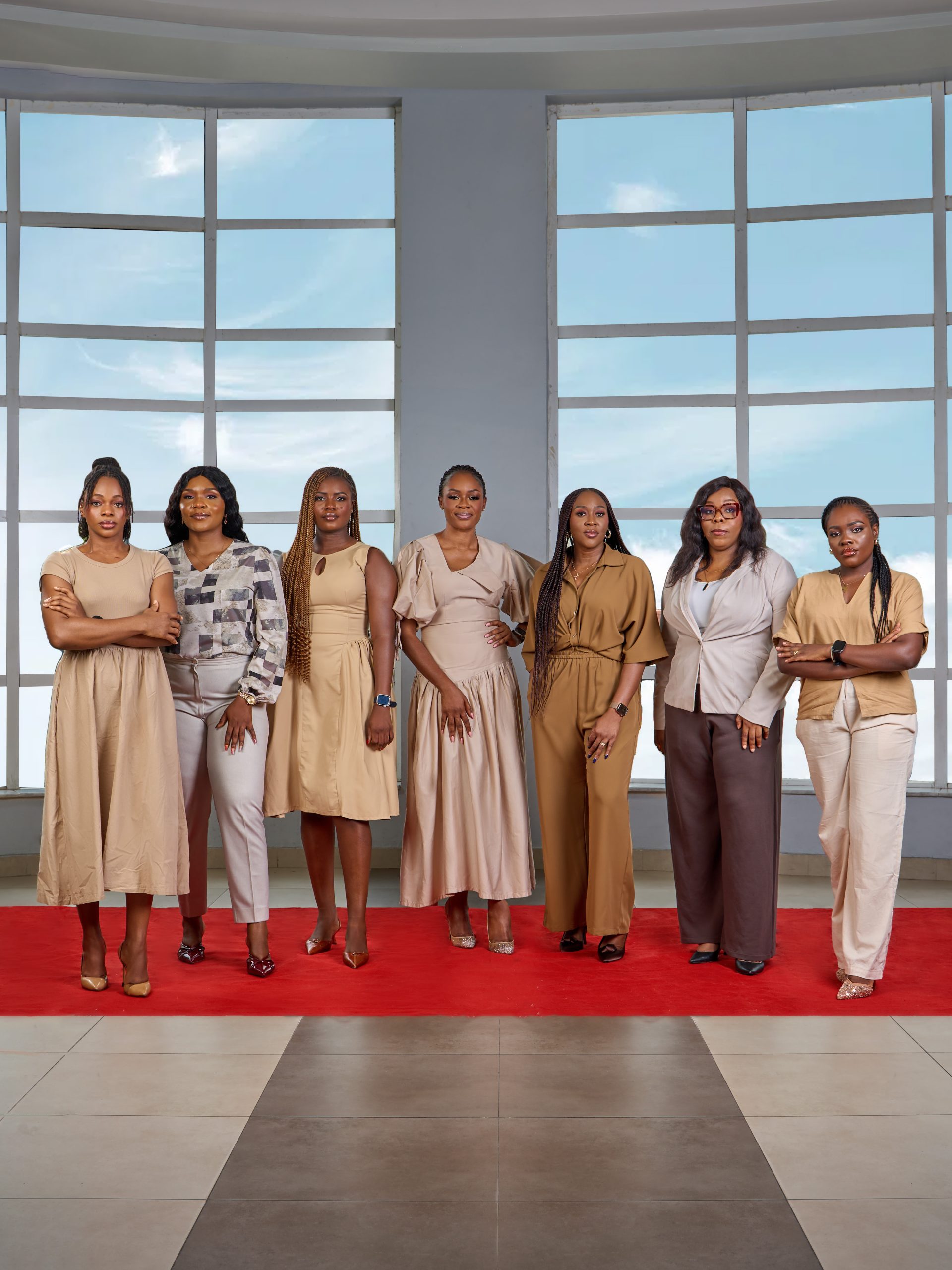
It sounded at first like the kind of question designed to warm up a room. Light. Playful. Easy to answer without thinking too hard. But when the women leading key parts of Filmhouse Group gathered for an International Women’s Day conversation moderated by the company’s PR and Communications Manager, Shirley Onwumeh, the responses were quite revealing. The conversation became a way of talking about instinct, personality, pressure, and purpose without using any of those words directly.
One woman chose The Truman Show, framing leadership through authenticity in a world that often feels performative. Another reached for the Yoruba classic Agbaranla, with its themes of strength, faith, and quiet resilience. Someone else saw herself in The Transporter, a nod to the relentless motion of modern work and the speed at which decisions, responsibilities, and opportunities often arrive. The Intern surfaced as a symbol of humility and lifelong learning. Ready Player One suggested the kind of future-facing thinking required to stay relevant in a fast-changing industry. Then came Desperate Housewives, drawing laughter for its recognition of the layered demands of womanhood, work, family, friendship, and everything in between.
And when Fantastic Four entered the conversation, it did so with a joke that cut close to the truth: one participant would rather play all four characters herself. The room laughed, but the line lingered because it named something women in leadership often know too well: the need to be strategist, builder, mentor, and problem-solver, sometimes all before lunch. Different films. Different reference points.
Yet the themes that emerged were strikingly similar: resilience, adaptability, collaboration, and the determination to keep evolving.

THE WOMEN BEHIND THE VISIBLE GLAMOUR
That, perhaps, is what makes this moment at Filmhouse Group worth paying attention to. Audiences may know the company through the visible pleasures of cinema: the premieres, the campaigns, the full theatres, the glamour, the stories arriving on screen. But behind that public-facing world is a wider ecosystem spanning exhibition, production and distribution, and within it are women helping shape output, culture, systems, and growth. Their work influences how stories are developed, how they travel, how they reach audiences, and how the businesses around those stories continue to expand.
What stood out at the roundtable was the way these women, who occupy senior roles, spoke about leadership more as stewardship than as status. The conversation moved easily from humour to reflection, and when they were asked what advice they would give their 10-year-old selves, the tone shifted. Some spoke about the pressure to grow up too quickly and the reminder that childhood does not need to be rushed. Others reflected on overthinking uncertainty, noting that many moments that once seemed overwhelming eventually found their own resolution. There were also quieter lessons about confidence and about the courage it takes to simply be yourself. Behind every title in the room was a story shaped by doubt, persistence and growth.
LEADERSHIP AS CULTURE
Those journeys now influence how they lead.
For Mojisola Oladapo, Chief Marketing Officer at Filmhouse Group, leadership begins with people. After nearly 16 years across Africa’s entertainment and marketing landscape, she has learnt that strategy alone does not build enduring brands. People do. The real work, as she sees it, lies in building teams that believe in what they are making together and in creating environments where talent can develop, ideas can be encouraged, and people can feel invested not only in the task at hand but in one another. It is an understanding of leadership that feels less performative than practical. In a business obsessed with visibility, it centres on what is less glamorous but far more durable: trust, culture and consistency.
SHAPING STORIES AND AUDIENCES
Across the business, Ladun Awobokun, Chief Content Officer at FilmOne Limited, approaches storytelling from a unique angle. In her world, films are not just products to be distributed; they are narratives that travel, shaping how audiences see Africa and how Africa sees itself. That distinction matters. It shifts cinema out of the narrow language of units and openings and places it where it belongs: in culture. Her focus is not simply on what gets watched, but on what gets carried forward, what resonates, and what expands the possibilities of African storytelling in the first place.
Victoria Ogar, Head of Distribution at FilmOne Entertainment, works at the intersection of strategy and timing. Hers is the kind of role that often stays invisible to viewers, though its effects are everywhere. Understanding when and where a story meets the market can determine its reach, performance and afterlife. With audience behaviour constantly shifting, her work demands precision, foresight, and informed decisions. The scale of that responsibility is clear in one telling detail: she has helped bring more than 500 local and international titles to West African audiences. That is not a footnote. It is a reminder that cinema does not move on creative ambition alone; it also moves on planning, judgement and market intelligence.
At Filmhouse Cinemas, Winifred Wessels, Head of Marketing, sees growth as something that rarely happens in isolation. Campaigns succeed, she suggested, when teams collaborate openly, and ideas are sharpened through conversations. Her work sits in the space where audience connection meets commercial strategy, translating insight into campaigns that keep cinema relevant in a competitive entertainment landscape. It is easy to speak loosely about “engagement” in an age of metrics and dashboards. What her role underscores instead is that audience-building is an act of interpretation. It requires listening closely, reading the room and finding ways to make cinema feel both immediate and worth choosing again.
BEYOND THE CINEMA HALL
That question of audience now stretches far beyond the cinema hall itself. Simisola Aladenaye, Digital Marketing Manager, Filmhouse Group, works in a space where storytelling is no longer confined to traditional media. Today’s audiences discover, discuss and share stories across multiple digital platforms, and her role ensures Filmhouse and its products remain present in those conversations. This is not just a technical shift; it is a cultural one. The life of a film now extends through online reactions, clips, commentary, anticipation and feedback. Digital is no longer merely promotional support. It is part of how audiences experience the story in real time.
Then there is the cinema floor itself, where leadership is often expressed in moments audiences may barely register but almost always feel. For Chizoba Obi, Guest Services Manager at Filmhouse Cinemas, the work is shaped by service: the welcome at the door, the care taken when problems arise, the conversations that shape team readiness, and the small interactions that can turn a routine outing into a memorable experience. Her work is a useful reminder that while cinema may begin with storytelling, it is sustained by people. Brand loyalty is not built only through spectacle. It is also built through attention.
THE MEANING OF “GIVE TO GAIN”
For these women, one idea kept resurfacing: giving. The year’s International Women’s Day theme, “Give to Gain”, resonated strongly across the Filmhouse ecosystem as a working philosophy: giving time to mentor younger colleagues, giving space to new ideas, and giving access, encouragement, and knowledge to women coming into the industry. In that sense, giving is not softness. It is institution-building. It is how leadership reproduces itself in healthy ways. It is how organisations create continuity instead of relying on a single visible figure at the top.
Onwumeh captured that spirit in a line that lingered after the discussion ended: “The women before us poured into us. Now it’s our turn to pour into the next generation.”
MORE THAN A MOMENT
It is also the clearest way to understand what these women represent at Filmhouse Group: a network of leaders helping shape teams, expand audiences, elevate stories, and strengthen the systems that support African cinema. Viewers may see the films,
the premieres and the campaigns. Much of the real work, however, happens elsewhere: in strategy meetings, in distribution planning sessions, in digital conversations, in acts of service, and in the patient work of mentoring others into confident and competent workforce and future leaders.
Their lives would have been boxed into different genres if they were movies, and each would belong to a different genre. In reality, however, they are building something larger than individual success: an ecosystem with infrastructure. And that may be the most important story of all in an industry built on stories.