 Follow Us on Google News
 Follow Us on Google Discover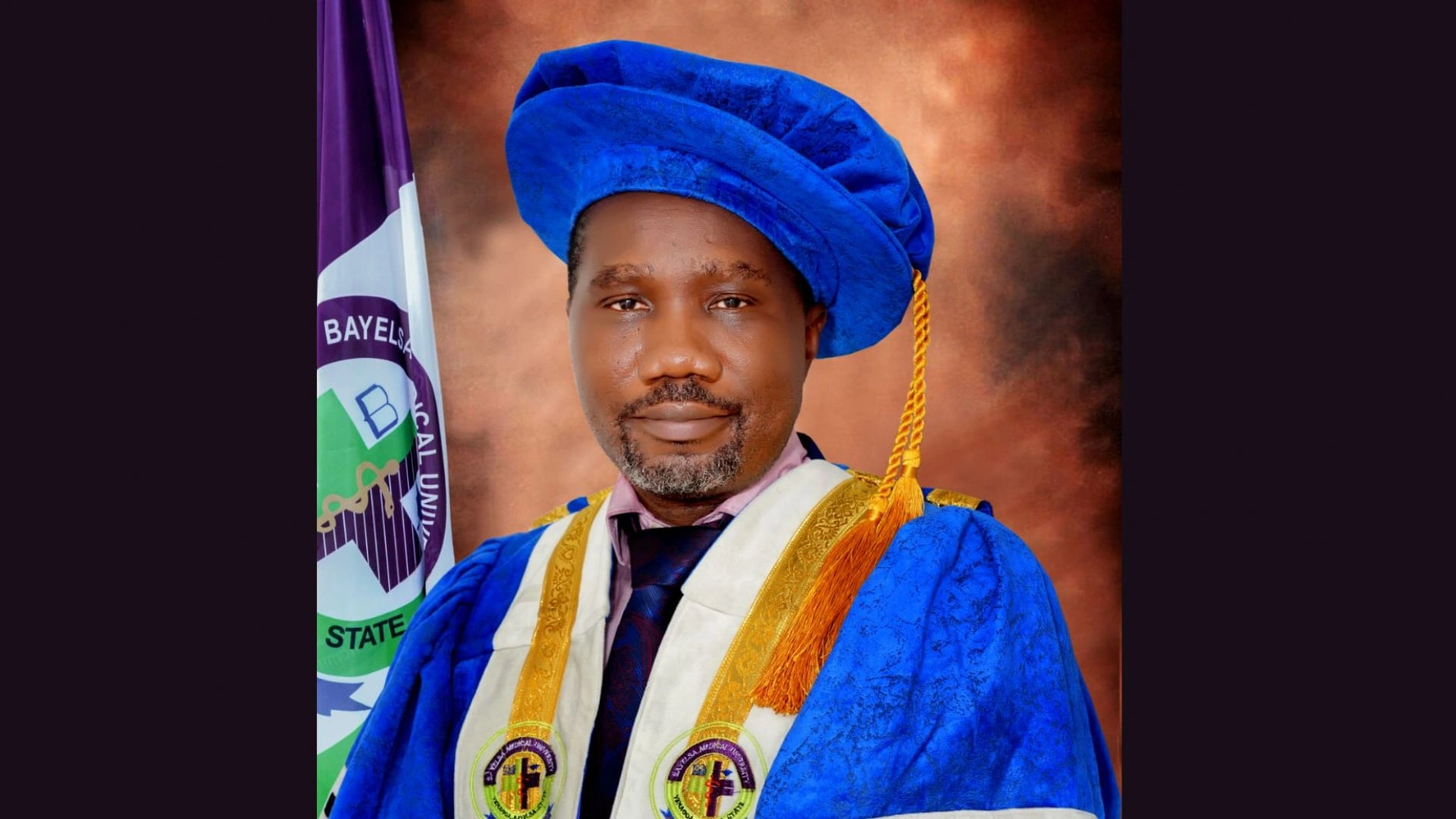
Prof. Dimie Ogoina is an internationally respected physician-scientist, infectious diseases specialist, and academic leader. He serves as Vice Chancellor of Bayelsa Medical University and Professor of Medicine. Over two decades, he has combined clinical practice, research, and institutional leadership while mentoring young health professionals and strengthening healthcare systems.
Prof. Ogoina studied medicine at Ahmadu Bello University where he graduated with distinction and won the Professor Bandipo’s Prize for Best Graduating Doctor in Community Medicine. He later completed postgraduate specialist training in Internal Medicine at Ahmadu Bello University Teaching Hospital. His fellowships include FWACP, FMCP, FACP, and FIDSA.
He gained global recognition for pioneering research on mpox during Nigeria’s 2017 outbreak, where he reported early clinical evidence suggesting sexual transmission of the virus. His work later proved significant during the 2022 global outbreak and contributed to international understanding of the disease.
Prof. Ogoina has served in several international advisory roles including the World Health Organization Emergency Committee on mpox. He has authored over 100 peer reviewed publications and received global recognition including Nature’s Top 10 Scientists in 2022 and the TIME 100 Most Influential People in 2023.
In this interview, the Vice Chancellor speaks on merit, leadership, institutional transformation, and the values that have shaped his career in academia and administration.
What does merit mean to you in practical terms?

Merit means that recognition and opportunity flow from competence, preparation, and contribution rather than personal connections or background. In practical terms, merit rewards the effort invested in learning, the discipline required to develop expertise, and the courage to pursue excellence even when the path is difficult.
Throughout my career, merit has been closely tied to diligence and attention to detail. It is the willingness to do the work others may overlook and the readiness to confront questions that require persistence and intellectual honesty. Merit thrives when individuals focus on substance rather than status.
A clear example in my own career occurred in 2017 when I reported the first evidence suggesting sexual transmission of mpox. The discovery did not emerge from a highly resourced laboratory environment. It emerged from careful clinical observation, rigorous analysis, and the determination to document a pattern that had not previously been recognized.
The process required curiosity and the courage to publish findings that challenged established assumptions about how the virus spreads. Merit is reflected in that type of commitment to truth and scientific inquiry. It is the discipline of doing the work faithfully and trusting that the value of the work will eventually become evident.
What inspired your decision to pursue a career in academia and university administration?
My interest in academia developed during my fourth year in medical school. At that stage of my training, I began to appreciate the deeper impact of scientific discovery and the role of medical researchers in shaping healthcare outcomes. I realized that beyond clinical practice, there existed an opportunity to contribute to knowledge creation and to train the next generation of medical professionals.
I developed a strong admiration for scientists who dedicated their lives to solving complex health problems through research. Many of them were medical doctors who combined clinical insight with investigative rigor. That example influenced my aspirations. I wanted to pursue a path where patient care, research, and teaching intersected.
Teaching also appealed to me because it provides a space where knowledge is shared and refined. The classroom encourages analytical thinking, intellectual debate, and curiosity. It also provides an opportunity to inspire younger minds and help them build the confidence required for professional excellence.
Administrative leadership was not originally my ambition. However, over time, I was entrusted with responsibilities that required organizational leadership. These roles often emerged when colleagues recognized my commitment to service and the need for structured leadership within the institutions where I worked.
My professional journey gradually moved through several leadership positions. I served as Chief Resident Doctor, Chairman of the Medical Consultants Association, Head of Department, Provost of a Medical School, President of the Nigerian Infectious Diseases Society, and Chief Medical Director of a teaching hospital. Each role required new responsibilities and offered opportunities to contribute to institutional growth.
Now, as Vice Chancellor of Bayelsa Medical University, I see administration as an extension of academic service. Leadership in a university environment allows one to shape systems that enable education, research, and community engagement to flourish.
As Vice Chancellor of Bayelsa Medical University, what guiding principles shape your leadership style?
Three principles define my leadership philosophy: integrity, innovation, and excellence.
Integrity forms the foundation of every decision within the university system. Academic institutions depend heavily on credibility. Students, faculty members, and society must trust that admissions, recruitment, research evaluation, and governance processes are conducted fairly. Without integrity, the reputation of an institution can deteriorate rapidly.
Transparency and accountability are therefore essential. Every administrative action must align with institutional regulations and ethical standards. Universities train future professionals. If integrity is compromised within the academic environment, it becomes difficult to expect graduates to uphold ethical standards in their professional practice.
Innovation represents the second pillar of my leadership approach. Medical education continues to evolve rapidly due to technological advancement and new scientific discoveries. A modern medical university must remain adaptable and forward looking.
At Bayelsa Medical University we are integrating emerging technologies into our educational framework. Artificial intelligence, virtual reality, and mixed reality are increasingly being incorporated into our training programmes. These tools enhance learning by providing simulation based environments where students can practise procedures and clinical decision making before encountering real life medical situations.
Innovation also extends beyond classroom instruction. Digital health technologies and research platforms allow faculty members and students to explore new approaches to healthcare delivery and biomedical research.
Excellence is the third guiding principle. Every institution must establish a culture where high standards are consistently pursued. Excellence does not imply perfection. Rather, it represents a continuous commitment to improvement. Students must strive to master their disciplines. Faculty members must pursue impactful research and effective teaching. Administrators must ensure that systems operate efficiently and transparently.
What major reforms or initiatives have you introduced since assuming office?
Since assuming office as Vice Chancellor in October 2024, I introduced the ASPIRE Agenda. The framework represents our institutional strategy for transforming Bayelsa Medical University into a globally competitive medical institution.
ASPIRE stands for Academic Excellence, Sustainability, Partnership and Engagement, Innovation, Research Excellence, and Empowerment and Welfare. Each pillar represents a strategic area necessary for the long term development of the university.
To ensure effective implementation, we established an ASPIRE team tasked with developing concept notes and work plans for each pillar. We also created a Strategic Planning Committee responsible for integrating contributions from various stakeholders into a comprehensive five year strategic plan.
Implementation has already begun in several areas. The university has enlisted in international university rankings to benchmark our progress against global standards. We have organized capacity building programmes for staff members to strengthen professional development. We also hosted the inaugural staff award ceremony to recognize outstanding contributions within the university community.
One of our major technological initiatives includes the establishment of an artificial intelligence and virtual reality laboratory for student training. This facility enhances simulation based learning and supports our broader goal of integrating advanced technologies into medical education.
We have also strengthened digital governance systems within the university. The “Talk to the VC” application allows students to communicate directly with my office, ensuring that concerns and suggestions are heard promptly. In addition, the BMU AI Assistant provides staff members with instant access to university documents and administrative resources through their mobile devices.
Research development has also received significant attention. The university recently secured a Wellcome Trust multi-million dollar research grant. Such partnerships contribute to expanding research capacity and strengthening the global visibility of our academic work.
What legacy are you intentionally building at Bayelsa Medical University?
My vision is to build a globally competitive medical university that produces highly skilled healthcare professionals and contributes meaningfully to medical research and community health.
One aspect of that legacy is establishing a culture of research excellence. Faculty members and students should actively contribute to scientific discovery and publish research that addresses pressing health challenges.
Another goal is to develop a technologically advanced learning environment where students gain exposure to the same training tools used in leading international medical schools. Access to modern simulation technology and digital learning platforms improves educational quality.
International partnerships also play a critical role in institutional development. Collaborative research programmes, academic exchanges, and joint training initiatives expand opportunities for both faculty members and students.
Equally important is maintaining strong engagement with the local community. Bayelsa Medical University must remain responsive to the health challenges of Bayelsa State and the broader Niger Delta region.
What major challenges have you faced as Vice Chancellor?
The first six months of my tenure presented significant challenges involving systems, personnel, and financial resources. Leadership within a young university requires navigating multiple stakeholders and aligning them with a shared institutional vision.
Developing a medical university to global standards requires considerable investment in infrastructure, research laboratories, and teaching hospitals. Recruiting and retaining high quality faculty members also demands strategic planning and supportive working conditions.
Another challenge involves shifting institutional culture. Transforming a young university into a globally competitive institution requires changing mindsets and encouraging individuals to embrace higher standards.
Despite these challenges, the support of the Bayelsa State Government has been significant. Under the leadership of His Excellency the Governor of Bayelsa State, Senator Douye Diri, the state has invested in infrastructure development, accreditation processes, and human resource capacity for the university.
What advice do you give young Nigerians who desire to build careers anchored on merit and character?
Young Nigerians must invest in continuous learning. Knowledge and skill development remain the strongest foundations for professional growth.
Integrity must guide every decision. Reputation grows gradually through consistent ethical behaviour and responsible conduct.
Patience is also essential. Professional success rarely arrives instantly. Many careers require years of dedication, resilience, and persistence before recognition appears.
Young professionals should also think beyond personal achievement. The most meaningful careers contribute to society. Mentorship, community service, and problem solving create impact that extends beyond individual success.
Merit thrives when competence, character, and perseverance work together. Those values continue to shape my own journey and remain essential for anyone seeking lasting professional fulfillment.

