 Follow Us on Google News


 Follow Us on Google Discover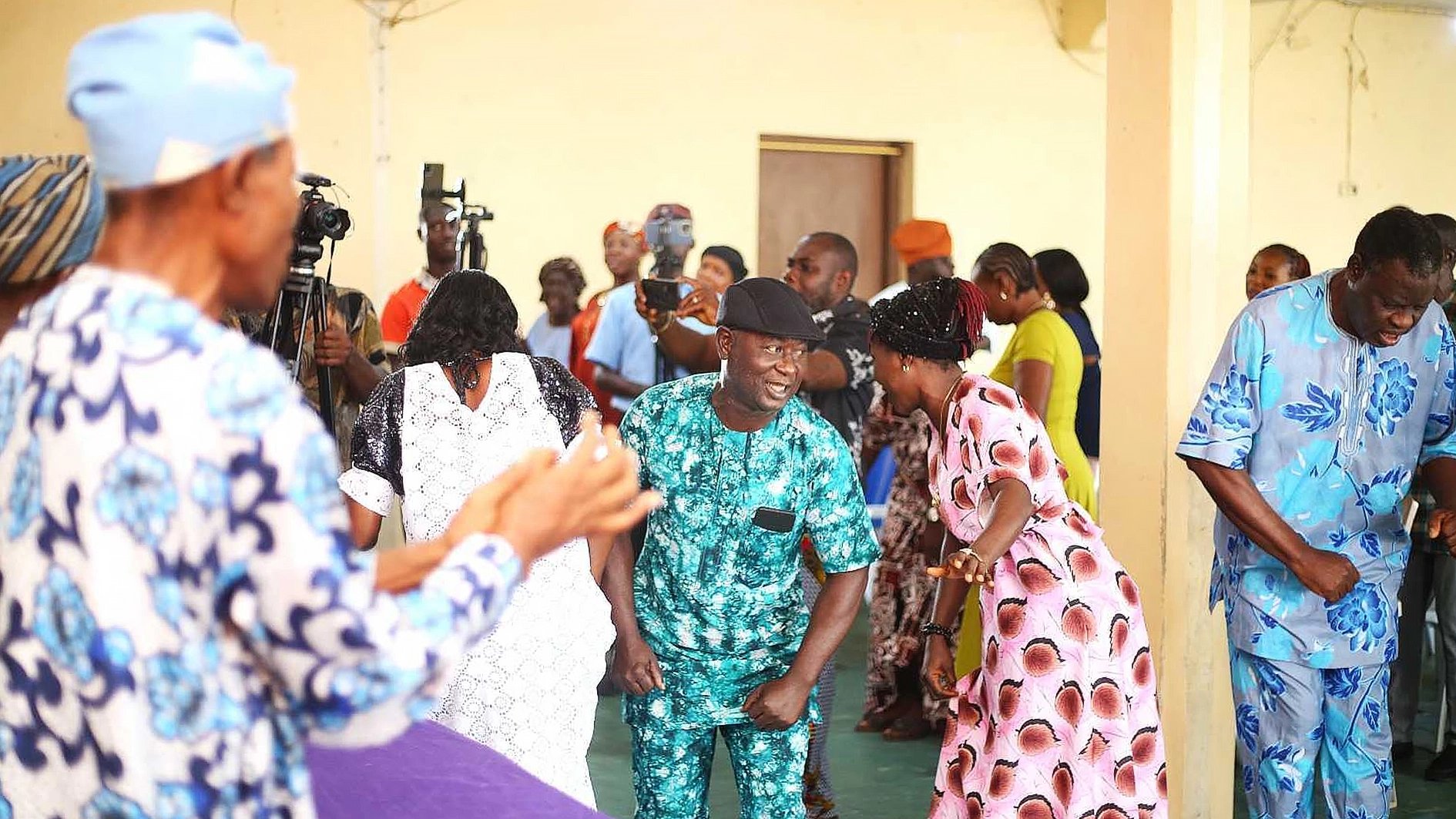
… Monarch, residents appeal to govt for Lagos-style embankment
… Say 85 percent of community lost to ravaging surge
The Health of Mother Earth Foundation (HOMEF), has trained residents of Ayetoro community in Ilaje Local Council Area of Ondo State on the use of indigenous songs, dance and storytelling as weapons of resistance against environmental degradation and extractive activities as the Atlantic Ocean continues to ravage their ancestral lands.
The training brouy together participants from the oil-producing coastal community for a one-day community dialogue and training on the use of cultural tools to build resistance and as instruments of advocacy, solidarity, and resistance against decades of environmental neglect.
According to the foundation, the cultural tools marked a departure from conventional advocacy approaches, instead harnessing the rich cultural heritage of the Ilaje people to amplify their voices, document their experiences, and demand accountability from both the government and multinational oil companies operating with the axis.
Speaking at the event, Community and Culture Lead of HOMEF, Cadmus Atake-Enade, explained that the initiative was designed to build the people’s resilience against environmental degradation while promoting a just energy transition rooted in indigenous knowledge, cultural values, and community participation.

Atake–Enade noted that Ayetoro’s historic identity as a self-reliant, sustainable community that had its own energy system even before Nigeria as a country had its own energy infrastructure made it a fitting ground for the training.
According to him, participants were equipped with skills in grassroots organizing, advocacy messaging, and the strategic use of cultural expressions to tell their own stories and challenge the extractive activities that have rendered their once-thriving community desolate.
He said, “We are here in Ayetoro to build the people’s resilience against environmental degradation going on in their environment. We are here to train the people on the use of cultural tools to build resistance against extractive activities.
“These activities came to Ayetoro not just because it is one community but because of its historic identity and background. In the past, Ayetoro was known as a tourist center, a community that was self-reliant and sustainable and that had its own energy even before Nigeria as a country had its own energy system.”
He emphasised that the global conversation on energy transition would remain incomplete without justice, stressing that local communities must be active participants in decisions affecting their environment and natural resources.
“So far, it has been a community built on resilience against extractives and climate change. The story of Ayetoro is devastating. However, we must not relent. We use this medium to build their resilience to ensure that they use their cultural tools like music and dancing in expressing themselves and telling their own stories and experiences as community people,” he added.
The Ogeloyinbo of Ayetoro, Oba Oluwambe Ojagbohunmi, described the situation as a “save-our-soul” emergency, revealing that more than 85 percent of the community had already been lost to persistent ocean surges.
“We thank HOMEF for such a wonderful program of enlightenment about the cultural impact of resistance. We sang the songs of freedom from the community, we sang songs of hope and songs of courage, and together in unity, we can continue to ask for our inalienable rights,” the monarch said.
The traditional ruler lamented that extractive activities by oil companies operating in the area were the primary factor that had rendered their homes desolate, while community-built infrastructure, including electricity facilities and industries, had been washed away by the advancing sea.
He called on the federal government and the international community to intervene with a permanent sea embankment project, noting that the technology and financial resources required were beyond the capacity of the state government and the community.
Residents who participated in the training expressed gratitude for the initiative, describing it as a lifeline that had empowered them to articulate their struggles and demand justice.
For Mofeoluwa Arowolo, a participant, the training had given the community a renewed sense of hope and a platform to amplify their voices to the world.
“We really appreciate HOMEF for helping us to amplify our voices to the world, governor and philanthropists. They should all know what we are facing. Where do we go? We have a shelter problem, a healthcare problem, and a financial problem caused by this sea incursion. We need assistance. We have the right to live in a clean and healthy environment,” she said.
Sunday, Adetoro, another resident who spoke at the event, appealed to President Bola Tinubu to replicate the shoreline protection project undertaken in Lagos State for Ayetoro community, expressing confidence that the land could be reclaimed and their lives restored.
“We are begging the federal government of Nigeria under the leadership of His Excellency, President Bola Ahmed Tinubu, to come to our rescue in the Ayetoro community for shoreline protection. It is possible. He did it in Lagos, and surely, he can do it here. The land can be reclaimed so that we can live our lives again,” Adetoro pleaded.
The training comes against the backdrop of a worsening existential crisis in Ayetoro, where the Atlantic Ocean has been relentlessly advancing inland for over a decade, destroying homes, schools, healthcare facilities and industries built through communal efforts.

