 Follow Us on Google News
 Follow Us on Google Discover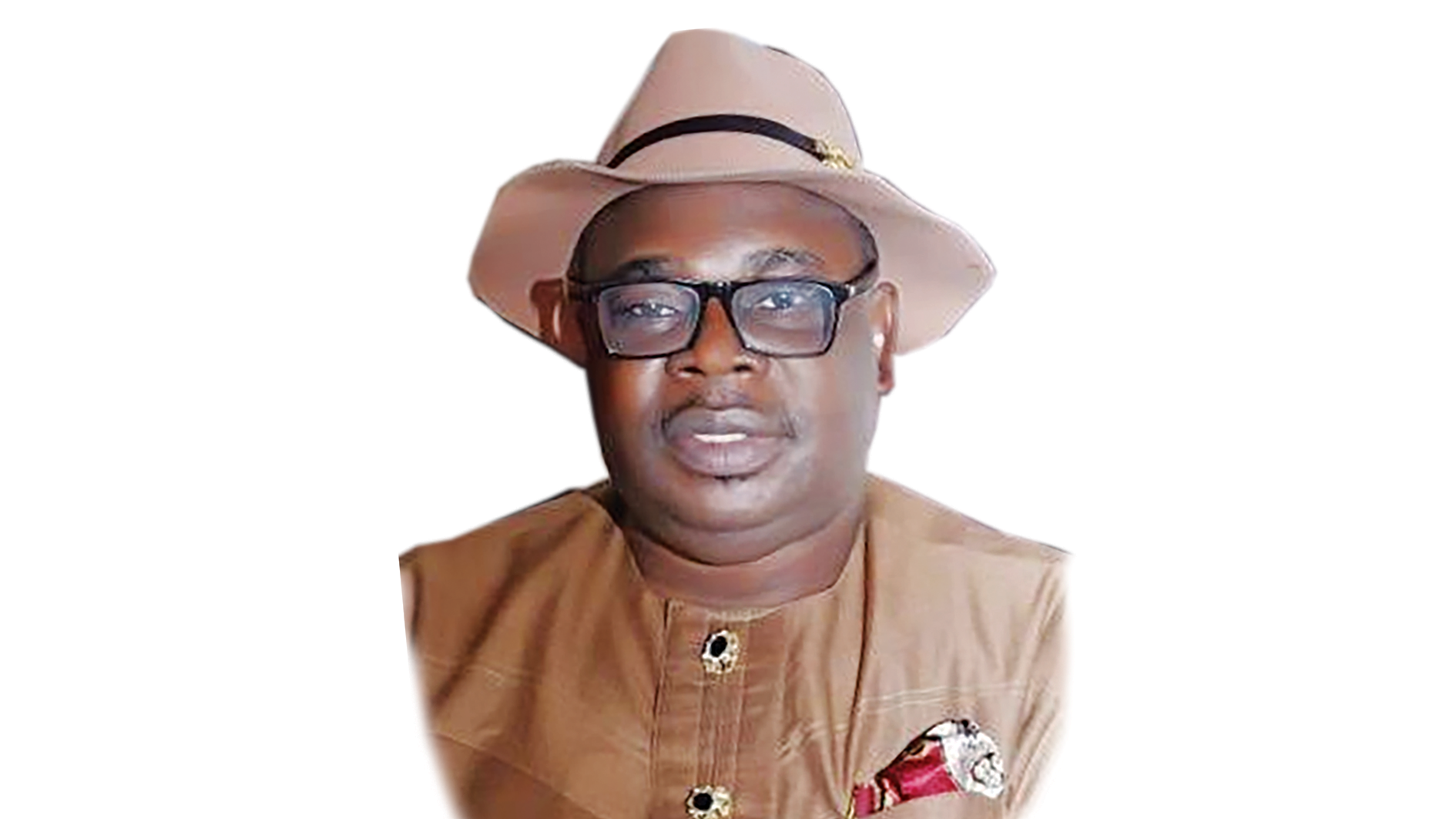
Almost five years as Chief Executive Officer of National Mathematical Centre (NMC), Prof. Promise Mebine, was recently appointed Vice-Chancellor, Federal University, Otuoke (FUO), Bayelsa State. Recalling efforts at sustaining the centre, he called for improved funding to save it from dying. For his new appointment, Mebine told BRIDGET CHIEDU ONOCHIE that his ambition is to churn out graduates who are socially responsible and technologically empowered to solve societal problems.
What is responsible for the poor understanding of mathematics by most Nigerian students?
Most students are afraid of Mathematics, but if the trainer is able to put things in the right perspective, they will discover that it is not difficult: it is just phobia or perception. We have the best resource persons in public schools, but people are not willing to put in their best because of the happenings around us.
In public schools, every teacher has something to sell in the bag. Because their remuneration is very poor, they complement teaching with trade in order to survive. They just hold one or two classes and go for their business.
So, we need to adequately fund education, ensure the welfare of teachers and enhance their capacities through regular training. Universal Basic Education Commission (UBEC) is doing a lot in this regard. Through our partnership with them, we have visited several states to train secondary and primary school teachers on the practicality of mathematics beyond formula, how to break the subject down for the children to understand. That way, they will not forget easily.
So, automatically, the approach is the problem and not that Nigerians don’t have acumen for Science, Technology, Engineering and Mathematics (STEM), like the Asians. I have taken our students to several countries for competitions, and they returned with gold medals. Out of eight gold medals meant for the best countries, Nigeria got one in our last outing. This means that we are not bad, just that we are not doing certain things right.
How has NMC collaborated with international institutions to benefit Nigerian researchers and students?
We do that a lot. We do up to three or four trainings yearly with ComSats institution in Pakistan. We also collaborate with Trustee Italy to train teachers. Sometimes, we hold the training virtually if a lecturer is unable to come down. We also invite lecturers from South
Africa and Malaysia for the trainings.
How do you think AI might impact Mathematics learning in Nigeria?
I have nothing against Artificial Intelligence (AI), but we need to be very careful with the usage. You must understand the application, else, it is garbage in, garbage out. AI picks things that are already done for you to refine, but most people don’t bother to refine information obtained through AI.
Again, you must understand what to ask AI and how to structure your questions. So, while it is very helpful and greatly impacts the study of mathematics, your own part is key because it will only guide you on the steps to take to solve questions, but if you don’t know what to do, you will not be able to solve the problem.
As you take up your new appointment, what in your view should be done to give the centre its pride of place?
Well, since I have been prompted, let me say that we are a household that has seven hectares of land. I came in 2021 and started fighting for the fencing of the land. There were days we fought with the villagers, who attempted to cut off our electricity cables. That is to say that the government is not doing enough for the agency.
They may have done their bit, but in terms of funding, their effort is not enough. I have advocated that they assist in fencing the centre. I even awarded the contract when the fund was captured in the budget, but at the end of the day, the money was not released.
Secondly, if we can have the University of Transport in Nigeria, there is nothing wrong in having a specialised National University of Mathematical Sciences. I presented this matter over and over, even up to the National Assembly, where it has passed First Reading. It is my dream to see this centre converted into a university to show that we are serious about STEM.
Also, I don’t want this place to die. The next director must be ready to continue with what we have already laid down. I wrote it down in black and white that I don’t want a politician or someone, who is only interested in what he gets, but someone who has the heart for the centre.
I did not do anything personal throughout my years at the centre. Whatever I presented was about the centre. So, the new chief executive should have the heart to develop the place.
What policies or reforms are you bringing to bear on your new appointment?
To be a Vice-Chancellor has been one of my dreams. I have been Head of Department for over 13 years, became the pioneer director of my state polytechnic, and the first director of NMC from the South-South.
So, my dream has been fulfilled with my appointment as VC. My policies and reforms revolve around academic excellence, relevant research, institutional sustainability, people and governance, as well as transformative community engagement.
Today, if you interview some students during convocation ceremonies, you will be shocked that many of them don’t even know what they studied. So, I envision graduates who are well-trained intellectually and academically, ones who will be socially responsible and technologically empowered beyond the point of certificates.
I want to see students who can think outside the box and solve societal and environmental problems. To achieve this, there is a need to align our programmes with global standards and local realities. There are many things we have within us that we don’t seem to see.
What most students are after is the examination they want to pass, but there are lots of things within our locality that can be converted to help develop our communities.
In terms of research innovation, my focus area is environmental sustainability. People burn forests and fell trees without understanding the implications of their actions. We should be able to educate them on the health and environmental consequences of such actions.
At a point in Port Harcourt, if you go out in white clothes, it turns black before you return. Same pollution is also inhaled by the people. But mathematically, we can deduce that these affect human lungs. By bringing such information to public domain, people would be deterred from actions that are not environmentally sustainable.

