 Follow Us on Google News
 Follow Us on Google Discover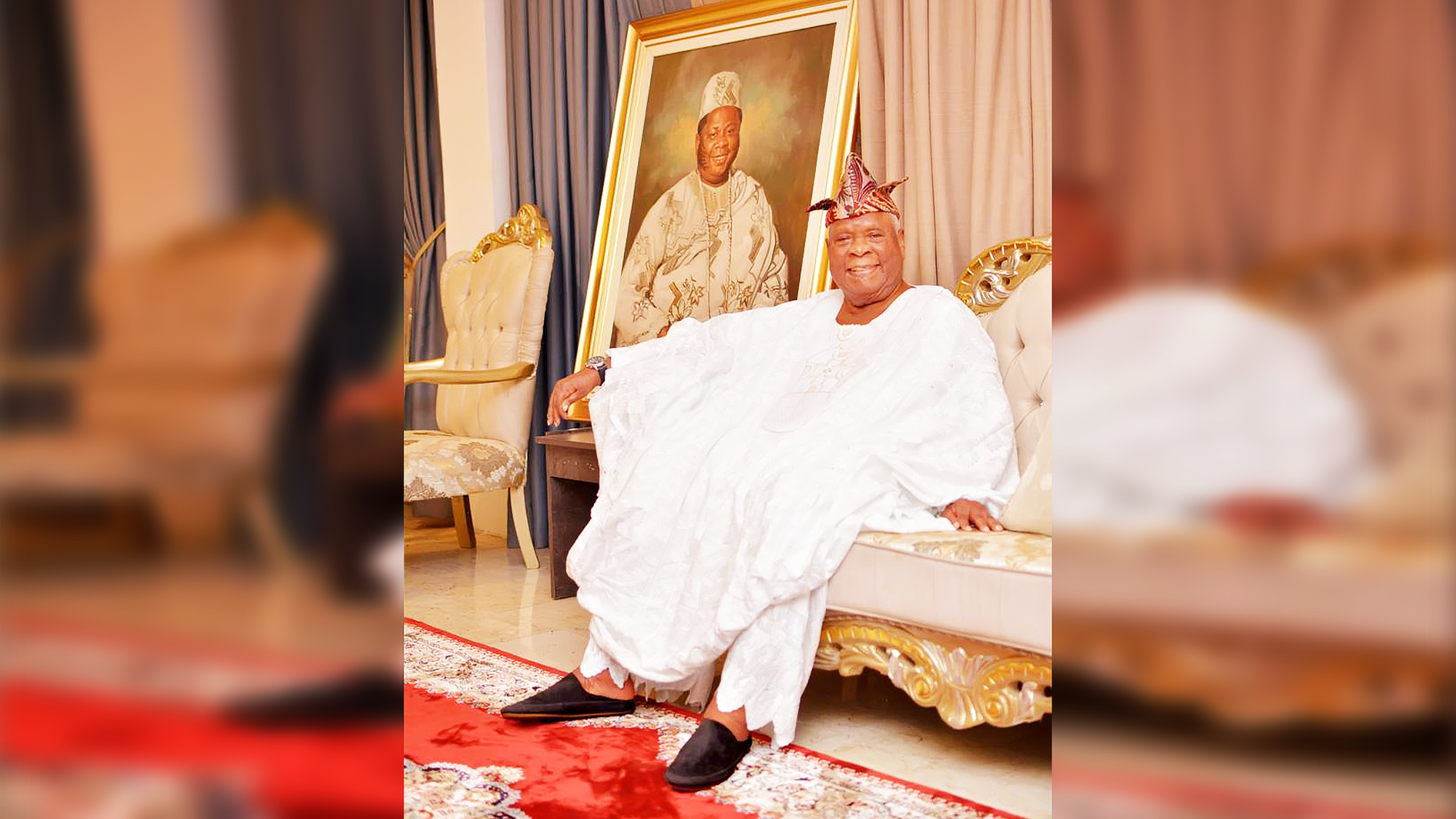
“Some men are born into greatness. Others forge it with their bare hands, their sleepless nights, their unshakeable faith, and their refusal to be ordinary. Lawal Yusuf Obelawo was the latter — and then some.”
“Some men are born into greatness. Others forge it with their bare hands, their sleepless nights, their unshakeable faith, and their refusal to be ordinary. Lawal Yusuf Obelawo was the latter — and then some.”
On March, 2026, the world quietly lost one of its most extraordinary human beings. There was no fanfare in the heavens that morning — only a gentle, final exhale, and a smile. A smile so wide, so certain, so luminous, that all who witnessed it understood: this was not the grimace of defeat. This was the arrival of a conqueror. Lawal Yusuf Obelawo, patriarch, pioneer, prayer warrior, and peerless entrepreneur, took his last breath at the age of 95, not clutching at life, but releasing it with grace — with that unmistakable smile still resting on his lips, as though he had already seen what awaited him on the other side and was thoroughly pleased.
To lose him is to lose a landmark. Not merely a father, not merely a businessman, not merely a community figure — but a landmark. The kind that orients people, that gives context to a landscape, that reminds you where you are and who you come from. His passing has left a silence so vast it echoes.
The Man Before The Monument
Born on May 20, 1930, in a Nigeria still yoked to colonial rule, Lawal Yusuf Obelawo entered the world with nothing but the raw materials of greatness: an iron will, a restless curiosity, an uncompromising integrity, and a spiritual consciousness that would prove to be the compass for everything he would build and become.
He did not grow up in privilege. He did not benefit from the advantage of formal university education. What he had was something universities rarely confer — the rare and sovereign gift of original thinking. He was a self-made man in the truest and most profound sense of that expression. Not self-made in the shallow, boastful way the phrase is sometimes used, but self-made in the deepest meaning: he fashioned himself, sculpted his own intellect, disciplined his own character, and built his own world brick by deliberate brick, year by patient year.

The Pioneer — A Mind That Saw Before Others Could See
History will record what his contemporaries could barely fathom: Lawal Yusuf Obelawo was the first African to own a plastic pipe factory. At a time when industrial manufacturing in Africa was considered the exclusive province of European conglomerates and colonial enterprises, he stepped forward, looked the giants in the eye, and said — not with words but with action — I belong here too.
He was also the first to import wood processing machinery into Nigeria, opening a frontier that others had not even imagined approaching. In doing so, he went toe-to-toe with established commercial behemoths like John Holt, competing not with the advantage of inherited capital or political favoritism, but with the sheer force of strategic intelligence and an entrepreneur’s instinct that was decades ahead of its time.
But perhaps no single act better captures the genius of Lawal Yusuf Obelawo than what happened in the 1970s in the raw materials supply chain that sustained his plastic manufacturing enterprise. He had been purchasing resins from British Petroleum Corporation, as most manufacturers did, accepting the arrangement as standard practice.
Most men would have. Most men did. But Obelawo was not most men. He began to probe. He asked questions no one else thought to ask. He traced the origins of the resins he was purchasing — and discovered, with that characteristic precision of his, that British Petroleum was not the producer at all. They were merely a distributor, a middleman operating under the illusion of exclusivity. The true source of those resins was Hungary.
And so he did what only a man of his extraordinary boldness would dare: he bypassed the intermediary, established contact directly with the Hungarian source, and began purchasing his raw materials at source. The cost savings were transformative. The independence it granted his enterprise was revolutionary. One decision — born not of luck but of relentless inquiry — became the inflection point that elevated his business into an entirely different league.
This is who Lawal Yusuf Obelawo was: a man who never accepted the surface of anything. He always went deeper, always questioned the architecture of the arrangement, always sought the truth behind the facade.
The Empire Beyond Nigeria — Côte d’Ivoire And The Toyota Legacy
His vision was never constrained by borders. While others built locally and were content, Obelawo’s ambitions were continental. In Côte d’Ivoire, he did not arrive as a visitor. He arrived as a builder.
He became one of the largest employers of labor in the country, a distinction that speaks not merely to wealth but to responsibility — to the understanding that enterprise must create opportunity, that a businessman’s truest measure is the number of lives elevated by his work. Among his most remarkable contributions to Côte d’Ivoire was the introduction of metered taxis, a concept he operationalized on a scale previously unseen, deploying a fleet of 530 vehicles across the country. In a single stroke, he modernized urban transportation, created employment for hundreds of drivers and support workers, and brought structure and dignity to a sector that had functioned informally.
It was through him that Toyota vehicles entered Ivory Coast in remarkable volume — a partnership that grew so significant, so respected, that the Toyota Corporation of Japan honored him with a distinction rarely, if ever, bestowed upon an African businessman: a specially designed Toyota Crown, customized exclusively for him. This was not a gift born of commercial courtesy. It was an acknowledgment, from one of the world’s most demanding corporations, that they had encountered in Lawal Yusuf Obelawo a man of uncommon stature.
The Nation Builder — The Making Of Osun State
Lawal Yusuf Obelawo disdained partisan politics. He did not seek elected office, did not crave the platforms and pageantry of political life, did not need the validation of a title to feel consequential. And yet, presidents and heads of state sought his counsel.
He sat among them as an equal — not because of any formal position he held, but because of the one currency that transcends all political rank: integrity.
His contribution to the creation of Osun State stands as a testimony to his commitment to homeland development. In the debates and advocacy that shaped the political geography of southwestern Nigeria, his voice carried weight. He was not a politician; he was something rarer and more powerful — a patriot with the vision to see what his people needed and the influence to help bring it to pass. He gave back to his homeland not just in treasure but in time, in strategy, in the kind of quiet, sustained effort that does not seek recognition but achieves results.
The Legal Mind Without A Law Degree
There is a particular kind of brilliance that formal institutions cannot produce and cannot fully contain. Lawal Yusuf Obelawo possessed it. Without the benefit of a law degree, he prepared his own legal briefs. More remarkably, he directed his lawyers — trained, qualified, credentialed men and women — on precisely how his cases should be argued. And they listened. Because when he spoke about the law, he did not speak with the hesitancy of the uninitiated. He spoke with the authority of a man who had done the work, read the materials, understood the principles, and formed his own conclusions.
It was not arrogance. It was earned authority. He had done what very few people do in any field: he had mastered it on his own terms, without institutional scaffolding, without anyone telling him he could. He simply decided that he would understand — and he did.
The Father — A School Without Walls
To speak of Lawal Yusuf Obelawo only through the lens of his public achievements is to miss the most intimate and perhaps most enduring dimension of his greatness: the man he was as a father, as a teacher, as a shaper of the next generation.
He did not raise his children with softness alone. He raised them with purpose. When he took his son to the production manager and instructed him to be sent on errands, assigned to the production lines, made to work at every level of the factory floor — it looked, from the outside, like severity. Perhaps even like punishment. But it was neither. It was education of the most profound kind. He was teaching, through lived experience, what no classroom can adequately convey: humility in the face of labor, endurance in the face of discomfort, and respect for every hand that turns every wheel in every enterprise.
He sat his son beside him through sleepless nights, drafting letters together — drafts after drafts, corrections after corrections, sometimes until the early hours of the morning. When the pen fell heavy with fatigue, he did not relent. Because he knew what that son did not yet know: that the mind is sharpened by discipline, not by comfort. That excellence is not a moment — it is a habit. Nothing left his desk that was not excellent.
Words mattered. Standards mattered. Every sentence was scrutinized. Every idea was tested. In that late-night discipline, he was not just writing letters — he was constructing a legacy.
He told his son: “The respect you get from certain people is because I am alive.”
Those words were not a boast. They were a forewarning. They were a father preparing a child for the weight of a world that would, one day, have to be navigated without him. A world in which the son would have to earn his own standing, build his own respect, carry his own name — and honor the name given to him. Those words echo now with a resonance that only absence can produce.
The Prayer Warrior — A Man Anchored In God
At the very foundation of everything Lawal Yusuf Obelawo built, everything he achieved, everything he endured, was an unshakeable, disciplined, daily communion with God. Every morning, at 4 a.m., for two full hours, he prayed. Not occasionally. Not when circumstances demanded it. Not as a performance or a ritual emptied of meaning. He prayed daily, with the consistency of a man who understood that everything he had — every factory, every vehicle, every contract, every breakthrough, every child, every breath — was held in hands greater than his own.
When illness came, when his body weakened, when the voice that had once commanded boardrooms and addressed presidents grew faint — his lips still moved. In prayer. Even on his sick bed, the discipline held. The communion continued. And in that image — a man of 95, voice diminished by age and illness, lips still moving in the predawn silence — there is perhaps the single most complete portrait of who Lawal Yusuf Obelawo truly was. Strip away the factories, the fleets, the accolades, the custom Toyota Crown, the political influence, the legal briefs — and what remains is a man on his knees, speaking to God, faithful to the last.
The Diamond Named Lopin
Thirty years before his passing, something shifted in Lawal Yusuf Obelawo. The man who had spent decades building wealth made a quiet, deliberate decision to stop chasing it.
He turned his attention to something he called, with unmistakable tenderness, his “baby LOPIN” — a diamond, he said, whose true value he had chosen to conceal. He spoke of LOPIN with the language of long-term investment, of patient cultivation, of a man who understood that the most precious things in life are not those displayed on shelves but those carefully guarded, nurtured in obscurity, until the moment of revelation arrives.
Many of his decisions in those final decades puzzled those around him. Choices that appeared counterintuitive, restraints that seemed unnecessary, silences that seemed inexplicable. But as the years accumulated and time performed its slow, faithful work of translation — wisdom emerged from every one of those choices. He had always seen further than the horizon visible to others. He had simply been patient enough to let time prove it.
A Life Fully Lived — 95 Years Of Irreversible Impact
He was 95 years old when he departed. And yet, remarkably, he did not die an old man emptied of dreams. He died with vision still burning. He was still speaking of tomorrow, still imagining possibility, still holding the future with both hands even as the present was drawing to a close. He did not die diminished. He died full.
And in his final moment, when the last breath came, he smiled. A great, wide, unambiguous smile. The smile of a man arriving somewhere he has always believed he would go. The smile of a man whose prayers — millions of them, offered across 95 years of predawn mornings — had just been answered in full. The smile of a man who built something with his life that time cannot demolish.
WHAT REMAINS
A father is a country. And when a father dies, you do not merely grieve a person — you grieve a whole geography of yourself. The roads he made for you. The shelter he gave you.
The language he taught you. The standards he set that became, over time, not a burden but a compass.
Lawal Yusuf Obelawo was a country. He was a factory and a classroom and a place of worship all in one extraordinary human frame. He was the first of many things, and he was the best version of the one thing that mattered most: a man who lived with intention, gave with generosity, built with integrity, and left the world demonstrably better than he found it.
The tears are real. The grief is legitimate. The silence in the rooms where he once sat is enormous. But so is the inheritance. The discipline is there. The standards are there. The prayers echo in the bones of every life he shaped. The factories still stand. The roads of Osun State were partly cleared by his voice. Hundreds of families in Côte d’Ivoire were fed by his vision. Toyota still makes the Crown. Hungary still produces resins. And somewhere, baby LOPIN waits — patient, precious, concealed — for the moment its light is ready to be revealed to the world.
Go well, Baba. The smile said everything.
“He did not die empty of vision — he died believing in tomorrow.”

