 Follow Us on Google News
 Follow Us on Google Discover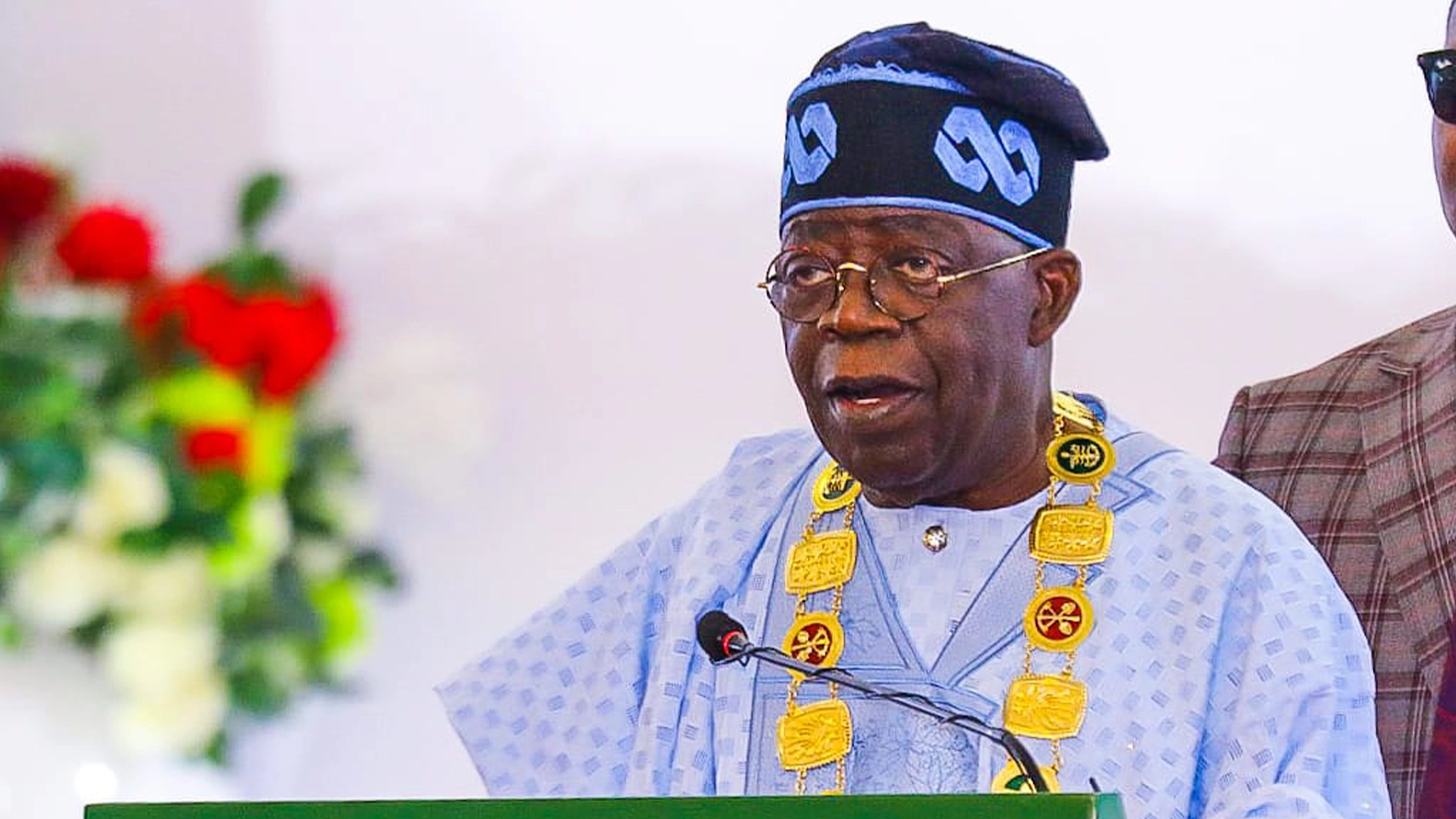
By Magnus Onyibe
On Friday March 6, by constituting an 11-member committee to actualise the incorporation of the Grid Asset Management Company Limited (GAMCO), President Bola Tinubu seemed to have heeded the call by Nigerians for him to fulfil his campaign promise that under his watch Nigeria will experience steady electricity supply and spare the populace the menace of unsteady power supply which the long suffering masses have been grappling with for decades. The Chief of Staff to the President, Rt.Hon.Femi Gbajabiamila, who inaugurated the committee on behalf of President Tinubu, underscored the purpose of the committee:
“The proposed establishment of GAMCO is one of the revolutionary steps taken by Mr President and this administration in the all – important power sector. We are here for the inauguration of the Committee on Grid Asset Management Company (GAMCO), which is basically to optimise and revolutionise power generation, and in particular, the grid and transmission sector.”
Continuing, he called on members to align with the President’s vision in proposing the formation of GAMCO and to stick to the committee’s mandate, which is to conduct a comprehensive review of existing laws, regulations, policies, and institutional frameworks governing the electricity value chain, including generation, transmission, distribution, and market operations.
The task given the committee, which ordinarily falls within the purview of the line minister, suggests to me that President Tinubu may not be satisfied with the policies and programmes of the incumbent Minister of Power, Mr Adebayo Adelabu, who has been on the saddle since August 2023 and has come up with a rash of policies and programmes such as the electricity multi-bands tariff system, which most electricity consumers in Nigeria regard as a scam and therefore a sore point between the administration and the masses.
Most recently, Minister Adelabu’s last policy decision before GAMCO was introduced last Friday, March 6, was the unveiling of a so-called 10-year rescue plan to revive manpower shortage in the electricity sector, which essentially is about breaking up the TCN into two government agencies, instead of doing the ideal thing, which is to invite private sector investors to participate in the transmission aspect of the electricity ecosystem in Nigeria.

Part of the minister’s plan was also the training of 1,200 electrical engineers and prioritization of local contractors under a “Nigeria First” procurement policy. Other initiatives under the watch of the minister include:
Electricity Act 2023: Devolving regulatory powers to subnational governments and promoting competition and private sector participation.
Metering Initiative: Securing N700 billion to deploy 1.1 million meters by end-2025 and 2 million annually for five years.
Renewable Energy Expansion: Mobilising $2 billion for renewable energy projects and increasing power access across rural and underserved communities.
It is interesting to note that apart from the signing into law of the electricity act 2023, the objectives of Adelabu’s power sector reforms did not make the desired impact.
Perhaps that is why President Tinubu seems to have discountenanced them by introducing the GAMCO, which he is taking charge of from the presidency, as reflected by the fact that it is his chief of staff, Gbajabiamila (not Minister of Power Adelabu), who is leading the committee, which is more or less a rescue team for the electricity sector.
Incidentally, when Minister Adelabu introduced his last policy measures (10 years plan), which were suboptimal in my view, l expressed my reservations with readers in my column of November 6 last year. GAMCO has been introduced to remedy the age long electricity power shortage, which has been a handicap and obstacle to Nigeria’s industrial development.
In the article titled “On Boosting Electricity Supply in Nigeria: Why Minister Adelabu’s Approach Misses the Mark” which was published on November 6 in this column, l criticized Minister Adebayo Adelabu’s strategy to improve Nigeria’s electricity supply by arguing that the minister’s proposal to split the Transmission Company of Nigeria (TCN) into two government-controlled entities is flawed and won’t address the root cause of the problem – a broken transmission system. I then highlighted that Nigeria’s power generation capacity is around 12,000 megawatts, but only 5,000 megawatts are being utilised due to transmission constraints. Therefore, I suggested that the government should liberalise transmission, encourage private investment, and focus on renewable energy solutions to unlock Nigeria’s economic potential. In that piece l also emphasised that Nigeria needs a modern, investment-driven grid, not more bureaucracy.
Five months after l expressed the view, president Tinubu opted to take charge of the critically important electricity supply sector via the establishment of GAMCO inaugurated last Friday March 6 aimed at addressing most of the isssues raised in my ealier referenced article which constitute the bulk of the terms of reference for GAMCO.
For context, below is the article first published five (5) months ago on November 6, 2025 titled: On boosting electricity supply in Nigeria: Why minister Adelabu’s approach misses the mark?
“Twelve years after Nigeria privatised its power sector, the country — with over 220 million citizens — still struggles to supply barely 5,000 megawatts of electricity. Meanwhile, generation companies can produce up to 12,000 megawatts, but that power remains stranded. The reason is clear: a broken transmission system.
The 2013 reform copied the telecom privatisation model, assuming similar success. Instead, it created a fragmented electricity value chain — generation, transmission, and distribution — run by disconnected entities. Critically, while generation and distribution were privatised, transmission was left under government control through the Transmission Company of Nigeria (TCN). That single decision has proven fatal.
TCN still operates colonial-era infrastructure incapable of wheeling current power needs, let alone future demand. Grid collapses, load rejection, and stranded generation capacity are the predictable consequences. The private-sector Gencos have invested and improved capacity; TCN has stagnated.
The impact has cascaded downstream. Distribution companies (Discos) are chronically under-supplied, unable to scale, and now saddled with an estimated ₦4 trillion debt burden. Consumers remain in darkness, businesses rely on generators, and economic growth is constrained.
Now, as the initial privatisation agreements expire, Nigeria has a rare chance to correct course. However, the recent proposal by Power Minister Adebayo Adelabu to split TCN into two government-controlled entities misses the point. Fragmenting failure does not produce reform — it multiplies inefficiency.
What Nigeria needs is not more bureaucracy but a modern, investment-driven grid. Transmission must be restructured, opened to private capital and expertise, and aligned with performance incentives. This is how successful power markets operate globally, from Europe to Asia.
Nigeria’s electricity challenge is not generation; it is transmission. Rather than doubling down on a state structure that has failed, the government should pursue bold market-driven reforms. The window to act is now. The cost of hesitation is another decade of darkness.
My objection to the policy matrix proposed by Minister Adelabu is anchored on the dictum that the government has no business in business. Until the government completely hands off the management of electricity — as it did with the telecommunications sector 25 years ago — chaos in the power sector will persist.
To be continued tomorrow.
Onyibe is an entrepreneur, public policy analyst, alumnus of the Fletcher School of Law and Diplomacy, and former commissioner in the Delta State government. He wrote from Lagos.

