 Follow Us on Google News
 Follow Us on Google Discover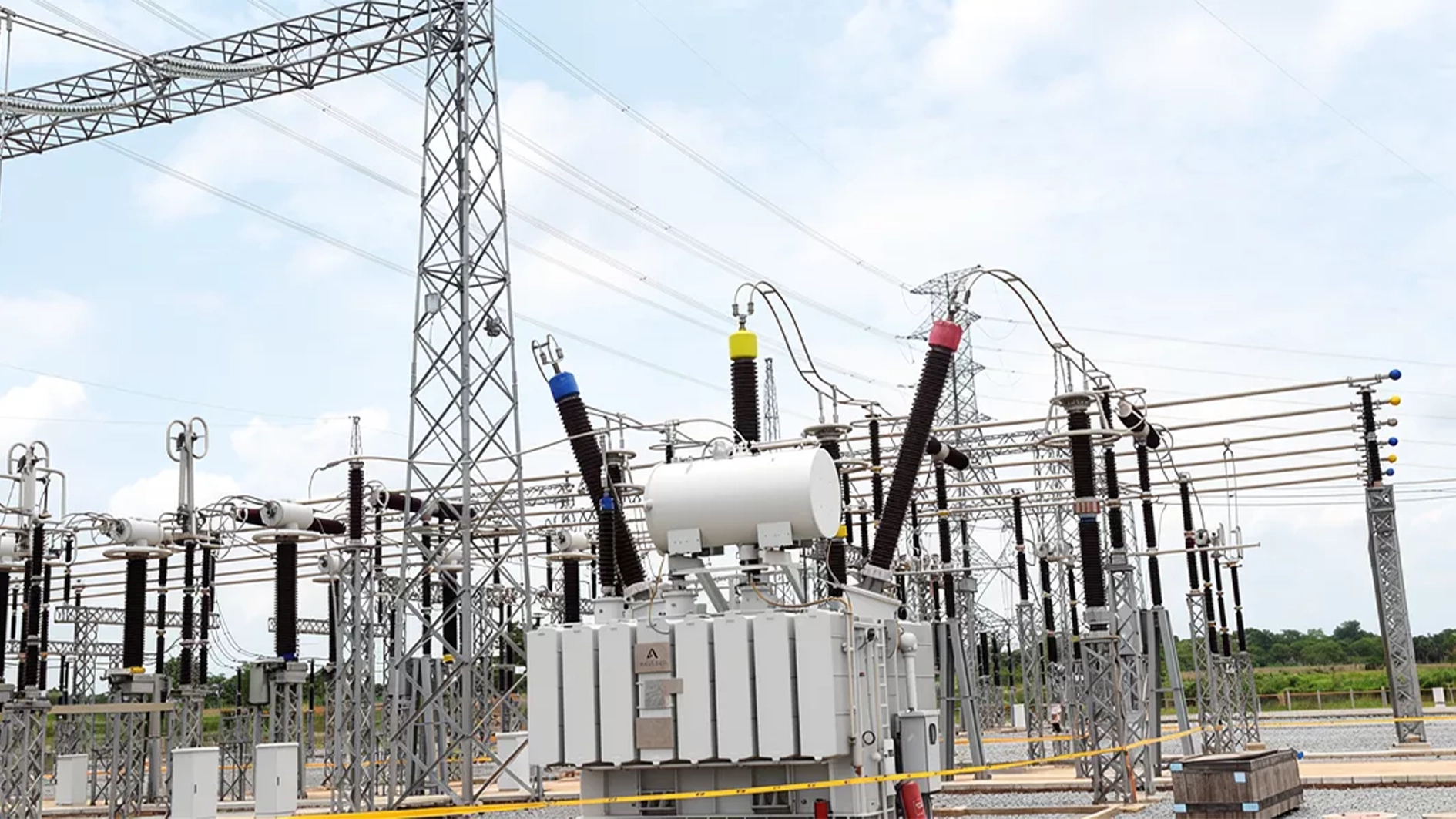
NIGERIA is preparing another attempt to fix one of its most stubborn economic problems – a power sector that has absorbed billions of dollars in public investment yet still fails to keep the lights on for most of its 220 million people.
The Federal Executive Council had recently approved the incorporation of the Grid Asset Management Company Limited, or GAMCO — a commercially structured vehicle charged with reviving idle government-owned power plants and easing chronic bottlenecks in the national grid.
The Guardian learnt that the initiative could recover about 1,600 megawatts of electricity within two years by rehabilitating assets that are already built but barely operating.
After more than two decades of reform efforts that have repeatedly fallen short, analysts said the question is less about engineering and more about credibility.
A Sector Built But Not Working
Nigeria’s electricity sector has undergone multiple restructuring efforts since the early 2000s, culminating in the privatisation of most generation and distribution assets in 2013. That reform was intended to attract private investment and improve efficiency across the value chain. Instead, the sector has been mired in chronic financial and operational paralysis.
Distribution companies have long grappled with weak revenue collections and tariff disputes, leaving them unable to pay for the power they receive. That has created a persistent liquidity crisis across the system, limiting investment and discouraging lenders. Meanwhile, inadequate transmission capacity has prevented existing power plants from delivering their full output to consumers. Nigeria has an installed generation capacity exceeding 13,000 megawatts, yet the grid routinely delivers only a fraction of that. For businesses across Africa’s largest economy, the consequence has been near-total dependence on diesel generators, raising costs and eroding competitiveness.
Three Plants, One Corridor
Against that backdrop, it was gathered that GAMCO will focus its pilot phase on three gas-fired plants developed under the National Integrated Power Project: Omotosho (513MW), Olorunsogo (754MW) and Ihovbor (508MW) — a combined installed capacity of 1,775 megawatts that is currently operating at near-zero availability.
Government officials attribute the collapse to unreliable gas supply, absent maintenance regimes, and the lack of bankable power purchase agreements with creditworthy buyers.

Alongside the plant recovery programme, GAMCO is tasked with constructing a high-capacity double-circuit transmission line along the Benin–Lagos corridor – one of the most congested routes in the national grid, linking generation clusters in the South with the industrial and commercial centres of Lagos and Ogun states. The line, designed as open-access shared infrastructure rather than a dedicated evacuation route for a single plant, would allow multiple generators to inject power into the same corridor.
The Renewed Hope Infrastructure Development Fund Power Team, which is driving GAMCO’s operationalisation, said the company would raise financing through project finance structures – debt and equity secured against the ring-fenced cash flows of specific projects – rather than sovereign borrowing. GAMCO’s shares will be held by the Ministry of Finance Incorporated on behalf of the Federal Government.
Cheaper Than Building New
Government planners argue the approach is significantly more efficient than commissioning new capacity. Building a new 1,600MW gas plant today would cost an estimated $3.36 billion and take five to seven years – a timeline complicated further by a global shortage of gas turbines, where annual manufacturing capacity of roughly 60 gigawatts falls well short of demand exceeding 100 gigawatts. Rehabilitating the three NIPP plants, by contrast, requires no new turbines and could deliver comparable output in less than three years at considerably lower cost.
The new entity is structured to complement, rather than replace, existing power sector institutions. The Niger Delta Power Holding Company, which owns the NIPP plants, retains full ownership of the underlying assets. The Transmission Company of Nigeria retains its statutory role over the national grid. GAMCO’s function is narrower – to package specific projects into bankable propositions capable of attracting private capital, then manage the commercial arrangements around them.
The Familiar Challenge
Yet the proposal confronts a challenge familiar to every previous reform effort – convincing investors that the sector’s underlying financial problems have actually been resolved. Payment risk remains the central concern for financiers. Distribution companies, the end buyers of electricity, continue to struggle with revenue collection, and long-standing disputes over tariff levels have yet to produce a durable resolution.
Previous restructuring efforts have repeatedly faltered at the same point: the market’s inability to generate reliable cash flows across the entire value chain. Adding megawatts to a system that cannot pay for them has historically deepened, rather than resolved the sector’s difficulties.
For GAMCO to succeed, analysts said the government would need to demonstrate that improved generation and transmission output translates into sustainable revenues — a test that will ultimately depend less on the new entity’s commercial structure than on the sector’s capacity to fix its deep-rooted governance and financial failures.
According to officials, the pilot is designed as a proof of concept, with the expectation that a demonstrated track record will unlock financing for a wider rollout across additional NIPP plants and transmission corridors nationwide.

