 Follow Us on Google News
 Follow Us on Google Discover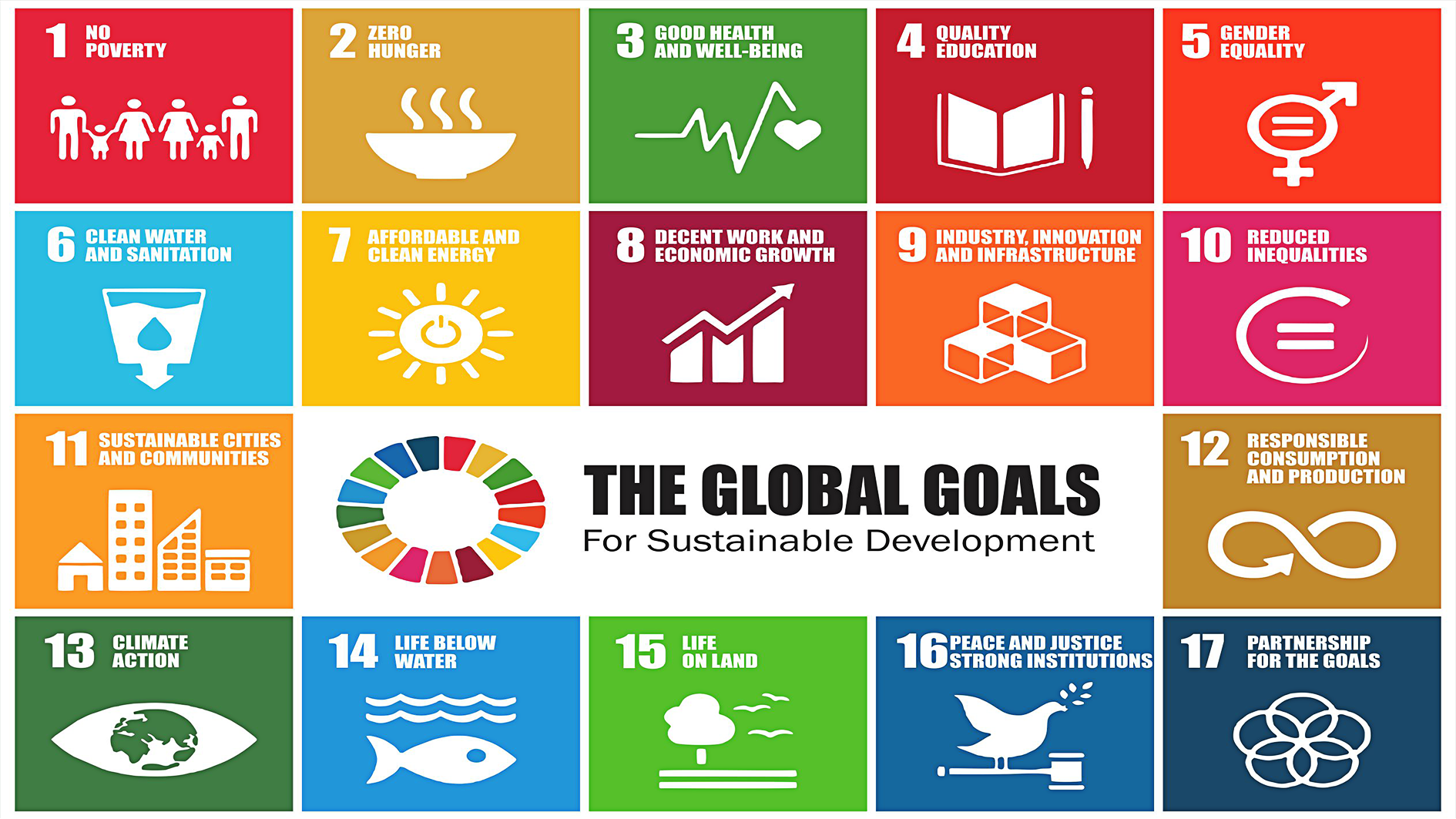
With less than five years left to meet Sustainable Development Goals (SDGs) targets, data from the International Labour Organisation (ILO) shows that much more is needed if Nigeria, among other developing countries, is to fulfil the target, GLORIA NWAFOR reports.
The world adopted the Sustainable Development Goals over a decade ago with an ambitious promise to improve the well-being of mankind. With less than five years remaining, the latest data by the ILO present a mixed picture.
The 2030 Agenda and the 17 SDGs were adopted by the United Nations (UN) General Assembly in 2015 as a universal call-to-action to end poverty, protect the planet and ensure peace and prosperity for all, with a commitment that no one would be left behind.
The report by the labour organisation showed that on several fronts, progress has been slow, uneven, or has stalled altogether.
Stating that labour’s share of the global economy was shrinking, it said the share of gross domestic product (GDP) going to workers — rather than to capital — has declined.
According to it, the global labour income share fell from 53.0 per cent in 2015 to 52.6 per cent in 2025, equivalent to roughly $196 purchasing power parity (PPP) less per worker per year.
Noting that labour income was the primary source of livelihood for most households, the report argued that when productivity gains flow disproportionately to capital rather than to wages, the distribution of growth becomes more unequal.

The decline, it said, was sharpest in 2023, during the post-pandemic inflationary period.
Stating that jobs are not enough to escape poverty, it said that with about 284 million workers, translating to 7.9 per cent of the global employed population, lived in extreme poverty in 2025, earning less than $3 PPP per day.
It showed that the persistence of working poverty underlines that employment alone was no guarantee of economic security.
Even though the global rate has fallen by 3.1 percentage points since 2015, the data showed that regional disparities had remained wide.
It reported that in sub-Saharan Africa and the Least Developed Countries (LDCs), around 40 per cent of workers are still working poor, barely two percentage points below their 2015 levels.
In sub-Saharan Africa, the report said nearly half of all employed youth fall into the category, highlighting that access to employment was a necessary but insufficient condition for escaping poverty.
Noting that more than half the world’s workers, 57.9 per cent, remained in informal employment, with sub-Saharan Africa (SSA) standing at 87.6 per cent.
It argued that informal employment typically means an absence of social protection, legal safeguards, sick leave, and other standard employment protections.
The limited change in the figures over the decade points to the structural nature of informality in many labour markets.
The report highlighted that the global share of young people not in employment, education, or training (NEET) rose slightly from 19.9 per cent in 2024 to 20.0 per cent in 2025 and is projected to reach 20.2 per cent by 2027.
It noted that this follows a recent low of 19.7 per cent in 2023, with the trend now moving in the wrong direction.
Behind the global figure, it said four million additional young people fell into NEET status in 2025 alone, stating that early and prolonged exclusion from employment and education is associated with longer-term scarring effects on career trajectories.
Stating that the gaps persist where women stand in the world of work, it said women earned 52.4 per cent of men’s total labour income globally in 2025, up from 49.4 per cent in 2015.
According to the ILO, the gap reflects differences in pay rates, but also lower employment-to-population ratios among women and their concentration in lower-paid sectors and roles.
Among employees specifically, it said women earned on average 78 cents for every dollar earned by male employees yearly.
Contributing factors, it said, include unequal access to education and training, the disproportionate burden of unpaid care work, pay opacity, and weak enforcement of non-discrimination frameworks.
On social protection, the ILO report explained that for the first time, more than half of the world’s population (52.4 per cent) is covered by at least one social protection benefit, up from 42.8 per cent in 2015.
However, despite the progress, it said 3.8 billion people remain without any protection at all.
While high-income countries are approaching universal coverage at 85.9 per cent, and upper-middle-income countries stand at 71.2 per cent, it said low-income countries reached only 9.7 per cent, barely changed since 2015, and lower-middle-income countries cover 32.4 per cent of their populations.
Though Nigeria has made slow, yet notable strides toward the 2030 SDGs through infrastructural development, health improvements, and youth-led initiatives, with major progress in reducing gender disparities in school enrolment and enhancing maternal health.
Key achievements include passing the Not Too Young to Run Bill, expanding access to electricity, implementing school feeding programmes, and launching economic empowerment schemes.
Despite the achievements, Nigeria ranks 146 out of 166 countries in the 2024 Sustainable Development Report, with only one goal (responsible consumption and production) showing marked progress.
Structural barriers, such as widespread insecurity, high unemployment rates, and corruption, hinder the achievement of most targets.
Findings also showed that the COVID-19 pandemic slowed progress on gender equality and increased economic hardship.
To address some of the challenges, the Federal Government integrated the SDGs into its national development strategies, ensuring that progress is integrated into yearly budgets.
In a policy brief by the African Centre for Leadership, Strategy and Development, assessing Nigeria’s progress toward achieving the SDGs by 2030, said despite early signs of political commitment and coordination through the Office of the Senior Special Assistant to the President on SDGs (OSSAP-SDG), Nigeria ranked 146 out of 166 countries in the 2024 Sustainable Development showed marked progress.
The centre said while progress has been made in areas such as maternal health, gender equality in school enrolment, and microenterprise development, the country continues to face structural setbacks. Widespread poverty, education gaps (especially among out-of-school children), gender inequality, inadequate healthcare, and insecurity all hinder comprehensive SDG implementation.
The brief also flags systemic weaknesses: under-reporting of activities, limited integration of technology for monitoring, insufficient engagement of subnational governments and non-state actors, and the lack of alignment between the SDGs and Nigeria’s long-term development plan, Agenda 2050.
Outlining bold recommendations, the centre urged both the federal and state governments to explore alternative funding strategies, mainstream SDG implementation across key sectors, strengthen institutional frameworks, and expand civil society and private sector engagement.
The brief calls for prioritising infrastructure, agriculture, education and health as catalysts for SDG acceleration.
Many indicators fall under Goal 8, which aims to promote sustained, inclusive and sustainable economic growth, full and productive employment and decent work for all.
With less than five years remaining, for several indicators, the trajectory over the past decade points away from the 2030 targets rather than toward them. How the final years of the SDG era unfold remains to be seen.

