
GDN SIDEBAR
Asisat Oshoala defied a football world that wasn’t built for her. Now, Amstel Malta is betting on her story and what it means for a generation of Nigerian girls.

On any given afternoon, somewhere in Lagos, a young girl is kicking a ball across a dusty patch of concrete, chasing something she can not yet name. Her parents have told her to come inside. The boys on the street have told her this game is not for her. She plays anyway.
For years, stories like hers existed on the margins — footnotes to a game that belonged, by common understanding, to someone else. Today, they look a little different. With the announcement of Asisat Oshoala as its newest brand ambassador, Amstel Malta is stepping into a conversation that extends well beyond product placement and into the territory of cultural timing.
Oshoala’s Origin Story
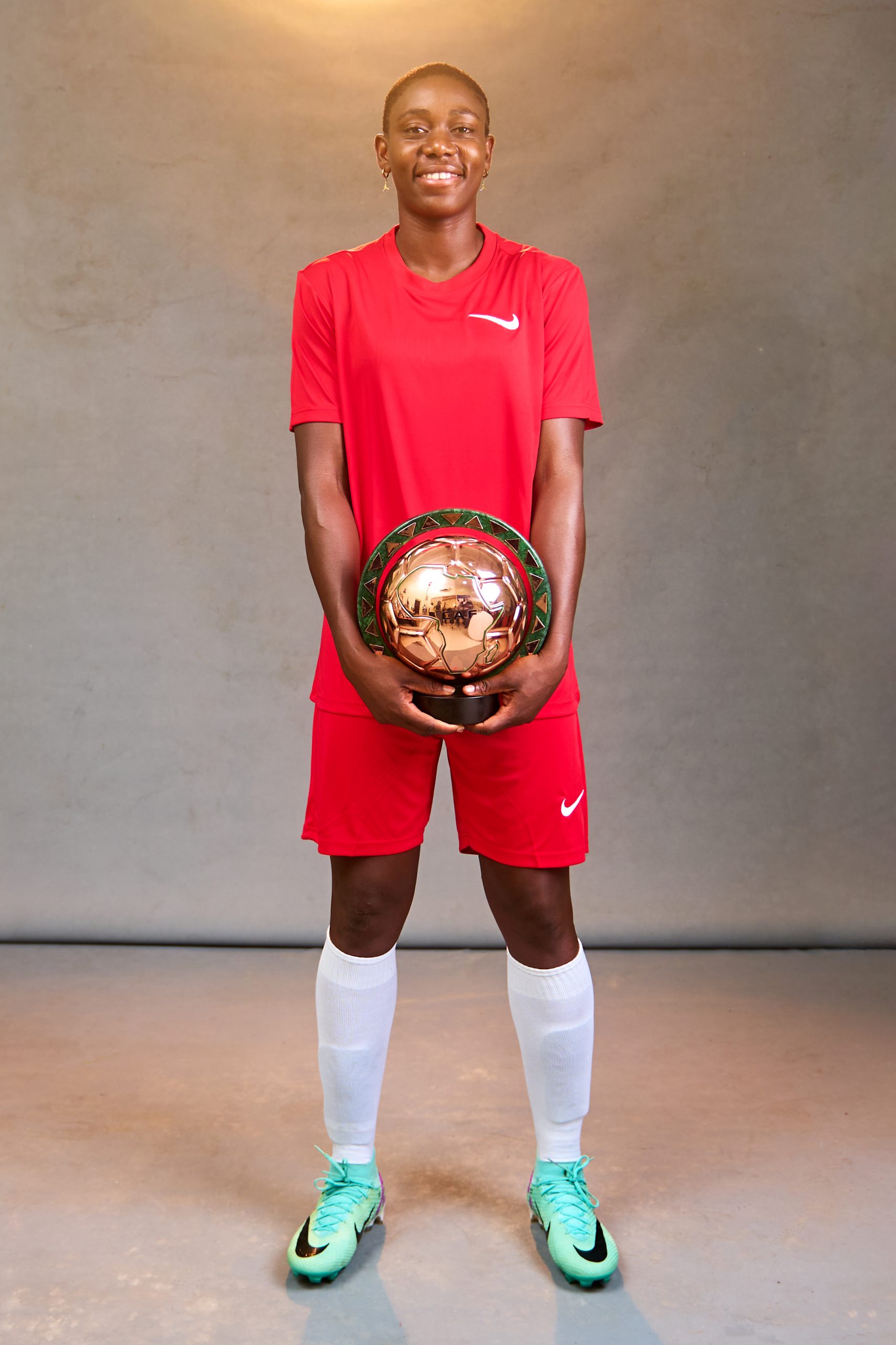
Before Oshoala was Agba Baller — before the six African Women’s Footballer of the Year awards, before the UEFA Women’s Champions League triumph with Barcelona, before she became the first African woman ever nominated for the Ballon d’Or Féminin — she was a girl in Lagos who had to lie to play.

“My parents were a big part of my journey,” Oshoala recalls in an interview with SkySport. “They did not want me to play at that time because they wanted me to focus on my education. I usually just played with boys on the street, on the concrete grounds, or on the beach or something just for fun. They scolded me, and kind of stopped me every time.”
It was not cruelty. It was a particular kind of love that tried to protect a child from a world unlikely to make space for her. Football, in those years, was not seen as a viable path for a girl in Nigeria. It was barely seen as a leisure activity for girls.
Despite the hurdles and opposition, she kept at it until the turning point came at the 2014 FIFA U-20 Women’s World Cup, where the teenage Oshoala walked away with both the Golden Boot and the Golden Ball — top scorer and best player of the entire tournament. In a single tournament, she did not just announce herself to the world; she gave her parents evidence they could not argue with. After that, they became her most steadfast supporters.
What quickly followed was a career of sustained firsts. FC Barcelona, where she became the first African player to score in a UEFA Women’s Champions League final. The first African woman to win the Champions League outright, in 2021. The first African woman to win La Liga’s Pichichi Trophy as the division’s top scorer. Three Champions League titles in total, a record for any African woman in the competition’s history.
Oshoala’s ascent has not happened in a vacuum. It has coincided with and, in many ways, helped precipitate a profound shift in how Nigerian women’s football is seen, both at home and internationally. The Super Falcons, Nigeria’s national women’s team, are Africa’s most decorated women’s football side. Their most recent triumph at the Women’s Africa Cup of Nations came in 2025, when they defeated hosts Morocco 3–2 in a closely contested final in Rabat. Results like these have not only sustained their dominance but have also reinforced Nigeria’s long-standing presence in the upper tier of women’s football.
With that visibility for women comes growing commercial interest globally. Research from the Women’s Sport Trust shows that four in five brand decision-makers now say they are likely to invest in women’s sport sponsorship in the coming years, with women’s football identified as the single most attractive category for that investment. Sponsorships of elite women’s sports have been found to outperform those of men’s elite sports in driving brand awareness, consideration, and consumer conversion.
In Nigeria, that conversation is still developing, which is precisely what makes Amstel Malta’s move significant. When a brand of its size and cultural relevance chooses a female footballer as the face of its flagship campaign, it sends a signal to every other brand watching.
‘Be Your Best’ — And Mean It
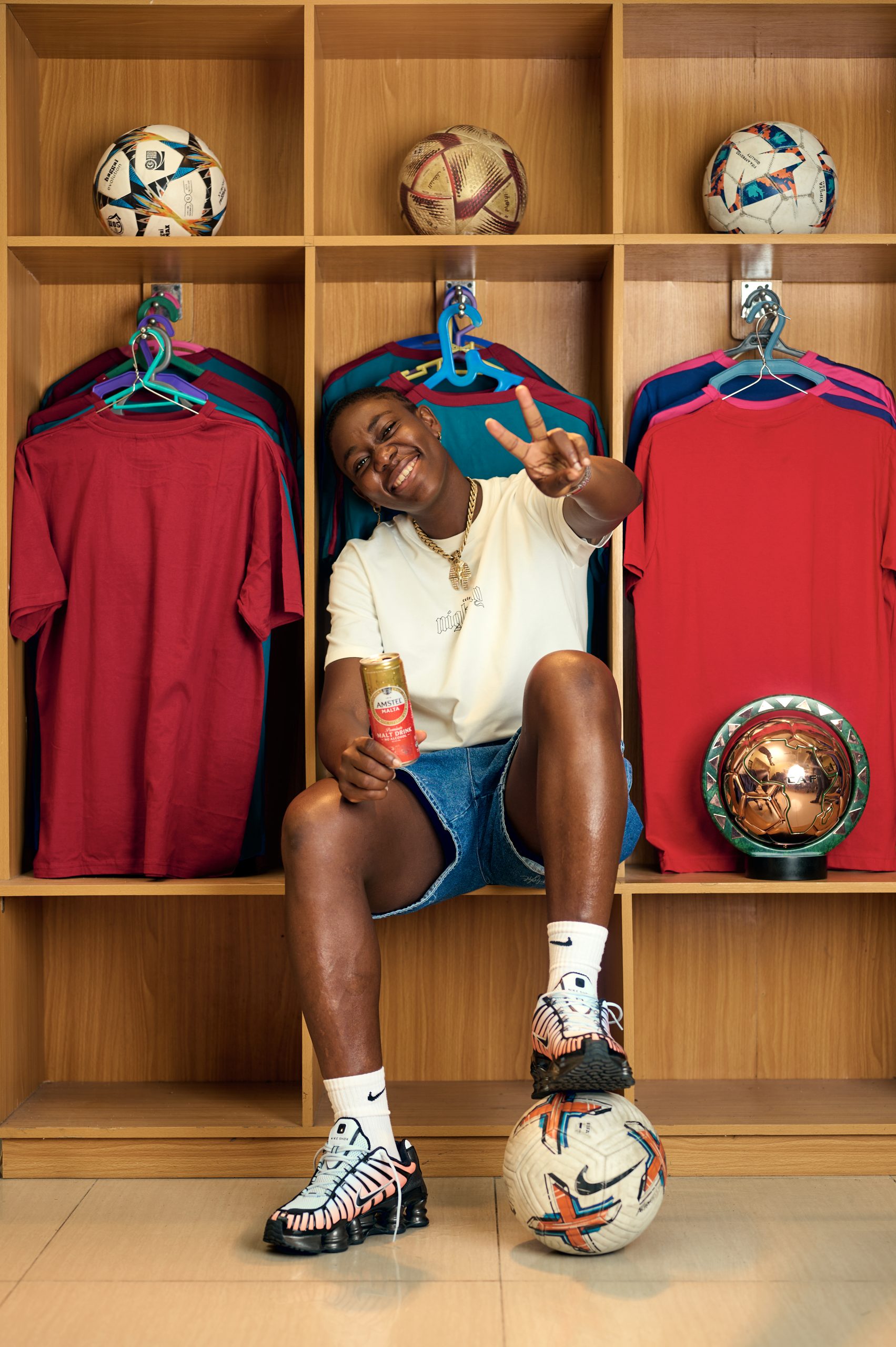
Amstel Malta’s “Be Your Best” campaign has been part of the brand’s DNA for some time. It is a line that is easy to say but difficult to earn. For it to land, the person attached to it has to genuinely embody the philosophy, not just in their professional highlights, but in the texture of how they have actually lived. Oshoala earns it. Not through perfection, but through something more durable: persistence.
This is perfectly displayed in a striking TVC that places Oshoala firmly in her element, showing off the world-renowned skills she has spent her career perfecting. We see Oshoala sharp, controlled, and entirely herself, with a can of Amstel Malta to help her ‘Be her Best’.
But beyond the visual storytelling, it is in moments of direct connection that the collaboration takes on deeper meaning.
During a recent #AskAsisat Instagram Live session, fans were given the opportunity to engage with Oshoala beyond the pitch — asking questions, sharing perspectives, and, in many ways, stepping into her world. The session created a more personal entry point into the campaign, one that moved away from spectacle and towards conversation. In a gesture that reinforced this sense of community, Amstel Malta rewarded participants a total of ₦ 3 million.
Speaking directly to fans, Oshoala offered a glimpse of the mindset that has sustained her, stating, “Success, for me, is living my dream. I genuinely love what I do. Football isn’t just my job; it is a part of who I am. Every day I wake up knowing there’s still so much I want to achieve, and that drive keeps me pushing forward. I’ve also bee n intentional about giving back, especially to the younger generation and those who don’t have the same opportunities I had. If my journey can open even one door for someone else, then it means everything to me.”
For Francis Obiajulu, Senior Brand Manager for Amstel Malta, the alignment was never in question. “Asisat reflects what Amstel Malta stands for: fierce discipline, resilience and commitment to excellence. The ‘Be Your Best’ philosophy is rooted in that mindset, and this partnership, along with the TVC, brings it to life in an authentic and relatable way. Our aim is to continue encouraging people to set a higher standard for themselves.”
Off The Pitch
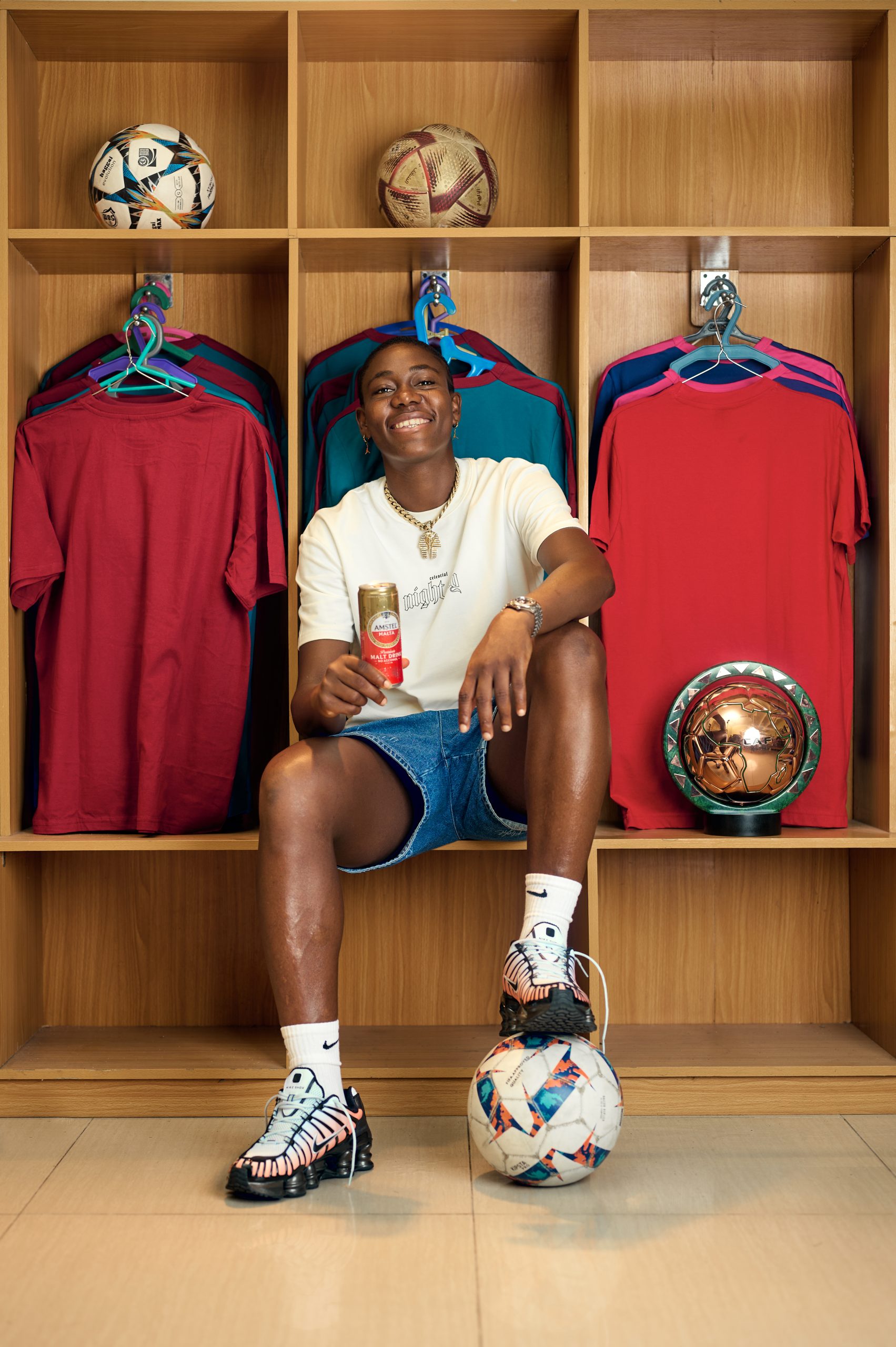
In 2019, Oshoala launched the Asisat Oshoala Foundation with a specific, considered mandate: empowering young girls in Africa through football and education. Each year, the foundation hosts the Football4Girls tournament in Lagos — structured, competitive, and deliberately designed to be the kind of opportunity she herself never had.
In 2021, she was appointed to FIFA’s Technical Advisory Group (TAG) on women’s football. So, when she speaks about access, about advocacy, about what it means for a girl to see herself represented, she is speaking from institutional authority, earned over a decade of proof.
A Statement Worth Making

Back on those Lagos streets where a girl once had to lie to play, the landscape is changing. There are now structured leagues, professional pathways, and, increasingly, brands are becoming more willing to support female excellence.
Amstel Malta’s partnership with Oshoala is the latest and most prominent expression of that shift. It is a signal to the girl on the concrete pitch, to her parents with their reasonable doubts, and to every brand still watching from the sidelines: backing female excellence in Nigeria is not a risk. It is exactly the right place to be.
Excellence is not accidental. It is deliberate — and, now, thanks to Amstel Malta, it is celebrated.