 Follow Us on Google News


 Follow Us on Google Discover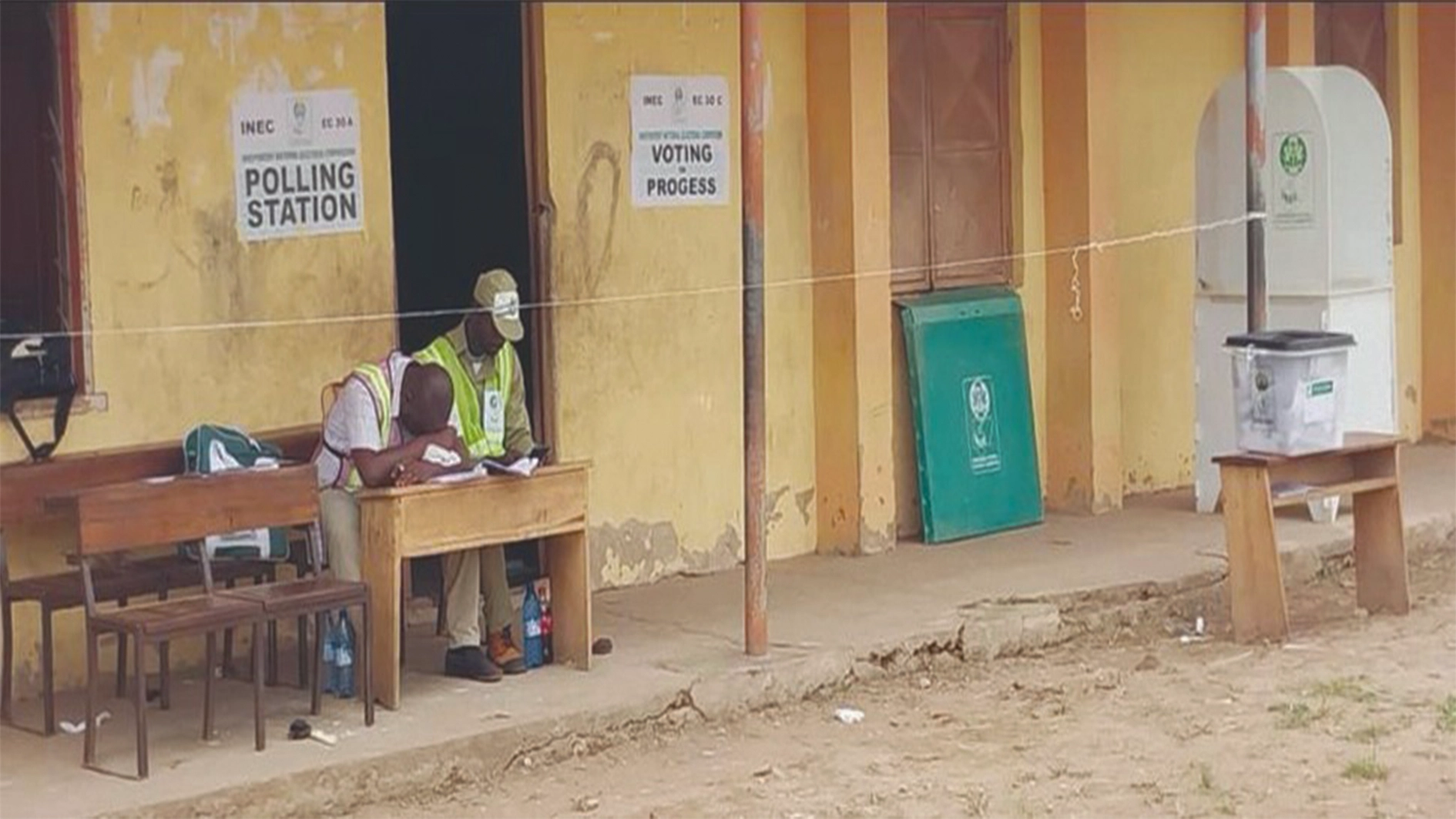
By Jelilah Bilal
On March 25, 2026, under the auspices of the Rule of Law Development Foundation, scholars, policy observers, and civic actors gathered virtually for the organisation’s 16th webinar to examine one of the most pressing challenges confronting contemporary democracy, particularly Nigeria’s.
At the webinar, a paper titled ‘Voter Apathy: A Political Economy Perspective,’ was delivered by Prof. Lai Olurode of The Wings Schools, Iwo, Osun State. The session formed part of an ongoing intellectual series aimed at interrogating governance, institutional legitimacy, and democratic participation in Nigeria.
Rather than approaching voter apathy as a behavioural defect among citizens, Olurode, a sociologist, advanced a structural argument rooted in political economy. His presentation rejected simplistic explanations that portray non-participation as civic irresponsibility. Instead, he located declining voter turnout within wider economic, institutional, and historical forces that shape citizens’ perceptions of power and belonging within the democratic order.
The discussion opened with a striking observation: Nigeria lacks certainty about the actual number of living voters. Electoral calculations are often derived from registers whose accuracy remains contested due to migration, mortality gaps, and internally displaced populations. Without a reliable denominator, measuring apathy becomes analytically unstable. The question, therefore, is not merely why turnout declines but whether participation statistics themselves capture political reality.
Olurode urged participants to reconsider the moral framing of voter disengagement. “Political elites frequently condemn citizens who abstain from elections, yet such criticism obscures systemic barriers embedded within the political environment. According to the political economy perspective, behaviour must be interpreted through relationships between social classes, institutional arrangements, and material conditions. Voting patterns emerge not in isolation but within structures that distribute opportunity unevenly,” he argued.

Central to his argument was the claim that politics, as presently constituted, offers only episodic participation for the majority.
“Citizens appear politically relevant on election day but remain marginal to governance processes thereafter. Decision making, resource allocation, and policy influence often remain concentrated among affluent networks capable of navigating state institutions. Under such conditions, abstention becomes less a failure of citizenship and more an expression of rational disillusionment.”
The presentation framed voter apathy as a multi-causal phenomenon shaped by intersecting pressures. “Poverty, insecurity, institutional distrust, and elite competition collectively influence citizens’ willingness to participate,” he said.
Olurode emphasised that any attempt to address apathy without confronting these broader forces risks treating symptoms while ignoring underlying causes.
Several research questions guided the analysis: Why do voters stay away from polling units? Which demographic groups exhibit higher levels of disengagement? Who bears responsibility for apathy, citizens who abstain or institutions that erect obstacles? How can voters be encouraged to return to the electoral arena? Why has declining turnout become a global rather than exclusively Nigerian phenomenon? These questions shifted the discussion from blame towards investigation.
Situating Nigeria within a global context, Olurode noted that voter apathy has spread across democracies with varying institutional strengths. He argued that in advanced democracies, ideological convergence among political parties often reduces perceived electoral stakes, while in emerging democracies, insecurity and governance deficits deepen distrust. The shared outcome is a weakening connection between citizens and representation, suggesting that the crisis reflects structural transformations in modern politics.
A recurring theme throughout the presentation was contested legitimacy. “Political elites express concern about declining turnout largely because governments elected by a minority risk appearing unrepresentative. Anxiety over apathy therefore stems partly from fears about legitimacy rather than purely altruistic commitment to democratic participation. This insight reframes public debates by exposing the political interests embedded within calls for voter mobilisation.”
One of the presentation’s most compelling conceptual contributions was the description of the ballot paper as a social contract document. “Though materially insignificant, the ballot acquires symbolic power through collective belief. Citizens invest expectations of service delivery, recognition, and justice into the act of voting. When these expectations remain unmet, the symbolic contract weakens, producing withdrawal from future elections,” Olurode submitted.
He characterised politics as a marketplace of competing values. However, he noted that frequent defections among political parties blur ideological distinctions, leaving voters uncertain about genuine alternatives.
He added: “When parties appear interchangeable, electoral choice loses meaning. Historical commentary describing political parties as resembling fingers of the same diseased hand captured the frustration of citizens confronted by limited differentiation.
“The monetisation of politics further compounds disengagement. Vote buying transforms democratic participation into economic exchange, eroding ethical foundations. Citizens facing economic hardship may accept inducements, yet repeated exposure to transactional politics reinforces cynicism. Voting becomes commercialised rather than deliberative, diminishing the perceived dignity of participation.”
Another significant factor identified by Olurode is voter fatigue. According to him, successive electoral cycles accompanied by limited socio-economic improvement generate emotional exhaustion. “Citizens who repeatedly vote without experiencing tangible change gradually disengage,” he said. “Fatigue also arises from logistical challenges, long queues, administrative inefficiencies, and fears associated with election security.”
While subjecting political parties to critical scrutiny, Olurode noted that the absence of internal democracy, dominance of wealthy patrons, and disregard for organisational rules weaken public confidence.
“Candidate selection processes perceived as predetermined by financial influence undermine the credibility of electoral competition. Voters excluded from meaningful participation within parties may extend their disengagement to national elections,” he noted.
He also cited institutional trust as another decisive variable driving the voter apathy syndrome. He stated that electoral management bodies must not only operate transparently but also be perceived as impartial.
Olurode warned that public suspicion that electoral institutions serve personal or partisan interests erodes legitimacy even when reforms are introduced, noting that trust develops cumulatively through consistent performance rather than isolated improvements.
He further said: “Security conditions also shape participation. Misuse of security resources and uneven enforcement of directives create perceptions of bias. Citizens who fear intimidation or violence may rationally avoid polling environments. In regions affected by displacement, participation becomes both logistically difficult and psychologically burdensome, reinforcing patterns of withdrawal.”
He also noted that the legal framework surrounding elections introduces additional complexity. “Prolonged litigation and judicial intervention sometimes shift public perception of political outcomes from ballots to courtrooms. When judicial processes appear to determine winners more decisively than voters, citizens question the value of electoral participation,” he stated.
Olurode further examined ethical transformations within the voting community, stating that exposure to corruption and compromised norms gradually weaken civic commitment.
“When resilient voters observe widespread manipulation, moral incentives for participation decline. Ethical erosion therefore reflects systemic conditions rather than individual weakness.”
He, however, emphasised Nigeria’s democratic assets despite these challenges. “The country possesses trained electoral personnel, technological innovations, vigilant civil society organisations, an active media landscape, and a judiciary capable of intervention. These resources indicate that voter apathy is reversible if institutional credibility improves.”
Olurode recommended structural reforms that should include depoliticising national security through cross party consensus to reduce fears associated with elections. He also recommended that addressing poverty through comprehensive social policies acknowledges the economic foundations of participation, just as revitalising political parties through internal democracy could restore ideological clarity and competition.
Olurode called for expanded research into the demographic distribution of apathy, noting evidence suggesting significant disengagement within certain regions. “Data driven analysis would enable targeted solutions rather than generalised mobilisation campaigns,” he said, arguing that technology should simplify voting procedures and reduce the physical burden associated with participation.
A controversial proposal by Olurode involved recognising the time and cost incurred by voters. “Compensating citizens indirectly through improved services or incentives could signal societal appreciation for civic engagement.” While contentious, the suggestion underscored the broader argument that participation must hold tangible value for citizens.
Underlying the entire presentation was a philosophical shift: Voter apathy should be interpreted as feedback from society rather than failure of citizenship; blaming citizens obscures accountability and delays reform; democratic systems must earn participation by demonstrating responsiveness and fairness.
The webinar concluded with a call for dissemination of findings among policymakers, civil society actors, and academic communities. Dialogue grounded in evidence, rather than assumption, was presented as essential for rebuilding democratic trust. Also, knowledge sharing across institutional levels could transform isolated discussions into coordinated reform efforts.
Beyond institutional analysis, the presentation highlighted the cultural dimension of participation. Public narratives that portray politics as irredeemably corrupt reinforce disengagement. Media institutions therefore carry responsibility to balance critique with constructive engagement, presenting politics as consequential rather than futile.
It was also noted that education also plays a long term role in sustaining participation. “Civic literacy equips citizens to interpret political processes critically and engage meaningfully. Without such grounding, electoral participation risks becoming episodic enthusiasm rather than informed decision making.”
The webinar noted that generational change further complicates the issue. “Younger citizens encounter politics primarily through digital spaces characterised by rapid information flows and competing narratives. Digital engagement expands awareness but does not automatically translate into voting behaviour. Institutions must therefore adapt communication strategies while preserving credibility.”
It also observed that economic inequality remains a persistent driver of disengagement. “Citizens confronting daily survival challenges may prioritise immediate needs over political participation. Inclusive economic policies therefore function indirectly as democratic reforms by reinforcing the connection between governance and lived experience.”
However, it noted that community networks offer pathways towards rebuilding trust. “Religious institutions, local associations, and civic groups often maintain stronger legitimacy than formal political structures. Engaging these networks in voter education initiatives could reconnect citizens with democratic processes.”
Continuous accountability beyond electoral cycles was also identified as essential. “Participation thrives when citizens perceive ongoing influence rather than temporary relevance. Elections must operate within a broader participatory ecosystem that encourages dialogue between state and society throughout governance cycles.”
The presentation ultimately reframed voter apathy as both warning and opportunity that signals dissatisfaction with existing arrangements while offering insight into citizens’ unmet expectations.
Olurode’s political economy perspective therefore invites a shift from accusation to analysis. “Democracy depends not only on procedures but on credibility. Where institutions inspire trust, participation follows naturally. Where exclusion persists, withdrawal becomes rational,” he said.
The webinar’s significance lay in its insistence that democratic renewal requires structural imagination. Mobilisation campaigns alone cannot restore turnout without addressing inequality, insecurity, and institutional distrust. Participation must be sustained by evidence that governance responds to collective needs.
In his closing reflections, Olurode said that voter apathy represents a crisis of political imagination rather than mere civic decline. “Democracies must move beyond ritual elections towards substantive engagement capable of restoring belief in collective agency. Participation cannot be commanded, it must be earned through consistent responsiveness.”
The silent ballot, Olurode concluded, speaks volumes about governance. “Its absence reveals fractures within democratic relationships and challenges leaders to rebuild trust. Addressing voter apathy therefore demands humility from political elites and renewed commitment to inclusive governance.”

