 Follow Us on Google News


 Follow Us on Google Discover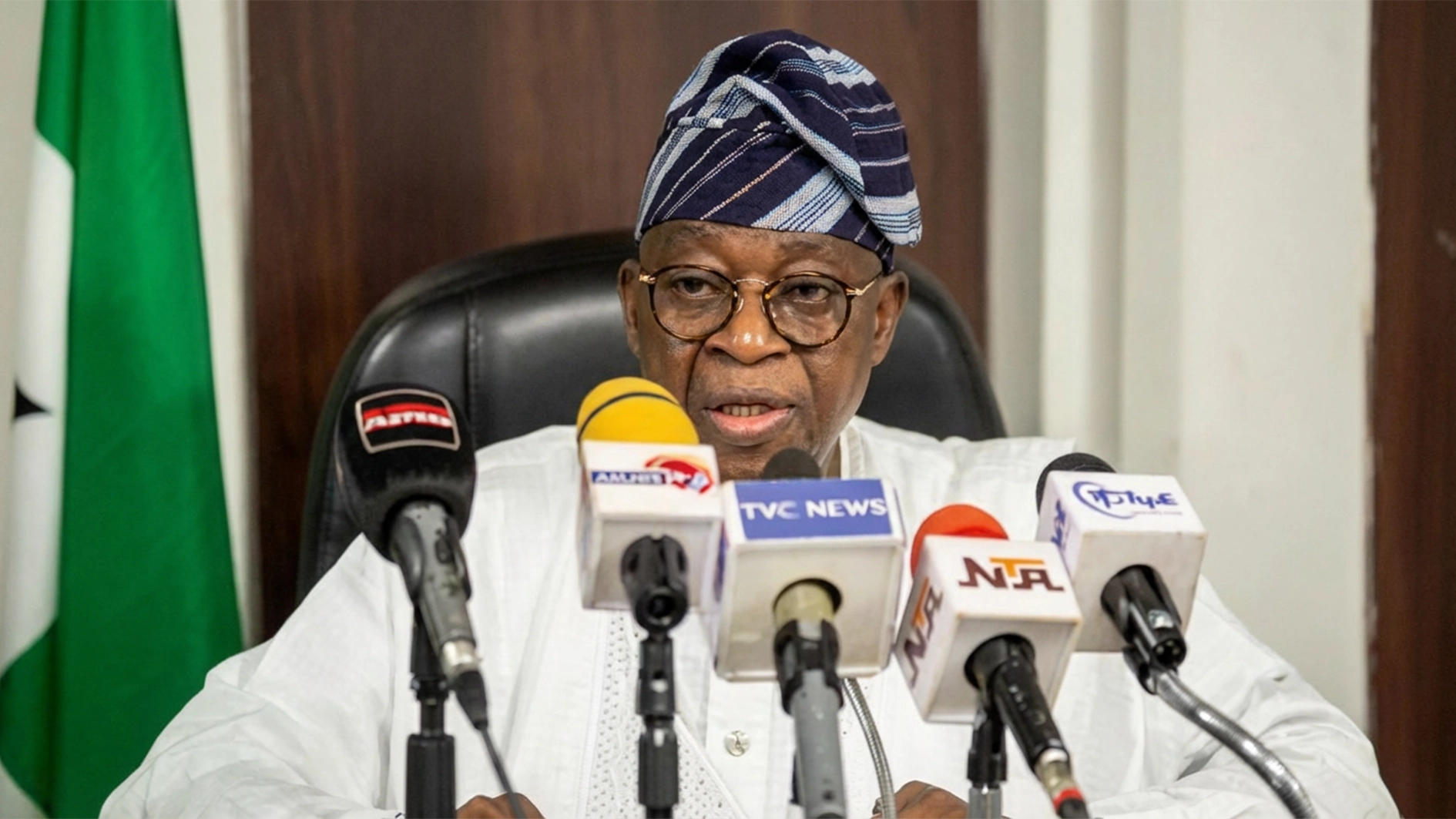
The Minister of Marine and Blue Economy, Dr. Adegboyega Oyetola, has renewed calls for stronger regional co-operation and increased investment in the fisheries sector, even as persistent structural challenges continue to undermine growth across West and Central Africa.
Speaking on Monday at the National Fisheries Investment Conference in Monrovia, Liberia, Oyetola acknowledged that despite the region’s vast marine and inland water resources, the sector remains constrained by deep-rooted inefficiencies.
The conference, held from March 30 to 31 and declared open by Liberia’s President, Joseph Nyuma Boakai, brought together ministers responsible for fisheries and aquaculture across the subregion.
While describing the forum as timely, the minister conceded that the fisheries sector, critical to food security, employment, and economic growth, has yet to realise its full potential due to longstanding challenges.
“Despite our rich marine and inland water resources, the sector continues to face significant challenges,” Oyetola said, pointing to declining fish stocks, weak infrastructure, and limited access to finance and modern technology.
His remarks underscore growing concerns that repeated policy pronouncements and regional engagements have not translated into measurable improvements in productivity or sustainability.

Although millions across the region depend on fisheries and aquaculture for their livelihoods, the sector continues to struggle with poor value chain development and inadequate investment, raising questions about the effectiveness of existing frameworks.
Oyetola stressed the need for sustainability and better resource management, warning that failure to address environmental and governance issues could further erode long-term gains.
“Our oceans, rivers, and coastal ecosystems must be carefully managed… without sustainability, long-term benefits cannot be achieved,” he stated.
He also referenced ongoing efforts by the Federal Government under President Bola Ahmed Tinubu to reposition fisheries and aquaculture as drivers of the blue economy.
However, stakeholders have continued to express concerns over implementation gaps, particularly in areas such as infrastructure, regulation, and access to financing.
The minister cited improvements in maritime security, including a reported zero piracy record in the Gulf of Guinea, as a factor boosting investor confidence.
Nonetheless, analysts note that security gains alone may not be sufficient to unlock meaningful investment without parallel reforms in logistics, policy consistency, and institutional capacity.
On investment, Oyetola called for increased funding across the fisheries value chain, including aquaculture, processing, cold-chain logistics, and export development.
Yet, industry observers argue that attracting such investment will require stronger policy coherence and enforcement mechanisms.
He further highlighted the importance of regional collaboration, noting that transboundary fish stocks make unilateral action ineffective.
“No single country can tackle illegal, unreported, and unregulated fishing alone,” he said, reiterating the need for collective action through regional bodies such as the Fisheries Committee for the West Central Gulf of Guinea (FCWC).
As Chairman of the FCWC Ministerial Committee, Oyetola outlined ongoing initiatives, including coordinated patrols, a regional register of fishing vessels, and enhanced information-sharing systems.
However, questions remain about the pace of implementation and the tangible impact of these measures on illegal fishing and resource depletion.
Bolaji Akinola, special adviser to the Minister in a statement said that efforts are underway to harmonise fisheries policies and promote intra-regional trade, though stakeholders insist that stronger political will and accountability mechanisms are required to drive meaningful change.

