 Follow Us on Google News
 Follow Us on Google Discover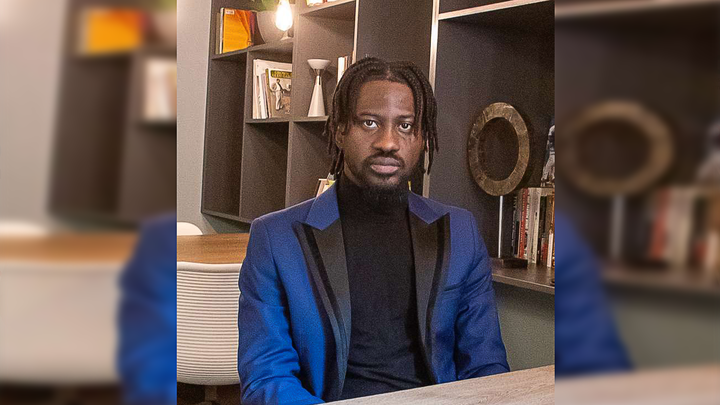
By Samuel E. Orinya
As Nigeria continues to confront evolving security threats across the Middle Belt, a growing number of experts are calling for the integration of advanced technology into national counterterrorism strategies. One such voice is Mr. Agbo George Idoko, an artificial intelligence (AI) researcher based in the United States.
He is from Ichama in Okpokwu Local Government Area of Benue State, whose work in machine learning and signal processing has attracted international attention. Benue state has been the epicenter of several attacks and slaughtering of innocent lives by terrorist groups.
In an interview granted to The Guardian at the newspaper’s invitation, Mr. Idoko explained how modern AI systems could dramatically strengthen Nigeria’s capacity to detect, prevent, and respond to terrorist activity, particularly in rural communities such as those in Benue, which have faced persistent attacks by armed groups.
“We are at a point where security challenges are becoming more sophisticated,” Idoko said. “AI is not a miracle cure, but it offers tools that can multiply the effectiveness of security agencies. Nigeria has the human talent and data infrastructure to begin adopting these systems in a coordinated way.”
Drawing from his background in biomedical signal processing and research in high-precision machine-learning models, Idoko stated that the same analytical frameworks used for medical diagnostics could be adapted to analyze security-related data streams.
For example, he described how acoustic-signal monitoring, pattern recognition, and predictive modeling, techniques commonly used in advanced healthcare AI, could be repurposed to detect unusual movement patterns in rural farmlands; sound signatures associated with illegal weapons or repeated attacks; real-time anomalies in communication signals; and shifts in population displacement data that often precede violence
“These systems can help security agencies develop an early-warning mechanism,” he explained. “Many attacks in Benue and neighboring states follow identifiable patterns. AI models can learn these patterns and alert authorities before violence escalates.”
According to Idoko, one of the challenges of deploying AI in Nigeria’s security architecture is the need for contextually trained models.
“Imported systems fail because they were not trained on Nigerian realities,” he said. “What works in Europe or America may not map onto the unique terrain, languages, movement patterns, and conflict triggers present in Benue State.”
He emphasized that Nigeria must invest in building indigenous AI datasets, including environmental audio recordings, geographic movement logs, and historical incident patterns from states like Benue, Plateau, Kaduna, and Nasarawa.
“Local data is the fuel,” he stressed. “Once we have that, the models will be able to detect threats with far greater precision.”
Potential Applications Already Within Reach
When asked about realistic short-term applications, Idoko outlined several areas where Nigeria could begin integrating AI within 12 to 18 months: Community Surveillance Grids; Automated Drone Monitoring; Communication Mapping Tools; and Rapid-Response Coordination Apps
“These tools don’t replace human intelligence,” he noted. “They simply extend its reach.”
For Idoko, the issue is deeply personal. Growing up in Ichama, he witnessed how communities across Okpokwu and neighboring LGAs were repeatedly destabilized by armed groups.
“Benue has suffered for too long,” he said. “If technology can offer even a small improvement in how threats are detected or prevented, then it is worth pursuing with urgency.”
Experts contacted by The Guardian described Idoko’s proposals as part of a broader movement to integrate advanced analytics into African security policy. Several security analysts noted that while drones and biometric tools are already in limited use in Nigeria, AI-driven predictive modeling represents “a new frontier.”
Mr. Chinedu Abebe, a security policy researcher in Abuja, said:
“Using AI to fight terrorism in the Middle Belt is not something that has been explored in depth. The fact that researchers like Mr. Idoko are thinking along these lines shows that Nigerian talent is capable of contributing world-class solutions.”
Idoko believes Nigeria has the potential to become one of Africa’s leaders in AI-driven national security, if there is political will, investment, and collaboration between academic researchers and government agencies.
“We don’t need to wait for foreign companies to solve our problems,” he said. “Nigeria has the expertise. What we require now is a coordinated national framework.”
As tensions continue to affect rural communities in Benue and beyond, his message is both urgent and hopeful:
“AI can give us a fighting chance. We should use every tool available to protect our people.”

