 Follow Us on Google News
 Follow Us on Google Discover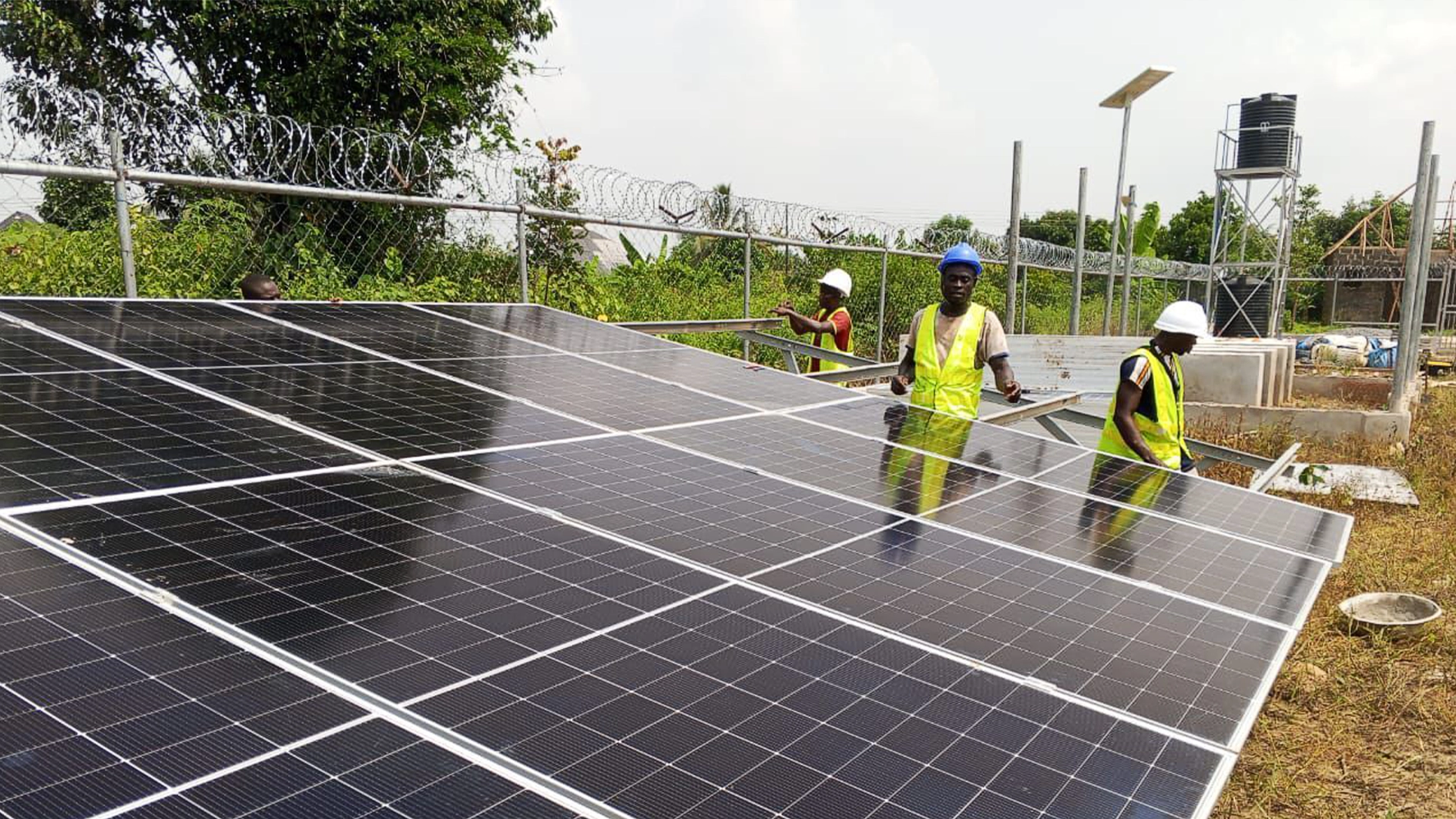
As All On expands Niger Delta electrification
Residents of Akeddei Community in Bayelsa State are witnessing a new wave of optimism as work progresses steadily on a solar hybrid mini grid project set to deliver reliable and affordable electricity to the area.
Powered by a $532,828 grant from All On, an impact investing company to renewable energy firm Darway Coast Ltd, and now in its final stages of installation, the project, upon completion, is expected to transform livelihoods, stimulate economic activity, and improve essential services in the riverine community.
For many residents, since All On, an independent, non-profit organisation (limited by guarantee) awarded the contract for the solar hybrid minigrid, the atmosphere in Akeddei has changed noticeably as visible progress on the project has strengthened their confidence that dependable electricity which was long considered a distant dream is finally within reach.
From the installation of critical equipment to the training of local workers and steady advancement at the project site, each milestone has reinforced the community’s belief that sustainable power is becoming a reality.
The project, which represents the second phase of a broader electrification initiative in the Niger Delta, is more than infrastructure; it signals the possibility of economic revival, improved living standards, and renewed community development.

Scheduled for commissioning in the second quarter of this year, it follows the success of a pilot project in nearby Oweikorogha, where an 80kWp minigrid exceeded its initial targets of 430 connections, delivering electricity to 451 homes, businesses, and healthcare, demonstrating the tangible impact of decentralized renewable energy solutions in underserved communities.
Checks by The Guardian showed that the arrival of stable power in Oweikorogha quickly reshaped daily life in the community. Businesses extended operating hours, households reduced spending on diesel and petrol generators, and public institutions such as schools and health centres began operating more efficiently.
As the second phase of the electrification initiative in the oil-rich Niger Delta area, the Akeddei project is designed to operate on a larger scale, with an estimated 1,058 electricity connections once fully operational.
Communications Lead at All On, Toun Odetola, emphasized that the objective of the Akeddei project, like many of the company’s investments, goes beyond installing energy infrastructure. It places strong emphasis on productive-use customers, including small businesses, artisans, and service providers whose activities depend heavily on a reliable power supply.
According to her, the initiative is designed to create sustainable energy connections that drive socio-economic development. “The aim of this project, like All On’s many other grants and investments, is about much more than installing infrastructure. It is about enabling meaningful energy access that supports livelihoods, reduces dependence on expensive alternatives, and strengthens communities across the Niger Delta,” she said.
Odetola adds that as All On celebrates its 10th anniversary this year, the organisation’s focus remains firmly on expanding energy access and supporting economic growth in underserved regions.
For Darway Coast Ltd, the company responsible for implementing the project, the initiative represents a long-term commitment to delivering reliable and affordable electricity in rural communities.
Chief Executive Officer of the company, Henry Ureh, said the project aligns with the organisation’s broader mission to support economic development while protecting the interests of customers and stakeholders.
“As a company, we are committed to delivering affordable, reliable electricity that drives economic growth,” he said. “We are confident that the people of Akeddei will experience measurable improvements in their quality of life, unlocking new economic opportunities for the community.”
Meanwhile, community members have followed the project closely, not only because of its long-term promise but also because many residents are already participating directly in its implementation.
Local youth have been engaged in construction and site preparation, while Darway Coast Ltd has initiated training programmes for community-based operators who will manage technical and administrative functions after commissioning. This approach, Ureh say, is intended to ensure sustainability, local ownership, and long-term operational success.
With millions of households still lacking reliable grid power, mini grids are increasingly seen as practical solutions for rural and riverine communities where extending the national grid remains difficult and costly.
By combining solar energy with backup systems, hybrid mini grids provide cleaner, more stable electricity while reducing dependence on fossil fuels and lowering operating costs for consumers.
Energy experts say such projects are essential to closing Nigeria’s energy access gap and supporting inclusive economic growth.

