 Follow Us on Google News


 Follow Us on Google Discover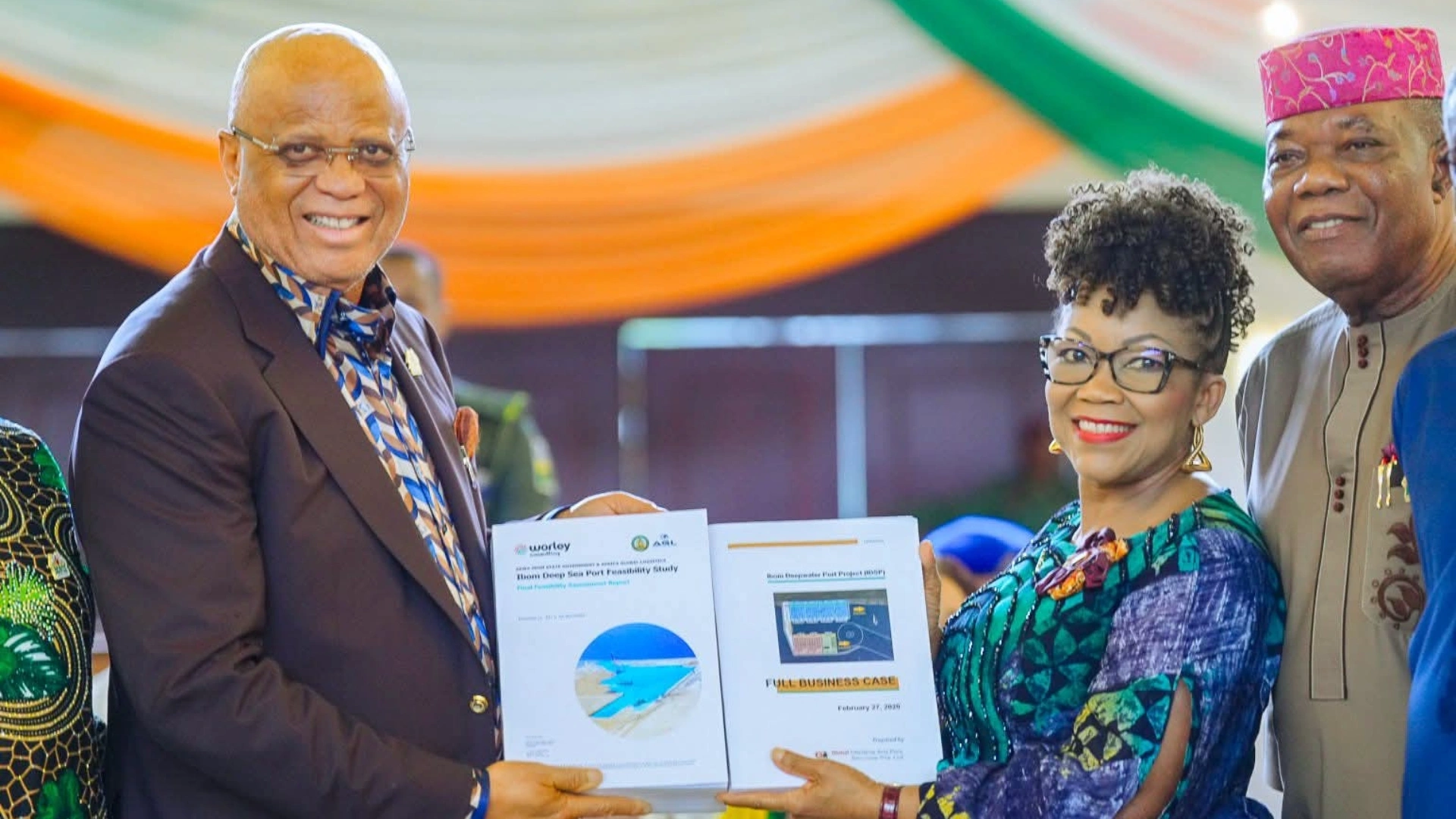
Governor Umo Eno has received the feasibility report for the proposed Ibom Deep Seaport, restating his administration’s intention to move the project towards implementation after years of planning.
The report was presented on Wednesday at the Banquet Hall of Government House in Uyo by the project’s technical committee. The governor said the document provides a clearer framework for the next phase of development, particularly in attracting investors and structuring delivery.
He commended the committee for its work, noting that the findings offer direction for a project expected to expand maritime capacity and support economic activity in the state and beyond.
Chairman of the committee, Mfon Usoro, said the seaport is designed to be delivered through a Public-Private Partnership arrangement. According to her, the model is intended to ease financing constraints while encouraging private sector participation.
She explained that the port would be linked to the Ibom Industrial City and operate within a Free Trade Zone framework. The plan is to position it as a regional transhipment hub, supporting trade flows and industrial operations.
Governor Eno acknowledged the role played by previous administrations in advancing the project. He referenced former governors Victor Attah, Udom Emmanuel, and Godswill Akpabio, who is the current president of the Nigerian Senate, noting that progress has been cumulative over the years.

He cautioned against politicising the initiative, describing large-scale port development as a long-term undertaking that requires continuity and coordination.
The governor highlighted steps already taken under his administration, including funding for updated studies, technical surveys and the establishment of a project office. He also pointed to related infrastructure investments such as road expansion and ongoing developments in the state’s aviation sector, including operations by Ibom Air at the Victor Attah International Airport.
He said attention would now shift towards engaging investors and key stakeholders, with the committee expected to support discussions that will move the project closer to execution. Plans are also underway to introduce training programmes aimed at preparing local workers for roles linked to the port’s eventual operations.
Usoro said preliminary work on the project has covered financial modelling, due diligence and the selection of preferred bidders through an international process. The next stage, she added, would focus on core infrastructure, including breakwaters, container terminals and access routes, alongside regulatory processes involving agencies such as the Nigerian Ports Authority.
She noted that port projects of this scale typically require extended timelines due to their technical and financial demands.
The presentation drew attendance from government officials, industry representatives and federal agencies, reflecting continued collaboration between public institutions and private investors on the proposed seaport.
For Akwa Ibom, the project remains a central part of its long-term economic planning, with authorities indicating that sustained coordination will be required to translate the current phase into construction and eventual operation.

