 Follow Us on Google News


 Follow Us on Google Discover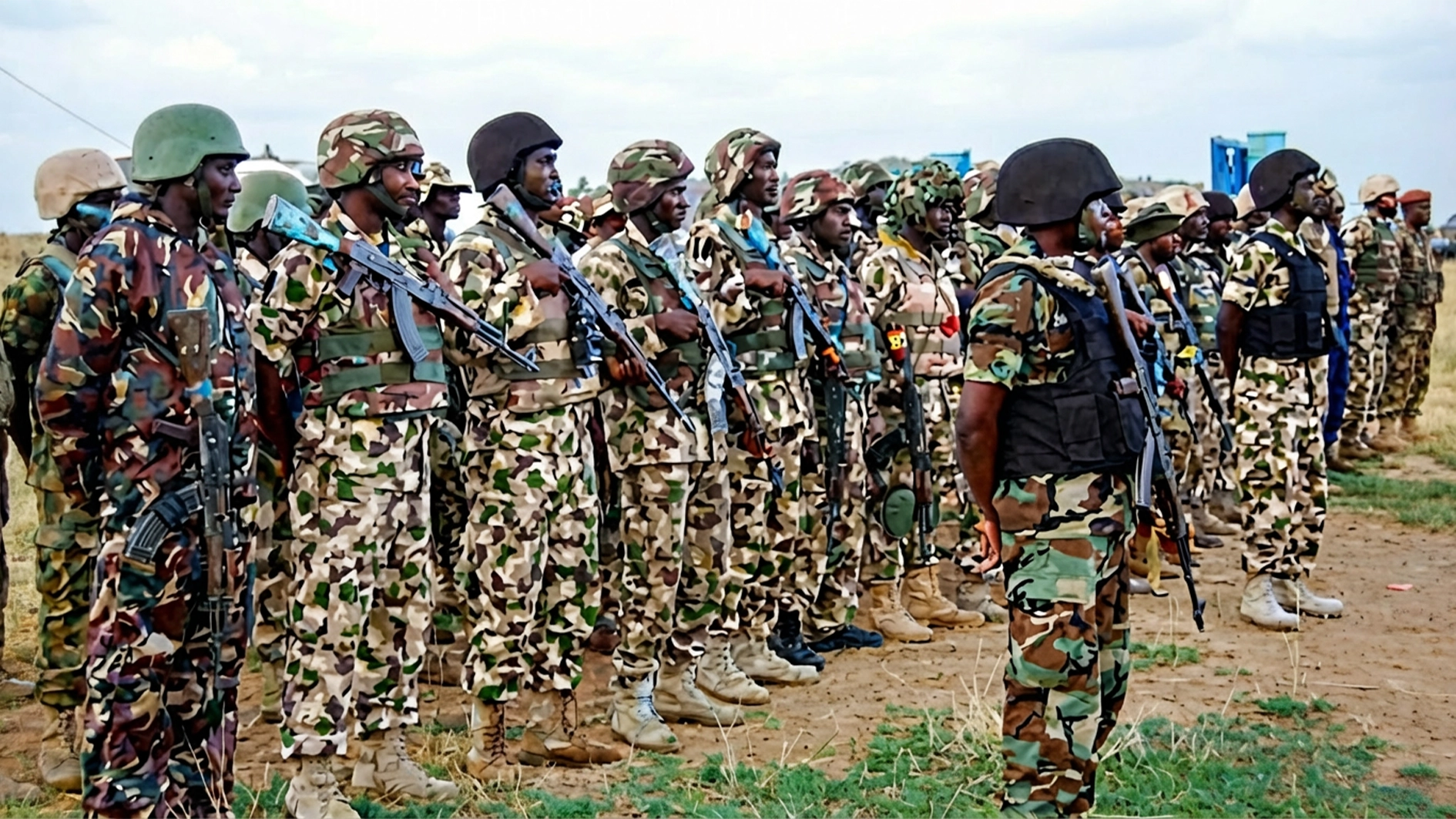
• President censures opposition on electricity privatisation
• APC, ADC gain in new Reps defections
The African Democratic Congress (ADC) has taken a swipe at President Bola Tinubu and the National Assembly over a seven per cent budgetary allocation for the provision of equipment for the Nigerian Army but full funding of the presidential fleet, describing the development as lip service to the security of lives and property.
On his part, Tinubu heavily criticised the 2013 privatisation of Nigeria’s electricity sector, blaming the previous Peoples Democratic Party (PDP) administration for the ongoing power crisis. He described the privatisation as a failure, noting that 90 million Nigerians still lack access to electricity 10 years later, with grid capacity remaining stagnant.
“We have leaders who have privatised electricity that is not working. They gave us darkness, and we are trying to get ourselves through that to build a nation of bright hope and joyful people, leaving our children with a life worthy of pride. But, they don’t even believe in the democracy they preach, don’t pay attention to them,” Tinubu said.
A fresh wave of defections swept through the House of Representatives yesterday, as many lawmakers switched party allegiance in what observers see as early positioning ahead of the 2027 general elections.
The ADC says its stand is based on reports that only about seven per cent of the Army’s security equipment budget was released in 2025.

The party said it was outraged that, out of N336.76 billion approved for security equipment in the year, only a paltry N16.71 billion was released, while nothing was released for key logistics such as transport and aircraft fuel, as well as military barracks.
In a statement signed by the National Publicity Secretary, Bolaji Abdullahi, the party also lamented that, at a time when the nation faces unprecedented security challenges, the Federal Government chose to concentrate resources on maintaining the presidential fleet while military aircraft languish due to a lack of funds.
The party described the development as an unpardonable misplacement of priority.
The ADC further argues that the underfunding of military equipment and operations significantly explains why the security situation in the country continues to deteriorate, with insurgents and terrorists becoming more emboldened by the day.
The party pointed to the recent abduction of over 400 women and children in Ngoshe, Borno State, where Boko Haram has issued a N5 billion ransom demand and a 72-hour ultimatum, as evidence that the APC government has lost control of the fight against terror.
TINUBU stated that the objectives of the privatisation effort—to improve efficiency and attract investment—have “by and large, not been met,” with the power sector continuing to underperform.
He specifically targeted former Vice President Atiku Abubakar, who was the chairman of the National Council on Privatisation (NCP), questioning the performance of his past economic reforms, including the sale of the Delta Steel Company (DSC) and Ajaokuta Steel Complex (ASC).
The President called for a reorganisation and recapitalisation of Electricity Distribution Companies (DisCos), noting that only 60 per cent of electricity sent to the grid is paid for.
At the resumption of plenary after the Easter break, Deputy Speaker Benjamin Kalu read multiple defection letters on the floor, underscoring shifting loyalties within the lower chamber.
He downplayed concerns that the trend signals a drift towards a one-party state, describing it instead as evidence of democratic choice.
Kalu noted that the cross-carpeting cuts across both ruling and opposition parties, reflecting the fluid nature of Nigeria’s multiparty system.
Among the high-profile moves, Thaddeus Attah, representing Eti-Osa Federal Constituency in Lagos, defected from the Labour Party (LP) to ADC, citing the protracted leadership crisis within his former party as a constraint on effective representation.
PDP recorded the biggest losses, with five members exiting its fold. Abubakar Abdul (Niger) defected to the All APC; Yakubu Noma (Kebbi) joined the ADC; while Ibrahim Mohammed, also from Kebbi, moved to the APC.
In Osun State, Mudashiru Alani (Ayedire/Iwo/Ola-Oluwa) and Adetunji Olusoji (Odo-Otin/Ifelodun/Boripe) both left the PDP for the Accord Party.
Despite the gains, the APC also lost ground, as David Fuoh (Taraba) defected to the PDP, while Bashir Zubair (Kaduna) joined the ADC, highlighting a continuing two-way realignment within the House.
Party defections remain a recurring feature of Nigeria’s political landscape, particularly in the build-up to elections.
With less than two years to the 2027 polls, lawmakers appear to be recalibrating their affiliations amid internal party crises, electoral calculations and evolving alliances.
Meanwhile, the House adjourned plenary till Wednesday in honour of Kano lawmaker, Hassan Danjuma, who died on April 10, 2026, at the age of 66.

