 Follow Us on Google News
 Follow Us on Google Discover
The Food and Agriculture Organisation of the United Nations (FAO) and the World Meteorological Organisation (WMO), yesterday, raised concerns that the frequency, intensity and duration of extreme heat events, which have risen sharply over the past half-century, pose great risks to agri-food systems.
The UN bodies warned that ecosystems are set to soar in the future, according to its new report entitled “Extreme heat and agriculture.”
Extreme heat also takes a toll on agricultural labourers. The number of days yearly when it is simply too hot to work may rise to 250 per year in most of South Asia, tropical Sub-Saharan Africa and parts of Central and South America, according to the report.
While severe heat events threaten the livelihoods, health and labour productivity of over a billion people, agricultural workers and agri-food systems are on the frontlines.
The joint FAO-WMO report described the physical science of extreme heat, the vulnerabilities, observed and projected impacts on agriculture, adaptation strategies, case studies, and offered policy recommendations.
It was released for Earth Day, which holds every April 22, highlighting the interconnections between a changing climate, food security, agri-system and ecosystem health.
The document said the impact of extreme heat events is relative to the context of when and where they occur. For the most common livestock species, stress, it said, begins at above 25 °C, and a bit lower for chickens and pigs, which are unable to cool themselves by sweating.
For most major crops, yield declines begin to occur above 30°C, but lower for some crops such as potatoes and barley. Evidence points to a strong correlation between heat waves and wildfires, with longer and more intense fire seasons, the study revealed.
Key recommendations point to the need for innovation and implementation of adaptive measures such as selective breeding and crop choices adjusted to the new climate reality, adjusting planting windows, and altering management practices that can shelter crops and agricultural activities from the impacts of extreme heat.
Early warning systems, it emphasised, are a particularly important tool in aiding farmers in their efforts to respond to intense heat.
Access to financial services – cash transfers, insurance and payment schemes, shock-responsive social protection schemes and other forms, the report noted, underpins all categories of adaptation options.
Speaking on the report, FAO Director-General QU Dongyu, noted: “This work highlights how extreme heat is a major risk multiplier, exerting mounting pressure on crops, livestock, fisheries and forests, and on the communities and economies that depend upon them.”
On her part, WMO Secretary-General, Celeste Saulo, observed that extreme heat is increasingly defining the conditions under which agrifood systems operate, adding that more than simply an isolated climatic hazard, it acts as a compounding risk factor that magnifies existing weaknesses across agricultural systems.
“Early warnings and climate services like seasonal outlooks are vital to help us adapt to the new reality,” she said.
Extreme heat threatens agri-food systems, UN warns
Date: 23 April 2026 3:59am WAT
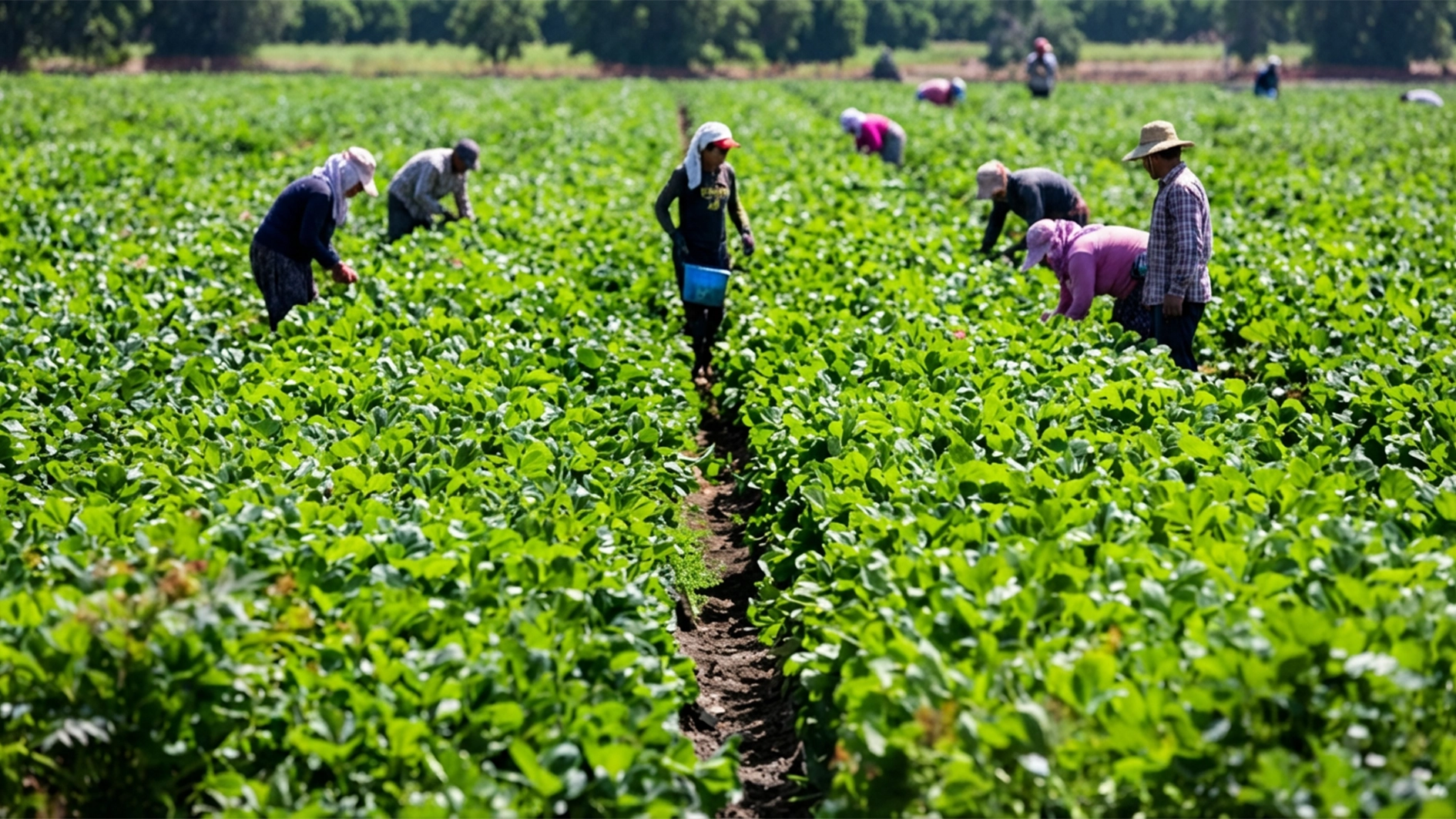
Agriculture farming
Agriculture farming

